
自由贸易

Search documents
德国总理呼吁彻底改革欧美联盟,“我们不相信关税和保护主义,只相信自由贸易”,媒体评论“不信任达到顶峰”
Hua Er Jie Jian Wen· 2026-02-14 02:20
Group 1 - German Chancellor Friedrich Merz calls for a more equitable transatlantic partnership based on mutual interests rather than shared values, highlighting a significant decline in trust between the US and Europe since Trump's second term began [1][2] - Merz emphasizes the need for Europe to reduce its over-reliance on the US, stating that the MAGA movement's cultural wars do not align with European beliefs, and he advocates for free trade over tariffs and protectionism [1][2] - The speech comes at a time when US-EU relations are at a historic low, exacerbated by high tariffs imposed by the Trump administration and threats to withdraw security protections [1][2] Group 2 - Merz suggests that the transatlantic partnership has lost its assumed foundation, advocating for a transactional alliance where Europe and the US face each other as equal partners with distinct value systems [2] - The Pentagon's policy officials echo Merz's sentiments, indicating that while there will be differences, the goal should be to build a more durable partnership based on shared interests [2] - Merz reaffirms Germany's commitment to free trade, climate agreements, and the World Health Organization, stressing the importance of unity in addressing global challenges [2] Group 3 - Following his speech, Merz meets with US Secretary of State Marco Rubio to discuss potential new military support for Ukraine, with the atmosphere described as positive and mutually understanding [3] - Merz's reaffirmation of discussions with French President Macron regarding the establishment of a European nuclear deterrent reflects deep-seated doubts about the US's commitment to NATO's Article 5 [4] - The negotiations for a European nuclear deterrent are still in early stages and aim to complement rather than replace the US nuclear umbrella, highlighting Germany's reliance on US security [5]
王毅会见英国外交大臣:中方支持自由贸易,反对任何形式的保护主义,希望英方为中国企业提供公平、公正、非歧视的营商环境
Xin Lang Cai Jing· 2026-02-14 01:55
来源 | 新华社 中共中央政治局委员、外交部长王毅13日在出席慕尼黑安全会议期间会见英国外交大臣库珀。 库珀表示,斯塔默首相访华取得圆满成功和丰硕成果,为推动英中关系发展发挥重要作用。英中构建长 期稳定的全面战略伙伴关系,符合双方战略利益。英方在台湾问题上长期奉行自建交以来的政策,没有 也不会改变。愿同中方一道落实两国领导人共识,推进各领域机制性对话,拓展在贸易、投资、金融、 气候、安全、绿色科技等领域合作,妥善管控分歧。英方坚持多边主义和国际法治,双方可加强多边沟 通协作,为促进世界和平与安全作出贡献。 双方还就乌克兰危机、苏丹、伊朗等国际和地区问题交换意见。 王毅表示,中英都是世界性大国和安理会常任理事国,各自承担维护国际和平与安全的职责,应该保持 经常性交往,加强战略协调与沟通,拓展双方共同利益,维护世界和平与发展。前不久斯塔默首相对中 国成功进行历史性访问,重启了中英关系。习近平主席同斯塔默首相一致同意发展长期稳定的全面战略 伙伴关系,就双多边合作达成广泛共识,回应了各界对中英关系稳定发展的期待。 王毅说,双方应落实好两国领导人共识,不断释放双边关系利好,发掘更多合作潜能。双方要办好新一 轮经济财金对 ...
中德法举行三方外长会晤
Xin Hua Cai Jing· 2026-02-14 00:49
中共中央政治局委员、外交部长王毅13日在德国慕尼黑同德国外交部长瓦德富尔、法国外交部长巴罗举 行三方外长会晤。 三方就中欧关系中的重要问题和乌克兰危机等共同关心的问题交换意见,都积极评价此次会晤重要意 义,同意继续保持战略沟通。 瓦德富尔表示,面对动荡不安的世界,德国和法国比以往任何时候都更加需要同中国沟通对话,增进互 信、消除误解,发挥大国作用,发出共同声音。德方重视中国在全球事务中发挥的重要积极作用,愿同 中方加强沟通协调。德国、法国重申坚定奉行一个中国政策,致力于发展长期稳定的对华关系。支持自 由贸易,反对脱钩断链,愿同中方协商解决贸易摩擦,推动欧中经贸关系实现平衡发展。 巴罗表示,当今世界不稳定性上升,多边主义和国际秩序受到威胁,全球多地冲突延宕。法中德应共同 为推动世界和平、完善全球治理发挥作用。国际形势越是不稳定,越需要构建伙伴关系。法方致力于重 振稳定积极的欧中关系。法方欢迎习近平主席提出的全球治理倡议,期待同中方沟通对话,推动各多边 平台加强协调,维护多边主义和自由贸易。相信法中、德中、欧中关系可以并行不悖向前推进。 王毅表示,中德法外长首次举行三方会晤,这既是因应时势变化的创新之举,也是开展 ...
德国总理默茨呼吁彻底改革美欧联盟
Xin Lang Cai Jing· 2026-02-13 19:38
德国总理默茨呼吁建立一种新的、更平等的跨大西洋伙伴关系,这种关系应基于共同利益,而非欧 洲和美国已不再共享的价值观。 他在今年慕尼黑安全会议的开幕演讲中发表了上述评论,这番话是自美国总统特朗普开启第二任期以来 美欧之间持续一年多的疏远和日益加剧的不信任的集中体现。 默茨重申,他已开始与法国总统马克龙就建立欧洲核威慑力量进行初步会谈,以补充美国在该地区的核 保护伞。这鲜明地体现了西方联盟内部的紧张关系。 此举暴露了欧洲对美国保护其北约伙伴这一承诺的可信度深感怀疑。 自上任以来,特朗普已对从欧盟和该地区其他国家进口的商品征收高额关税,并在上个月放弃之前曾威 胁要吞并丹麦所属的格陵兰岛。他的政府还支持了从德国到英国的反对派民族主义政党。 默茨说:"'让美国再次伟大'(MAGA)运动的文化战争不属于我们。当言论被用来攻击人类尊严和宪 法时,言论自由就应该到此为止。我们不相信关税和保护主义,我们相信自由贸易。" 默茨的评论是对美国副总统万斯一年前在该会议上讲话的迟来回应。万斯当时说,欧洲已经背弃了言论 自由等西方价值观,并暗示美国可能不再保护那些将极右翼政党排除在政府之外的欧洲国家。 德国陷入困境的经济也高度依赖国际贸 ...

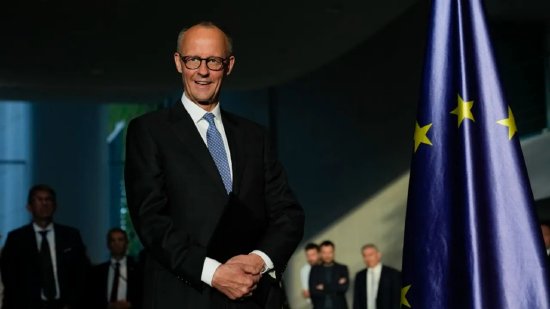
德总理说欧洲应尽快摆脱对美依赖
Xin Lang Cai Jing· 2026-02-13 19:31
第62届慕尼黑安全会议2月13日在德国开幕。欧美跨大西洋紧张关系在本届慕安会上备受关注。德国总 理默茨在当天的致辞中表示,跨大西洋关系"不再理所当然",欧美之间已出现深刻裂痕,欧洲应尽快摆 脱对美国的过度依赖。默茨表示,欧洲"不相信关税和保护主义,坚定支持自由贸易、气候协定和世界 卫生组织等,坚信全球性问题只能通过合作来解决"。默茨还"喊话"美国称,"在大国竞争的时代,即使 是美国也不够强大到能独自应对一切。"他呼吁"共同修复并重建跨大西洋信任",并称"欧洲人正在尽自 己的责任"。 ...
德国总理:欧洲完全可以维护自身的利益和价值观
Xin Lang Cai Jing· 2026-02-13 16:24
【德国总理:欧洲完全可以维护自身的利益和价值观】智通财经2月13日电,德国总理默茨当地时间13 日在慕尼黑安全会议开幕式上发表讲话时表示,欧洲并非没有机遇,欧洲完全可以"果断、团结、自信 地"维护自身的利益和价值观。默茨表示,欧洲和美国之间从一开始就出现了分歧。欧洲不信奉关税和 保护主义,信奉自由贸易,全球挑战唯有携手才能解决。加入北约不仅是欧洲的竞争优势,也是美国的 竞争优势。因此,让欧美携手修复和重振跨大西洋信任。此外,他正在与法国总统马克龙就关于建立欧 洲联合核威慑力量的问题进行对话。这并非是要放弃北约,而是要在北约内部建立一个强大、自给自足 的欧洲支柱。在谈到丹麦格陵兰岛问题时,默茨称丹麦完全可以信任欧洲,欧洲盟友也会坚定地站在丹 麦一方。(央视新闻) 转自:智通财经 ...
超越美国,中国再成德国第一大贸易伙伴,默茨着急访华有门道
Sou Hu Cai Jing· 2026-02-12 11:51
Group 1 - China has regained its position as Germany's largest trading partner, surpassing the United States, largely due to U.S. tariff policies [1][3] - In 2025, Germany's imports from China increased by 9%, reaching €171 billion, significantly higher than imports from the U.S. [1] - From 2016 to 2023, China was Germany's top trading partner for eight consecutive years until the U.S. briefly overtook this position in 2024 [3] Group 2 - U.S. tariffs have severely impacted German manufacturing, particularly in the automotive and machinery sectors, leading to a significant drop in demand for German products in the U.S. market [3][5] - The German automotive industry has faced substantial profit declines, with Volkswagen's operating profit dropping by one-third and Mercedes-Benz's net profit plummeting by 56% [3] - The German mechanical engineering sector is projected to see a 5% decline in production this year due to U.S. tariffs [5] Group 3 - China has maintained a stable trade environment without imposing tariffs, providing German companies with a predictable market, particularly for key components supporting Germany's green transition [5] - A survey indicated that 93% of German companies in China plan to continue investing in the Chinese market, with over half intending to increase their investments in the next two years [5] Group 4 - German Chancellor Merz is set to visit China with a delegation of major industrial leaders to strengthen trade relations and seek new orders in sectors like renewable energy and digitalization [6][8] - Despite the need for closer ties with China, German Foreign Minister Baerbock emphasized Germany's closer relationship with the U.S., indicating a complex diplomatic balancing act [8] - The German wholesale and foreign trade association has stated that U.S. protectionist tariffs pose a significant challenge to German exports, highlighting the necessity for enhanced cooperation with China [8]
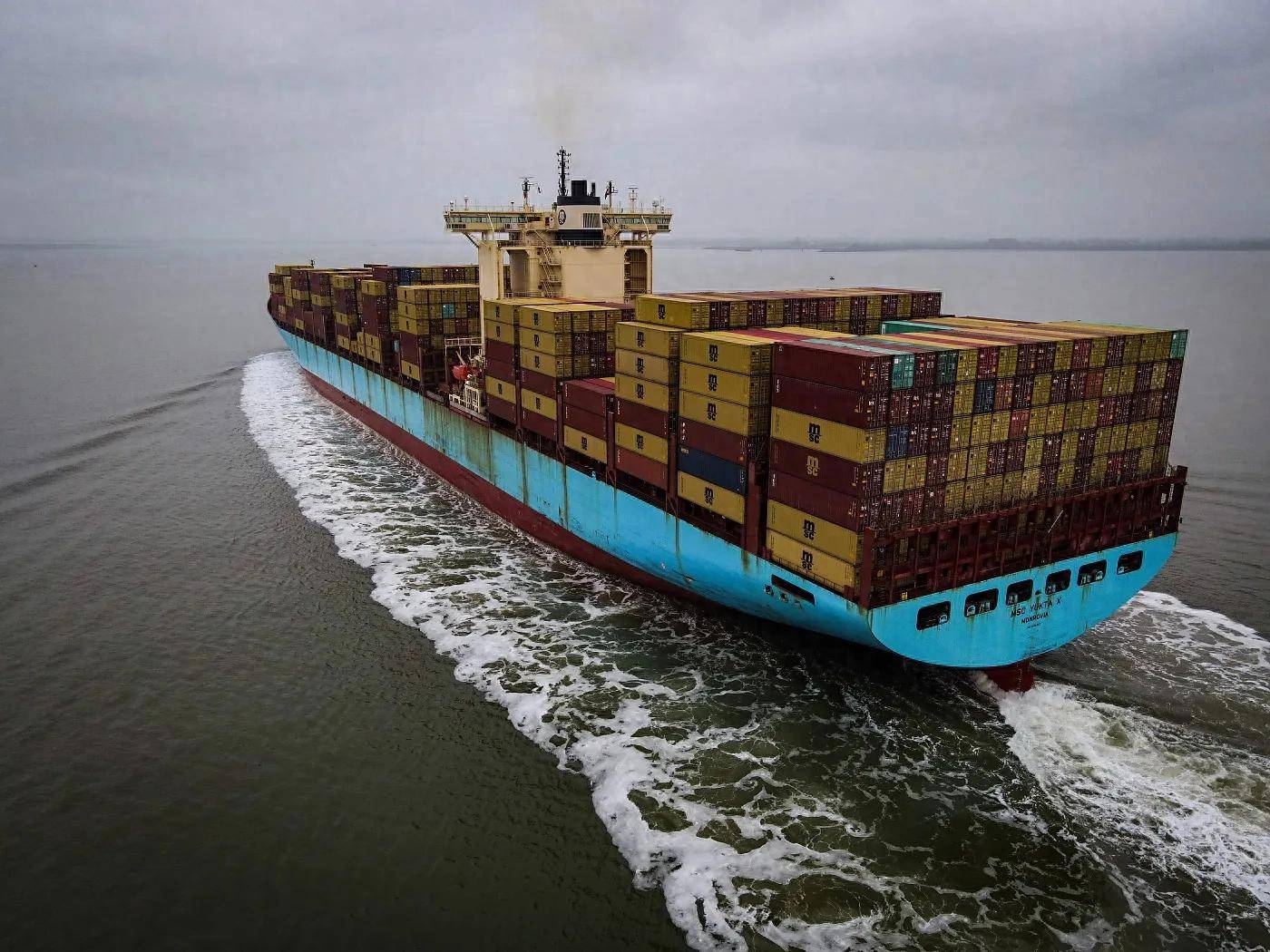
中国对经济全球化的支持更趋重要
Zhong Guo Xin Wen Wang· 2026-02-11 06:09
Group 1 - The core argument emphasizes that any attempts to exclude China from global supply and value chains will ultimately backfire on those making such attempts, highlighting the interdependence of the global economy [1][2] - The current international environment is marked by uncertainty and geopolitical conflicts, which pose unprecedented challenges to economic globalization [1][2] - China has reiterated its strong support for economic globalization, free trade, and multilateralism, asserting that development is a right for all countries, not just a privilege for a few [1][2] Group 2 - European leaders are warned that the greatest risk to the global economy is not from openness itself, but from the artificial creation of "decoupling" and "disconnection" from China, which could raise costs and weaken competitiveness [3] - The call for cooperation in trade, investment, technology, and green development with China aligns with the concerns of many developing countries, emphasizing the need for a stable and predictable international economic environment [2][3] - The importance of soft power and cultural exchanges in supporting globalization is highlighted, with a focus on the need for understanding and trust between societies [4]
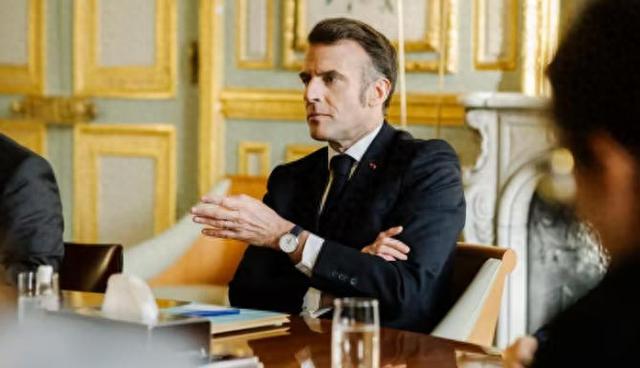
马克龙着急:欧盟再不作为,将被中美横扫出局
Xin Lang Cai Jing· 2026-02-11 01:13
Core Viewpoint - French President Emmanuel Macron warns Europe to take urgent action to avoid being outcompeted by China and the United States in key strategic areas, advocating for a "Europe first" approach and increased investment in green technology, defense, and security [1][4][9]. Group 1: European Competitiveness - Macron emphasizes that Europe is facing a dual crisis from China and the U.S., with China's trade surplus reaching $1 trillion and the U.S. presenting instability [4][7]. - He calls for a new common borrowing initiative among EU member states to fund strategic sectors, suggesting that Europe must invest in its own future to counteract dollar dominance [9][10]. - Macron highlights the need for Europe to simplify and deepen its single market while promoting trade diversification [5][7]. Group 2: Investment Needs - The estimated annual investment requirement for the EU in green and digital technologies is €800 billion, with total needs in defense and security reaching approximately €1.2 trillion [7]. - Macron's proposals include the issuance of euro bonds to support these investments, despite skepticism from other EU member states regarding the feasibility of such initiatives [9][12]. Group 3: Political Dynamics - Macron's push for a more sovereign Europe has seen some success, but he acknowledges that progress has been slow and insufficient [2][4]. - The upcoming EU summit is expected to discuss competitiveness and the "European manufacturing" strategy, but Macron's proposals face opposition, particularly from Germany, which has historically rejected similar debt-sharing initiatives [12][15]. - There is a growing recognition among EU countries of the need for flexibility in financial matters, but consensus on Macron's proposals remains elusive [15].
中国对经济全球化的支持更趋重要(国际论坛)
Ren Min Ri Bao· 2026-02-10 22:23
Group 1 - The core argument emphasizes that attempts to exclude China from global supply and value chains will ultimately backfire in a highly interdependent world economy [1][2][3] - The current international landscape is marked by uncertainty and geopolitical conflicts, leading to discussions about the end of globalization at the World Economic Forum [1][2] - China reiterates its commitment to economic globalization, free trade, and multilateralism, asserting that development is a right for all nations, not just a privilege for a few [1][3] Group 2 - European perceptions of China are heavily influenced by ideological and geopolitical narratives, which can hinder rational economic judgments and increase costs of trade and connectivity [2][3] - The risk of "decoupling" from China is highlighted as a significant threat to Europe's competitiveness and economic transformation, advocating for pragmatic cooperation in trade, investment, and technology [3][4] - The importance of soft power and cultural exchange in supporting globalization is stressed, with a call for more direct engagement with China rather than relying on third-party narratives [4]