超级个体

Search documents
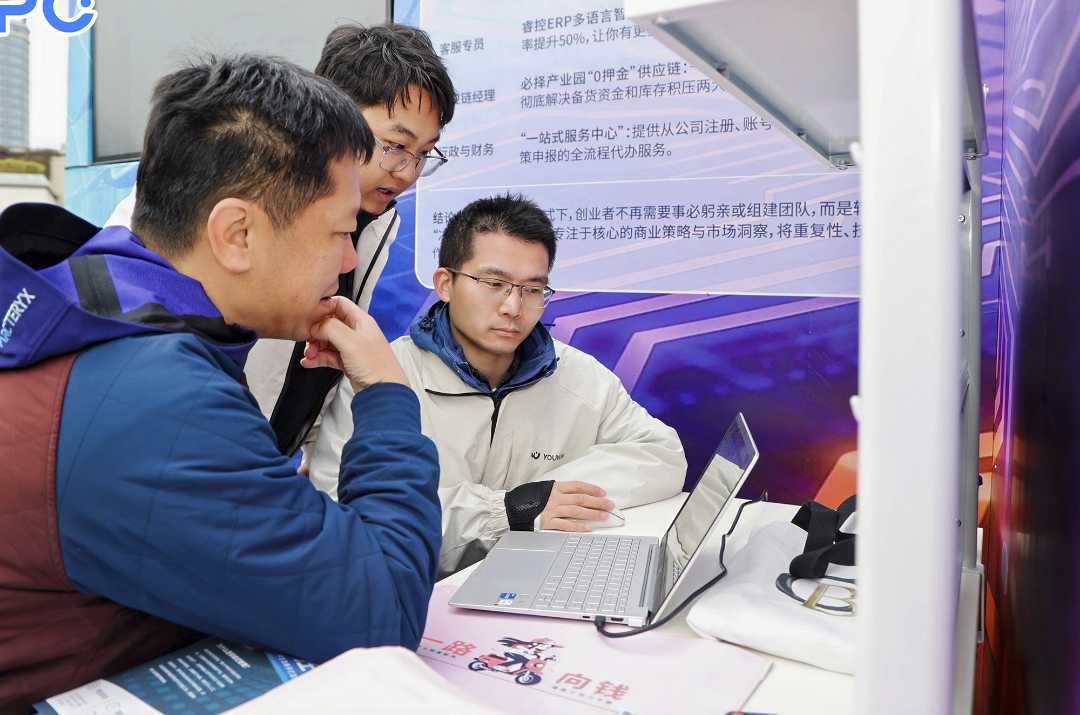
临港 "零界魔方" 筑巢 引爆超级个体创业潮
Xin Lang Cai Jing· 2026-01-17 11:29
Core Insights - The "Super Individual" initiative launched by Shanghai Lingang New Area aims to foster entrepreneurship by providing a supportive environment for startups, including a community called "Zero Boundary Cube" that offers free office and living spaces [1][5] - The initiative has attracted over 150 entrepreneurial teams, including one-person companies, within just five months, indicating a strong demand for such collaborative spaces [1][6] Group 1: Entrepreneurial Ecosystem - The "Zero Boundary Cube" community has successfully attracted a diverse range of innovative business models, including data processing and code outsourcing, with all 20 independent offices already rented out [6] - The initiative supports cross-border data flow and provides compliance assistance for teams needing to navigate regulatory requirements, enhancing the operational capabilities of startups [5][6] Group 2: Success Stories - Chen Zishun, co-founder of Humi Technology, reported that his cross-border live streaming team achieved sales of 100 million yen (approximately 5 million RMB) within four months of joining the "Zero Boundary Cube" [3] - Wang Xiyu, founder of MemoTalk, highlighted the collaborative atmosphere in the community, which helped him resolve technical challenges and prepare for the launch of his first batch of 1,000 products [7] - Lu Guozong, founder of Shanghai Baizhi Advertising, utilized AI tools to create city promotional videos, achieving over a million views online and demonstrating the effectiveness of the "Super Individual" model [8] Group 3: Future Developments - The Lingang New Area is working on opening commercial scenarios for leading enterprises to assist "Super Individuals" in overcoming fragmented technological challenges, aiming to create a symbiotic ecosystem of "Super Enterprises + Super Individuals" [10]



文库“换脸”,搜索“换命”,百度的AI重构
3 6 Ke· 2026-01-13 05:11
Core Insights - Baidu's document library has undergone a significant rebranding, with its AI-native application "Chengpian" renamed to "Daogu" to target a younger audience and shift focus from serious writing to a community for creative content [1][4][5] - The rebranding was executed quietly without a major announcement, raising questions about the effectiveness of the original application and the strategic direction of Baidu's AI initiatives [4][6] - The transition reflects a broader trend in Baidu's strategy to enhance its AI capabilities in consumer-facing applications, particularly in the context of evolving user expectations for productivity tools [15][18] Baidu's AI Strategy - Baidu's document library has been restructured to operate as an independent business unit, indicating a strategic shift towards generating revenue and enhancing user engagement [4][11] - The original application "Chengpian" was designed to facilitate long-form content creation but struggled to gain traction, leading to its rebranding as "Daogu" to better align with user interests in creative content [5][11] - The company aims to tap into the growing demand for AI-driven productivity tools, particularly among the younger generation, with a focus on the "AIGC" (AI-generated content) market [13][20] Market Position and Competition - Baidu's AI applications, including the document library and cloud storage, are positioned as complementary tools for enhancing productivity, with a focus on user engagement and monetization [18][20] - Despite the rebranding, Baidu faces stiff competition from other AI applications that have gained significant user bases, highlighting the challenges in converting early advantages into sustained market leadership [15][16] - The company is navigating a complex landscape where traditional search functionalities are being redefined by AI capabilities, necessitating a balance between maintaining existing revenue streams and innovating for future growth [30][32] User Engagement and Performance Metrics - Baidu's document library has reported impressive growth in user engagement, with AI monthly active users exceeding 97 million and a significant increase in paid subscriptions [20] - The rebranding to "Daogu" is seen as a strategic move to attract a younger audience, capitalizing on the high willingness to pay among users interested in creative content [11][13] - The transition reflects a broader industry trend where user expectations are shifting from information retrieval to direct content generation, necessitating a reevaluation of traditional search paradigms [25][29]


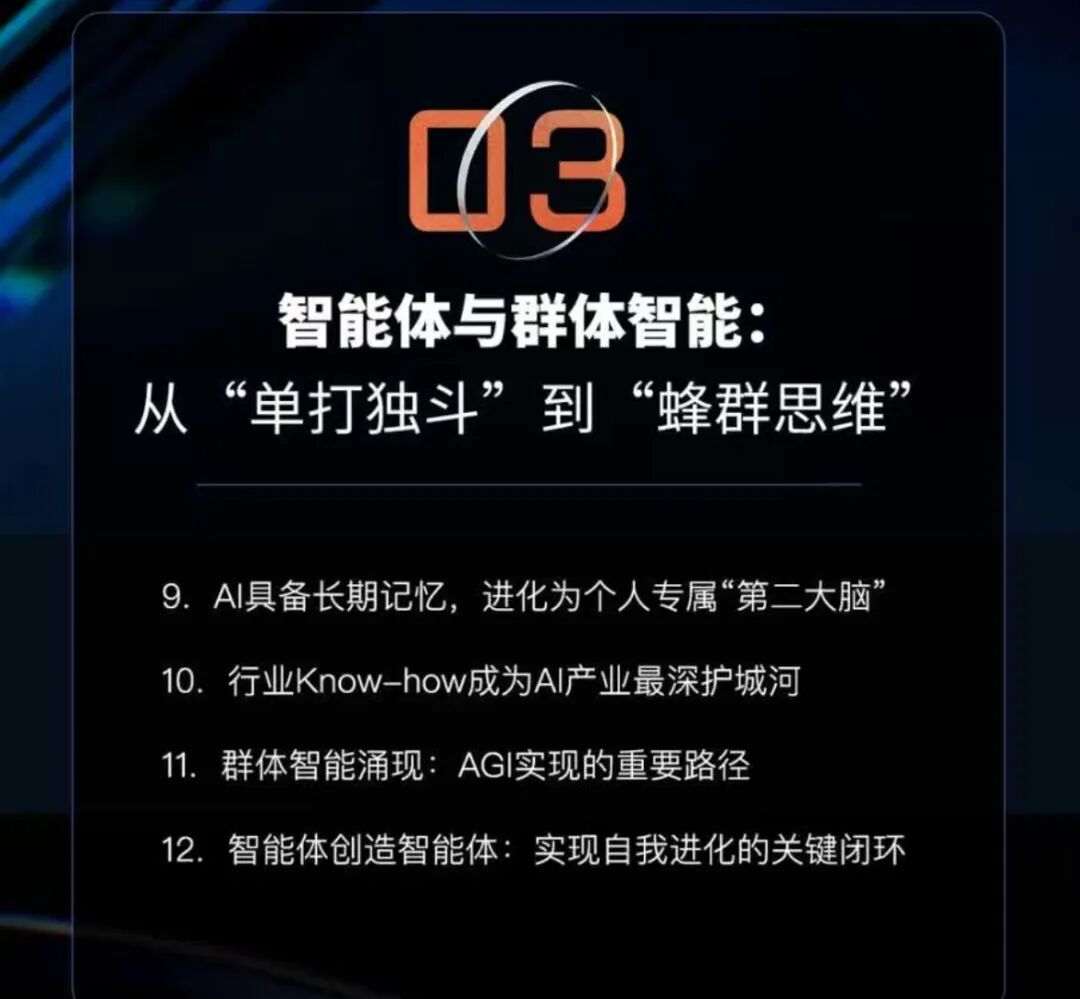
周鸿祎2026年20大AI预测:当“硅基员工”与“超级个体”成为现实
3 6 Ke· 2026-01-09 12:39
Core Insights - The article presents a comprehensive forecast by Zhou Hongyi titled "2026 AI Panorama Prediction: 20 Development Trends Towards the Era of 100 Billion Intelligent Agents" which spans six dimensions including computing power, models, security, and economy [1][2] Group 1: AI Integration in the Workplace - The introduction of "silicon-based digital employees" signifies a shift in the workforce, where AI will be considered part of the employment system alongside human workers, creating a "carbon-silicon" hybrid team [3][4] - The role of management will evolve from traditional oversight to that of a "business coach," focusing on problem definition and resource mobilization, including AI resources [8] Group 2: Industry Knowledge as a Competitive Advantage - Zhou emphasizes that "industry know-how" will become the most significant competitive moat for AI industries, highlighting the importance of unique, tacit knowledge that cannot be easily digitized [9][10] - Companies must focus on converting their tacit knowledge into formats that AI can understand and learn from, as this will be the most valuable skill in the coming years [12] Group 3: The Rise of the "Super Individual" - The future workplace will be dominated by individuals who can define core problems and direct intelligent agents, blurring the lines between roles such as product managers and programmers [13] - The disparity between individuals may widen as AI amplifies personal capabilities, leading to a shift in educational focus towards cultivating skills to effectively manage AI [15] Group 4: Traditional Enterprises' Path Forward - Traditional industries should not compete with tech companies on general AI models but should instead deepen their industry-specific knowledge to maintain relevance [16] - A trend is emerging where manufacturing companies are prioritizing practical applications of AI to encapsulate the expertise of seasoned workers rather than developing their own large models [16] Group 5: Management Challenges and New Skills - The traditional directive management style will gradually become obsolete, presenting new challenges for managers in assessing AI contributions and team dynamics [17][18] - Future leaders will need to design effective collaboration rules and responsibility boundaries for mixed teams of humans and AI [18] Group 6: Legal and Ethical Considerations - The integration of AI into the workplace raises significant questions regarding labor laws, contract laws, and ethical standards, necessitating a reevaluation of existing frameworks [21][22] - The concept of "AI safety" is elevated to a critical concern, encompassing not just technical aspects but also institutional and ethical dimensions [21] Group 7: Societal Implications and Future Outlook - The transition to a workplace with "silicon colleagues" is already underway, with various AI tools being utilized in different capacities [22] - While the complete realization of a "100 billion intelligent agents" workplace by 2026 may not be fully achieved, the direction of this trend is clear, indicating a shift from AI as a tool to AI as a partner [25][26]
AI催生“超级个体” “一人公司”成创新最小单元
Xin Lang Cai Jing· 2026-01-08 21:02
Core Insights - The concept of "One Person Company" (OPC) is transitioning from theory to practice, driven by AI tools that enable individuals to operate fully functional businesses [1] - The rapid evolution of AI technologies is reshaping traditional entrepreneurial models, with predictions that by 2026, everyone should be able to become an OPC [1] - The emergence of "super individuals" is seen as a catalyst for market innovation, with various cities in China actively developing OPC communities and support platforms [1][3] Group 1: Development of OPC - The "OPC Suzhou Night" event gathered over 1,000 participants, including aspiring entrepreneurs and successful AI entrepreneurs, highlighting the growing interest in OPCs [1] - The first AI OPC conference in Suzhou showcased the potential of AI-enabled entrepreneurship, with local governments integrating resources to reshape the entrepreneurial ecosystem [1] - Companies like Qichacha, Sibich, and Zhuimi Technology are emerging as benchmarks for entrepreneurs in the AI sector [1] Group 2: AI's Role in Entrepreneurship - Jiangsu Wutong AI Technology's founder demonstrated how AI can streamline job matching and career development for individuals, emphasizing AI's role as a core operational force [2] - The AI employment service platform based on Wutong's model has recorded over 100,000 job postings and serves more than 500,000 users monthly [2] Group 3: Nationwide Trends - Various cities across China are launching initiatives to support OPCs, such as the AI Youth Talent Training Base in Nanjing and the OPC Night School in Beijing [3] - These initiatives aim to provide comprehensive support for entrepreneurs, including access to resources, mentorship, and collaborative ecosystems [3] Group 4: Economic Impact and Support Systems - OPCs are filling gaps in the market that larger enterprises are unable or unwilling to address, thus becoming vital components of the industrial chain [4] - Experts emphasize the need for a robust support ecosystem, including digital infrastructure, legal and financial services, and risk management for entrepreneurs [4] - The growth of "super individuals" and OPCs is expected to contribute significantly to high-quality economic development, fostering a symbiotic relationship between "super enterprises" and "super individuals" [4]
2026年,「一人公司」爆发
36氪· 2026-01-05 09:19
Core Viewpoint - The rise of "one-person companies" is transforming the entrepreneurial landscape, driven by advancements in AI and changing startup dynamics [6][12][76]. Group 1: Trends and Statistics - Over one-third of new companies are founded by solo founders, increasing from 23.7% in 2019 to 36.3% in the first half of 2025, marking a 53% growth over six years [9]. - The startup costs for 90% of one-person company founders are below $500, facilitated by the availability of cloud computing, SaaS tools, and AI resources [33][34]. - Reports indicate that 96% of people have used AIGC products, with nearly 70% using them daily, highlighting the rapid adoption of AI tools [29]. Group 2: Definition and Characteristics of One-Person Companies - A "one-person company" is defined as a business led by a single founder who utilizes AI and external resources to enhance their capabilities, rather than being limited to a single individual performing all tasks [18][24]. - This model allows founders to validate business ideas before assembling a team, leveraging AI tools to manage various aspects of the business efficiently [20][21]. Group 3: Reasons for the Surge in One-Person Companies - The capabilities of AI have expanded, allowing individuals to perform tasks that previously required team collaboration, thus enabling solo entrepreneurs to operate effectively [30][31]. - Successful examples of solo founders, such as Guillermo Rauch and Pieter Levels, have demonstrated the viability of this model, encouraging others to reconsider the necessity of co-founders [38][40]. Group 4: Challenges and Considerations - While one-person companies offer independence, they also present challenges such as loneliness and the burden of decision-making [51][67]. - The traditional view that co-founders are essential for risk-sharing and skill complementarity is being challenged, as conflicts among co-founders can lead to significant issues [46][47]. Group 5: Future of Organizational Structures - The emergence of one-person companies raises questions about the relevance of traditional organizational structures, as AI reduces the need for large teams and hierarchical management [59][64]. - Future organizations may evolve into dynamic networks of small teams and AI agents, capable of executing complex workflows without traditional management layers [65][66].

2026年,「一人公司」爆发,不被雇佣就不会「被裁」
创业邦· 2026-01-04 10:35
Core Viewpoint - The rise of "one-person companies" is transforming the entrepreneurial landscape, enabled by advancements in AI and a shift in startup dynamics, allowing individuals to create significant business value independently [6][12][37]. Group 1: Trends and Statistics - In 2025, over one-third of new companies were founded by solo founders, increasing from 23.7% in 2019 to 36.3% in the first half of 2025, marking a 53% growth [6][9]. - Reports indicate that 90% of one-person company founders started with less than $500, highlighting the decreasing startup costs due to the availability of cloud computing and SaaS tools [19][20]. Group 2: Advantages of One-Person Companies - AI has expanded the capabilities of individuals, allowing them to perform tasks that previously required teams, with AI tools becoming essential in daily operations [17][28]. - The traditional need for co-founders is being challenged as successful solo founders demonstrate the viability of starting alone and building teams later based on business needs [20][26]. Group 3: Challenges and Considerations - While one-person companies offer independence, they also present challenges such as loneliness and the burden of decision-making, which can be mitigated through community support and networking [26][36]. - The traditional startup model emphasizing co-founders may lead to conflicts and inefficiencies, as many startups fail due to internal disagreements among founders [24][36]. Group 4: Future of Organizational Structures - The emergence of one-person companies raises questions about the relevance of traditional organizational structures, as AI enables individuals to accomplish tasks that once required collaborative efforts [28][29]. - Future organizations may evolve into dynamic networks of small teams managing multiple AI agents, shifting away from hierarchical models [29][35].

陈天桥AI哲思:选择并承担责任,是通往“超级个体”的进化之路
Xin Lang Cai Jing· 2026-01-04 09:04
Core Insights - The core argument presented by Chen Tianqiao is that AI operates on the principle of statistical optimality based on historical data, which leads to a tendency towards convergence and risk aversion [1][2][3] - Chen emphasizes that while AI aims to return everything to the mean, this often results in mediocrity and stagnation in human progress [3][4] AI's Limitations - AI's inability to comprehend "cost" is highlighted, as it can fail in virtual environments without real consequences, unlike humans who face tangible repercussions in their decisions [3][4] - The essence of business is framed as an exchange of interests, where the foundation of transactions is based on the concept of cost, which AI cannot fully grasp [3][4] The Concept of "Super Individuals" - Chen proposes that the phrase "I choose, I bear" signifies not just passive defense against AI but also represents a pathway for humans to evolve into "super individuals" [2][4] - Using Elon Musk as an example, Chen argues that super individuals are not necessarily polymaths but rather leverage their will and credit to harness the best external minds for their endeavors [2][4] The Human-AI Dynamic - The relationship between humans and AI is described as a lever where responsibility serves as the fulcrum, AI's execution acts as the lever arm, and choices are the targets of force [4] - This dynamic is expected to democratize the "Musk model," leading to the emergence of more super individuals as AI amplifies execution capabilities, with the competition now focusing on the stability of responsibility and precision of choices [4]
现在「一人公司」爆发
投资界· 2026-01-04 08:15
Core Viewpoint - The emergence of "one-person companies" is reshaping the entrepreneurial landscape, driven by advancements in AI technology, allowing individuals to create and manage businesses independently without the need for traditional team structures [6][19]. Group 1: Trends and Statistics - In 2025, over one-third of new companies are founded by solo founders, increasing from 23.7% in 2019 to 36.3% in the first half of 2025, marking a 53% growth over six years [3][6]. - Reports indicate that 90% of one-person company founders have startup costs below $500, facilitated by the availability of cloud computing and SaaS tools [11][12]. Group 2: Definition and Characteristics - A "one-person company" is defined as a business led by a single founder who utilizes AI and external resources to enhance their capabilities, rather than being limited to a single individual performing all tasks [6][8]. - The model allows founders to validate business ideas before assembling a team, leveraging AI tools to streamline operations and decision-making [9][11]. Group 3: Reasons for Popularity - The rise of one-person companies is attributed to the increased capabilities provided by AI, which has made it possible for individuals to accomplish tasks that previously required teams [9][19]. - The startup costs have significantly decreased, enabling individuals to launch businesses with minimal financial investment and infrastructure [11][12]. Group 4: Challenges and Considerations - While one-person companies offer independence, they also present challenges such as loneliness and the burden of decision-making without a partner [17][23]. - Founders are encouraged to build networks for emotional support and decision-making, as well as to consider their own capabilities and willingness to adapt to AI tools [24][25]. Group 5: Future of Organizational Structures - The traditional organizational model may become less relevant as AI enables individuals to perform tasks that once required multiple people, leading to a potential shift towards dynamic networks of small teams and AI agents [19][20]. - The future may see organizations structured around results rather than hierarchical models, with small teams managing numerous AI agents to execute complex workflows [20][21].

宁波海曙AiOPC社区正式发布
Xin Lang Cai Jing· 2026-01-04 05:31
Core Viewpoint - The AiOPC community in Ningbo Haishu District aims to support AI entrepreneurs by providing a comprehensive ecosystem that enables "one-person companies" to thrive, facilitating their journey from idea to market [1][3]. Group 1: AiOPC Community Overview - The AiOPC community is designed specifically for AI-enabled entrepreneurs, focusing on creating a supportive environment for individual startups [3]. - The community will leverage five dimensions: space, policy, scenarios, tools, and services to foster the growth of AI entrepreneurs [1][3]. Group 2: Initial Projects and Participants - Eight initial projects have been launched within the AiOPC community, covering areas such as smart hardware, AI content generation, chip development, and digital cultural tourism [5]. - These projects reflect a trend of being "small yet specialized, light yet fast, and practical yet innovative" [5]. Group 3: Support Measures and Policies - The "NewBoss0574" plan includes four key support strategies: zero-cost entry, comprehensive empowerment through five dimensions, focus on seven core industry sectors, and collaboration with community, capital, platforms, and ecosystems [6]. - Entrepreneurs can access various benefits, including office space starting from 5 square meters with up to three years of rent-free support, discounted services, and annual government subsidies of up to 300,000 yuan for computing resources [6]. Group 4: Industry Context and Opportunities - The traditional textile industry is adopting smart design, and industrial manufacturing is seeking more flexible software solutions, indicating a significant opportunity for OPCs to fill gaps in these sectors [7]. - OPCs are viewed as agile entities that can address niche demands within the broader industrial ecosystem, enhancing innovation and responsiveness [7].
2026年,“一人公司”爆发,不被雇佣就不会“被裁”
虎嗅APP· 2026-01-03 13:35
Core Viewpoint - The article discusses the rise of "one-person companies" in the AI era, suggesting that individuals can now create businesses valued at over $1 billion without traditional team structures, fundamentally changing the entrepreneurial landscape [5][10]. Group 1: Definition and Characteristics of One-Person Companies - A "one-person company" is defined as a business led by a single founder who utilizes AI and external resources to enhance their capabilities, rather than relying solely on a team [16]. - This model allows founders to validate business ideas before assembling a team, thus avoiding the need for immediate co-founders [17]. - The emergence of AI tools has made it feasible for individuals to operate effectively as a company, integrating various resources and tasks [19]. Group 2: Reasons for the Surge in One-Person Companies - The proliferation of AI has expanded the range of tasks that a single individual can accomplish [22]. - Reports indicate that 96% of people have used AIGC products, with 70% using them daily, highlighting the widespread adoption of AI tools [24]. - The startup costs for one-person companies have significantly decreased, with 90% of founders requiring less than $500 to start their businesses [28]. - Supportive policies for one-person companies are emerging, such as Shanghai's initiatives providing zero-rent spaces for entrepreneurs [31]. Group 3: Challenges and Considerations - While one-person companies offer independence, they also present challenges such as loneliness and the burden of decision-making [43]. - Founders are encouraged to seek community support and mentorship to mitigate feelings of isolation [44]. - The article emphasizes that the key to success in a one-person company is not doing everything alone, but rather making strategic decisions about what to pursue [68]. Group 4: Future of Organizational Structures - The rise of one-person companies raises questions about the relevance of traditional organizational structures in the AI age [48]. - AI is changing the necessity for large teams, as individuals can now accomplish tasks that previously required collaboration [51]. - Future organizations may shift from hierarchical models to dynamic networks of small teams and AI agents working together [60]. Group 5: Conclusion and Recommendations - The concept of "one-person companies" is becoming a viable path for many entrepreneurs, particularly in knowledge-intensive and creative fields [74]. - Individuals are encouraged to start small projects using AI to test their business ideas without waiting for ideal partners [75].