
过紧日子

Search documents
学纪知纪明纪守纪丨让厉行节约反对浪费蔚然成风
Zhong Yang Ji Wei Guo Jia Jian Wei Wang Zhan· 2025-07-09 00:07
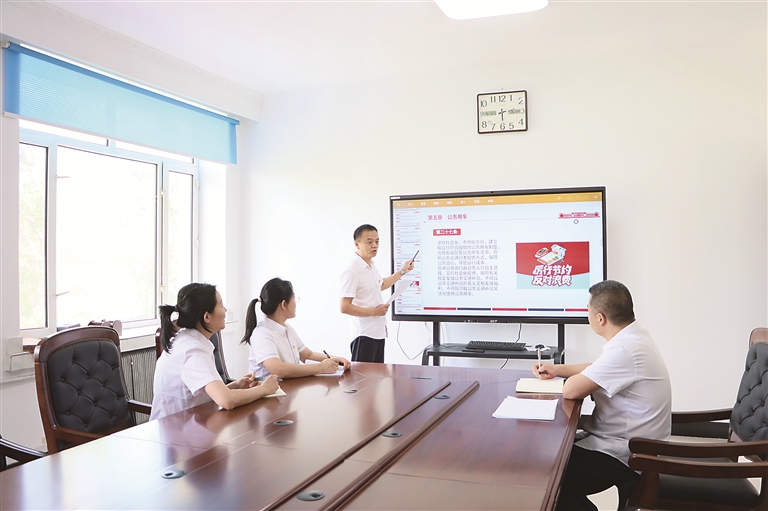
Core Viewpoint - The emphasis on frugality and opposition to waste is a fundamental principle of the Party, reinforced by Xi Jinping's repeated calls for hard work and thriftiness as essential for the Party's growth and success [4][19]. Group 1: Achievements in Promoting Frugality - Since the 18th National Congress, the Party and government have made significant strides in promoting frugality and curbing waste, establishing a robust regulatory framework to support these efforts [6][5]. - The implementation of the "Regulations on Party and Government Agencies' Frugality and Opposition to Waste" has provided a solid basis for preventing wasteful practices [5][20]. - The establishment of various management regulations, such as those governing travel expenses and public receptions, has tightened the control over public spending [5][6]. Group 2: Ongoing Issues with Waste - Despite progress, wasteful practices persist in some government agencies, including excessive spending on receptions and unnecessary travel [9][10]. - There is a lack of strict adherence to regulations regarding public funds, leading to issues such as non-compliance in reception standards and inadequate transparency in financial management [9][10]. - Some officials still exhibit a tendency towards superficial achievements, prioritizing appearances over effective resource management, which can lead to significant waste [11][12]. Group 3: Strengthening Supervision and Accountability - The role of disciplinary inspection and supervision is crucial in reinforcing frugality and combating waste, with a focus on holding key individuals accountable for their spending decisions [13][14]. - A comprehensive supervision network is being developed, utilizing data analytics to identify and address irregularities in public spending [13][16]. - The emphasis on integrating various forms of oversight, including public and internal audits, is essential for enhancing accountability and reducing waste [15][16]. Group 4: Cultural and Institutional Changes - Promoting a culture of frugality within government agencies is vital, with leaders expected to set an example and foster an environment that values thriftiness [17][19]. - Continuous education and awareness campaigns are necessary to instill the values of frugality and opposition to waste among all members of the Party and government [19][20]. - The establishment of rigid institutional frameworks is critical to ensure that frugality becomes a long-term practice rather than a temporary measure [20].

县城餐饮寒冬
投资界· 2025-07-01 03:10
Core Viewpoint - The article discusses the significant decline in hotel dining revenue in small county towns due to the implementation of stricter regulations on public dining and entertainment, particularly affecting the hospitality industry that relies heavily on government-related events and gatherings [4][6][9]. Group 1: Impact of Regulations - The introduction of a "strict frugality" policy has led to a sharp decrease in hotel dining revenue, with some establishments reporting only 30% of their usual income during the off-season [6][8]. - The new regulations have resulted in a notable reduction in public gatherings, including graduation and wedding banquets, which were previously significant revenue sources for hotels [7][9]. - The enforcement of these regulations has created a culture of caution among public officials, leading to a decline in traditional dining practices that supported local hospitality businesses [10][13]. Group 2: Dependency on Government-Related Revenue - In small county towns, government-related dining has historically been a stable source of income for hotels, as public officials often engage in regular dining activities that stimulate local economies [15][16][22]. - The article highlights that government employees are not the largest consumer group but are crucial for driving predictable and stable revenue streams for local businesses [22][26]. - The loss of government-related dining has caused a ripple effect, impacting the entire ecosystem of hotel dining and related services in these areas [33]. Group 3: Adaptation Strategies - In response to the decline in traditional dining revenue, hotel operators are adjusting their business models by simplifying menus and offering smaller, more affordable meal options [36][41]. - The focus has shifted towards creating a more casual dining atmosphere that alleviates pressure on guests to conform to previous dining norms [37][40]. - Despite these adjustments, the article notes that the changes are merely temporary fixes and do not address the fundamental challenges posed by the current economic environment [42][44].

云栖小镇:拧紧“过紧日子”发条,答好作风“考卷”
Hang Zhou Ri Bao· 2025-06-10 03:05
Core Viewpoint - The article emphasizes the importance of frugality and anti-waste measures within government agencies, highlighting the implementation of revised regulations to promote a culture of saving and responsible spending [1][2][3] Group 1: Ideological Commitment - The local government has organized meetings to instill the significance of frugality among all staff, enhancing political and ideological awareness regarding the necessity of living frugally [1] - Educational initiatives, including visits to correctional facilities and expert lectures, aim to deepen the understanding of the importance of saving and the urgency of opposing waste [1] Group 2: Practical Measures - The government is implementing strict budget controls, optimizing expenditure structures, and enhancing asset management to ensure that frugality is integrated into all operational processes [2] - Specific actions include controlling office expenses, managing supplies based on need, reducing paper usage through double-sided printing, and minimizing utility consumption [2] Group 3: Institutional Framework - A comprehensive supervision and inspection mechanism has been established to monitor and prevent wasteful practices, focusing on key areas such as public expenditure and project procurement [3] - The introduction of a monthly review system for expenditure and a public reporting mechanism aims to enhance accountability and encourage community oversight of wasteful behaviors [3]
河南省发文进一步加强省直部门培训费管理
He Nan Ri Bao· 2025-06-05 23:16
Group 1 - The core viewpoint of the article is the issuance of a notification by the provincial finance department to strengthen the management of training expenses for provincial departments, in line with the central government's regulations on frugality and anti-waste [1][2] - The notification consists of eight parts, including the importance of training expense management, training plan management, enhancing training effectiveness, optimizing training methods, scientific arrangement of training scale, strict budget management, performance management, and supervision [1][2] Group 2 - Compared to the existing system, the notification introduces five new requirements: limiting training frequency to one comprehensive offline training per year for each provincial department [2] - Implementation of plan review is required, where financial or training departments must assess the necessity, scale, target audience, method, venue, and budget of the training [2] - Control of out-of-province training is mandated, with exceptions requiring approval from the provincial organization department for certain cases [2] - The notification encourages optimizing training methods, promoting "multiple tasks in one training," inviting trainers, online training, and on-the-job self-study [2] - Strengthened budget management is required, with training expenses to be separately listed and accounted for, adhering to a "only reduce, not increase" policy for annual training budgets [2]
深度关注丨厉行节约反对浪费
Zhong Yang Ji Wei Guo Jia Jian Wei Wang Zhan· 2025-06-01 00:25
Group 1 - The central government emphasizes the importance of frugality and opposes wasteful practices within party and government organizations, reinforcing the need for strict adherence to the revised regulations on frugality and anti-waste [3][10][11] - Various local disciplinary inspection and supervision agencies are actively investigating and addressing issues of extravagant spending, including excessive hospitality and misuse of public funds [4][5][6][9] - The revised regulations aim to enhance the management of public funds, including travel, procurement, and official receptions, to ensure compliance with frugality principles [10][12] Group 2 - Specific cases of misconduct have been highlighted, such as unauthorized high-standard receptions and inappropriate procurement practices, which have led to disciplinary actions against involved officials [4][5][8] - The implementation of data-driven supervision and targeted investigations has been adopted by various local agencies to identify and rectify instances of wasteful spending [4][12] - The focus on reducing administrative costs and improving the efficiency of public spending is evident in the initiatives taken by local governments to streamline processes and enhance accountability [11][13]

国际酒店巨头要在中国过紧日子
Sou Hu Cai Jing· 2025-05-29 08:10
Group 1 - Major international hotel groups such as Marriott, Hilton, InterContinental, and Hyatt are experiencing a decline in operating metrics in the Greater China region, contrasting with global growth performance [1] - The emphasis on "tightening budgets" and "living frugally" in government meetings may lead to further restrictions on travel budgets, prompting international hotel groups to accelerate strategic adjustments to adapt to the "tight" market in China [1] Group 2 - The Dali Hilton hotel, once built at a cost of 1.8 billion yuan, is set to be auctioned at a significantly reduced price of 983 million yuan due to the developer's inability to repay a loan of 2.196 billion yuan [3] - In April, 54 hotels were auctioned with a more than 70% failure rate, indicating a troubling trend in the high-end hotel market in China [5] - The decline in high-end hotel performance is attributed to the ongoing downturn in the real estate sector, which has strained owners' cash flows [5] Group 3 - In Q1, key operating metrics for international hotel giants in Greater China continued to decline, with Marriott down 2%, InterContinental down 3.5%, and Hyatt experiencing a 5.2% decline in China despite a 2.3% global growth [5][8] - Hilton reported total revenue of approximately $1.08 billion in Q1 2025, with a net profit of about $300 million, while other major regions showed growth [8] Group 4 - The tightening of travel budgets by major companies, including ByteDance and Tencent, has led to a significant reduction in business travel demand, impacting high-end hotel occupancy rates [8][10] - STR Global data indicates that the recovery of business and travel demand in Q1 was not optimistic, with hotel market prices lacking effective support [10] Group 5 - The number of hotel establishments in China is projected to grow by nearly 100,000 from 2022 to 2024, leading high-end hotels to implement multi-dimensional reforms to enhance operational efficiency [12] - High-end hotels are adopting flexible staffing and cost control measures to maintain profitability, with some reducing guest amenities to cut costs [12] Group 6 - Despite increasing competition, international hotel groups continue to expand in China, with Hilton launching new brands and Marriott planning to open nearly 10 new JW Marriott hotels in major cities [13] - The signing of mid-range and high-end hotels increased by approximately 24.6% year-on-year, indicating a shift towards optimizing existing inventory and expanding into lower-tier markets [13][14]



股东也没茅台喝,变“抠”的茅台股东大会传递什么信号?
阿尔法工场研究院· 2025-05-19 14:32
Core Viewpoint - Guizhou Moutai is facing short-term price fluctuations and policy adjustments, reflecting structural contradictions within the liquor industry [17] Group 1: Shareholder Meeting Insights - The Guizhou Moutai shareholder meeting was held on May 19, with a significant number of attendees, prompting a change in venue from the Moutai International Hotel to the Moutai Conference Center [2][3] - This year's meeting featured a simplified reception, with a shift from table meals to a self-service format and the absence of a wine tasting session, replaced by blueberry juice products [4][6] - The reduction in reception expenses and the absence of Moutai wine during the meeting surprised some shareholders, indicating a response to higher management's call for frugality [8] Group 2: Price Trends and Market Dynamics - The price of the flagship product, "Flying Moutai," has dropped from 2700 yuan to around 2100 yuan, reflecting a 22% decline, with further drops expected [12] - If the price of Flying Moutai falls below 2000 yuan, it could disrupt the entire pricing structure of Moutai products and impact the profitability of distributors [14][15] - Moutai's secondary growth product, "Moutai 1935," has also seen a decline in market price, currently around 700 yuan, failing to maintain its initial market position [14] Group 3: Strategic Goals and Challenges - The company aims to maintain the price of Flying Moutai above 2000 yuan, as a drop could lead to significant issues within the distribution network [16] - The chairman, Zhang Deqin, has set a modest revenue growth target of around 9% for 2025, which has been met with mixed reactions [19] - The company is facing challenges in appealing to younger consumers, with some expressing dissatisfaction over the discontinuation of certain products like the "Sauce-flavored Latte" [19]


中央部门集中公开2025年预算,多部门“三公”经费压减5%
Xin Jing Bao· 2025-03-27 12:14
3月26日,2025年中央部门预算集中向社会公开。今年,各中央部门公开部门支出总表、财政拨款预 算"三公"经费支出表等9张报表,同时继续向社会公开项目绩效目标,一般公共预算一级项目公开绩效 目标的比例不低于60%。 记者注意到,落实习惯过紧日子要求,多部门"三公"经费预算压减5%,一些部门减少了进修及培训方 面的支出。 今年的预算报告要求,党政机关要把过紧日子作为习惯和常态。政府各项开支要精打细算,从严控 制"三公"经费以及会议费、培训费、差旅费、办公经费等支出。同时,加大对党政机关过紧日子落实情 况的监督检查力度。 体现在部门预算中,今年多个中央部门"三公"经费支出压减达5%。 值得注意的是,中国人民银行2025年"三公"经费预算安排比2024年全年预算数下降49.63%。央行表 示,"三公"经费缩减近一半,主要原因是落实习惯过紧日子要求,同时机构改革后,机构数量下降。 一般公共预算一级项目公开绩效目标比例不低于60% 绩效目标公开是预算公开的一项重要内容。2017年,中央部门首次向社会公开项目绩效目标,此后,公 开力度逐步加大,绩效目标公开数量从2017年的10个逐步增加到2024年的796个。 财政支出 ...