
长期主义

Search documents
滨水商业“天花板”如何炼成
Sou Hu Cai Jing· 2026-02-16 01:24
西岸梦中心冬季活动。受访者供图 长期主义的取与舍 梦中心地块在十余年前仍是一片以水泥厂、火车站、仓储码头为主的传统工业岸线。上海世博会后,徐 汇滨江确定了"规划引领、文化先导、生态优先、科创主导"的发展路径,今日已成为引导西岸每一个文 商旅体展项目开发的"长期主义坚持"。 新春佳节,上海距离黄浦江最近的滨水商业体"Gate M西岸梦中心"将于2月20日至23日举办新春非遗市 集,邀请市民游客在"逛、吃、玩、购"间感受传统文化的生命力。 2024年9月,西岸梦中心开业。2025年,全年到访这里的客流超过1100万人次。这个基于"上海西岸"十 余载城市IP积淀的水岸商业项目,运营团队道出了"开业即成爆款",且热度持续攀升的缘由:始终保持 敏锐的商业嗅觉,用真诚的心充实文化内涵,以"徐汇滨江一盘棋"的视野实践全域共治……一个商业项 目的成功,从来都不只是"商业"一家的事。 四季经济打破"魔咒" 西岸梦中心开业一年就打破了户外商业"看天吃饭"的魔咒,打出了"四季经济"的消费品牌:春季,爵士 春天音乐节、野兽派花艺装置激活了滨江漫步体验;夏季,水岸音乐节、水岸电影节将夜间消费与文化 体验叠加放大;秋季,FISE极限运动 ...


创金合信基金总经理苏彦祝:践行高质量发展 提升投资者获得感
Zhong Guo Ji Jin Bao· 2026-02-16 00:21
Group 1 - In 2025, China's economy demonstrated strong resilience amidst a complex internal and external environment, with the A-share market breaking through 4000 points and showing a "slow bull" characteristic throughout the year [1] - Looking ahead to 2026, the external environment is expected to improve with a phase of easing in China-US relations, and Chinese assets are likely to continue their revaluation [1] - The domestic environment is characterized by a "strong supply and weak demand" scenario during the transition of old and new growth drivers, which suppresses the elasticity of price recovery [1] Group 2 - The public fund industry is entering a critical year for high-quality development, with the China Securities Regulatory Commission (CSRC) emphasizing the importance of prioritizing investors' best interests [2] - Changjin Hexin Fund is actively implementing high-quality development principles, focusing on enhancing customer experience through product layout, client engagement, and investment education [2][3] - The fund is committed to a "fixed income +" strategy while also developing FOF and balanced active equity products, with a strong emphasis on long-term performance evaluation and aligning fund manager compensation with long-term investor returns [2][3] Group 3 - The "Hexin Island" initiative aims to educate investors on investment knowledge, addressing behaviors that can erode returns, such as frequent trading and chasing market trends [3] - The initiative has gained significant traction, with over a million followers and extensive content exposure, recognized as an innovative project in investor education by the China Fund Report [3] - The public fund industry is encouraged to play a more active role in supporting the real economy, promoting capital market stability, and meeting residents' wealth management needs [3]
滨水商业体“Gate M西岸梦中心”将于2月20日至23日举办新春非遗市集 全年1100万人次到访西岸梦中心 运营团队达成“开业即成爆款”
Jie Fang Ri Bao· 2026-02-16 00:07
记者 舒抒 "不论品牌大小,对于每一家入驻的商户,我们都会参与经营方向的规划,使其在梦中心的门店呈 现出有别于在其他项目的特色。"陈俭说。 长期主义的取与舍 新春佳节,上海距离黄浦江最近的滨水商业体"Gate M西岸梦中心"将于2月20日至23日举办新春非 遗市集,邀请市民游客在"逛、吃、玩、购"间感受传统文化的生命力。 2024年9月,西岸梦中心开业。2025年,全年到访这里的客流超过1100万人次。这个基于"上海西 岸"十余载城市IP积淀的水岸商业项目,运营团队道出了"开业即成爆款",且热度持续攀升的缘由:始 终保持敏锐的商业嗅觉,用真诚的心充实文化内涵,以"徐汇滨江一盘棋"的视野实践全域共治……一个 商业项目的成功,从来都不只是"商业"一家的事。 四季经济打破"魔咒" 西岸梦中心开业一年就打破了户外商业"看天吃饭"的魔咒,打出了"四季经济"的消费品牌:春季, 爵士春天音乐节、野兽派花艺装置激活了滨江漫步体验;夏季,水岸音乐节、水岸电影节将夜间消费与 文化体验叠加放大;秋季,FISE极限运动赛事与西岸艺博会形成跨圈层吸引力;冬季,"奇幻水岸嘉年 华"与大型户外冰场丰富了亲子与家庭客群的消费场景。 "不是在 ...
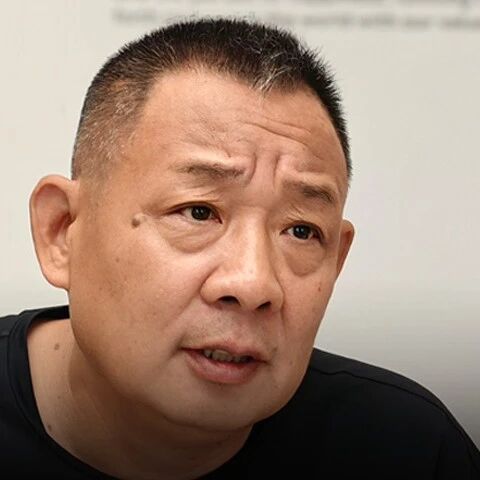
于东来退休幕后:3年放权,永不上市,接班人须60岁退休
36氪· 2026-02-15 13:07
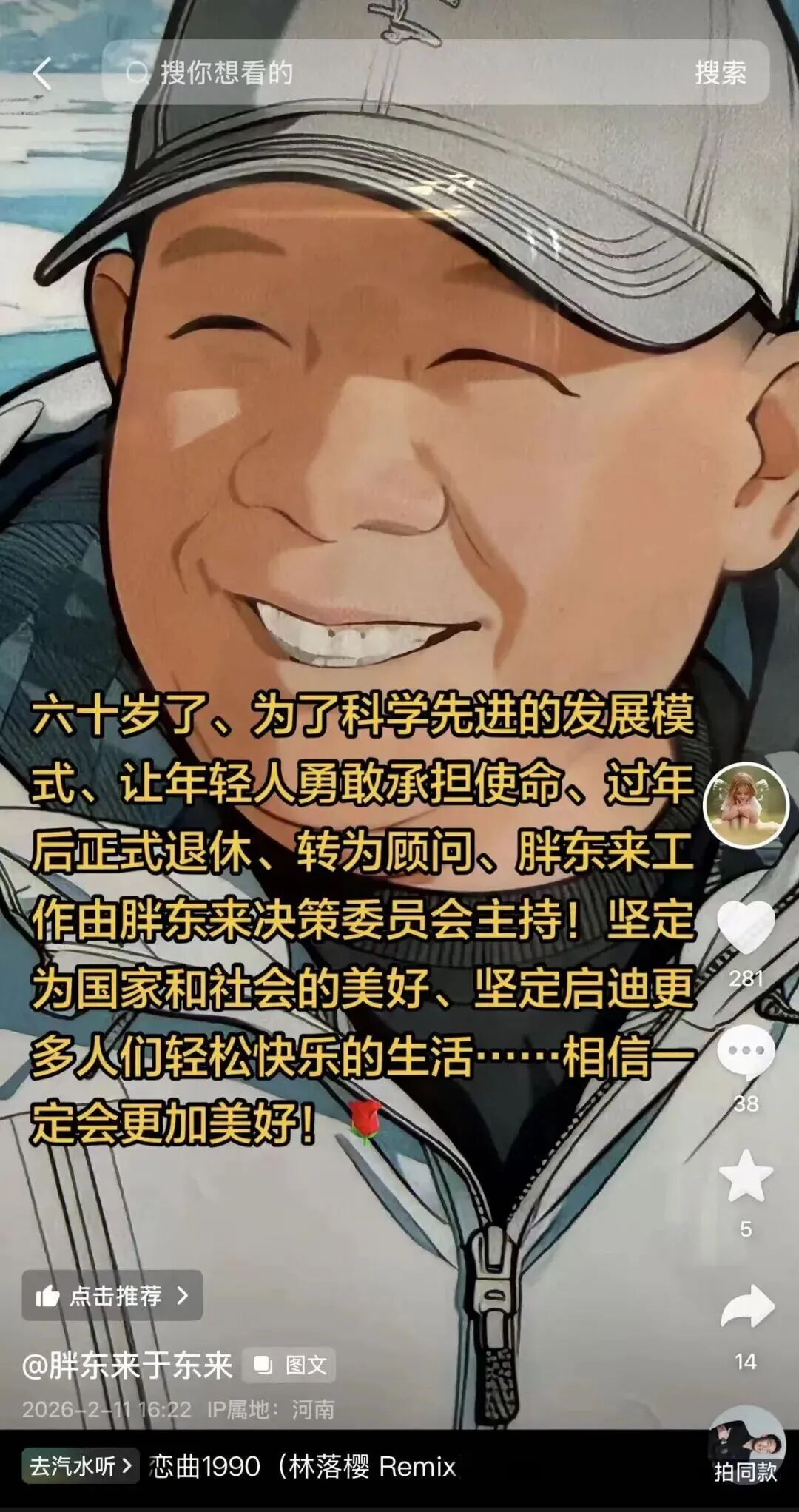
Core Viewpoint - The retirement of Yu Donglai, founder and chairman of the Pang Donglai Group, marks a significant shift in the company's governance structure, transitioning from personal leadership to a committee-based management model, emphasizing institutional continuity over individual authority [6][9][10]. Group 1: Retirement Announcement and Transition - Yu Donglai announced his retirement on February 11, 2026, stating he would become an advisor while the decision-making committee would manage daily operations [6][9]. - This decision is seen as a culmination of a three-year institutional reform aimed at empowering a professional management team rather than relying on family succession [9][14]. - The decision to implement a rotating management system reflects a commitment to decentralization and shared leadership, with responsibilities distributed among core team members [14][19]. Group 2: Long-term Strategy and Governance - Yu Donglai outlined four long-term strategies for Pang Donglai, including maintaining its educational nature, ensuring management exits power before age 60, never going public, and halting expansion after achieving set goals [17]. - The governance model emphasizes that the institution is more reliable than individual leadership, with Yu Donglai serving as a model for the 60-year exit rule [17][38]. - The company has established a transparent recruitment process for middle management, ensuring fairness and alignment with its core values [15][22]. Group 3: Employee Welfare and Consumer Trust - Pang Donglai has a robust employee welfare system, with an average monthly salary of 9,886 yuan and a compensation policy for dignity violations, reflecting a commitment to employee rights [22][23]. - The company’s service standards, including a "no-questions-asked" return policy, have fostered consumer trust, ensuring consistent service quality regardless of management changes [23][24]. - Employees express confidence in the stability of welfare policies, which are enshrined in company regulations, providing legal protection against arbitrary changes [37][41]. Group 4: Challenges and Industry Implications - The transition to a committee-based management model may face challenges in decision-making efficiency, particularly in urgent situations where quick decisions are necessary [39]. - The potential dilution of Yu Donglai's personal influence on company culture raises concerns about maintaining service quality and employee engagement [39][40]. - The case of Pang Donglai serves as a critical example for the broader retail industry, highlighting the importance of institutional resilience in the face of founder transitions and the pitfalls of rapid expansion [42][43].
他是京东001号员工,名叫张奇,当年刘强东在中关村卖碟片的时候,张奇就是刘强东招聘的第一个员工。张奇学历不高,但是他跟着刘强东白手起家,从最初的600元,升到了7位数。这不仅仅是一个关于暴富的故事,更是一场持续了26年的人性博弈与商业长跑。故事的终局,我们在今天的工商登记信息里看得...
Sou Hu Cai Jing· 2026-02-15 04:54
Core Insights - The article narrates the journey of Zhang Qi, the first employee of JD.com, highlighting his rise from a low-salary position to a key figure in the company, emphasizing themes of loyalty, hard work, and the impact of pivotal moments in his career [1][15]. Group 1: Zhang Qi's Early Days - Zhang Qi joined JD.com in August 2000, with a starting salary of 600 yuan, working in a cramped space without a proper office [1][16]. - He faced financial struggles, even sleeping in the warehouse due to the inability to afford rent [2]. Group 2: Key Turning Points - A significant moment occurred in 2001 when Zhang's mother fell seriously ill, leading to a financial crisis for him. Liu Qiangdong, the founder, provided him with 50,000 yuan, equivalent to eight years of his salary, which solidified Zhang's loyalty to the company [4][5][6]. - During the SARS outbreak in 2003, while many employees left, Zhang remained committed to the company, driven by a sense of moral obligation due to the financial support he received [7][8]. Group 3: Contributions to JD.com - Zhang Qi played a crucial role in the early logistics development of JD.com, modifying bicycles to increase cargo capacity, which laid the groundwork for the company's logistics system [3]. - He was instrumental in executing a major promotional event in 2004, which was a turning point for the company's marketing strategy [10][12]. Group 4: Long-term Impact and Recognition - By 2014, JD.com went public, and Zhang was recognized for his contributions, receiving gratitude from Liu Qiangdong during the celebration [13]. - Today, Zhang holds the title of "lifetime honorary employee" and enjoys significant retirement benefits, reflecting his long-term commitment and value to the company [14].



于东来退休幕后:3 年放权,永不上市,接班人须60岁退休
创业邦· 2026-02-15 03:59
Core Viewpoint - The retirement of Yu Donglai, founder and chairman of Pang Donglai, marks a significant shift in the company's governance structure, transitioning to a decision-making committee model that emphasizes institutional continuity over individual leadership [8][11][19]. Group 1: Retirement Announcement and Governance Changes - Yu Donglai announced his retirement on February 11, 2026, transitioning to an advisory role while maintaining his position as chairman and retaining 69.96% control of the company [8][11]. - The decision to retire is seen as a culmination of a three-year institutional reform aimed at decentralizing power and fostering a management team composed of internal core members [11][12]. - The decision-making committee will implement a rotating management system, allowing for shared leadership responsibilities among senior managers [14][19]. Group 2: Strategic Vision Post-Retirement - Yu Donglai outlined four strategic principles for Pang Donglai's future: maintaining its educational nature, ensuring management exits power before age 60, never going public, and halting expansion after achieving set goals [19][21]. - The company aims to uphold a culture of learning and sharing, focusing on employee welfare and community engagement rather than profit maximization [19][27]. Group 3: Employee Welfare and Corporate Culture - Pang Donglai has established a robust employee welfare system, including a monthly average salary of 9,886 yuan and a comprehensive dignity protection policy that compensates for mental and physical harm [21][25]. - The company emphasizes a consumer-centric approach, allowing employees to autonomously resolve disputes up to 200 yuan without needing to escalate issues [25][31]. - The governance model integrates employee participation in decision-making, ensuring that welfare policies are deeply embedded in the corporate culture [31][32]. Group 4: Challenges and Industry Implications - The transition to a committee-led governance model raises questions about decision-making efficiency and the potential for slower responses to urgent situations [34][35]. - The company's unique approach to governance and employee welfare serves as a potential model for other businesses facing founder dependency and growth challenges in the retail sector [36][38]. - The long-term success of Pang Donglai will depend on its ability to maintain its core values and operational principles without the direct influence of its founder [36][38].
于东来退休幕后:3年放权,永不上市,接班人须60岁退休
虎嗅APP· 2026-02-14 14:16
Core Viewpoint - The retirement of Yu Donglai, founder and chairman of the Pang Donglai Group, marks a significant shift in the company's governance structure, transitioning to a decision-making committee model that emphasizes institutional continuity over individual leadership [6][11][19]. Group 1: Transition and Governance - Yu Donglai announced his retirement on social media, stating he would become an advisor and that daily operations would be managed by a decision-making committee [6][11]. - The decision to retire is part of a long-term strategy to decentralize power, with Yu retaining his chairman role and 69.96% control but stepping back from daily operations [11][12]. - The decision-making committee consists of core internal members and operates on a rotating management system, allowing for shared leadership responsibilities [15][19]. Group 2: Institutional Reforms - Yu has previously indicated his intention to retire, emphasizing a gradual transition of responsibilities to ensure the company's growth without his direct involvement [14][19]. - The company has implemented a competitive recruitment process for middle management positions, ensuring transparency and fairness in leadership selection [17]. - Key strategic principles have been established, including maintaining a school-like nature, ensuring management exits by age 60, and a commitment to never go public [19][30]. Group 3: Financial Performance and Employee Welfare - By November 2025, Pang Donglai's sales exceeded 20.035 billion, with a cash reserve of 4.1 billion, indicating strong financial health [23]. - Employee compensation is robust, with an average monthly salary of 9,886 yuan and a structured compensation system for violations of personal dignity [23][25]. - The company has established a consumer-centric service model, allowing employees to autonomously resolve disputes up to 200 yuan without needing higher approval [25][26]. Group 4: Challenges and Industry Implications - Despite Yu's retirement, the company faces challenges in maintaining its unique culture and operational efficiency without his personal influence [32][36]. - The transition to a decision-making committee may introduce risks related to decision-making speed and the potential dilution of the company's core values [36]. - The broader implications for the retail industry highlight the difficulties many companies face in transitioning leadership while maintaining operational stability and growth [38][39].

策马逐梦,Ralph Lauren在中国的长期叙事
Xin Lang Cai Jing· 2026-02-14 11:25
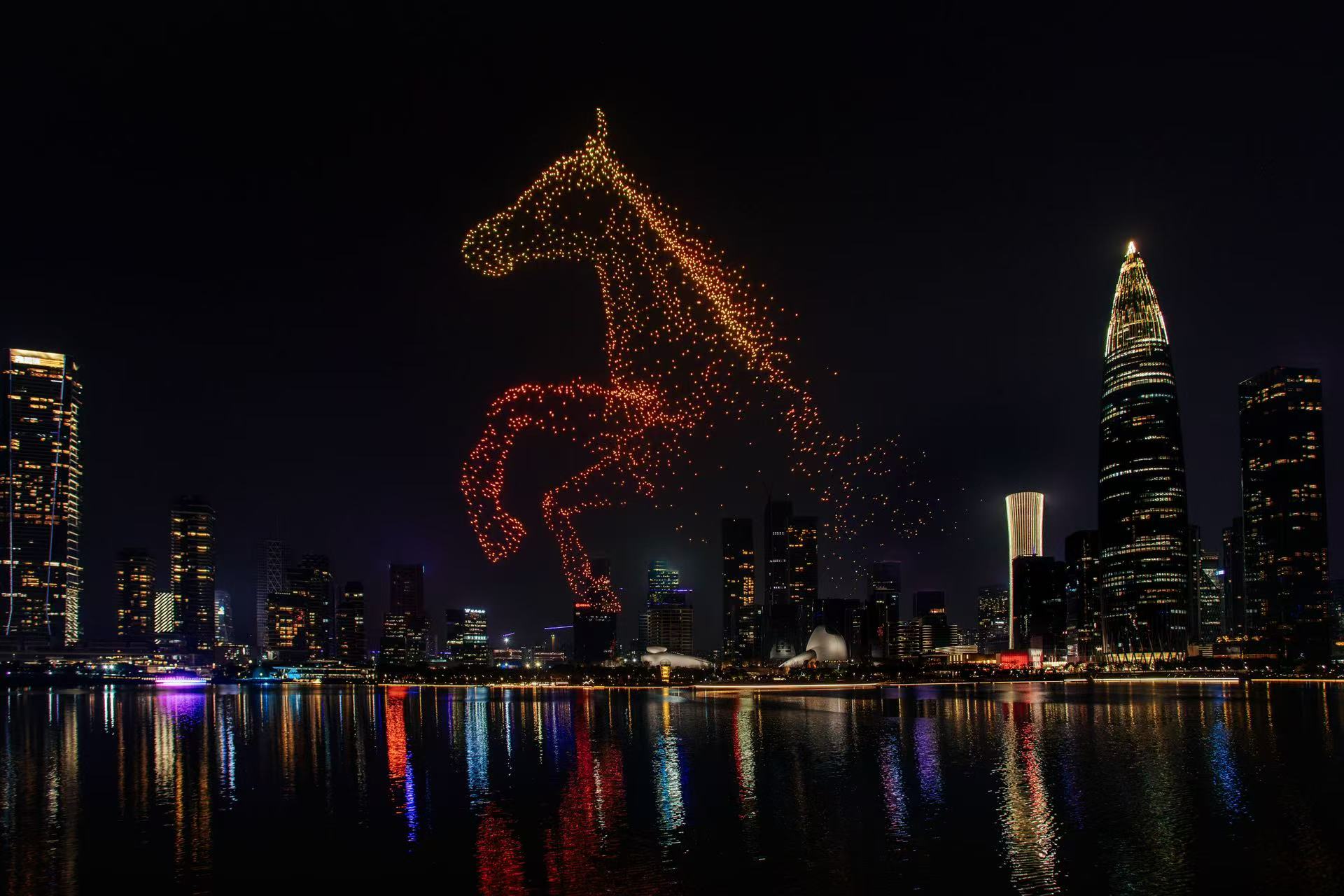
Core Viewpoint - Ralph Lauren's recent drone light show themed "Chasing Dreams" during the Chinese New Year in Shenzhen reflects the brand's long-term narrative of perseverance and aspiration, rather than immediate commercial goals [1][3][5] Brand Narrative - The event showcased Ralph Lauren's consistent use of the horse symbol, representing values of rhythm and endurance, which aligns with the brand's ethos of long-term commitment rather than short-term success [5][8] - The brand's narrative in China emphasizes the importance of dreams and perseverance, resonating with the local context of high-intensity work and personal growth [10][11] Market Strategy - Ralph Lauren's strategy in China has shifted from proving growth to establishing lasting brand relationships, focusing on long-term narratives rather than immediate sales [20][22] - The brand has experienced significant growth in the Chinese market, with over 30% year-on-year growth reported in the latest half-year results, indicating a stable trajectory rather than reliance on short-term spikes [21][22] Cultural Context - The choice of Shenzhen's Talent Park for the event highlights the city's representation of innovation and long-term investment, aligning with the brand's values [10][11] - The "Chasing Dreams" theme connects with the audience's personal experiences, making the brand's message relatable and grounded in everyday life [19][23] Long-term Engagement - Ralph Lauren's ongoing collaborations, such as with Wimbledon, illustrate the brand's commitment to long-term values and stability, contrasting with the fast-paced nature of the fashion industry [12][14] - The brand's recent initiatives, including workplace-focused fashion campaigns, aim to translate abstract concepts of success into practical, everyday choices for consumers [16][17]

于东来退休幕后:3年放权,永不上市,接班人须60岁退休
Xin Lang Cai Jing· 2026-02-14 08:49
Core Viewpoint - The retirement of Yu Donglai, founder and chairman of the Henan Pang Donglai Trading Group, marks a significant shift in the company's governance structure, transitioning to a decision-making committee model while maintaining his strategic advisory role [4][6][12]. Group 1: Retirement Announcement and Governance Changes - Yu Donglai announced his retirement on February 11, 2026, transitioning to an advisory role while the daily operations will be managed by a decision-making committee [4][6]. - The decision to retire is seen as a long-planned move towards a "功成身退" (successful withdrawal), with Yu retaining his chairman position and 69.96% controlling stake but stepping back from daily operations [6][7]. - The decision-making committee will consist of core internal members, implementing a rotating management system to ensure diverse leadership [7][12]. Group 2: Strategic Vision Post-Retirement - Yu Donglai outlined four long-term strategies for Pang Donglai, emphasizing the company's educational nature, the necessity for management to retire by age 60, the commitment to never go public, and the cessation of expansion once set goals are achieved [12][13]. - The governance model reflects a shift from individual leadership to a system-based approach, indicating that the company's culture and values are embedded in its operational framework [13][20]. Group 3: Employee Welfare and Corporate Culture - Pang Donglai has established a robust employee welfare system, including a monthly average salary of 9,886 yuan and a comprehensive dignity protection policy, which has been legally formalized [16][23]. - The company emphasizes a consumer-centric service model, allowing employees to autonomously handle minor disputes, which contributes to consistent service quality [18][19]. - The cultural ethos of Pang Donglai, characterized by shared values and employee participation in decision-making, is seen as a critical factor in maintaining operational stability post-retirement [20][22]. Group 4: Industry Context and Challenges - The challenges faced by Pang Donglai reflect broader issues in the Chinese retail sector, including founder dependency and the pitfalls of rapid expansion [26]. - The company's model of regional focus and refusal to go public is presented as a viable alternative to the prevalent growth strategies in the industry, promoting sustainable development [26]. - The transition to a committee-led governance structure is viewed as a test case for other Chinese private enterprises facing similar succession challenges [25][26].
视频|但斌、吴伟志、徐书楠、舒泰峰等私募大佬新春齐贺:投资顺利 马到功成 业绩长红!
Xin Lang Cai Jing· 2026-02-14 03:54
专题:资本市场大咖2026新春献词:骏马踏春来 驭势稳行启新程 编者按:辞旧迎新,金马贺岁。值此新春佳节,新浪财经特邀公私募领域数十位领军人物,通过镜头与 文字,为投资者送来马年新春祝福。信心如磐,笃行致远。愿这一声声真挚寄语,伴您策马扬鞭,共赴 投资长路。 东方港湾董事长但斌、中欧瑞博董事长吴伟志、因诺资产创始人徐书楠、重阳投资合伙人舒泰峰等送来 新春祝福。 但斌表示,展望2026年,它很可能成为AI应用的爆发之年,顶尖科技巨头的竞争将驱动技术以前所未 有的速度迭代,并真正开始改变各行各业,并惠及全球的普通人。对于投资者而言,在当前这样一个时 点,错失一个时代的风险远大于过早担心泡沫的风险。 东方港湾将始终秉承全球视野,坚持长期主义,继续聚焦于那些能够改变未来,拥有宽广护城河的伟大 企业。无论是这个全球的科技巨头,还是中国的科技巨头,我们将始终保持热情,并倾注全部的力量予 以关注。衷心祝愿各位投资者在新的一年里投资顺利,阖家欢乐,万事如意。 中欧瑞博董事长吴伟志指出,展望2026年,市场整体重心仍会上行,进入基本面驱动阶段。景气度持续 向上的行业有望继续走强,缺乏盈利支撑的板块则可能仅仅是顶部震荡。投资需要 ...