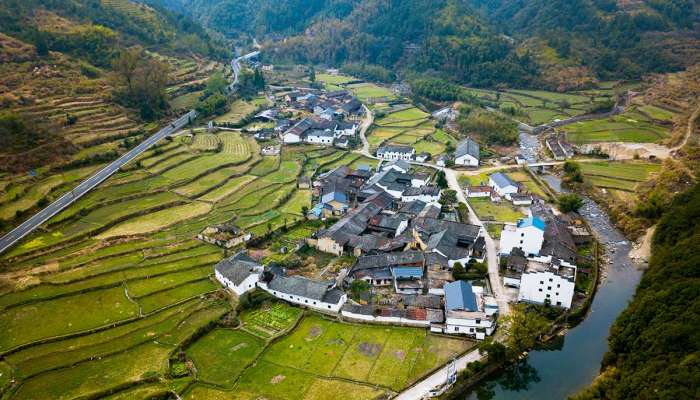
防止返贫致贫

Search documents
守牢最大确定性,开创乡村全面振兴新局面
Ren Min Wang· 2026-01-23 08:12
Group 1 - The core viewpoint of the articles emphasizes the stability and growth of China's agricultural sector, which is crucial for the overall economic development and social stability [1][2][3] - In 2025, China's total grain production reached 71.488 million tons, an increase of 8.38 million tons or 1.2% from the previous year, with significant growth in corn (2.1%), rice (0.7%), and soybeans (1.3%) [1] - The total meat production, including pork, beef, lamb, and poultry, reached 10.072 million tons, marking a 4.2% year-on-year increase and surpassing 100 million tons for the first time [1] Group 2 - Rural residents' per capita disposable income in 2025 reached 24,456 yuan, with a real growth of 6.0% after adjusting for price factors, outpacing urban residents' income growth [2] - The rural consumer goods retail sales in 2025 amounted to 68,230 billion yuan, reflecting a year-on-year growth of 4.1%, which is higher than the average growth rate in urban areas [3] - Various policies and initiatives have been implemented to prevent large-scale poverty and ensure the stability of income for rural residents, including employment support and collaboration between different regions and sectors [2]
脱贫攻坚成果巩固拓展 农业现代化水平持续提升
Jin Rong Shi Bao· 2026-01-23 02:05
Core Viewpoint - The agricultural sector in China has achieved a record grain production of 14.298 trillion jin, marking an increase of 16.8 billion jin, and has maintained a stable output above 14 trillion jin for two consecutive years, contributing to rural employment and income growth [1] Group 1: Agricultural Production and Employment - Grain production reached 14.298 trillion jin, an increase of 16.8 billion jin, setting a new historical high [1] - The scale of employment for rural laborers in poverty alleviation efforts exceeded 32 million [1] - The per capita disposable income of rural residents reached 24,456 yuan, reflecting a real growth of 6% compared to the previous year [1] Group 2: Poverty Alleviation and Rural Revitalization - The transition to a normalized assistance phase for poverty alleviation has begun, with a focus on maintaining stable support policies [2] - A mechanism for monitoring and preventing poverty has been established to ensure early detection and intervention for at-risk populations [2] - Emphasis on developing county-level leading industries to enhance local economic development and improve public services [3] Group 3: Technological Innovation in Agriculture - The role of technology in modernizing agriculture is increasing, with a focus on integrating technological and industrial innovation [4] - Initiatives to strengthen the supply of high-quality technological achievements and promote the cultivation of leading agricultural technology enterprises are underway [4] - Efforts are being made to enhance the application of agricultural technology and establish testing platforms for new agricultural technologies [4] Group 4: Enhancing Agricultural Efficiency and Quality - The agricultural sector aims to improve overall production capacity and quality, focusing on high-quality development [5] - Strategies include increasing grain production capacity and ensuring a diversified food supply system [5][6] - There is a strong emphasis on quality improvement, promoting green and organic products, and enhancing agricultural standards [6][7] Group 5: Rural Economic Development - The focus is on cultivating rural industries that increase income and enhance the value of rural resources [7] - Development of agricultural processing industries and new business models such as cultural tourism and live-streaming sales are being promoted [7] - Efforts to improve the quality of new agricultural business entities and enhance agricultural social services are ongoing [7]
2026年“三农”工作重点聚焦六个方面
Qi Huo Ri Bao Wang· 2026-01-23 01:44
Core Viewpoint - The Chinese government is accelerating agricultural modernization and rural revitalization, focusing on six key areas to enhance agricultural productivity and ensure food security by 2026 [1][2][3][5]. Group 1: Agricultural Production and Food Security - The government aims to stabilize the production and supply of important agricultural products, enhancing overall agricultural productivity and quality [1]. - In 2025, China's grain production reached a record high of 1.4 trillion jin, with significant contributions from autumn grain, which accounted for over 90% of the increase [3][5]. - The increase in grain production was primarily driven by the northeastern provinces, Inner Mongolia, and Xinjiang, contributing nearly 70% of the national increase [4]. Group 2: Poverty Alleviation and Rural Development - The government is focused on consolidating and expanding the achievements of poverty alleviation, establishing a regular mechanism to prevent the return to poverty [2]. - There will be a stable implementation of support policies for poverty alleviation, integrated into the rural revitalization strategy [2]. Group 3: Agricultural Technology and Innovation - Emphasis is placed on achieving high-level agricultural self-reliance through accelerated agricultural technology innovation and application [2]. - The government plans to enhance the overall effectiveness of the agricultural technology innovation system by promoting organized research and systematic breakthroughs [2]. Group 4: Rural Infrastructure and Living Conditions - The initiative includes improving rural living conditions and promoting the construction of beautiful and livable villages [3]. - There will be a focus on enhancing rural human settlements and implementing projects to improve the rural environment [3]. Group 5: Agricultural Reform and Development - The government is advancing key tasks in rural reform to stimulate agricultural and rural development [3]. - Measures include extending land contracts for another 30 years and improving the management of rural homesteads [3][6].
农业农村部:全面开展第二轮土地承包到期后再延长三十年整省试点
Xin Hua Cai Jing· 2026-01-22 06:35
Core Viewpoint - The Ministry of Agriculture and Rural Affairs will focus on six key areas to implement agricultural and rural work effectively by 2026, emphasizing food security, poverty alleviation, agricultural technology, farmers' income, rural living conditions, and rural reform [1][2]. Group 1: Food Security and Agricultural Production - Focus on stabilizing the production and supply of important agricultural products, enhancing comprehensive production capacity and quality efficiency [1] - Emphasize the integration of yield, ecological production, and income growth while developing technology-driven, green, quality, and brand agriculture [1] - Accelerate the establishment of a diversified food supply system and expand the supply of green and high-quality agricultural products to ensure stable and safe food supply [1] Group 2: Poverty Alleviation and Rural Development - Aim to consolidate and expand the achievements of poverty alleviation, establishing a regular mechanism to prevent poverty recurrence [2] - Maintain stability in post-transition support policies and integrate regular assistance into the rural revitalization strategy [2] - Develop a monitoring system for precise identification and dynamic adjustment of poverty prevention measures, focusing on employment support and enhancing the quality of assistance industries [2] Group 3: Agricultural Technology and Innovation - Accelerate agricultural technology innovation and application, leveraging the advantages of a new type of national system [2] - Promote organized research and systematic breakthroughs in key areas such as seed industry, agricultural machinery, and smart agriculture [2] - Foster the integration of technological and industrial innovation to develop new agricultural productivity tailored to local conditions [2] Group 4: Farmers' Income and Rural Industries - Focus on increasing farmers' income by developing rural industries, particularly emphasizing local specialties and agricultural processing [2] - Establish a fair mechanism for sharing the benefits of industrial development, allowing farmers to gain more from value-added activities [2] Group 5: Rural Living Conditions - Promote the construction of livable and workable beautiful villages, improving rural living conditions based on local needs [2] - Continue actions for rural construction and enhance the rural living environment through civilized rural customs initiatives [2] Group 6: Rural Reform and Development - Stimulate rural development by advancing key tasks in rural reform, including extending land contracts for another 30 years [2] - Strengthen the management of rural homesteads and develop new types of rural collective economies [2] - Enhance agricultural support and protection systems while fostering talent cultivation for rural development [2]
推进乡村全面振兴 今年我国将部署这些工作
Yang Shi Xin Wen· 2026-01-11 23:21
Group 1 - The core focus for the year is to enhance agricultural production capacity and quality efficiency, with a significant push for increased yield in grain and oil crops, and high-standard farmland construction [1][3] - The Ministry of Agriculture and Rural Affairs emphasizes the importance of stabilizing grain production and ensuring the supply of important agricultural products, implementing a new round of actions aimed at increasing grain production capacity by 1 billion jin [3] - There will be a transition to a normalized and precise assistance phase to consolidate and expand the achievements of poverty alleviation, with measures to prevent a return to poverty being established [3] Group 2 - The initiative includes modernizing facility agriculture and expanding food production space comprehensively [1] - The focus will also be on creating livable and workable rural areas, with a second round of land contract extensions being piloted for 30 years after expiration [3] - The Ministry aims to optimize agricultural structure and enhance yield per unit area while maintaining stability in agricultural land area [3]

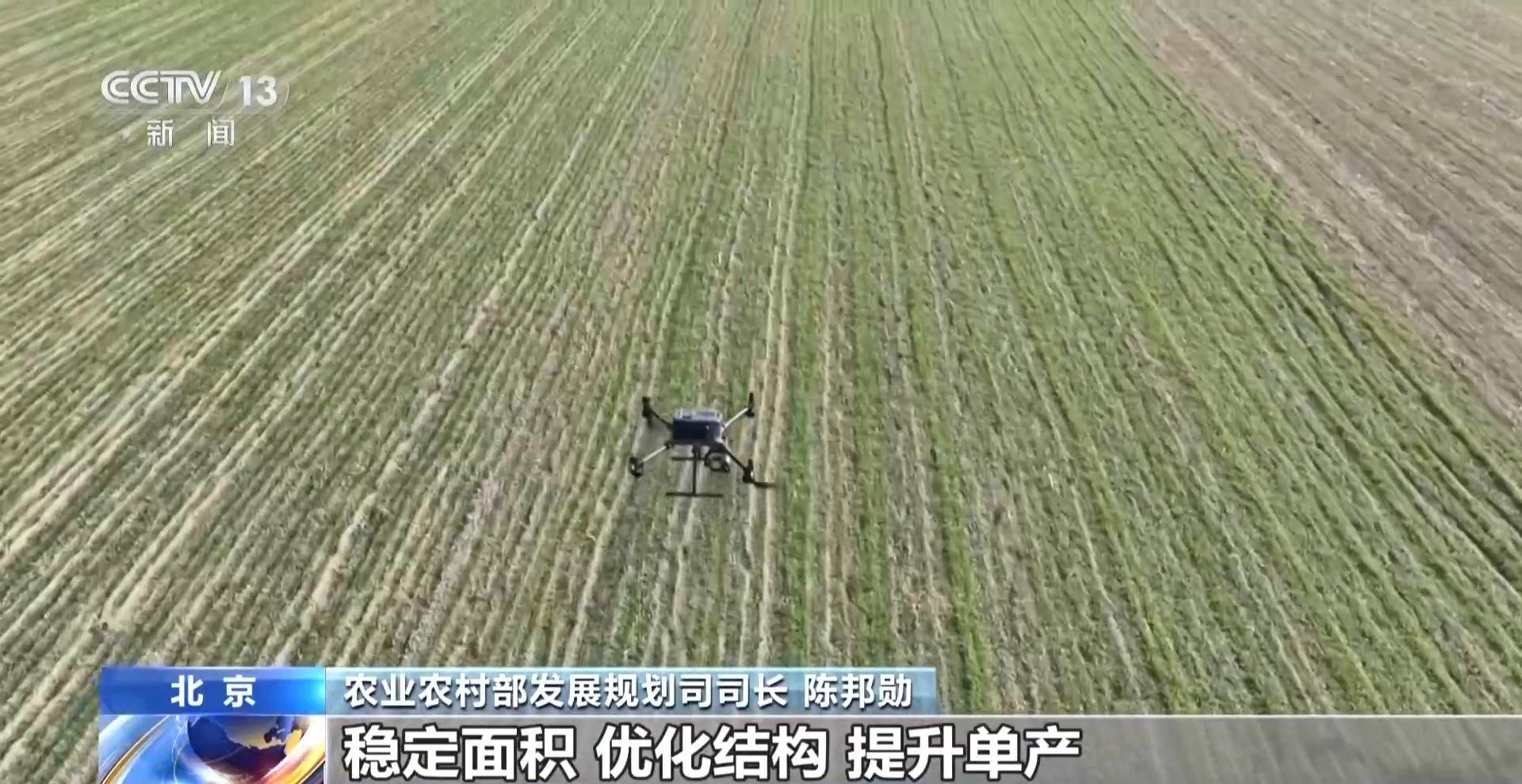
【好评中国】常态化帮扶要拿出责任担当
Xin Lang Cai Jing· 2026-01-11 01:44
Core Viewpoint - The central rural work conference emphasizes the establishment of a normalized mechanism to prevent poverty and ensure sustainable support for underdeveloped regions, aiming to solidify the achievements of poverty alleviation by 2026 [1] Group 1: Mechanisms and Policies - A long-term process is required to consolidate poverty alleviation achievements, necessitating a "normalized inspection, precise monitoring, and differentiated support" mechanism to identify at-risk populations [1] - The implementation of a comprehensive monitoring system is essential, including village cadre inspections and cross-departmental data sharing to ensure early detection and intervention for those in need [1] - The focus on enhancing social security systems is crucial to safeguard the bottom line of people's livelihoods and prevent large-scale poverty [1] Group 2: Employment and Industry Development - Emphasis on the dual focus of industry and employment as key drivers for increasing self-sufficiency among rural populations [1] - The strategy includes promoting the transformation of agricultural products from raw materials to processed goods and brands, enhancing value-added processes [2] - The introduction of more deep processing projects is aimed at ensuring farmers benefit at every stage of the industrial chain [2] Group 3: Community Engagement and Skill Development - The need to stimulate the internal motivation of the impoverished population is highlighted, leveraging local leaders and experts to assist in development [3] - Regular monitoring and risk assessment are necessary to address the specific challenges faced by vulnerable groups, including the elderly and those with health issues [3] - Initiatives such as skill training for returning laborers and the organization of employment opportunities are critical for improving the livelihoods of the impoverished [3]
让脱贫群众致富路越走越宽
Jing Ji Ri Bao· 2026-01-09 22:13
Core Viewpoint - The article highlights the successful transition from poverty alleviation to rural revitalization in China, emphasizing the importance of precise assistance and sustainable development in rural areas [1][4]. Group 1: Achievements in Poverty Alleviation - Gansu's Dingxi has transformed from a region known for its harsh conditions to one filled with happiness and prosperity [1] - Xinjiang's southern region has shifted from barren land to diverse income sources through specialty fruits, handicrafts, and facility agriculture [1] - The Daliangshan region in Sichuan has improved infrastructure, moving from traditional to modern staircases, enhancing tourism and local economy [1] Group 2: Strategies for Sustainable Development - The focus has shifted from merely improving agricultural output to enhancing market access, product value, and profitability [2] - There is an emphasis on extending the industrial chain and developing unique leading industries to avoid homogenization and competition [2] - Establishing stable production and sales platforms through long-term agreements with major retailers and e-commerce platforms is crucial [2] Group 3: Risk Prevention and Support Mechanisms - A comprehensive risk warning system covering income, health, and education is necessary to prevent poverty recurrence [3] - Different risk types require targeted interventions, such as health insurance for those impoverished by illness and job training for unstable employment [3] - A robust safety net should be established for families still facing difficulties despite assistance, ensuring a strong defense against large-scale poverty [3] Group 4: Policy Framework and Future Directions - The 2025 Central Rural Work Conference emphasizes the need for a regular support policy system to continue aiding underdeveloped regions [4] - The "14th Five-Year Plan" suggests establishing a mechanism to prevent poverty recurrence, maintaining precise assistance as a key strategy [4] - Continuous precise assistance is vital for enhancing the development capacity of underdeveloped areas and improving the welfare of low-income populations [4]
常态化帮扶,新阶段怎么干(新年谈“新”·五位干部群众谈常态化帮扶)
Ren Min Ri Bao· 2026-01-08 22:53
Core Viewpoint - The central rural work conference emphasizes the establishment of a normalized mechanism to prevent poverty and ensure continuous support for underdeveloped areas, aiming to consolidate and expand the achievements of poverty alleviation efforts during the 14th Five-Year Plan period [1] Group 1: Mechanism and Strategy - The first year of normalized assistance will begin in 2026, focusing on preventing large-scale poverty and ensuring effective support for vulnerable households [1] - A monitoring and assistance mechanism has been established in Wu Bu County, which includes regular checks, precise monitoring, and differentiated support to identify and assist at-risk households [2][3] - The strategy includes enhancing development capabilities through effective assistance and ensuring a robust social security system to prevent large-scale poverty [3] Group 2: Employment and Industry Development - Emphasis on industry and employment as key areas for development, with plans to enhance local agricultural products and create job opportunities through various initiatives [3][4] - Specific plans include promoting local specialties such as green pears and hand-made noodles, and utilizing labor cooperation and employment assistance projects [3][4] Group 3: Community and Individual Success Stories - Individual success stories highlight the effectiveness of assistance policies, such as the case of Li Guozhi, who improved his family's living conditions through hard work and support from poverty alleviation funds [5][6] - The community's approach includes a detailed management service model to address the needs of relocated populations, ensuring timely assistance and employment opportunities [8][9] Group 4: Cultural and Tourism Development - The development of cultural tourism in Huanghu Village has led to significant increases in visitor numbers and local employment, showcasing the potential of integrating culture with economic development [10][11] - Plans to enhance local tourism infrastructure and promote agricultural products through branding efforts are underway, aiming to increase the economic stability of the community [11][12]
焦点访谈丨推动农业农村现代化再上新台阶
Xin Lang Cai Jing· 2026-01-04 07:36
Core Viewpoint - The Central Rural Work Conference emphasizes the importance of "Three Rural Issues" (agriculture, rural areas, and farmers) for the modernization of agriculture and rural revitalization, particularly in the context of the 14th Five-Year Plan starting in 2026 [1][9]. Group 1: Agricultural Production and Food Security - Ensuring stable and safe supply of food and important agricultural products is a top priority for agricultural modernization and building a strong agricultural nation [2]. - The target for national grain production is to maintain over 1.4 trillion jin (approximately 700 million tons) by 2025, ensuring food security for the population [2]. - The meeting calls for the implementation of a new round of actions to enhance grain production capacity, focusing on improving agricultural production efficiency and quality [2][3]. Group 2: Technological Innovation in Agriculture - The conference highlights the need to strengthen key agricultural technologies and efficiently apply scientific achievements to enhance agricultural productivity [3]. - Innovations such as AI-powered laser weeding robots are being tested to improve efficiency and reduce environmental impact in agricultural practices [3]. - Emphasis is placed on integrating technology with agriculture to solve traditional production challenges and enhance productivity [3]. Group 3: Rural Income and Employment - Increasing farmers' income is a core goal of agricultural modernization, with policies aimed at stabilizing prices of important agricultural products [3][5]. - The rural income per capita is projected to reach 23,119 yuan in 2024, with a 6% year-on-year growth in the first three quarters of 2025 [5]. - The meeting proposes to enhance support for migrant workers and promote entrepreneurship to increase rural income sources [5][7]. Group 4: Poverty Alleviation and Rural Revitalization - Continuous consolidation of poverty alleviation achievements is essential for agricultural modernization and urban-rural integration [6]. - The meeting emphasizes the establishment of a long-term mechanism to prevent a return to poverty, with a focus on employment support and skill development [6][7]. - The importance of integrating various departments to monitor and adjust poverty alleviation efforts dynamically is highlighted [6]. Group 5: Policy and Reform Directions - The conference discusses the need for comprehensive reforms in rural areas, including extending land contracts and innovating financing mechanisms for rural development [8]. - Strengthening the leadership of the Party in "Three Rural Issues" is emphasized to drive progress in rural revitalization and agricultural modernization [9]. - The overall goal is to make agriculture a modern industry and improve living conditions in rural areas, ultimately leading to a wealthier and happier life for farmers [9].
详解中央农村工作会议:盘活各类农村资源,促进农民稳定增收
2 1 Shi Ji Jing Ji Bao Dao· 2025-12-31 10:46
Core Viewpoint - The Central Rural Work Conference emphasizes the importance of agricultural and rural modernization as a key component of China's overall modernization strategy, setting the stage for the 2026 agricultural work plan and focusing on food security and poverty alleviation efforts [3][4]. Group 1: Agricultural Production and Food Security - The conference highlights the need to stabilize grain and oil production and implement a new round of actions to enhance grain production capacity, aiming for a total grain output of 14,298 billion jin in 2025, marking a historical high and ensuring food security [5][6]. - China has achieved a per capita grain availability of 500 kg, surpassing the international safety line of 400 kg, but faces ongoing supply-demand imbalances that necessitate further enhancements in grain production capacity [5][6]. Group 2: Poverty Alleviation and Rural Revitalization - The conference introduces a new mechanism for integrating regular assistance into the rural revitalization strategy, transitioning from concentrated efforts to long-term mechanisms for consolidating poverty alleviation achievements [4][8]. - It emphasizes the establishment of a regular mechanism to prevent large-scale poverty and the need for a comprehensive policy framework to support underdeveloped areas, ensuring that poverty alleviation efforts are sustained and integrated with rural revitalization [8][9]. Group 3: Rural Reform and Land Policy - The conference calls for deepening rural reforms, including a comprehensive trial for extending land contracts for another 30 years, which aims to enhance the stability of land tenure and encourage long-term agricultural investment [10][11]. - The focus shifts from localized trials to systematic promotion of land contract extensions, addressing common issues across regions and enhancing the vitality of rural resources through innovative financing mechanisms [10][11]. Group 4: Policy Effectiveness and Support Mechanisms - The emphasis on improving the effectiveness of agricultural support policies aims to address fragmentation in policy implementation, streamline processes, and ensure that support reaches farmers effectively [7]. - Future policies are expected to focus on precision, diversification, and sustainability, with a shift from universal subsidies to targeted support for key agricultural stakeholders and the establishment of price stabilization mechanisms for essential agricultural products [7][8].