
非遗保护

Search documents
栋方木作张翔:“在成都做一家能传承下去的潮玩企业,像乐高那样”
Xin Lang Cai Jing· 2026-01-13 15:38
每经记者|石普宁 每经编辑|唐元 走进栋方(成都)文化传播有限公司(下称"栋方木作")位于成都的公司门厅,一组恢弘的微缩古建模型立刻吸引访客眼球。 故宫的"三大殿"——太和殿、中和殿与保和殿,安静地陈列于此。这是栋方木作耗时三年多、倾力打磨的复刻"北京中轴线"木质模型的核心部分。 成立于2019年的栋方木作,在很长一段时间里,更像是个潜心修炼的"手工作坊",创始人张翔带领团队,完成了北京中轴线的复刻和近300款产品的研发 储备。 而到了2025年下半年,随着另一位核心合伙人的加入,这家企业选择在专注"非遗保护"的基础上,转向追求规模与效率的"商业突围"。 这并不是一个轻松的决定,但市场机遇近在眼前。本期《创史记》,《每日经济新闻》记者和栋方木作创始人聊了聊,试图探寻一块块木头背后,搭建起 的"超级潮玩工厂"。 对于多数致力于呈现中华传统文化的文创企业而言,产品往往止步于博物馆式的"精美",却难以跨越到大众消费品的"好玩"。 栋方木作在去年意识到,要让年轻人"买单",仅仅靠"展示"是不够的,还需提供"可复制的快乐"。 说着容易,做着困难。北京中轴线申遗工作启动后,张翔团队历时三年,基本完成了北京中轴线木质模型的 ...


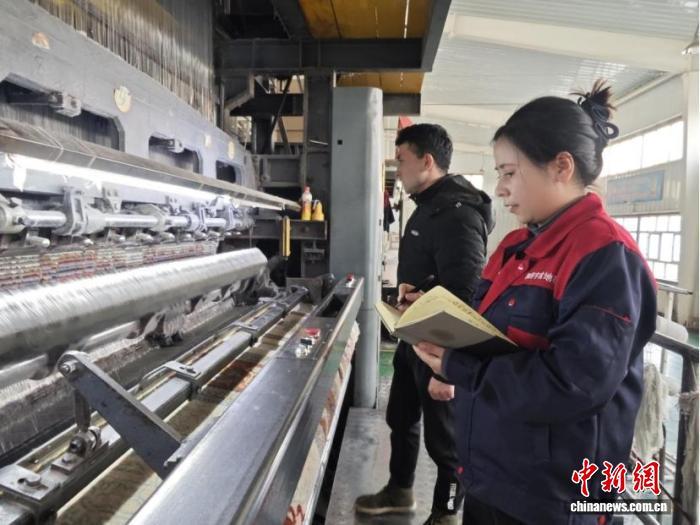
传承与创新并行 新疆“90后”设计师让传统技艺出彩出新
Zhong Guo Xin Wen Wang· 2025-12-27 07:38
Core Viewpoint - The article highlights the innovative efforts of a young designer, Alzgul Mutalip, in revitalizing traditional carpet weaving techniques in Hotan, Xinjiang, by integrating digital technology and modern design aesthetics with cultural heritage [1][2]. Group 1: Traditional Craft and Cultural Heritage - Hotan is known as the "hometown of carpets," with its carpets historically connecting Eastern and Western cultures through the Silk Road [2]. - The traditional Uyghur carpet weaving technique was included in the second batch of national intangible cultural heritage in 2008 [2]. - Alzgul Mutalip has a deep emotional connection to carpet weaving, having been influenced by her family's three generations of craftsmanship [2][5]. Group 2: Challenges and Innovations - The carpet industry faces challenges such as outdated designs and high production costs, leading to a decline in market acceptance [2][4]. - Alzgul recognized the need for innovation and began learning digital design to modernize traditional patterns [2][4]. - She developed a digital reconstruction of traditional designs, merging them with contemporary aesthetics, resulting in the "Silk Road Ribbon" series of carpets, which gained significant market attention [5]. Group 3: Production and Market Impact - The introduction of semi-mechanized production methods has increased efficiency, allowing for a daily output of 400 to 500 square meters and significantly reducing costs [5]. - The price of mid-range products has dropped to several thousand yuan, making them accessible to a broader consumer base [5]. - Alzgul's designs are now sold on e-commerce platforms and in major cities like Beijing and Shanghai, attracting customers who appreciate the blend of beauty and cultural significance [7]. Group 4: Community and Economic Development - Alzgul's innovation has not only revitalized traditional craftsmanship but also created job opportunities for local young women, enhancing their income and allowing them to balance work and family [7]. - The local government is actively promoting the carpet industry as a means of rural revitalization, establishing production bases and encouraging a "business + farmer" model to boost employment [7].
一座“没有屋顶的博物馆”如何炼成?
Xin Lang Cai Jing· 2025-12-20 11:52
Core Perspective - The "Hui Yun Liu Fang" National Cultural Ecological Protection Area exchange and display event highlights the achievements in the protection of Huizhou culture and emphasizes the dialogue on how intangible cultural heritage can be integrated into daily life [1][2]. Group 1: Cultural Protection and Development - The Huizhou Cultural Ecological Protection Area, established in December 2019, is the first cross-provincial national cultural ecological protection area in China, encompassing regions in Anhui and Jiangxi provinces [2]. - The protection area currently includes 5 items of human intangible cultural heritage, 26 national-level representative projects, and over 2,600 intangible cultural heritage inheritors, along with 2 World Cultural Heritage sites and 341 traditional Chinese villages [2]. - The approach to cultural protection has evolved from a single project focus to constructing an overall cultural ecological system, integrating heritage into contemporary life through community and educational initiatives [2][3]. Group 2: Community and Social Engagement - The event gathered various associations, enterprises, and volunteers to discuss the safeguarding and innovation of intangible cultural heritage, showcasing a collaborative approach to cultural preservation [5]. - Initial cooperation agreements were reached between Huizhou's intangible cultural heritage projects and ten well-known scenic spots, focusing on regular performances, craft workshops, and co-development of cultural products [5]. - The establishment of the first batch of "Intangible Cultural Heritage Aesthetic Consumption Spaces" in Anhui demonstrates how traditional aesthetics can be integrated into modern consumer contexts [5]. Group 3: Market Integration and Innovation - The "Hui Brand" serves as a model for the commercialization of intangible cultural heritage, transforming traditional wood carving designs into contemporary products and connecting with modern lifestyles [8]. - The Cao Family Residence in Shexian County utilizes a "minimal intervention" principle to revitalize historical buildings, incorporating Huizhou opera and folk songs into experiential activities [8]. - The vitality of the Huizhou Cultural Ecological Protection Area is reflected in market-driven practices that break traditional boundaries and foster innovation [8]. Group 4: Future Directions - The focus will be on enhancing the Huizhou Cultural Ecological Protection Area by creating distinctive cultural streets and villages, and promoting cultural festivals to spread local heritage domestically and internationally [11]. - The government aims to encourage social participation through policy support and platform development, allowing various stakeholders to become guardians and creators of Huizhou culture [11]. - The transition from government-led initiatives to community co-creation signifies a shift towards dynamic heritage transmission, exploring the integration of cultural protection with contemporary development [11].
为国际非遗保护事业贡献中国实践经验——文化和旅游部有关部门负责人谈赫哲族伊玛堪转入人类非遗代表作名录和入选优秀保护实践名册
Xin Hua She· 2025-12-11 14:32
Core Viewpoint - The successful transition of "Hezhe Ethnic Group's Imakan" from the urgent protection list to the representative list of intangible cultural heritage, along with the inclusion of the "Hezhe Ethnic Group's Imakan Protection Plan" in the excellent protection practice list, highlights China's commitment to preserving its cultural heritage and contributes to international efforts in safeguarding intangible cultural heritage [1][3]. Group 1: Cultural Significance - The Hezhe ethnic group is one of China's minority populations, primarily located in the Heilongjiang, Songhua, and Ussuri River basins. The "Hezhe Ethnic Group's Imakan" is a traditional oral narrative that conveys the history, hero stories, and cultural practices of the Hezhe people [2]. - The Imakan serves multiple functions, including recording history, educating future generations, and providing entertainment, while promoting values such as justice, bravery, and harmony [4]. Group 2: Achievements and Recognition - The successful transition of "Hezhe Ethnic Group's Imakan" and the recognition of its protection plan as an excellent practice demonstrate China's effective use of UNESCO's mechanisms for intangible cultural heritage protection [5][6]. - Since its inclusion in the urgent protection list in 2011, the Imakan project has seen significant progress, including an increase in the number of practitioners from 5 to 121, and heightened interest among the youth in preserving their cultural heritage [7]. Group 3: Future Directions - Moving forward, China aims to enhance its efforts in applying for more projects to be included in UNESCO's intangible cultural heritage lists, emphasizing the importance of these cultural practices in fostering national unity and cultural influence [8][9]. - The country plans to strengthen international cooperation in intangible cultural heritage, sharing its protection experiences and promoting cultural exchange [9].
10天上演10余场剧目 国家级非遗崇阳提琴戏展演周落幕
Zhong Guo Xin Wen Wang· 2025-12-02 01:41
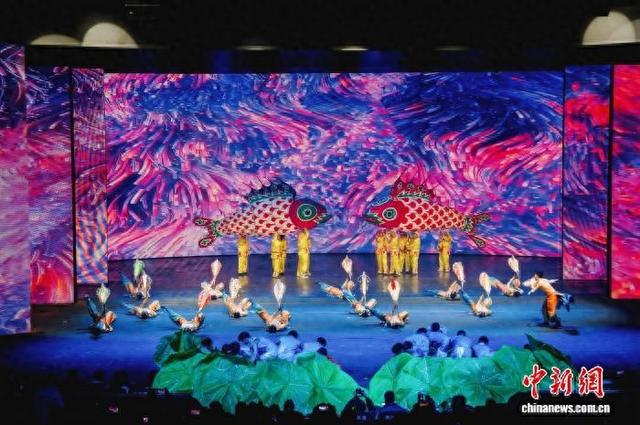
Core Viewpoint - The Chuyang Qinqin Opera Exhibition Week, a national intangible cultural heritage event, showcased over 10 high-quality performances, highlighting the unique local theatrical art and its evolution over the past century [1] Group 1: Event Overview - The exhibition week featured more than 10 premium performances, providing a rich cultural experience for the audience [1] - Chuyang Qinqin Opera has been a part of the local culture for over a century and was recognized as a national intangible cultural heritage in 2008 [1] Group 2: Cultural Integration - The event reflects a shift from traditional performances to a blended model that includes "opera + cultural creativity + cuisine + rural tourism," demonstrating the adaptability of local art forms [1] - The approach of "government setting the stage, the community performing, and the public enjoying" has revitalized this local art, making it more appealing to younger audiences [1] Group 3: Audience Engagement - The exhibition attracted a diverse audience, combining seasoned opera enthusiasts with younger faces, indicating a successful intergenerational engagement [1] - The ongoing popularity of the Chuyang Qinqin Opera Exhibition Week illustrates that the protection of intangible cultural heritage can thrive through contemporary dialogue and relevance [1]
“十四五”时期我国非遗保护成果突出 现有非遗保护机构2397个、从业人员1.7万余人
Ren Min Ri Bao· 2025-11-24 23:05
Core Insights - The "14th Five-Year Plan" period has seen significant achievements in the protection of intangible cultural heritage (ICH) in China, contributing positively to building a culturally strong nation and promoting high-quality economic and social development [1] Group 1: Achievements in ICH Protection - During the "14th Five-Year Plan" period, 325 items of the fifth batch of national-level ICH representative projects were announced [1] - A total of 942 national-level ICH inheritors from the sixth batch were recognized [1] - 14 national-level cultural ecological protection experimental zones passed inspection, with the total number of national and provincial cultural ecological protection zones reaching 276 [1] Group 2: Development of ICH Institutions - The workforce for ICH protection and inheritance has expanded, with over 1,397 institutions dedicated to ICH protection and more than 17,000 personnel involved [1] - The implementation of the Chinese ICH inheritor training program has been deepened, supporting over 100 educational institutions to hold training classes [1] - A more comprehensive work pattern has been established, led by ICH administrative management departments, with active participation from ICH protection centers, museums, and associations [1]
“十四五”时期我国非遗保护成果突出
Ren Min Ri Bao· 2025-11-24 22:31
Group 1 - The core viewpoint of the article highlights the significant achievements in the protection of intangible cultural heritage (ICH) during the 14th Five-Year Plan period, contributing positively to building a culturally strong nation and promoting high-quality economic and social development [1] Group 2 - During the 14th Five-Year Plan, 325 new national-level ICH representative projects were announced, along with 942 national-level ICH inheritors [1] - A total of 14 national-level cultural ecological protection experimental zones passed inspection, with the number of national and provincial cultural ecological protection zones reaching 276 [1] - The opening and operation of the China ICH Museum and nine provincial ICH museums in Zhejiang, Guangdong, and Xinjiang have been established [1] Group 3 - The workforce for ICH protection and inheritance has expanded, with the implementation of the Chinese ICH inheritor training program supporting over 100 institutions to hold training classes [1] - A more comprehensive work pattern has been established, led by ICH administrative management departments, with the involvement of ICH protection centers, museums, and associations [1] - There are currently 2,397 ICH protection institutions and over 17,000 practitioners nationwide [1]
“十四五”期间我国列入联合国教科文组织非遗名录名册项目达到44项 数量居世界第一
Yang Guang Wang· 2025-11-24 02:36
Group 1 - The core viewpoint of the articles highlights the significant achievements in the protection of intangible cultural heritage (ICH) during the 14th Five-Year Plan period in China, showcasing its integration into contemporary life and its potential to contribute to economic and social development [1][2] Group 2 - Over 12,900 ICH workshops have been established across the country, including 693 in poverty-stricken counties and 135 in key rural revitalization areas, creating job opportunities for over 1.2 million people [1] - More than 100 universities have established undergraduate programs and research directions related to ICH protection, with over 200 universities participating in training programs for ICH inheritors, resulting in more than 100,000 inheritors receiving education [1] - China has achieved a total of 44 items listed in the UNESCO ICH list, ranking first in the world, and has 276 national and provincial cultural ecological protection zones [2]
325项、10万人次、1.29万余家,成果突出!“数”说非遗绽放夺目新光彩
Yang Shi Wang· 2025-11-24 01:57
Core Insights - The report from the Ministry of Culture and Tourism highlights significant achievements in the protection of intangible cultural heritage (ICH) during the 14th Five-Year Plan period, indicating that ICH is increasingly integrated into contemporary life and flourishing [1] Group 1: Achievements in ICH Protection - During the 14th Five-Year Plan, 325 items were announced as the fifth batch of national-level ICH representative projects, and 942 individuals were recognized as the sixth batch of national-level ICH inheritors [3] - A total of 14 national-level cultural ecological protection experimental zones were approved, with the number of national and provincial cultural ecological protection zones reaching 276 [3] - The China ICH Museum and provincial ICH museums in nine provinces, including Zhejiang, Guangdong, and Xinjiang, have opened for operation, with records conducted for 2,290 national-level ICH inheritors [3] Group 2: Growth of ICH Inheritance Workforce - The ICH inheritance training program has been implemented, supporting 130 institutions to hold 435 training sessions, reaching a total of 100,000 participants [5] - Over 100 universities have established undergraduate programs and related research directions focused on ICH protection [5] Group 3: Economic and Social Development Impact - The integration of ICH with tourism has been deepened, contributing to rural revitalization efforts [7] - More than 12,900 ICH workshops have been established, including 693 in poverty-stricken counties and 135 in key rural revitalization support counties, creating job opportunities for over 1.2 million people [7] Group 4: International Recognition - China has achieved a total of 44 items listed in the UNESCO ICH inventory, ranking first in the world [9]

44项,世界第一!“十四五”期间我国非遗保护成果发布
Yang Shi Xin Wen· 2025-11-23 10:03
Group 1 - The report from the Ministry of Culture and Tourism highlights significant achievements in the protection of intangible cultural heritage (ICH) during the 14th Five-Year Plan period, with ICH increasingly integrated into contemporary life [1] - A total of 325 national-level ICH representative projects and 942 national-level ICH inheritors were announced, along with the successful acceptance of 14 national cultural ecology protection experimental zones, bringing the total number of national and provincial cultural ecology protection zones to 276 [1] - Nine provincial-level ICH museums, including those in Zhejiang, Guangdong, and Xinjiang, have opened, and records have been conducted for 2,290 national-level ICH inheritors [1] Group 2 - The ICH protection and inheritance workforce has expanded significantly, with the implementation of the ICH inheritor training program supporting 130 institutions to hold 435 training sessions, reaching a total of 100,000 participants [3] - Over 100 universities have established undergraduate programs and research directions related to ICH protection [3] - The role of ICH in economic and social development has become more prominent, with deep integration into tourism and support for rural revitalization, leading to the establishment of over 12,900 ICH workshops, including 693 in poverty-stricken counties and 135 in key rural revitalization support counties, creating job opportunities for over 1.2 million people [3] Group 3 - During the 14th Five-Year Plan period, China has achieved a total of 44 projects listed in the UNESCO ICH list, ranking first in the world [5]
