AI芯片

Search documents
台积电改写GaN格局
半导体行业观察· 2026-02-15 01:37
Core Viewpoint - TSMC's decision to exit the GaN foundry service by July 2027 is reshaping the GaN industry landscape, transitioning from reliance on advanced foundries to a focus on specialty process foundries [2][19]. Group 1: TSMC's Exit and Industry Impact - TSMC has been a crucial player in the GaN industry, being the only foundry capable of providing both high and low voltage GaN solutions [2]. - The exit of TSMC is prompting second-tier foundries to accelerate their capacity to fill the void left behind, leading to a reconfiguration of GaN manufacturing capabilities [2][5]. - GlobalFoundries (GF) has signed a GaN technology licensing agreement with TSMC, aiming to establish itself as a strategic GaN production center in the U.S. with over $80 million in federal funding [3]. Group 2: New Entrants and Strategic Moves - World Advanced (VIS), a TSMC subsidiary, is also entering the GaN market by expanding its GaN-on-Si capabilities, targeting mid-to-low margin orders previously handled by TSMC [3]. - Navitas, a major GaN customer of TSMC, is diversifying its supply chain by partnering with PSMC for 200mm GaN-on-Si production and strengthening ties with GF to mitigate manufacturing risks [4]. - ROHM is shifting from relying on TSMC to producing GaN devices in-house, establishing a new 8-inch wafer production line in Japan [7]. Group 3: Market Dynamics and Growth Projections - The GaN market is expected to grow significantly, with projections indicating a market size of approximately $3 billion by 2030 and a compound annual growth rate (CAGR) of 42% from 2024 to 2030 [10]. - The demand for GaN is expanding beyond consumer applications into high-reliability sectors such as data centers and electric vehicles, with automotive applications projected to grow at a CAGR of 73% from 2024 to 2030 [13]. - The shift in GaN applications is moving from consumer electronics to critical systems in data centers and automotive power supplies, emphasizing the need for reliability and efficiency [19]. Group 4: Structural Changes in the GaN Industry - The exit of TSMC is not a sign of declining GaN demand but rather a transition towards a decentralized manufacturing model, where multiple foundries share the production load [19]. - The industry is witnessing a redistribution of power, with IDM manufacturers regaining control over core processes and Fabless companies gaining more flexible manufacturing options [19]. - The GaN industry is evolving into a more independent and scalable sector, moving away from dependence on a single advanced foundry [19].


半导体产业链本周活跃,关注半导体设备ETF易方达(159558)、芯片ETF易方达(516350)等产品投资价值
Sou Hu Cai Jing· 2026-02-13 10:16
| | 中证云计算与大数 | 中证芯片产业 | 中证半导体材料 | | --- | --- | --- | --- | | | 据主题指数 | 指数 | 设备主题指数 | | 本周涨跌幅 | 5.4% | 5.0% | 2. 7% | | 指数估值 | 滚动市销率 | 市净率 | 市净率 | | | 5.0倍 | 7.6倍 | 7.9倍 | | 指数估值 | | | | | | 98. 5% | 90. 4% | 79. 6% | | 分位 | | | | | 跟踪该 | 云计算ETF易方达 | 芯片ETF易方达 | 半导体设备ETF | | 指数的ETF | (516510) | (516350) | 易方达 | | | | | (159558) | 本周,中证云计算与大数据主题指数上涨5.4%,中证芯片产业指数上涨5.0%,中证半导体材料设备主题指数上涨2.7%。 Wind数据显示,截至昨日,半导体设备ETF易方达(159558)本周"吸金"超2亿元,最新规模超50亿元。 注:"NO. 1"标签指截至2025年12月 31日,相关ETF规模在跟踪同标的指 数的ETF中排名第一,规模数据来自 交易所官网。" ...

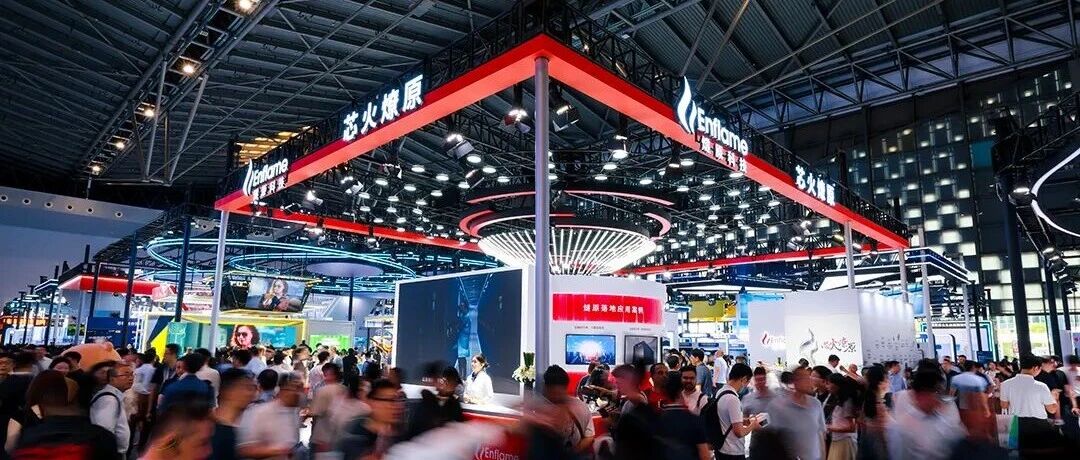
腾讯重仓!燧原科技IPO推进
是说芯语· 2026-02-13 06:46
Core Viewpoint - Shanghai Suiruan Technology Co., Ltd. is focusing on cloud AI chip design and has recently changed its IPO review status to "inquired" on the Sci-Tech Innovation Board, aiming to raise approximately 6 billion yuan for the development and industrialization of its AI chip series products [1][6]. Group 1: Company Overview - Suiruan Technology was established in 2018 and is recognized as one of the leading domestic cloud AI chip companies, alongside other firms like Moore Threads and Biran Technology, collectively referred to as the "Four Little Dragons of Domestic GPUs" [1][2]. - The company has developed four generations of cloud AI chips and has built a complete product system including AI chips, AI accelerator cards, intelligent computing systems, and AI computing software platforms [2][3]. Group 2: Market Position and Competition - The domestic cloud AI chip industry is in its early stages, with international players like NVIDIA holding a significant market share, while local companies are gradually breaking through technological barriers [1][6]. - Suiruan Technology's latest fourth-generation cloud AI chip supports FP8 low-precision data and has performance metrics that can compete with international products, indicating that its core technology has reached a leading level domestically [3]. Group 3: Financial Performance - The company's revenue has shown rapid growth, with a compound annual growth rate of 183.15% from 2022 to 2024, although it has not yet achieved profitability [6]. - Revenue figures for the years 2022, 2023, 2024, and the first nine months of 2025 are 90.1 million yuan, 300 million yuan, 720 million yuan, and 540 million yuan respectively, with net losses of 1.15 billion yuan, 1.567 billion yuan, 1.503 billion yuan, and 912 million yuan [5][6]. Group 4: Investment and Future Plans - The IPO proceeds will primarily be invested in the research and industrialization of the fifth and sixth generation AI chip series, as well as advanced AI hardware and software projects, with total planned investments of 6 billion yuan [6]. - The company has established a strong partnership with major internet firms, which has led to widespread commercial applications of its products in various AI scenarios [5].
壁仞科技(06082):壁立算砥,千仞芯芒
Shenwan Hongyuan Securities· 2026-02-13 06:05
Investment Rating - The report assigns a "Buy" rating for the company, Wallrun Technology (壁仞科技) [2][7]. Core Insights - Wallrun Technology is a leading domestic AI chip company focusing on GPGPU architecture and intelligent computing solutions, with a strong emphasis on proprietary technology and a diverse team background [6][15]. - The company has achieved significant revenue growth projections, with expected revenues of RMB 9.5 billion, RMB 20.2 billion, and RMB 39.5 billion for the years 2025 to 2027, respectively [7]. - The report highlights the company's innovative product offerings, including the BR106 and BR166 chips, which are designed for large-scale AI training and inference applications [25][28]. Financial Data and Profit Forecast - Revenue projections for Wallrun Technology are as follows: RMB 62 million in 2023, RMB 337 million in 2024, RMB 945 million in 2025, RMB 2,021 million in 2026, and RMB 3,951 million in 2027, with year-on-year growth rates of 12,330.86%, 442.97%, 180.61%, 113.83%, and 95.51% respectively [5]. - Adjusted net profit forecasts indicate losses of RMB 1,051 million in 2023, RMB 767 million in 2024, RMB 827 million in 2025, and a reduced loss of RMB 632 million in 2026, with a projected profit of RMB 74 million in 2027 [5][7]. - The company's gross margin is expected to fluctuate, with rates of 76.4% in 2023, 53.2% in 2024, and 31.9% in the first half of 2025, primarily due to changes in product sales mix [6][35]. Technology and Product Development - Wallrun Technology focuses on GPGPU architecture and has developed a comprehensive hardware and software ecosystem, including the BIRENSUPA software platform, which supports major AI frameworks [20][31]. - The company is pioneering advanced technologies such as Chiplet architecture and optical interconnects, enhancing the performance and scalability of its AI computing systems [50][53]. - The BR20X chip is expected to be commercialized in 2026, featuring improved performance and support for various data formats, further solidifying the company's market position [29][30]. Market Position and Ecosystem - Wallrun Technology has established strong partnerships with major telecommunications operators and is expanding its customer base, with a projected revenue contribution from its top five customers decreasing over time [6][38]. - The report emphasizes the growing domestic AI capital expenditure (Capex) market, which is expected to accommodate multiple AI chip companies, indicating a favorable environment for Wallrun Technology's growth [8][7]. - The company has successfully implemented a domestic supply chain strategy, ensuring production and research continuity despite external challenges [54].
清溢光电股价波动上涨,半导体行业关注度提升
Jing Ji Guan Cha Wang· 2026-02-13 01:59
经济观察网近期半导体行业关注度提升,特别是AI芯片领域。2月11日有报道称字节跳动正在推进自研 AI芯片并与三星洽谈代工合作,计划年内量产,这可能间接提振半导体材料板块情绪。清溢光电作为 掩膜版供应商,业务涉及半导体芯片领域,但公司未在近7天发布重大事件公告。 公司最新财务数据为2025年1-9月业绩:营业收入9.28亿元,同比增长12.28%;归母净利润1.44亿元,同 比增长19.33%。该数据反映公司稳健增长,但非近7天新发布信息,对短期股价影响有限。 股票近期走势 以上内容基于公开资料整理,不构成投资建议。 清溢光电近7天股价呈现波动上涨趋势,区间累计涨幅4.42%。具体来看:2月9日收盘29.52元,单日涨 2.75%;2月10日微跌0.14%;2月11日上涨1.22%,主力资金净流入94.96万元;2月12日收盘30.00元,涨 0.54%,但主力资金转为净流出534.37万元。截至2月13日最新数据,股价为29.71元,较前日跌0.97%。 资金面显示主力趋势不明显,筹码分散,技术面提示股价接近支撑位29.78元。 财报分析 ...

应用材料2026财年首季业绩指引乐观,出口管制影响或将缓解
Jing Ji Guan Cha Wang· 2026-02-12 23:07
经济观察网 应用材料公司近期动态显示,其2026财年第一财季业绩指引乐观,同时出口管制影响有望 缓解,行业需求前景向好。 业绩经营情况 应用材料在2025年11月公布2025财年财报时,对2026财年第一财季(截至2026年1月)给出了乐观指 引,预计营收为68.5亿美元(上下浮动5亿美元),调整后每股收益为2.18美元(上下浮动0.20美元), 均超出分析师预期。实际业绩发布可能在未来几周内成为焦点。 行业政策与环境 美国在2025年10月实施的出口管制规则曾导致公司向中国客户交付复杂化,预计2026财年营收将减少6 亿美元。但该规则在2025年底暂停后,应用材料确认2026财年可恢复约6亿美元销售额,后续政策执行 情况仍需关注。 行业状况 公司首席财务官Brice Hill指出,基于客户反馈,晶圆制造设备支出可能从2026年下半年开始加速增长, 主要受AI芯片生产需求推动,这或部分抵消出口限制的负面影响。 股票近期走势 2026年2月4日,应用材料股价下跌6.61%,报297.6美元,成交额达43.95亿美元;Citigroup同日维持"买 入"评级,目标价400美元。这一波动反映了市场对短期业绩和宏观因 ...
英特格股价下跌5.95%,财报后获利了结与板块走弱是主因
Jing Ji Guan Cha Wang· 2026-02-12 22:55
经济观察网 英特格(ENTG.OQ)于2月12日股价下跌5.95%,收盘报129.59美元,盘中振幅达6.99%。 下跌主要受财报后获利了结压力、半导体板块整体走弱、单季度营收同比下滑以及估值偏高与流动性波 动等因素影响。 公司估值 当日成交额1.91亿美元,换手率0.94%,较前几个交易日显著放大。公司市盈率(TTM)达83.61,高于 行业平均水平,高估值环境下部分资金可能转向防御性板块。 以上内容基于公开资料整理,不构成投资建议。 行业板块情况 当日美股纳斯达克指数下跌1.54%,半导体板块下跌1.48%。市场对AI芯片需求可持续性的担忧加剧板 块调整,科技股普遍承压,英特格作为半导体设备公司受到牵连。 业绩经营情况 2025年第四季度营收8.24亿美元,同比下降3.05%,净利润同比下降51.68%。尽管全年毛利率改善,但 单季度营收疲软可能引发市场对短期增长动能的担忧。 股票近期走势 公司于2月10日发布2025财年第四季度及全年财报,全年营收31.97亿美元(同比微降1.38%),净利润 2.36亿美元(同比下降19.53%)。尽管毛利率提升至38.78%且现金流稳健,但财报公布后连续两个交易 日 ...
太初元碁等10余家国产AI芯片深度适配MinerU自研模型
Guan Cha Zhe Wang· 2026-02-12 04:14
依托自研的VLM模型,MinerU对PDF及复杂网页的元素捕捉准确率可达99%。无论是精密复杂的数学 公式,还是嵌套繁琐的结构化表格MinerU均能实现精准还原与结构化提取。 据了解,MinerU的核心价值在于其跨行业的普适性与极高的解析精度。对于大模型研发而言,它是高 效的语料生产引擎,能够支撑千万级规模文档向AI-Ready数据的快速转化;对于政企办公及科研领域, 它则是精准的文档解析工具,极大提升了数字化办公的高质量发展。 近期,国内不少主流AI大模型相继推出更新版本,国产AI芯片企业也紧随其后适配新版本大模型。以 太初元碁为例,记者向相关负责人了解到,截至目前其已完成包括DeepSeek、千问、智谱、MinerU、 文心一言等在内的30多个AI大模型的国产算力适配工作,涵盖了Qwen3Dense/MoE系列模型、BAAI Embedding/Reranker系列模型、Qwen-VL、LLaVA等多模态理解系列模型;Stable-Diffusion、FLUX、 Wan系列等多模态生成类模型;GLM、Seed-OSS、文心一言等大语言模型;以及MinerU、DeepSeek- OCR2、Paddle-OC ...

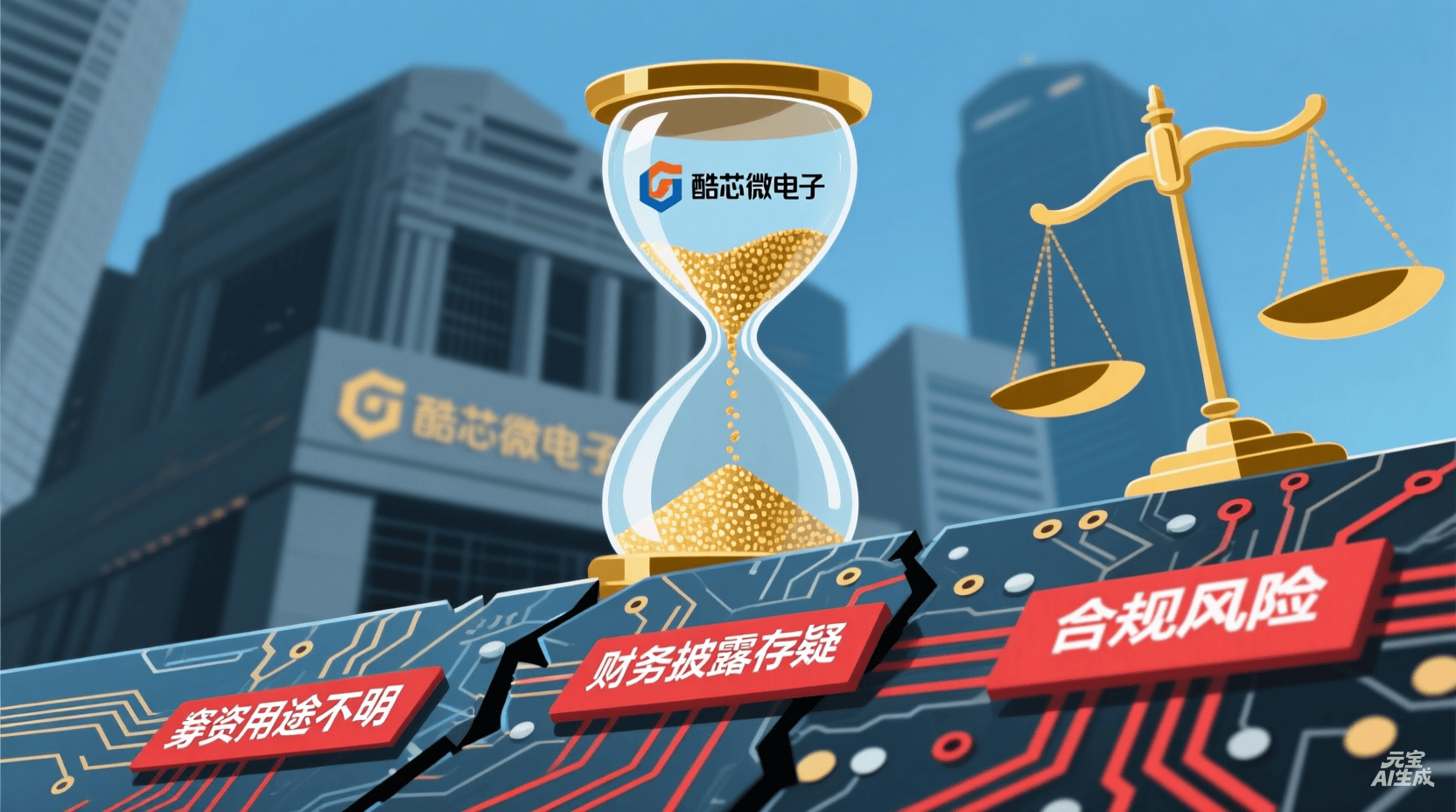
酷芯微电子或首轮上市申请遭拒 现金流仅够支撑18个月
Sou Hu Cai Jing· 2026-02-12 03:38
2026年1月28日,合肥酷芯微电子股份有限公司(下称"酷芯微电子")向港交所递交主板上市申请。然而,市场分析显示,该公司首轮申请被拒概率很大。 其背后存在收入增长停滞、经营性现金流恶化、存货及应收款项激增等多重问题。更严峻的是,扣除短期借款后的现金仅剩0.32亿元,按当前消耗速度仅能 维持约18个月运营。若上市进程延期,不仅会触发对赌协议中的巨额回购条款,还可能导致一级市场估值大幅下降,融资金额或遭腰斩。 2026年1月28日,合肥酷芯微电子股份有限公司正式向港交所主板递交上市申请,华泰国际担任独家保荐人。这家2011年成立的视觉处理AI SoC(系统级芯 片)供应商,递表前刚完成C轮融资,投后估值达33.4亿元,被市场视为AI芯片赛道的黑马。 对酷芯微电子而言,上市不仅是发展所需,更是生存的倒计时。公司扣除短期借款后,现金仅剩0.32亿元。2025年前九个月,公司经营现金净流出0.40亿 元,平均每月净流出约444万元。按此速度计算,公司账上现金仅能支撑约7.2个月(0.32亿元÷0.0444亿元/月)。 芯片设计行业作为典型的资本密集型领域,研发投入乃维持其竞争力的核心要素。2023年,酷芯微电子的研发 ...
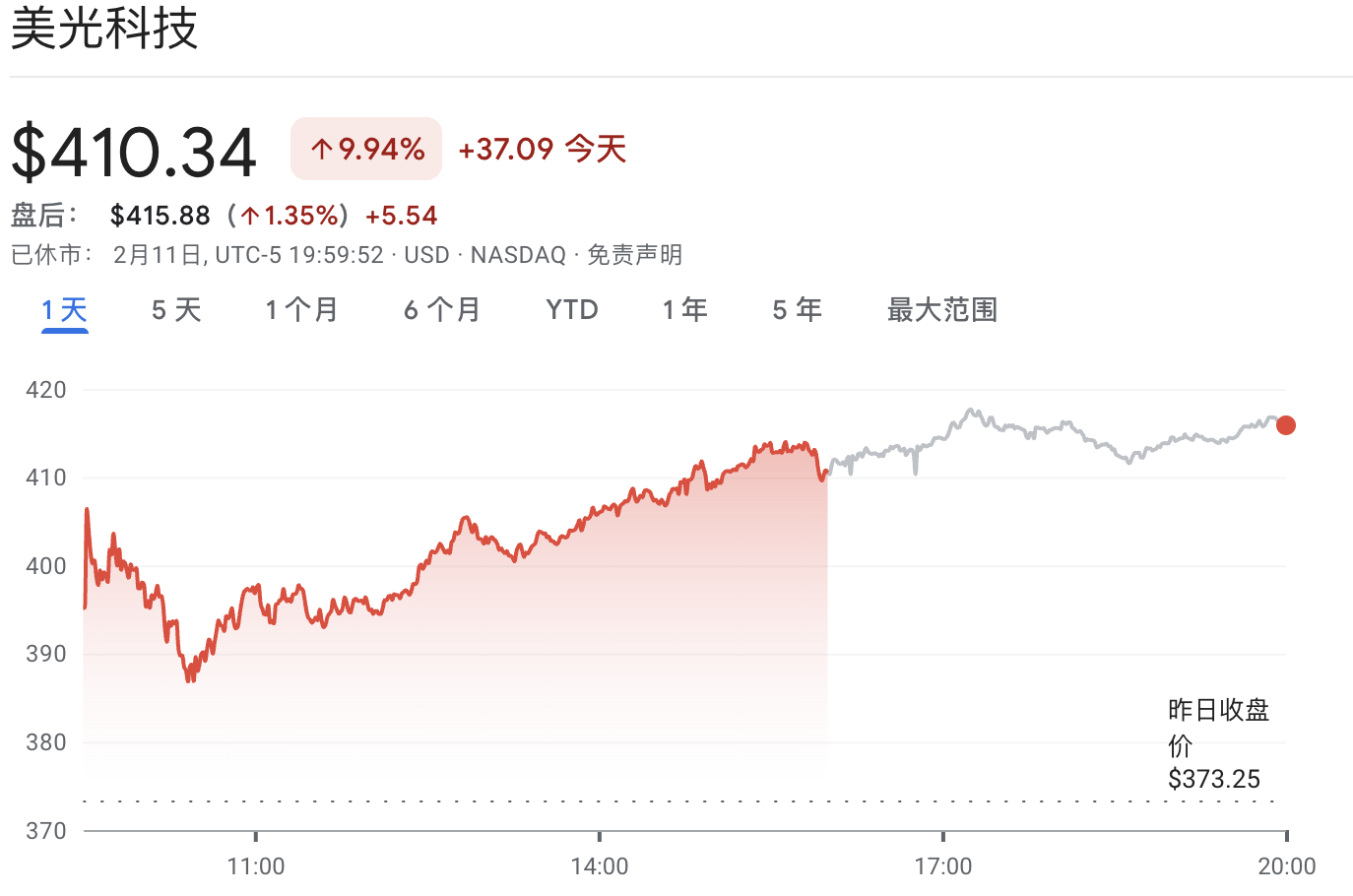
美光CFO对HBM有信心,存储股全线走高
Hua Er Jie Jian Wen· 2026-02-12 02:19
美光高管在行业会议上就下一代高带宽内存芯片的竞争力发表积极表态,缓解了市场对其在HBM4领域落后竞争对手的担忧。这一表态叠加华尔街分析师上 调目标价,推动存储芯片板块整体走强。 隔夜,美光首席财务官Mark Murphy在会议上表示,公司已开始HBM4芯片的量产和出货。"我们对HBM表现感到非常兴奋,"Murphy说。这一表态直接回应 了市场对美光在HBM4竞争中可能落后于SK海力士和三星电子的疑虑。 摩根士丹利分析师Joseph Moore周三将美光目标价从350美元大幅上调至450美元,维持增持评级。Moore指出,虽然SK海力士将在今年第一季度向英伟达供 应HBM4产品,但美光应能从第二季度开始实现同样目标。 HBM4是新一代高带宽内存技术,对于支持英伟达等厂商的前沿AI芯片至关重要。此前市场担心美光可能在这一领域被韩国竞争对手抢占先机,影响其在高 利润率产品市场的份额。 摩根士丹利的Moore在研究报告中指出,SK海力士虽将在第一季度向英伟达供应HBM4,但美光从第二季度开始也能实现供货,时间差距并不显著。 Moore预计,第一季度将出现新一轮大幅涨价,且2026年的供应增长几乎无法缓解预期中的严重短 ...