
新发展格局

Search documents
王沪宁:深化经济体制改革 推动高质量发展
Ren Min Ri Bao· 2025-10-31 00:31
Core Viewpoint - The article emphasizes the importance of deepening economic reforms and promoting high-quality development during the "15th Five-Year Plan" period, focusing on overcoming institutional barriers and enhancing innovation as key drivers for sustainable growth [2][5]. Group 1: Significance of Economic Reform - Economic reform is identified as a crucial driver for development, with historical context provided on its role in achieving rapid economic growth and social stability in China [3]. - The integration of development and reform is highlighted, indicating that progress in one necessitates advancement in the other, particularly in the context of transitioning to high-quality development [3][4]. Group 2: Key Tasks and Major Initiatives - The "Suggestions" outline seven key areas for reform, including the establishment of a modern industrial system, enhancement of innovation capabilities, and the construction of a robust domestic market [6][9]. - Emphasis is placed on the need for reforms that support the transformation of traditional industries and the cultivation of emerging sectors, ensuring a balanced and sustainable economic structure [7][8]. Group 3: Specific Reform Areas - The article details specific reform areas such as: - Strengthening the real economy and optimizing traditional industries while fostering new and future industries [7]. - Accelerating self-reliance in technology and enhancing the national innovation system to boost productivity [8]. - Expanding domestic demand and improving consumption capabilities through targeted reforms [9]. - Enhancing the socialist market economy by balancing government and market roles [10]. - Promoting high-level openness to create a competitive and cooperative international environment [11]. - Advancing rural modernization and regional economic coordination to ensure balanced development [12]. - Fostering a green transformation in economic and social development to build a sustainable future [13]. Group 4: Implementation of Reforms - The article stresses the importance of adhering to the correct direction in implementing reforms, ensuring alignment with the overarching goals of the "Suggestions" [14]. - Coordination and collaboration among various regions and departments are essential for the successful execution of reform tasks [15]. - Encouragement of innovative approaches and practical solutions tailored to specific challenges is highlighted as a means to ensure effective reform outcomes [15].
聚焦“十五五”规划建议|坚决破除阻碍全国统一大市场建设卡点堵点
Xin Hua Wang· 2025-10-31 00:29
Core Viewpoint - The construction of a strong domestic market is a strategic foundation for Chinese-style modernization, as outlined in the recent proposal by the Central Committee for the 15th Five-Year Plan, emphasizing the need to eliminate barriers to the establishment of a unified national market [1][2]. Group 1: Key Initiatives - The proposal includes the iteration of five versions of the negative list for market access and the removal of 4,218 regulations that hinder the establishment of a unified market and fair competition [1]. - It aims to enhance the internal dynamics and reliability of the domestic circulation by effectively breaking down various market barriers [1]. - Specific measures proposed include eliminating barriers related to resource acquisition, qualification recognition, bidding, and government procurement, as well as addressing local protectionism and market segmentation [1][2]. Group 2: Institutional Improvements - The proposal emphasizes the need to improve systems related to property rights protection, market access, information disclosure, social credit, mergers and acquisitions, and market exit [2]. - It calls for the establishment of a standardized administrative discretion framework and the development of comprehensive circulation rules and standards to lower logistics costs across society [2]. - The initiative also focuses on optimizing the market environment by regulating local government economic promotion behaviors and enhancing competition quality [2]. Group 3: Long-term Commitment - Building a unified national market is described as both a challenging and enduring task, requiring continuous efforts to eliminate barriers and address pain points [2]. - Successful construction of this market is expected to support the new development pattern and promote high-quality development, thereby enhancing resilience against risks and challenges [2].
金川集团市场部总经理张明文: 强化产业链供应链韧性
Jing Ji Ri Bao· 2025-10-30 22:17
Group 1 - The core viewpoint emphasizes the importance of building a modern industrial system to strengthen the foundation of the real economy, as highlighted by the 20th Central Committee's Fourth Plenary Session [1] - The company has focused on the core functions and missions of national strategic resource security, optimizing its operations through a comprehensive system that integrates domestic and international resources, as well as supply chain transformations [1] - The strengthening of controllable capabilities in strategic resource supply has laid a solid foundation for the company's safe development during the 14th Five-Year Plan [1] Group 2 - The company stresses the need to balance development and safety by enhancing new productive forces, focusing on breakthroughs in critical technologies in non-ferrous metals, and building a modern industrial system [2] - Future development plans include deep integration into the Belt and Road Initiative and the construction of new land-sea channels, aiming to improve the quality of overseas project operations and increase the number of overseas customers [2] - The company aims to achieve continuous growth in the export of high-quality products by leveraging resource acquisition and integrated development in advantageous regions along the Belt and Road [2]
对外经济贸易大学国家对外开放研究院教授蓝庆新: 构建全方位安全保障网
Jing Ji Ri Bao· 2025-10-30 22:17
Core Viewpoint - The 20th Central Committee's Fourth Plenary Session emphasizes the principle of "coordinating development and security" as essential for economic and social development during the 14th Five-Year Plan period, highlighting the importance of a new security framework to support a new development pattern [1] Group 1: Economic and Social Development - China's development is characterized by a mix of strategic opportunities and risks, with increasing uncertainties in the external environment [1] - The transition from high-speed growth to high-quality development necessitates a stable and secure internal and external environment [1] Group 2: Security Framework - A comprehensive security framework is required, encompassing political, economic, technological, cultural, social, ecological, and resource aspects [1] - The establishment of a systematic, holistic, and coordinated security system is essential to ensure safety while promoting high-level opening-up and accelerating the construction of a new development pattern [1]
消费投资协同发力扩内需
Jing Ji Ri Bao· 2025-10-30 22:16
Core Viewpoint - The expansion of domestic demand is not merely about the simple addition of consumption and investment, but rather about allowing the continuously upgrading consumption demand to guide investment direction and drive transformation, while efficient and precise investment enhances supply quality and creates new consumption demand, thus injecting lasting momentum into China's high-quality economic development [1][4] Group 1: Economic Contributions - In the first three quarters, final consumption expenditure contributed 53.5% to economic growth, while capital formation contributed 17.5%, indicating that domestic demand remains a solid foundation for China's economic development and response to challenges [1] - As a super-large economy, China possesses advantages in leading with domestic demand and internal circulation, making it crucial to correctly understand the dialectical relationship between consumption and investment to promote an economic development model driven by domestic demand and consumption [1][2] Group 2: Misconceptions in Practice - There are misconceptions that view consumption and investment as opposing forces, believing that increasing consumption necessarily crowds out investment or that expanding investment suppresses consumption [2] - Another misconception is the separation of short-term and long-term benefits, either overemphasizing the immediate growth from investment while neglecting the foundational role of consumption or assuming that a slowdown in investment growth indicates a contraction in investment space [2] - A tendency to focus on scale over efficiency leads to traditional expansion approaches that overlook the structure, quality, and efficiency of investment [2] Group 3: Dynamic Development and Investment - The aspiration for a better life among the populace drives continuous upgrades in consumption structure, guiding various factors towards fields that meet future development needs [3] - Forward-looking investments, especially breakthroughs in technological innovation, can create new products and services, stimulating new consumption demand, as evidenced by the rise of industries like smartphones and new energy vehicles [3] Group 4: Policy Directions and Investment Focus - The 20th Central Committee of the Communist Party of China emphasizes the importance of combining investments in goods and people, using new demand to lead new supply and creating new demand through new supply, promoting a virtuous interaction between consumption and investment [3][4] - There is significant space for investment in short-board areas, weak links, and new fields, focusing on major national strategies and high-quality development requirements [4] - Continuous investment in the livelihood sector is necessary to address shortcomings, achieving an organic combination of investments in goods and people [4]
新华时评·聚焦“十五五”规划建议|坚决破除阻碍全国统一大市场建设卡点堵点
Xin Hua She· 2025-10-30 16:15
Core Viewpoint - The construction of a strong domestic market is a strategic foundation for Chinese-style modernization, with a focus on eliminating barriers to the establishment of a unified national market [1][2]. Group 1: Key Measures for Market Construction - The proposal emphasizes the need to eliminate barriers in areas such as resource acquisition, qualification recognition, bidding, and government procurement [1]. - A total of 4,218 regulations and practices that hinder the establishment of a unified market and fair competition have been identified for cleanup [1]. - The iteration of the market access negative list has been released five times to facilitate smoother resource flow and efficient allocation [1]. Group 2: Institutional Improvements - The proposal includes enhancing systems for property rights protection, market access, information disclosure, social credit, mergers and acquisitions, and market exit [2]. - It aims to establish a comprehensive and scientifically sound institutional framework to provide ongoing momentum for breaking down barriers [2]. - The focus is on creating a market order that encourages quality and fair competition while optimizing statistical, fiscal, and assessment systems [2]. Group 3: Long-term Commitment - Building a unified national market is described as both a tough battle and a long-term endeavor, essential for supporting high-quality development and enhancing resilience against risks [2].
学习笔记|完整准确全面贯彻新发展理念
2 1 Shi Ji Jing Ji Bao Dao· 2025-10-30 13:10
Core Viewpoint - The 20th Central Committee of the Communist Party of China has approved the "15th Five-Year Plan" proposal, emphasizing the need for a new development pattern that prioritizes domestic circulation while promoting international circulation [2][3]. Group 1: Economic Development Goals - The "15th Five-Year Plan" aims to achieve high-quality development, with a focus on technological self-reliance and expanding domestic demand as key supports for economic growth [4]. - The plan highlights the importance of enhancing the national innovation system and increasing the overall effectiveness of independent innovation to seize opportunities from the new technological revolution [4]. - Measures to boost consumption will include increasing public service spending, expanding the supply of quality consumer goods and services, and fostering new consumption scenarios [4]. Group 2: Income Distribution Reform - The proposal emphasizes improving the income distribution system, advocating for a primary focus on labor-based distribution while allowing for multiple distribution methods [5][6]. - It aims to increase the proportion of residents' income in national income distribution and enhance labor remuneration in the primary distribution process [5]. - The reform will promote a more equitable income distribution, expanding the middle-income group and encouraging consumption as a key driver of economic growth [6]. Group 3: Challenges and Strategic Responses - The proposal acknowledges the challenges posed by external uncertainties and internal economic pressures, necessitating a focus on a new development pattern [2][3]. - It identifies issues such as insufficient effective demand, unbalanced development, and risks in key areas that need to be addressed to ensure sustainable economic growth [3]. - The plan calls for a steady approach to economic construction, prioritizing high-quality development and reform innovation as fundamental drivers [3].
李强发表署名文章
Ren Min Ri Bao· 2025-10-30 08:57
Core Viewpoint - The article outlines the guiding principles for China's economic and social development during the "15th Five-Year Plan" period, emphasizing the importance of strategic planning and implementation to achieve modernization goals [2][3]. Group 1: Historical Context and Strategic Positioning - The "15th Five-Year Plan" period is positioned as a critical phase in achieving socialist modernization, serving as a bridge between past achievements and future goals [3][4]. - The plan aims to solidify the foundation for modernization and address challenges while promoting high-quality development [4][5]. Group 2: Guiding Principles and Development Goals - The guiding ideology for the "15th Five-Year Plan" includes adherence to Marxism, the importance of high-quality development, and the need for comprehensive reforms [7][8]. - Six principles are outlined: party leadership, people-centered development, high-quality growth, comprehensive reform, effective market and government collaboration, and the balance of development and security [8]. Group 3: Implementation Strategies - Emphasis on constructing a new development pattern that prioritizes domestic circulation while maintaining international engagement [10][11]. - The integration of technological and industrial innovation is crucial for fostering new productive forces and enhancing competitiveness [11][12]. - Focus on improving public welfare and promoting common prosperity as essential components of modernization [12][13]. Group 4: Risk Management and Safety - The plan highlights the need to balance development with safety, ensuring resilience against various risks and challenges [13]. - A comprehensive approach to risk prevention and management is necessary to safeguard high-quality development [13]. Group 5: Future Directions - The article calls for a collective effort to implement the guiding principles and achieve the goals set forth in the "15th Five-Year Plan" [14].
“十五五”规划引领转型 中国房地产市场迎格局重塑
Sou Hu Cai Jing· 2025-10-30 08:40
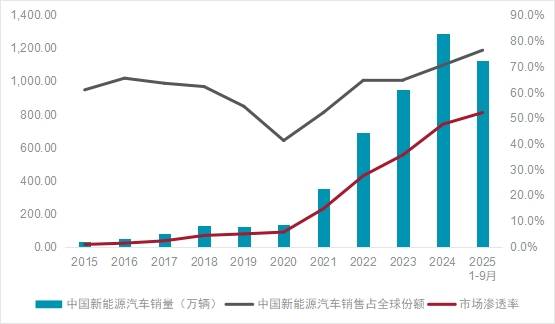
Core Insights - The "15th Five-Year Plan" (2026-2030) aims to reshape China's commercial real estate market through five core themes, addressing challenges such as high-quality development and global geopolitical shifts [1] - The plan emphasizes the construction of a modern industrial system, focusing on traditional industry optimization, emerging industry growth, and future industry layout [2] - The real estate sector is transitioning from a national economic pillar to a core of livelihood security, with a shift from "having a house" to "living well" [8] Group 1: Economic and Industrial Development - The "15th Five-Year Plan" prioritizes modern industrial system construction, which includes the growth of strategic emerging industries like new energy vehicles and biomedicine, with the latter expected to see significant growth in authorized transactions [2] - China's production of new energy vehicles is projected to reach 12.8 million units in 2024, with a compound annual growth rate of 72% [2] - The number of industrial robots installed in China has surpassed that of all other regions combined, with 276,300 units installed in 2023, making China the global leader [2] Group 2: Consumer and Retail Market Dynamics - The plan promotes a consumption-driven economy, shifting focus from material investment to human capital and social welfare, with policies aimed at stimulating consumer potential [4] - Consumer-focused REITs have gained traction, with existing products showing significant growth, indicating a robust market for retail properties [4] - The market is expected to see continued expansion of consumer REITs, driving retail properties to innovate and enhance consumer engagement [4] Group 3: Global Investment and Asset Appeal - China's commitment to high-level openness is enhancing the attractiveness of its assets, particularly in the context of global protectionism [5] - Panda bonds have seen cumulative issuance exceeding 1 trillion yuan, highlighting their appeal in the international market [5] - The expectation of increased foreign capital inflow into China's commercial real estate market is anticipated, particularly for quality assets like retail properties and logistics [5] Group 4: Real Estate Market Transformation - The real estate market is moving towards high-quality development, with a focus on improving living conditions and increasing the supply of affordable housing [8] - The proportion of real estate investment in GDP has decreased from nearly 15% in 2014 to 7.4% in 2024, indicating a reduced reliance on the sector [8] - The "15th Five-Year Plan" emphasizes green transformation, aiming for significant growth in the green industry and the establishment of zero-carbon parks [8] Group 5: Future Outlook for Commercial Real Estate - The upcoming five years are seen as a golden window for commercial real estate, driven by industrial expansion, consumer demand, and international capital interest [10] - The transition towards a demand-driven economy and the emphasis on sustainability are expected to reshape the value standards in commercial real estate [10] - The sector is poised for a new cycle of restructuring and potential release, guided by policy support and market dynamics [10]

李强同志署名文章:“十五五”时期经济社会发展的指导方针
Ren Min Ri Bao· 2025-10-30 04:38
Core Viewpoint - The article outlines the guiding principles for China's economic and social development during the "15th Five-Year Plan" period, emphasizing the importance of achieving socialist modernization and addressing both domestic and international challenges [1][2][3]. Group 1: Historical Context and Strategic Positioning - The "15th Five-Year Plan" period is positioned as a critical phase in the journey towards socialist modernization, serving as a bridge between past achievements and future goals [2][3]. - The plan aims to solidify the foundation laid during the "14th Five-Year Plan" and to address key challenges while promoting high-quality development [3][4]. Group 2: Guiding Principles and Ideological Framework - The guiding ideology for the "15th Five-Year Plan" includes adherence to Marxism, Mao Zedong Thought, Deng Xiaoping Theory, and Xi Jinping's Thought on Socialism with Chinese Characteristics for a New Era [5][6]. - Six principles are emphasized: comprehensive party leadership, prioritizing the people, promoting high-quality development, deepening reforms, combining effective markets with proactive government, and balancing development with security [7]. Group 3: Practical Implementation and Development Strategies - The plan calls for a focus on domestic circulation while maintaining international engagement, aiming to strengthen the domestic market and enhance economic resilience [8][9]. - Emphasis is placed on technological and industrial innovation to foster new productive forces, with a focus on integrating education, technology, and talent development [9]. - The plan highlights the importance of improving people's livelihoods and promoting common prosperity, addressing disparities in public services and income distribution [10]. Group 4: Security and Risk Management - The article stresses the need to integrate development with security, ensuring that economic growth is underpinned by a robust safety framework [11]. - It advocates for proactive risk management and the establishment of mechanisms to prevent systemic risks while promoting high-quality development [11]. Group 5: Future Outlook and Commitment - The article concludes with a call for unity and action under the leadership of the Communist Party, emphasizing the commitment to advancing China's modernization and national rejuvenation [12].