量子技术

Search documents
据华尔街日报:空客硅谷创新中心与AI初创公司SandboxAQ发布采用量子技术的新导航技术成果。
news flash· 2025-07-15 11:02
据华尔街日报:空客硅谷创新中心与AI初创公司SandboxAQ发布采用量子技术的新导航技术成果。 ...

国开启科取得用于多控量子相移门的分解方法等专利
Sou Hu Cai Jing· 2025-07-15 01:57
Group 1 - The National Intellectual Property Administration has granted a patent for a method, device, equipment, and medium for multi-controlled quantum phase shift gates to three companies: Guokai Quantum Technology (Anhui) Co., Ltd., Qike Quantum Technology (Zhuhai) Co., Ltd., and Guokai Quantum Technology (Beijing) Co., Ltd. [1] - Guokai Quantum Technology (Anhui) Co., Ltd. was established in 2022, located in Hefei, with a registered capital of 37.31 million RMB. The company has invested in one enterprise, participated in 12 bidding projects, and holds 182 patents [1]. - Qike Quantum Technology (Zhuhai) Co., Ltd. was founded in 2021, based in Zhuhai, with a registered capital of 10 million RMB. The company has participated in one bidding project and holds 233 patents and 103 trademark registrations [1]. - Guokai Quantum Technology (Beijing) Co., Ltd. was established in 2016, located in Beijing, with a registered capital of 35.875 million RMB. The company has invested in four enterprises, participated in one bidding project, and holds 495 patents and 116 trademark registrations [2]. Group 2 - The companies are primarily engaged in sectors such as computer, communication, and other electronic device manufacturing, as well as technology promotion and application services [1][2]. - The patent granted is significant for the development of quantum technology, indicating a growing focus on innovation within the industry [1].
中国科协将举行第二十七届年会系列活动
Yang Guang Wang· 2025-07-12 07:27
Group 1 - The 27th China Association for Science and Technology Annual Conference will be held from July 1 to July 31 in Beijing, focusing on "Tracing Technological Frontiers and Supporting Innovative Development" [1] - The main forum is scheduled for the morning of July 6, featuring prominent speakers discussing topics such as quantum technology, biomanufacturing, deep-sea technology, artificial intelligence, and agriculture [1][2] - The conference will include various exhibitions and open academic exchanges to foster a positive academic atmosphere [1] Group 2 - The latest citation report indicates that 56 Chinese scientific journals rank in the top three internationally within their disciplines, with 24 journals ranking first [2] - A new "Academic Association" service platform will be launched, providing comprehensive management systems for scientific journals and promoting data exchange and publication services [2] - The conference will host 98 specialized forums covering ten fields, including basic sciences, life health, earth sciences, ecological environment, manufacturing technology, information technology, advanced materials, resource energy, agricultural technology, and aerospace technology [2] Group 3 - The annual conference is a significant initiative for the China Association for Science and Technology to implement the spirit of the Third Plenary Session and contribute to the 14th Five-Year Plan [3] - It aims to strengthen the association's service to national strategic guidance and enhance its academic influence and cohesion among scientific workers [3]
A股并购重组逻辑正发生深刻变化
Zheng Quan Ri Bao· 2025-07-09 16:12
Group 1 - The A-share market has seen a significant increase in major asset mergers and acquisitions (M&A), with 104 disclosed projects this year, which is 2.17 times that of the same period last year [1] - The shift in M&A logic from "scale first" to "innovation-driven and ecological synergy" reflects a deeper change in the market, emphasizing the importance of acquiring innovative assets such as data, patents, and production processes [1][2] - The current economic environment reveals limitations in traditional M&A strategies focused on scale, prompting companies to seek core technological breakthroughs and innovative ecosystems to gain competitive advantages [1][3] Group 2 - Companies like Haitan Water Group are leveraging M&A to transition from traditional production to new productive forces, particularly in the photovoltaic silver paste sector [2] - The competition among enterprises has evolved beyond single products to a comprehensive contest of entire industrial chains and innovation ecosystems, driven by intensified product homogeneity and price wars [2] - The trend of innovation-driven and ecological synergy in M&A is expected to create a strong demonstration effect, encouraging more companies to engage in M&A, thereby enhancing the overall technological level and optimizing industrial structure [2][3] Group 3 - The chairman of the China Securities Regulatory Commission highlighted the importance of a financial service system that supports technological innovation and industrial transformation, positioning M&A as a key function in optimizing resource allocation [3] - The transformation of A-share M&A logic is both a spontaneous market evolution and a necessary choice for the capital market to support national strategies, aiming to aggregate innovative elements and upgrade industrial ecosystems [3]
量子产业化,日本下血本了
Hu Xiu· 2025-07-08 01:29
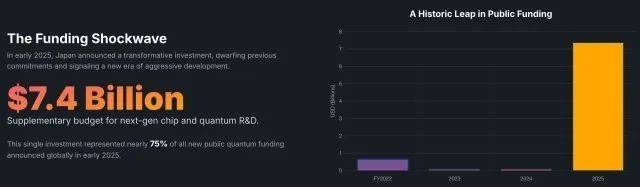
Group 1 - Japan's government has committed $7.4 billion (approximately 1.05 trillion yen) to quantum technology this year, which is more than three times the total investment over the past five years [1][2] - This investment represents a strategic shift driven by deep-seated concerns about historical failures in technology leadership, particularly in the semiconductor industry [3][4] - The Japanese government aims to transition from basic research to industrialization, with a clear goal of making quantum technology a pillar of future economic prosperity and national security [5][10] Group 2 - The investment is seen as a "preventive and high-risk" intervention to avoid being left behind in the global competition for technology leadership [7][9] - The government hopes to stimulate systemic change, encouraging research institutions, large enterprises, and potential startups to engage in the quantum race [8][9] - Japan's approach is characterized by a "collaborative giant ship" model, where the government leads and industrial giants collaborate, forming a powerful alliance [12][14] Group 3 - Major Japanese corporations like Toyota, NEC, and Fujitsu are expected to benefit significantly from government contracts and participation in core research projects [43][44] - The focus on building a self-sufficient supply chain for quantum technology components is a key aspect of Japan's strategy, aiming to avoid reliance on foreign suppliers [20][23] - The mixed quantum-classical computing strategy is seen as a pragmatic approach to leverage existing capabilities while aiming for quick results in various applications [17][18][19] Group 4 - Japan's commitment to quantum technology is likely to provoke responses from other major players, including the U.S. and China, potentially escalating a new round of "quantum arms race" [39][40][42] - The success of Japan's strategy will depend on overcoming challenges such as fostering a vibrant startup ecosystem and effectively translating research into marketable products [25][29][31] - Attracting and retaining top talent in the competitive global landscape is crucial for Japan to realize its quantum ambitions [32][34][38]


量子科技行业周刊:量子技术进入加速创新爆发期,行业尚处萌芽期
Chan Ye Xin Xi Wang· 2025-07-07 05:26
Key Policies - The European Commission has launched a quantum technology strategy aiming to make Europe a global leader in the quantum field by 2030, with expectations to create tens of thousands of high-skilled jobs and a market value exceeding €155 billion by 2040 [4][5] - Texas Governor Greg Abbott has signed the HB 4751 bill to initiate the "Texas Quantum Initiative," aiming to position Texas as a leader in quantum computing, networking, and sensing technologies [6][8] Key Events - The EU technology leader emphasized the need for increased private funding in the quantum sector, as only 5% of global private investment currently flows to Europe, despite over €11 billion in public funding provided in the past five years [9] - SpeQtral and Thales Alenia Space have signed a new cooperation agreement to advance satellite quantum communication technology [9][12] - The China Association for Science and Technology highlighted the need for patient support and a rational environment for the industrialization of quantum technology [15] - A research team demonstrated a high-speed 16-node quantum access network based on passive optical networks, marking progress towards practical quantum communication solutions [17] Key Technologies - An international research team has developed the first quantum computer capable of operating in space, integrated into a satellite launched on June 23 [22] - A new method has been successfully implemented to simulate specific fault-tolerant quantum computations, addressing a long-standing technical challenge [23][24] - Tokyo University and IBM have achieved a record simulation of a many-body system using 56 quantum bits on the IBM Heron quantum processor [26][27] - CSIRO and collaborators have demonstrated the application of quantum machine learning in semiconductor manufacturing, potentially reshaping chip design [29] Key Companies - IBM has released version 2.1 of its Qiskit SDK, predicting the achievement of undisputed practical quantum advantage by the end of 2026 [37][38] - Quantum eMotion and Krown are advancing the development of quantum-secure encryption wallets [39] - Xanadu and Mitsubishi Chemical are collaborating to develop quantum algorithms for simulating extreme ultraviolet lithography processes [40][45] - D-Wave has completed a $400 million stock issuance to accelerate its commercialization efforts in quantum computing [48][49] - Groove Quantum has secured €10 million in funding to focus on germanium-based quantum computing technology [50]

潘建伟:量子技术产业化需要耐心支持和理性环境
Ke Ji Ri Bao· 2025-07-06 23:29
Core Insights - The core viewpoint of the articles is the current state and future path of quantum technology, particularly focusing on quantum information technology, which is driving the second quantum revolution [1][2]. Group 1: Quantum Technology Overview - Quantum technology is defined as "quantum information technology," which includes quantum computing, quantum communication, and quantum precision measurement [1]. - Quantum communication has established wide-area networks and practical terminal products, while quantum precision measurement is showing application value in navigation and medical fields [1]. - Quantum computing is still in the experimental research phase, with the "Zuchongzhi No. 3" superconducting quantum computing prototype recently achieving the strongest "quantum computing superiority" published to date [1]. Group 2: Challenges in Industrialization - The industrialization of quantum computing may take another 10 to 15 years, primarily due to the lack of practical algorithms suitable for current quantum computers [2]. - Traditional sectors pose resistance to the adoption of quantum technology, as existing interests may hinder the integration of new technologies like quantum secure communication [2]. - There is a concern about unrealistic promotion of immature technologies by some companies, which can mislead the public and investors, damaging the credibility of quantum technology [2]. Group 3: Recommendations for Development - To promote the industrialization of quantum technology, continuous investment and support from both government and private sectors are essential [2]. - There is a need for a consensus across society to allow time and space for technology to grow, as well as the cultivation of interdisciplinary talents who understand quantum principles and can operate relevant equipment [2][3]. - The development of quantum technology relies on the manufacturing of essential equipment such as electron beam lithography machines, molecular beam epitaxy, and dilution refrigerators [3].
第二十七届中国科协年会主论坛举办 五位院士专家作主旨报告
Huan Qiu Wang Zi Xun· 2025-07-06 14:05
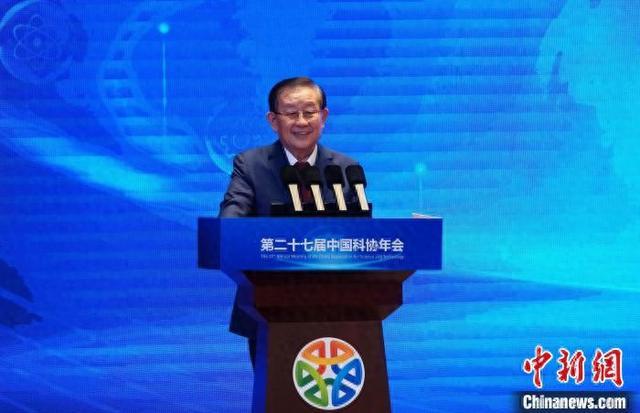
中国科协副主席、中国科学院院士潘建伟,中国人工智能学会理事长、中国工程院院士戴琼海,中国海 洋学会副理事长、中国工程院院士李家彪,中国作物学会理事长、中国农学会副会长、中国工程院院士 万建民,中国可再生能源学会理事长、中国工程院院士谭天伟,分别围绕量子技术、人工智能、深海科 技、种业振兴、生物制造等主题作主旨报告。 主论坛上,中国科协还发布2025重大科学问题、工程技术难题和产业技术问题,包括具有引领性、创新 性、战略性的30个问题难题,推动研判未来科技发展趋势,前瞻谋划前沿科技领域与研究方向。 来源:中国新闻网 中新网北京7月6日电 (记者 孙自法)第二十七届中国科协年会主论坛7月6日在北京举行,中国科协主席 万钢出席并致辞,中国科协党组书记贺军科主持主论坛,五位院士专家应邀作主旨报告。 中国科协主席万钢出席主论坛并致辞。中新网记者 孙自法 摄 万钢表示,本届年会旨在紧跟世界科技前沿发展态势,锚定科技强国目标,交流新理论、新观点、新学 说,探讨新领域、新赛道、新机遇。科协组织将致力于把握科技前沿的发展态势,丰富高质量科技供 给;发挥跨界融合的组织优势,开展高水平科技咨询;倡导务实开放的会风学风,促进高效率学 ...
哈佛大学发布《2025全球关键和新兴技术指数报告》,揭示全球科技新格局
Tai Mei Ti A P P· 2025-07-04 09:17
Core Insights - The report from Harvard Kennedy School's Belfer Center outlines the intense global competition in key emerging technologies as of 2025, focusing on the rivalry between the US and China, with Europe lagging behind [1][6]. Group 1: Key Technology Areas - The report identifies five critical technology areas with assigned strategic weights: Semiconductors (35%), Artificial Intelligence (25%), Biotechnology (20%), Space Technology (15%), and Quantum Technology (5%) [3][6]. - Semiconductors are described as the "heart" of modern technology, while AI is viewed as a "multiplicator of competition" impacting various sectors [3][6]. Group 2: Global Technology Landscape - The US is recognized as the only "super technology power," leading in all five technology areas due to its vibrant decentralized innovation ecosystem [6][7]. - China ranks second globally, showing strong momentum, particularly in biotechnology and quantum technology, where it is rapidly closing the gap with the US [7][9]. - Europe ranks third overall but exhibits uneven performance across different fields, excelling in AI and biotechnology while lagging in semiconductors and space technology [10]. Group 3: Biotechnology Developments - Biotechnology is highlighted as the field where China has the best chance to surpass the US, driven by its dominance in pharmaceutical production and a significant increase in clinical trials and patents [12][13]. - Recent investments from major pharmaceutical companies in China underscore international recognition of its biotechnology capabilities [12][13][15]. Group 4: Artificial Intelligence Progress - In AI, while the US maintains a numerical advantage in model development, China is rapidly improving in model quality, with the performance gap narrowing significantly [16][18]. - China's cost-effective model training presents a competitive edge, with substantial reductions in training costs compared to US counterparts [18]. Group 5: Semiconductor Industry Challenges - The semiconductor industry is characterized by its complex global supply chain, with the US, Japan, Taiwan, and South Korea holding dominant positions [20][22]. - China's semiconductor development faces significant challenges due to US export controls, impacting its access to advanced manufacturing technologies [22]. Group 6: Future Technology Competitions - In quantum technology, the competition involves the US, China, and Europe, with China excelling in quantum sensing and communication, while the US leads in quantum computing research [23][25]. - The space technology sector is driven by innovative public-private partnerships in the US, exemplified by companies like SpaceX, which are revolutionizing space exploration [25][27]. Group 7: Nature of Technological Competition - The report emphasizes that technological progress relies on openness and cooperation, yet geopolitical realities are creating barriers to global collaboration [28]. - Countries are adopting strategies like "nearshoring" and "friend-shoring" to enhance supply chain resilience, which may lead to increased costs and reduced efficiency [28]. Group 8: Conclusion on Future Technology Race - The future of technological competition will hinge on the balance between open innovation and closed protectionism, as well as the interplay between national strategies and grassroots innovation [29].
安徽合肥:“量子大道”越走越宽
Ke Ji Ri Bao· 2025-07-03 23:27
Group 1 - The core viewpoint of the articles highlights the significant advancements and applications of quantum technology in Hefei, particularly through the efforts of China Telecom Quantum Group, which has developed quantum encryption communication technology that has attracted nearly 6 million users [2][3] - Hefei is recognized as a major hub for quantum technology innovation in China, hosting about one-third of the country's quantum technology enterprises, and is actively transforming cutting-edge technology into a driving force for future industrial development [2][3] - The local government has established a dedicated team to support the quantum industry, facilitating collaboration between academia, research institutions, and enterprises to promote the integration of research and application [3][4] Group 2 - The successful commercialization of quantum technology relies on deep integration of research, industry, and application, with Hefei's government implementing policies to encourage this collaboration, including funding support for projects up to 10 million yuan [3][4] - The development of quantum technology products, such as long-distance single-photon imaging radar systems, has significantly accelerated, with timeframes for commercialization reduced from over 10 years to 3-5 years [4][6] - Initial funding is crucial for startups in the quantum industry, as demonstrated by the case of Yaozheng Quantum Technology Co., which received 30 million yuan in investment to support its development [5][6] Group 3 - Application scenarios are essential for the growth of the quantum industry, exemplified by the establishment of the first quantum application demonstration substation in Anhui, which integrates quantum measurement, communication, and computing [7] - Hefei has developed a complete ecosystem for the quantum industry, with nearly 90 upstream and downstream enterprises, making it a leader in the national quantum industry landscape [7][8] - The local government supports the quantum industry through various initiatives, including recognition programs for new technologies and products, which facilitate the practical application of quantum innovations [7]