高股息资产

Search documents
红利风格防御性凸显!红利低波ETF(512890)逆势上涨规模突破190亿
Xin Lang Ji Jin· 2025-06-26 08:41
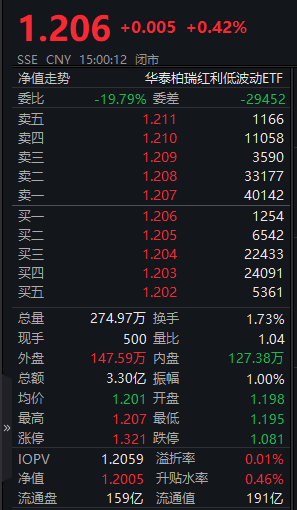
Group 1 - The core point of the news is the performance and growth of the Hongli Low Volatility ETF (512890), which has seen significant increases in both its shares and scale in 2024 [1][4] - As of June 25, 2024, the Hongli Low Volatility ETF has a total of 158.73 billion shares and a scale of 190.56 billion yuan, reflecting a year-to-date increase of 29.45% in shares and 38.59% in scale [1][4] - The ETF's recent closing price was 1.206 yuan, with a trading volume of 3.30 billion yuan on June 26, 2024 [1] Group 2 - The ETF's performance is attributed to the strong performance of its top ten components, including Chengdu Bank, Shanghai Rural Commercial Bank, and Jiangsu Bank [3] - The fund was established on December 19, 2018, with a management fee of 0.50% and a custody fee of 0.10%, and has achieved a return of 140.10% under the management of Liu Jun [4] - The investment strategy for bank stocks emphasizes the importance of liquidity and the revaluation of net assets, which is expected to drive industry valuation upward by 2025 [2]

6个月狂买1800亿港元!平安“扫货”银行H股
华尔街见闻· 2025-06-25 09:50
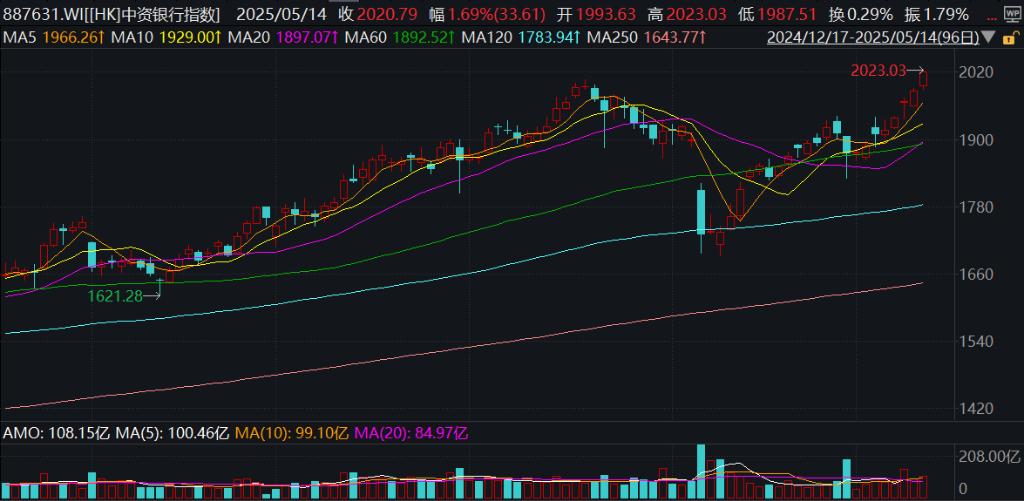
Core Viewpoint - The article discusses the significant increase in holdings of domestic large bank stocks by Ping An Insurance and other mainland insurance companies, betting that high dividend yields will offset the adverse factors of narrowing bank profit margins and profit pressures [1][2]. Group 1: Investment Trends - Ping An Insurance has substantially increased its holdings in several large banks listed in Hong Kong since the end of 2024, with a total holding size reaching HKD 180 billion (USD 23 billion) [1]. - The proportion of Ping An's holdings in Industrial and Commercial Bank of China (ICBC) has risen to 18%, while holdings in China Merchants Bank and Agricultural Bank of China have exceeded 15% [1]. - The combination of low valuations and high dividend yields in Hong Kong bank stocks provides a more attractive allocation choice for insurance funds, highlighting the market's urgent demand for high-yield assets [2][3]. Group 2: Market Performance - The influx of insurance capital has led to a significant rise in the banking sector, with the Hong Kong-listed Chinese bank index reaching a seven-year high [2]. - Individual stocks like CITIC Bank have achieved historical highs, and Agricultural Bank of China also closed at its highest level since its listing in 2010 [2][6]. Group 3: Investment Strategy - Insurance funds favor high dividend assets, with the average dividend yield of large Chinese banks in Hong Kong exceeding 4%, compared to a benchmark 10-year government bond yield of 1.65% [3]. - Ping An Insurance emphasizes that the low volatility and high dividends from bank stocks will contribute to considerable interest income, maintaining a balanced investment strategy between growth stocks and high dividend value stocks while increasing non-bank stocks to diversify risk [4]. Group 4: Challenges Ahead - Despite strong stock performance, Chinese banks face record-low profit margins and slow profit growth [7]. - There are concerns regarding the sustainability of the upward momentum in bank stocks, as banks continue to deal with profit margin compression and high funding costs [8]. - Observations are needed to determine whether bank credit expansion can translate into real economic activity, as stock performance has diverged from the banks' fundamentals [9].
AH溢价最新情况如何?港股红利主题大举吸金,港股红利ETF基金(513820)今日除息,规模首超30亿元!机构:年内降息或达30BP
Sou Hu Cai Jing· 2025-06-25 06:39
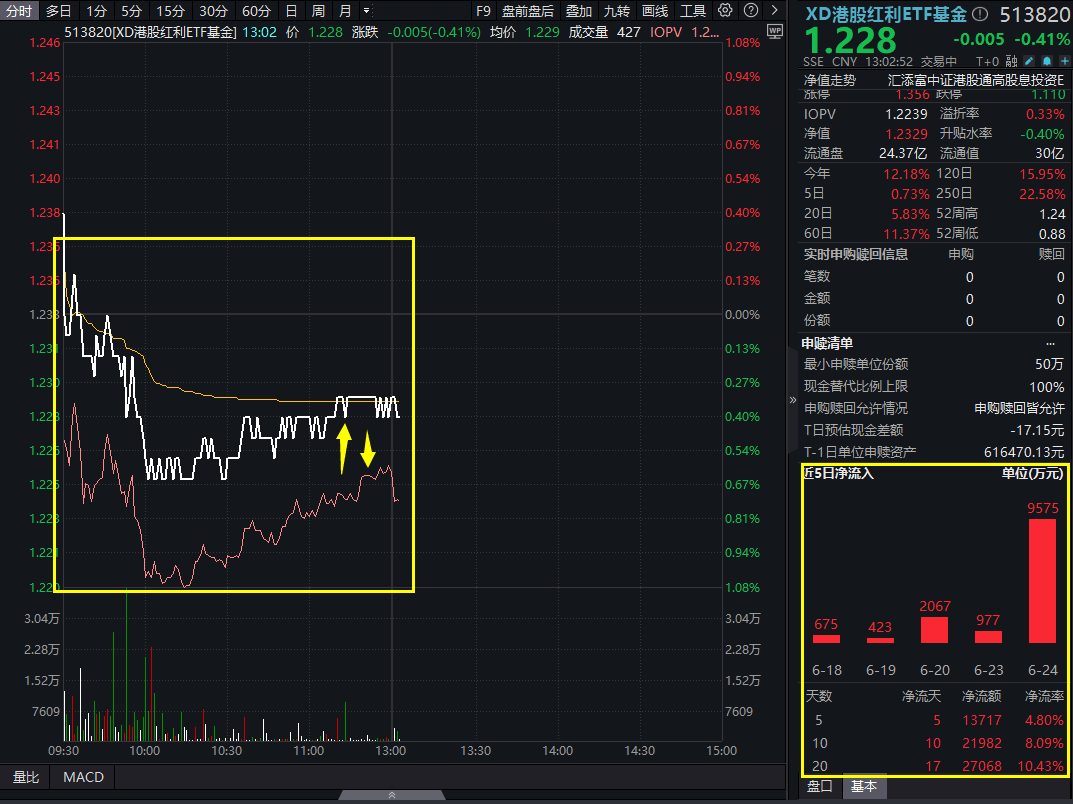
Core Viewpoint - The Hong Kong Dividend ETF Fund (513820) is experiencing significant investor interest, with a focus on high dividend yields and a strong performance in the market, particularly on its ex-dividend date [1][5][12]. Group 1: Fund Performance and Market Activity - On June 25, the Hong Kong Dividend ETF Fund (513820) marked its 12th ex-dividend date, with cash dividends expected to be distributed by the end of the month [1]. - The fund has seen a continuous inflow of over 270 million yuan in the past 17 days, surpassing a total scale of 3 billion yuan, leading in size among similar funds [1]. - As of June 25, the fund experienced a slight decline of 0.41%, while the premium in trading prices reached 0.25% [1]. Group 2: Index Composition and Stock Performance - The index of the Hong Kong Dividend ETF Fund consists of 30 constituent stocks, with 18 of them listed in both Hong Kong and A-shares, accounting for over 60% of the index weight [6]. - The top-performing stocks include Guotai Junan International, which rose by 4.89%, while coal stocks experienced a general decline [3][4]. Group 3: Valuation and Dividend Yield - The average AH premium rate for the index constituents reached 37%, indicating a favorable valuation compared to A-shares [6]. - The Hong Kong Dividend ETF Fund's index has a declared total dividend amount of 1,015.98 billion yuan for 2024, reflecting an 11.06% year-on-year increase, with a dividend payout ratio of 38.91% [12][13]. Group 4: Macro Environment and Investment Strategy - The current low-interest-rate environment is driving demand for high-dividend assets, making the Hong Kong Dividend ETF Fund an attractive option for defensive investors [11][12]. - The overall cash dividend ratio for the Hong Kong market reached 48.9% in 2023, surpassing the A-share market's 41.8% [12].
6个月狂买1800亿港元!平安“扫货”银行H股
Hua Er Jie Jian Wen· 2025-06-25 01:35
Group 1 - Major insurance companies, including Ping An Insurance, have significantly increased their holdings in large domestic banks, betting that high dividend yields will offset the negative factors of narrowing profit margins and profit pressures in the banking sector [1][3] - As of June 24, Ping An Insurance has raised its holdings in several large banks listed in Hong Kong to a total of HKD 180 billion (USD 23 billion), increasing its stake in ICBC to 18% and in both China Merchants Bank and Agricultural Bank of China to over 15% [1] - The influx of insurance funds has led to a substantial rise in bank stocks, with the Hong Kong-listed Chinese bank index reaching a seven-year high, and individual stocks like CITIC Bank hitting historical highs [1][4] Group 2 - The average dividend yield of large Chinese banks listed in Hong Kong exceeds 4%, compared to a benchmark 10-year government bond yield of only 1.65%, making bank stocks more attractive for long-term investors seeking dividend income [3] - Ping An Insurance emphasizes that the low volatility and high dividends from bank stocks will contribute to considerable interest income, while also maintaining a balanced investment strategy between growth stocks and high-dividend value stocks [3] - Other insurance companies, such as Ruida Insurance and Xinhua Life Insurance, have also increased their stakes in bank stocks, indicating a broader trend among insurers to invest in this sector [3]


朝闻国盛:中观数据与盈利预测指向哪些行业景气?
GOLDEN SUN SECURITIES· 2025-06-24 00:21
Group 1: Core Insights - The report highlights the industries showing signs of economic prosperity based on medium-term data and profit forecasts, indicating potential investment opportunities [3][6]. - The report emphasizes the importance of monitoring macroeconomic indicators and sector performance to identify favorable investment sectors [3][6]. Group 2: Industry Performance - The top-performing industries in January, March, and over the past year include Communication (7.9%, 0.3%, 28.0%), Banking (6.0%, 11.2%, 33.4%), and Media (4.6%, 0.2%, 42.6%) [1]. - Conversely, the bottom-performing industries include Food & Beverage (-7.3%, -7.6%, -1.7%), Automotive (-6.9%, -6.7%, 27.4%), and Household Appliances (-6.6%, -8.0%, 9.0%) [1]. Group 3: Environmental Sector Insights - The environmental sector is experiencing stricter monitoring standards, with leading companies positioned to benefit from these changes, particularly in waste management and recycling [5][7]. - The report identifies specific companies such as Huaneng Environment and Huicheng Environmental as key players benefiting from carbon neutrality initiatives and significant project wins [5].
超8% !这个指数的股息率有这么高 ?
Xin Lang Cai Jing· 2025-06-23 09:01
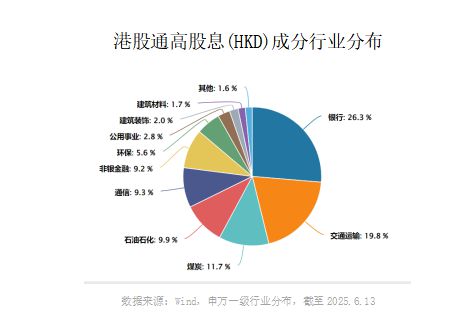
Core Viewpoint - The decline in one-year fixed deposit rates of major state-owned banks to 0.95% has led investors to seek stable and growth-oriented investment products, highlighting the attractiveness of high-dividend assets in the Hong Kong stock market, particularly the Hong Kong Stock Connect High Dividend Index with a dividend yield of 8.08% as of June 6 [1][2]. Group 1: Advantages of Hong Kong High Dividend Assets - Strong profitability supports continuous dividends, indicating that high-dividend assets typically have mature business models and stable cash flows, providing strong defensive characteristics during economic downturns [2]. - The industries covered by the Hong Kong Stock Connect High Dividend Index, such as banking, transportation, coal, and oil, possess high barriers to entry and are less sensitive to economic cycles, suggesting long-term resilience [3]. Group 2: Market Outlook for High Dividend Assets - In the current financial market environment, both Hong Kong and A-shares are focusing on high-dividend assets as a key investment theme, with factors supporting high-dividend strategies becoming stronger [5]. - The uncertainty surrounding U.S. tariff policies has increased market volatility, further enhancing the appeal of high-dividend assets, while domestic long-term funds are accelerating their allocation to dividend-paying assets [5]. Group 3: Investment Tools - Investors can focus on the Hong Kong market through the Hong Kong High Dividend ETF (159302), which tracks the Hong Kong Stock Connect High Dividend Index, selecting 30 highly liquid, consistently dividend-paying companies [6]. - In the A-share market, the High Dividend ETF (563180) tracks a high-yield strategy index, utilizing a dual screening method based on dividend yield and payout ratio, with a current dividend yield of 5.79% as of June 13 [6].
年内险资举牌增至16次 举牌标的高股息特征明显
Zheng Quan Ri Bao· 2025-06-20 16:55
Group 1 - Insurance companies have increased their stake acquisitions, with 16 instances reported this year, a significant rise compared to 5 instances in the same period last year [1][2] - The recent acquisition by Great Wall Life Insurance involved purchasing 4.4 million shares of Qinhuangdao Port Co., bringing its total holdings to approximately 279 million shares, which is 5.0005% of the company's total equity [2] - The market value of Great Wall Life's holdings in Qinhuangdao Port is approximately 610 million RMB, representing 0.42% of the insurer's total assets as of the last quarter [2] Group 2 - The increase in stake acquisitions is attributed to new accounting standards that require insurance companies to reflect the market value of stock investments, leading to greater volatility in financial statements [3] - The insurance sector is facing pressure from declining long-term interest rates and the maturity of high-quality non-standard assets, which impacts investment returns [3] - The preference for high-dividend stocks is evident, with 8 out of 16 acquisitions targeting listed banks, which are known for their high dividend yields [4] Group 3 - Future trends indicate that insurance companies are likely to increase their stake acquisitions, focusing on specialized and strategic investments in sectors such as high technology, new energy, and healthcare [5] - The collaboration between banks and insurance companies is seen as beneficial for expanding insurance product sales due to banks' extensive networks [4]
国投瑞银基金总经理王彦杰:看好下半年结构性机会
Sou Hu Cai Jing· 2025-06-20 06:47
Group 1 - The eighth Asia-Pacific Precious Metals Conference (APPMC) will be held in Singapore from June 15-17, 2025, with a focus on industry trends and investment strategies [1] - The general manager of Guotou UBS Fund, Wang Yanjie, expressed optimism about the A-share market in 2025, particularly regarding structural opportunities in the second half of the year [1] - The A-share market is expected to outperform overseas markets due to a significant weakening of its financing attributes since 2024, which has historically constrained stock price performance [1] Group 2 - In 2024, the net financing scale of A-share listed companies drastically decreased from 1 trillion yuan in 2023 to 124.9 billion yuan [2] - The expansion of share buybacks alongside the reduction in net financing demonstrates companies' confidence in their development prospects, which is expected to boost stock prices and improve market liquidity [2] - The People's Bank of China and regulatory bodies introduced a "stock buyback and increase loan" policy in October 2024, significantly lowering corporate financing costs [2] Group 3 - Despite ongoing macroeconomic challenges and geopolitical uncertainties, investment strategies should focus on technology innovation and high-dividend assets [4] - Historical data indicates a positive correlation between the appreciation of the renminbi and the performance of Chinese equity markets, suggesting an increase in allocations to Chinese stocks, including Hong Kong stocks [4] - The implementation of buyback policies is expected to stabilize and uplift the market, with continued optimism for the investment value of the A-share market in 2025 [4]

国投瑞银基金总经理王彦杰:看好下半年结构性机会
中国基金报· 2025-06-20 06:38
Group 1 - The article presents an optimistic outlook for the A-share market in 2025, particularly highlighting structural opportunities in the second half of the year, with the potential for the Chinese stock market to outperform overseas markets [2] - Since 2024, the net financing scale of A-share listed companies has significantly decreased from 1 trillion yuan in 2023 to 124.9 billion yuan in 2024, which supports valuation recovery [2] - The implementation of stock repurchase policies, including the "stock repurchase and increase loan" policy introduced by the People's Bank of China and regulatory bodies, is expected to boost stock prices and improve market liquidity [2][3] Group 2 - The macroeconomic challenges and geopolitical uncertainties remain, but investment strategies should focus on technology innovation and high-dividend assets, with an increase in allocation to the Chinese stock market, including Hong Kong stocks [3] - Historical experience shows that the implementation of repurchase policies often stabilizes the market, and with the deepening of the stock repurchase loan policy, the investment value of the A-share market is expected to remain positive [3]

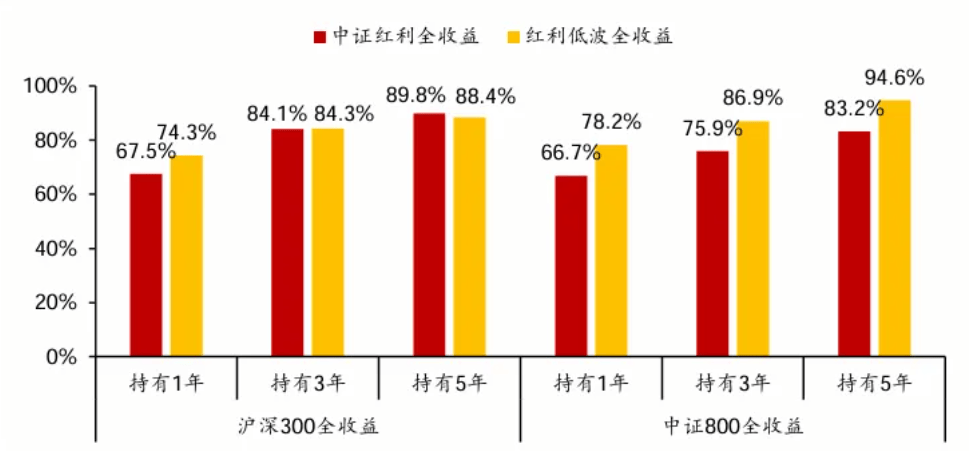
E目了然 | 多利好因素共振,红利低波资产迎来黄金配置期!
Sou Hu Cai Jing· 2025-06-20 03:53
Core Viewpoint - In the current volatile market environment, investors are increasingly focused on how to achieve stable asset appreciation, particularly in a context of declining interest rates and rising market uncertainty. The search for asset allocation strategies that provide stable cash flow and effectively mitigate market risks has become a common concern among various investors. The dividend low-volatility strategy, characterized by "high dividend yield and low volatility," is gaining attention as a potential solution to these challenges [1]. Interest Rate Environment - The global economy has largely entered a low or even negative interest rate era, with significant reductions in deposit rates by major banks in China. For instance, as of May 20, 2025, the interest rate for one-year fixed deposits fell below 1%, and the average interest rate for current deposits dropped to 0.05% [2]. This environment has compressed the yields of traditional fixed-income products, leading to a scarcity of stable assets, while dividend assets are becoming increasingly attractive due to their stable cash flow and higher dividend yields [2]. Policy Support - Regulatory bodies have intensified their focus on corporate dividend policies, with the introduction of measures linking dividend payouts to financing qualifications and shareholder behavior. For example, the "New National Nine Articles" issued in April 2024 aims to enhance shareholder return awareness among listed companies [3]. Additionally, new rules effective from January 1, 2025, will impose penalties on companies with low dividend payouts, further encouraging higher dividend distributions [3][4]. Fund Flow Dynamics - There is a notable shift in fund preferences towards dividend assets, driven by both policy support and changes in market dynamics. Long-term funds, such as insurance and pension funds, are increasingly allocating capital to high-dividend assets, with projections indicating an influx of approximately 600 billion to 800 billion yuan over the next three years [6]. This trend is expected to enhance the valuation of dividend assets and benefit related funds, such as the TaiKang Dividend Low-Volatility ETF [6]. Market Conditions - The current A-share market is characterized by volatility, influenced by international trade tensions and geopolitical risks. Despite maintaining stable growth, domestic economic indicators show signs of weakening, leading to a challenging investment environment. In this context, dividend low-volatility assets are positioned as a strategic choice for investors seeking stability and returns [19][20]. Investment Strategy - The dividend low-volatility strategy combines high dividend yield and low volatility characteristics, providing a robust investment framework. The CSI Dividend Low-Volatility Index selects stocks based on liquidity, consistent dividend payments, and low volatility, aiming to deliver stable returns while minimizing risk [14][15]. This strategy is particularly appealing in turbulent market conditions, as it has historically demonstrated strong defensive capabilities [19][20]. Conclusion - Overall, the combination of supportive policies, increasing fund inflows, and favorable market conditions positions dividend low-volatility assets as an attractive investment opportunity. These assets not only offer stable returns in a low-interest-rate environment but also serve as a defensive strategy in volatile markets, making them a preferred choice for investors seeking to navigate economic cycles effectively [20].