
共同富裕

Search documents
揭秘东莞新晋百亿村:共富如何实现?丨众说百千万㉒
Nan Fang Nong Cun Bao· 2025-12-24 10:02
Core Viewpoint - The article highlights the transformation of Huangchong Village in Dongguan into a "billion-dollar village," emphasizing its successful economic development model that integrates industrial, property, investment, and service sectors to achieve collective prosperity [12][15][70]. Group 1: Economic Development - Huangchong Village's collective assets surpassed 10 billion yuan, making it the second "billion-dollar village" in Guangdong province [12]. - The village transitioned from a single-industry focus on paper manufacturing to a diversified economy with a "four-wheel drive" strategy, incorporating industrial, property, investment, and service sectors [24][25]. - The annual output value of the paper industry in Huangchong has exceeded 10 billion yuan, maintaining its status as a pillar industry [22][23]. Group 2: Infrastructure and Innovation - The Huangchong Intelligent Manufacturing Industrial Park was established, combining high-standard and customized factory spaces, expected to generate an annual output value of 4.4 billion yuan and over 100 million yuan in tax revenue [34][36]. - The park has achieved a 90% occupancy rate with over 50 companies already established, focusing on high-end equipment manufacturing and strategic emerging industries [36]. Group 3: Agricultural Transformation - Huangchong Village is integrating traditional agriculture with cultural and tourism elements, establishing projects like "Deben Farm" to enhance community engagement and economic growth [40][48]. - The implementation of a digital farming management system has reduced production costs by approximately 30%, while increasing rice yields to 950 jin per mu [55]. Group 4: Social Welfare and Community Engagement - The growth of the collective economy has led to increased investments in public services, including housing, education, and recreational facilities for villagers [60]. - The village guarantees 100% employment for residents, with job opportunities available in various sectors, including the paper factory and the industrial park [61]. - A points-based system encourages community involvement, allowing residents and newcomers to earn educational opportunities for their children through participation in volunteer activities [65][66]. Group 5: Vision for the Future - Huangchong Village aims to create a model of collective prosperity through robust industrial foundations, enhancing living standards, and promoting ecological sustainability [70][71].


西湖边摆开宋韵共富市集
Hang Zhou Ri Bao· 2025-12-24 02:20
Core Viewpoint - The event "Party and Masses Together for Common Prosperity" held at West Lake attracted numerous citizens and tourists, showcasing traditional culture while promoting community welfare [1] Group 1: Event Highlights - The market featured NPCs dressed in Song Dynasty attire, engaging with visitors and enhancing the cultural atmosphere [1] - Various stalls offered local delicacies and creative products, including the 2026 West Lake calendar and traditional snacks, drawing significant interest from attendees [1] - Unique experiences such as sugar painting and traditional tea tasting were available, allowing visitors to engage with the cultural heritage of the region [1] Group 2: Community Engagement - Artists created portraits for visitors, with proceeds donated to the scenic area's charity, fostering a sense of community and shared responsibility [1] - Services such as "Red Little West" for community support and "Run Little West" for government services were present, emphasizing the integration of cultural activities with social services [1] - The event was well-received by attendees, who appreciated the opportunity to enjoy cultural experiences while contributing to community welfare [1]
扩大内需的重要一招
Sou Hu Cai Jing· 2025-12-23 23:49
让有消费能力的群体带头消费,政策引导与边界界定缺一不可。习近平总书记指出:"要有序取消一些 行政性限制消费购买的规定,释放消费潜力。"这需要政策、制度甚至法律层面精准发力,体现包容、 合理。当然,这些既要为消费"松绑",又要划清"红线"。必须严格区分合理消费与铺张浪费、个人消费 与公款消费的本质区别,在鼓励品质消费、多渠道消费、适度超前消费的同时,又坚守纪律底线,杜绝 公款消费和奢靡之风。近年来,多地实践证明政策"松绑"的有效性:重庆破除二手车流通堵点卡点,海 南公开征集消费限制优化建议,北京定向增发新能源小客车指标等,这些举措都有效激活了相关领域消 费潜力。此外,要完善消费维权机制,优化消费环境,让有消费能力的群体"能消费、敢消费、愿消 费",推动形成全社会消费升级的良好氛围。 长期以来,全球经济发达体在经济承压时,无不通过引导消费稳增长。如公职人员带薪休假,以及各地 创新假期制度的推行,就展现了显著的带动效果:如今年黄山等地针对"秋假"推出免门票活动,成功将 传统旅游淡季转化为消费旺季;北方地区同步探索"雪假"模式,吉林的"雪假"首日,重点冰雪场所接待 游客超5万人次,部分景区客流量同比翻倍。这些数据生动 ...
“小众茶”闯出“国际路”
Xin Lang Cai Jing· 2025-12-23 23:14
Group 1 - The core viewpoint highlights the successful blend of traditional craftsmanship and modern innovation in the Zhangping Shui Xian tea industry, leading to its international recognition and market expansion [1] - Zhangping Shui Xian tea has been awarded at the Panama World Expo and recognized as a representative work of human intangible cultural heritage, showcasing its unique position as a "niche tea" [1] - The commitment of 44 inheritors of Zhangping Shui Xian tea-making techniques, including Zhang Xingyu, emphasizes quality over quantity, with a production of only 200 kilograms annually from meticulously cultivated tea gardens [1] Group 2 - Modern innovations have opened new avenues for the Zhangping Shui Xian tea industry, with collaborations between leading tea companies like Jiupeng and new-style tea beverage brands, enhancing market presence among younger consumers [1] - The Zhangping Shui Xian tea industry has evolved from an annual output value of 800,000 yuan during its low point to over 2 billion yuan today, reflecting significant growth and shared prosperity among tea farmers [2] - The establishment of a "common prosperity tea field" in Zhangping promotes a collaborative industry development community, ensuring diverse participation, shared benefits, and risk-sharing among stakeholders [2]
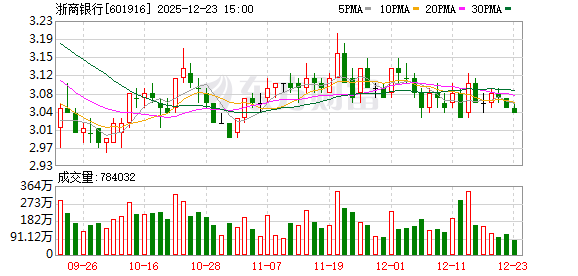
吕临华“接棒”浙商银行行长 此前为浙江农商联合银行副行长
Mei Ri Jing Ji Xin Wen· 2025-12-23 14:36
Group 1 - The new president of Zhejiang Commercial Bank, Lü Linhua, has been nominated following the appointment of Chen Haiqiang as chairman [2] - Lü Linhua previously served as the deputy president of Zhejiang Rural Commercial Bank and has extensive experience in financial regulatory roles [2][3] - Zhejiang Rural Commercial Bank has a total asset management of 7.02 trillion yuan, with deposits of 4.93 trillion yuan and loans of 3.92 trillion yuan as of June 2025 [2] Group 2 - Lü Linhua has emphasized the importance of rural financial institutions in narrowing the urban-rural gap and promoting common prosperity in Zhejiang [3] - The bank is focusing on a multi-tiered funding supply system and inclusive financial products to support the development of new entities and industry chains [3] - The management structure of Zhejiang Commercial Bank has been further refined with key appointments, including Lü Linhua as vice secretary and proposed president [4]

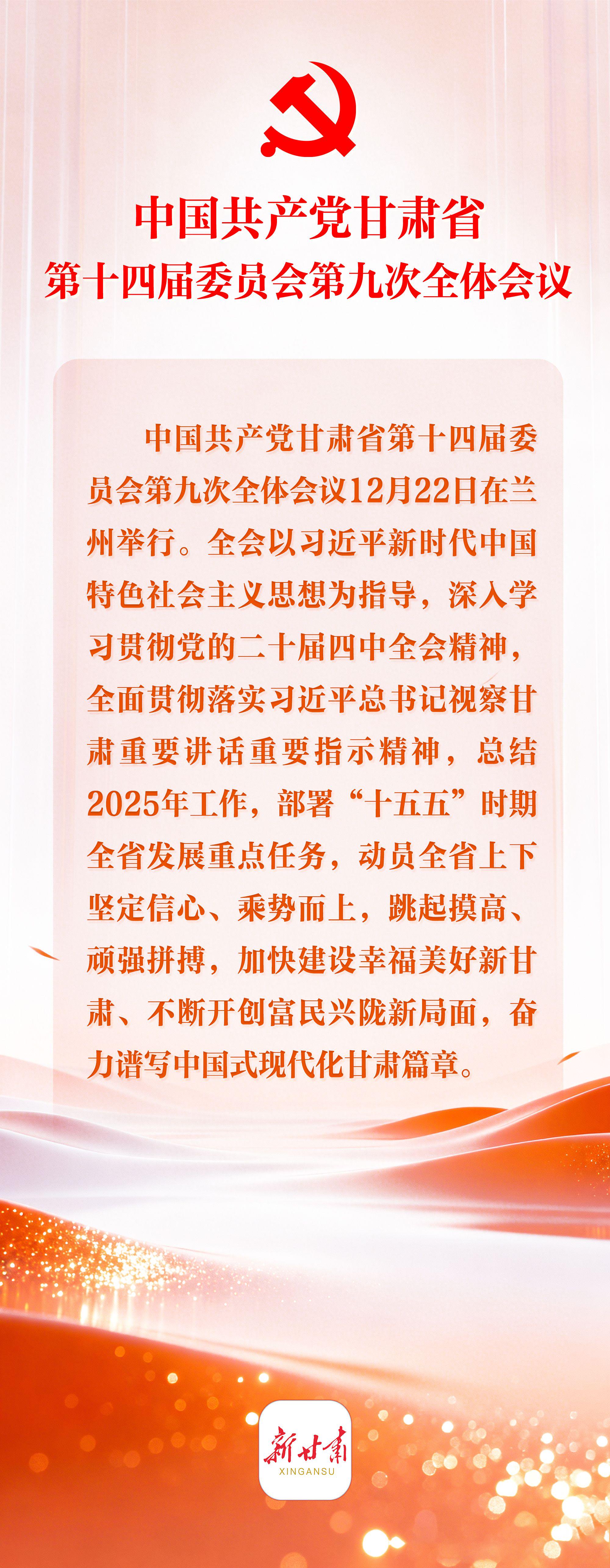
【甘快看】划重点!甘肃省委十四届九次全会要点梳理
Xin Lang Cai Jing· 2025-12-23 13:54
原标题:划重点!甘肃省委十四届九次全会要点梳理 员会第九次全体会议 州举行。全会以习 特色社会主义思想) 习贯彻党的二十届1 全面贯彻落实习近 肃重要讲话重要指 2025年工作,部署 全省发展重点任务, 坚定信心、乘势而. 新疆战士 如此带 ෆ්යා (ෆ්, 加 大 ) 肃、不断开创富民: 力谱写中国式现代化 XINGANSU 中国共产党 第十四届委员会第 "十四五":极不寻 五年来,全' 托、感恩奋进,迎 前行。 推动综合经济实 现代化产业体验 科技创新水平 深化改革开放 基础设施建设 文化事业和文化) 民生保障水平 生态环境质量 主动创安主动创 党的领导和党的父 XINGANSU 中国共产党 第十四届委员会第 "十五五" 必须全面贯彻" 更加注重加强党 更加注重保障和 更加注重提升发 更加注重数智赋 更加注重激发市 更加注重主动创 全面深化改革质 开放合作能级 社会文明程度 人民生活品质 美丽甘肃建设水 社会治理效能 到2035年全省 体居民人均可支配 中国共产党 第十四届委员会第 台阶,经济实力、 技实力、区域竞争 人的全面发展、人 得更为明显的实质 与全国一道基本实 代化。 XINGANSU "十 ...
沈晗耀:三大国际科创中心引领中国经济高质量发展
Guo Ji Jin Rong Bao· 2025-12-23 07:32
Core Insights - The article emphasizes the need for China to accelerate its transformation into a global technology powerhouse to lead world development, addressing current economic challenges such as overcapacity, insufficient demand, and real estate downturns [1] Group 1: Strategic Solutions - The construction of three major international innovation centers in Beijing, Shanghai, and the Guangdong-Hong Kong-Macau Greater Bay Area is proposed as a national core strategy to drive high-quality economic development [2] - The central bank is urged to play a pivotal role in the economy by facilitating a direct monetary channel to support public goods and stimulate private sector growth, creating a virtuous cycle of GDP and tax revenue [3] - Establishing real estate, stock market, and commodity stabilization funds is recommended to stabilize the economy and promote high-quality development in key sectors [4] Group 2: Economic Framework - A closed-loop system is proposed, integrating technology-driven development, stabilization funds, and distribution reforms to achieve high-quality economic growth and common prosperity [5] - The need for deep distribution system reforms is highlighted to address unemployment and income inequality, ensuring a multi-tiered distribution system that supports various levels of wealth [4]
直面供需错配难题!普惠保险四大创新解码民生保障新路径
Nan Fang Du Shi Bao· 2025-12-23 03:06
Core Viewpoint - Inclusive insurance is a crucial part of inclusive finance, continuously upgraded in China under national policy guidance, injecting strong momentum into social security and common prosperity [2] Group 1: Product Innovation - The inclusive insurance sector is accelerating its development, with a focus on tailored products to address coverage gaps, driven by the common prosperity strategy and inclusive finance policies [3] - The National Financial Regulatory Administration issued guidelines in June 2024 to enhance the quality of inclusive insurance, emphasizing the need for a robust product supply system targeting specific fields and risk groups [3] - Local innovations are emerging in the insurance coverage for new citizens and gig economy workers, with customized insurance plans addressing specific occupational risks [4] Group 2: Service Innovation - The enhancement of service quality is essential for improving product competitiveness, with digital transformation being a key focus for the industry [7] - Insurance companies are implementing smart underwriting and fully automated claims processes to simplify procedures and reduce operational costs [7] - Banks are becoming frontline service providers for inclusive insurance, offering one-stop services that integrate insurance with banking operations [8] Group 3: Environmental Innovation - The sustainable development of inclusive insurance requires collaboration among government, enterprises, and banks to create a cooperative ecosystem [9] - Government policies and resource support are vital for the construction of the inclusive insurance ecosystem, while industry organizations help reduce product development costs [9] - Despite the rapid growth of bank-insurance cooperation, challenges such as product homogeneity and insufficient service collaboration remain [9][10]
从“农家乐”到“和美新乡村”:四川农文旅融合的共富新实践
Xin Lang Cai Jing· 2025-12-22 23:28
Core Viewpoint - The article emphasizes the importance of integrating agriculture, culture, and tourism (Agri-Culture-Tourism integration) as a key strategy for rural revitalization and modernization in China, particularly highlighting the successful practices in Sichuan province [1][2]. Group 1: Deep Motivations for Agri-Culture-Tourism Integration - The traditional "farm stay" model has faced challenges such as homogenization and sustainability issues, necessitating a shift towards Agri-Culture-Tourism integration to support comprehensive rural revitalization and farmer prosperity [2]. - Agri-Culture-Tourism integration aims to reshape the multiple values of agriculture and the functions of rural areas by incorporating cultural and tourism elements, transforming rural spaces into holistic living environments [2]. Group 2: Sichuan's Pathways for Innovative Integration - Sichuan has developed various distinctive pathways for Agri-Culture-Tourism integration, including the creative transformation of dormant cultural resources into experiential and consumable products [3][4]. - The use of modern technology, such as AR, enhances visitor experiences by providing interactive and informative content about agricultural practices and local culture [3]. - Community involvement is crucial, with models that connect farmers, cooperatives, and enterprises to ensure that local residents benefit from tourism, fostering a sense of cultural confidence and shared experiences [4]. - Sichuan promotes ecological tourism that aligns with environmental protection, offering high-quality ecological products and services while maintaining ecological integrity [4]. Group 3: Theoretical Insights on Sustainable Development - The foundation of Agri-Culture-Tourism integration lies in maintaining the agricultural base and cultural essence, emphasizing the need for systematic value reconstruction and product development [5][6]. - Establishing a community of shared interests among farmers, local collectives, enterprises, and government is essential for ensuring long-term benefits from the integrated model [6]. - Differentiated development is encouraged, focusing on unique local resources to create an irreplaceable core attraction [6]. - The ultimate goal is to achieve a harmonious new rural landscape characterized by prosperous industries, ecological livability, and effective governance [6]. Group 4: Future Directions for Agri-Culture-Tourism Integration - Future efforts should deepen the integration levels, moving from mere physical combinations to more profound interactions, such as developing rural art festivals and comprehensive agricultural projects [7]. - Expanding cross-sector collaborations with education, health, and outdoor leisure industries is recommended [7]. - Strengthening technological support by incorporating advanced technologies like the metaverse and AI to create immersive experiences is essential [7]. - Promoting equitable wealth distribution among all villagers is crucial for achieving common prosperity [7].
践行民政使命 护航青海新篇
Xin Lang Cai Jing· 2025-12-22 19:20
Core Viewpoint - The recent meetings of the Party's 20th Central Committee and the Provincial 14th Committee emphasize the importance of civil affairs work in promoting people's well-being and achieving common prosperity in Qinghai, aligning with the broader strategy of Chinese-style modernization [1][2]. Group 1: Individual Needs - During the 14th Five-Year Plan period, Qinghai's civil affairs departments have developed a comprehensive safety net policy system, ensuring basic living standards for hundreds of thousands of vulnerable groups, significantly enhancing their sense of gain, happiness, and security [2]. - The 20th Central Committee calls for a robust social assistance system and improved services for vulnerable groups, necessitating tailored and diversified support measures from civil affairs departments [2]. Group 2: Professional Services - The focus of civil affairs work is shifting from material assistance to include mental care and rights protection, with an emphasis on developing a comprehensive elderly care service network and enhancing the quality of care for vulnerable populations [3]. - There is a need to strengthen the professional service workforce and improve mental health services for specific groups, such as children in difficult situations and elderly individuals living alone [3]. Group 3: Policy Coordination - The increasing complexity of social welfare policies necessitates better coordination among various policies to enhance their effectiveness, addressing long-standing issues in resource allocation and service capacity [4]. - Civil affairs departments are encouraged to explore innovative and differentiated reforms at the grassroots level, ensuring that various reform measures are interconnected to address imbalances in social welfare [4]. Group 4: Institutional Fairness - The focus for the 14th Five-Year Plan period is on promoting institutional fairness in social welfare, ensuring that benefits are equitably distributed among all vulnerable groups, regardless of their location [5]. - Efforts will be made to standardize social assistance applications and reduce regional disparities in welfare policies [5]. Group 5: Economic Attributes - Civil affairs work is increasingly recognized for its economic implications, as effective welfare policies can stimulate social consumption and support economic growth [6]. - The development of elderly care services and social assistance policies is seen as a means to expand domestic demand and promote consumption [6]. Group 6: Technological Empowerment - The integration of technology in civil affairs is on the rise, with big data and AI being utilized to better identify service needs and enhance operational efficiency [7]. - The application of new technologies, such as blockchain and IoT, is expected to improve service delivery and monitoring in civil affairs, making services more accessible and efficient [7].