
新型能源体系

Search documents
2025智能电网产业创新发展大会在南京举行
中国能源报· 2025-12-20 05:15
Core Viewpoint - The conference focused on the integration of new power systems and energy internet development, aligning with China's "dual carbon" goals and responding to national energy work directives [2][6]. Group 1: Conference Overview - The 2025 Smart Grid Industry Innovation Development Conference was held in Nanjing, co-hosted by China Energy Automobile Communication Group and China Energy News [2]. - The event aimed to strengthen the foundation for building an energy powerhouse, highlighting Nanjing's role as a hub for smart grid innovation and manufacturing [2]. Group 2: Keynote Speeches and Discussions - Experts discussed critical topics such as carbon neutrality pathways, high-quality construction of new distribution systems, digital engineering practices in power systems, and the latest policy interpretations [6]. - Notable speakers included senior experts from major energy companies and institutions, providing theoretical support and forward-looking guidance for industry development [6]. Group 3: Collaborative Platform - The conference established a high-end platform for interaction among government, industry, academia, research, and application sectors, promoting project connections and cross-industry collaboration [6]. - The event marked a significant step towards building a new energy system and advancing towards green and low-carbon development through collaborative and innovative efforts [6].


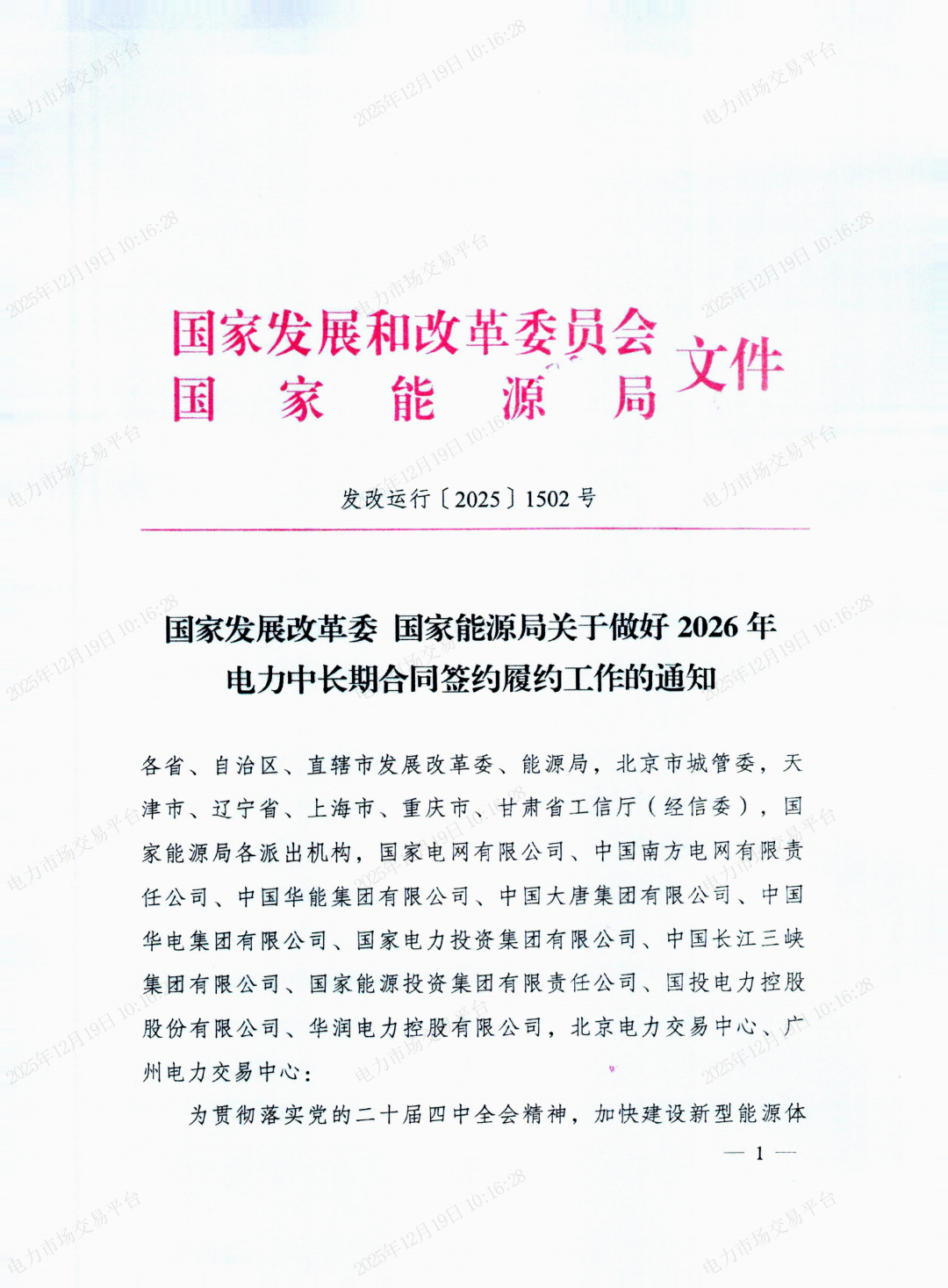
两部门:电力中长期交易直接参与市场用户不再执行分时电价!
中关村储能产业技术联盟· 2025-12-20 02:18
Core Viewpoint - The article discusses the guidelines issued by the National Development and Reform Commission and the National Energy Administration for the signing and performance of medium- and long-term electricity contracts for 2026, emphasizing the importance of high-quality contract signing and flexible pricing mechanisms to ensure stable electricity supply and pricing. Group 1: Contract Signing Mechanisms - The document emphasizes the need to improve the quality of long-term electricity contract signing by implementing time-segmented and curve-based signing mechanisms, allowing for more accurate reflection of price signals across different time periods [1][9] - It encourages the signing of flexible pricing mechanisms that adjust according to market supply and demand and generation costs, rather than mandating fixed prices [2][10] Group 2: Cross-Province and Cross-Region Contracts - The notification requires that for cross-province and cross-region electricity delivery with clear priority generation plans, both sending and receiving parties must collaborate to fully sign annual medium- and long-term contracts, specifying monthly plans and delivery curves [4][8] - It also highlights the need for coordination among electricity trading centers to complete the signing of national contracts by December 25, 2025 [4][15] Group 3: Market Structure and Pricing - The document outlines that regions with operational electricity spot markets should have at least 24 trading time slots, while other provinces should optimize their medium- and long-term trading time slots based on actual electricity load curves [5][9] - It specifies that market participants directly involved in the market will not be subject to government-mandated time-of-use pricing [10] Group 4: Quality and Compliance in Contract Performance - The guidelines stress the importance of continuous and flexible trading within provinces, taking into account the characteristics of renewable energy generation and load [11] - It calls for the establishment of a robust mechanism to ensure high-quality signing and performance of medium- and long-term contracts, including a credit evaluation system for market participants [12][13]

“十五五”关键时期 绿色转型进入系统推进阶段
Zheng Quan Ri Bao Wang· 2025-12-19 13:29
Group 1 - The roundtable discussion focused on China's green transition during the upcoming "15th Five-Year Plan," emphasizing the need for substantial progress in flexible power systems, market mechanisms, and green production lifestyles to achieve carbon peak goals [1] - Beijing aims to reduce its reliance on fossil fuels, with plans to increase the share of green electricity, targeting over 40 billion kilowatt-hours of green electricity imports by 2025 [2] - CATL (Contemporary Amperex Technology Co., Limited) is expanding battery applications beyond electric vehicles and energy storage, providing battery solutions for over 900 electric ships and addressing the decarbonization needs of high-energy industries like steel and cement [2] Group 2 - The Rocky Mountain Institute highlighted China's systematic reforms in green transition, particularly in green electricity, establishing a unified national electricity market framework that positions China as a leader in renewable energy [3] - The importance of market mechanisms in the new power system was emphasized, with a call for price signals to guide long-term investment decisions and influence electricity consumption behavior [3] - The launch of the journal "Zero Carbon Era" aims to contribute insights into energy system transformation and green technology innovation, promoting China's green industry and practices on a global scale [4]

两部门:优化电力中长期价格形成机制,直接参与市场用户不再执行政府规定的分时电价
Xin Lang Cai Jing· 2025-12-19 12:44
Core Viewpoint - The National Development and Reform Commission and the National Energy Administration have issued a notice to enhance the signing and performance of medium- and long-term electricity contracts for 2026 through four key measures, aiming to ensure effective implementation and quality of these contracts [22][25]. Group 1: Contract Signing Requirements - The total signed electricity volume for medium- and long-term contracts by coal-fired power enterprises in each province should not be less than 70% of the actual online electricity volume from the previous year, with monthly contract signing volumes not less than 80% of the expected market-based online electricity volume [10][26]. - The electricity consumption side must ensure that the monthly contract signing volume is not less than 80% of the expected electricity consumption [2][27]. - For cross-provincial and cross-regional contracts, there should be clear arrangements for supporting renewable energy in transmission projects, encouraging green electricity trading to fulfill priority generation plans [3][28]. Group 2: Quality Improvement Measures - There should be a mechanism for time-segmented and curve-based signing in annual electricity medium- and long-term transactions, with at least 24 trading periods in regions where the electricity spot market is operational [5][28]. - The pricing mechanism for medium- and long-term electricity contracts should be flexible, allowing for adjustments based on market supply and demand, and not mandating fixed prices [6][29]. - A balance management system for electricity supply and demand should be established to avoid significant discrepancies in electricity volume across trading periods [12][29]. Group 3: Efficient Contract Performance - Continuous and flexible trading of medium- and long-term contracts within provinces should be promoted, considering the characteristics of renewable energy generation and load [8][30]. - The quality of cross-provincial and cross-regional medium- and long-term transactions should be improved by enhancing trading frequency and optimizing transaction organization [14][30]. - Monitoring of medium- and long-term trading behaviors should be strengthened to prevent market manipulation and ensure compliance with regulations [15][31]. Group 4: Contract Assurance Mechanism - A mechanism to promote high-quality signing and performance of medium- and long-term contracts should be established, ensuring compliance with policy requirements [16][32]. - The priority generation plan for cross-provincial and cross-regional electricity should be effectively implemented, ensuring that annual delivery needs are met [17][33]. Group 5: Timeline - Local government departments and the National Energy Administration should complete the necessary preparations for the medium- and long-term electricity market by December 10, 2025, and finalize cross-provincial contract signing by December 25, 2025 [18][34].






全国第一,四川水电装机规模突破1亿千瓦
Xin Hua She· 2025-12-19 08:21
Core Insights - Sichuan province has become the first in China to surpass a hydropower installed capacity of 100 million kilowatts, accounting for approximately one-quarter of the national total [1][2] Group 1: Hydropower Capacity - The installed capacity of 100 million kilowatts is equivalent to about 4.4 Three Gorges Dam projects [2] - Sichuan's hydropower development has a history of over 100 years, dating back to the completion of the 140-kilowatt Dongwo Hydropower Station in 1925 [2] - Major breakthroughs in hydropower development have occurred since the establishment of New China, with significant projects like the Baihetan and Wudongde hydropower stations being completed in recent years [2] Group 2: Environmental Impact - The newly connected Yinjiang Hydropower Station has a total installed capacity of 390,000 kilowatts and is expected to deliver over 1.6 billion kilowatt-hours of clean energy annually, reducing carbon dioxide emissions by 1.3 million tons [3] - Sichuan's annual electricity generation contributes about one-third to external supply, with a cumulative delivery of over 1.9 trillion kilowatt-hours of clean energy to regions like Central and Eastern China since 1998 [2] Group 3: Future Development - Sichuan is accelerating the planning and construction of a new energy system that promotes the complementary development of hydropower, wind, solar, hydrogen, and natural gas [3] - The province is transitioning from merely generating power to stabilizing and optimizing its energy system, aiming to enhance its role in supporting national carbon neutrality goals [3]
新材料周报:中央经济工作会议提出全面绿色转型,建议关注风电上游原材料机遇-20251219
Shanxi Securities· 2025-12-19 06:40
Investment Rating - The report maintains a "B" rating for the new materials sector, indicating a leading position in the market [2]. Core Insights - The central economic work conference emphasizes a comprehensive green transition, suggesting a focus on upstream raw material opportunities in the wind power sector. The wind power industry is expected to maintain a high prosperity pattern, with annual new installed capacity projected to be no less than 120 million kilowatts during the 14th Five-Year Plan period, reaching a cumulative installed capacity of 1.3 billion kilowatts by 2030 and 5 billion kilowatts by 2060 [5][4]. Market Performance - The new materials sector saw an increase of 0.66%, underperforming compared to the ChiNext Index, which rose by 2.08%. Over the past five trading days, the synthetic biology index fell by 1.58%, while semiconductor materials increased by 6.21%, electronic chemicals by 7.05%, industrial gases by 4.48%, and battery chemicals decreased by 1.88% [2][18][13]. Price Tracking - Amino acids: Valine at 13,050 CNY/ton (up 3.57%), Arginine at 20,950 CNY/ton (down 1.87%), Tryptophan at 30,500 CNY/ton (unchanged), Methionine at 17,950 CNY/ton (down 2.45%) [3]. - Industrial gases: UPSSS grade hydrofluoric acid at 11,000 CNY/ton (unchanged), EL grade hydrofluoric acid at 6,160 CNY/ton (up 0.98%) [3]. - Degradable plastics: PLA (FY201 injection grade) at 17,800 CNY/ton (unchanged), PLA (REVODE 201 blow film grade) at 16,800 CNY/ton (down 1.18%) [3]. Investment Recommendations - The report suggests focusing on wind blade manufacturers such as "Shidai New Materials" and "Maijia Xincai" due to the anticipated growth in the wind power upstream materials market [5].



电力中长期交易:直接参与市场用户不再执行分时电价!利好新型储能等灵活调节资源
中关村储能产业技术联盟· 2025-12-19 06:19
Core Viewpoint - The document outlines the guidelines for signing and fulfilling long-term electricity contracts for 2026, emphasizing the importance of high-quality contracts to ensure stable electricity supply and pricing in the market [6][7][8]. Group 1: Contract Signing Requirements - The document stresses the need for a high proportion of long-term electricity contracts, with coal-fired power plants required to sign contracts for at least 70% of the previous year's actual grid-connected electricity [7]. - For regions with tight electricity supply, local authorities may adjust the signing ratio upwards during peak seasons [8]. - The document mandates that electricity users should also ensure that their annual contract signing volume meets at least 80% of the expected electricity consumption [8]. Group 2: Improving Contract Quality - It is essential to enhance the quality of long-term contracts by implementing time-segmented and curve-based signing mechanisms, allowing for more precise reflection of price signals [9][10]. - The document encourages the adoption of flexible pricing mechanisms that reflect real-time supply and demand, rather than enforcing fixed prices [10]. - Regions are required to optimize the price formation mechanism, ensuring that market participants are not bound by government-mandated time-of-use pricing [10]. Group 3: Cross-Province and Cross-Region Agreements - The document requires that parties involved in cross-province and cross-region electricity transactions must fully sign annual long-term contracts and clarify monthly plans and delivery curves [3][8]. - It emphasizes the need for coordination between sending and receiving parties to establish stable inter-provincial electricity flows [3][8]. Group 4: Timeframe and Implementation - Local governments and the National Energy Administration are tasked with implementing these guidelines and must report their arrangements for the 2026 annual trading by December 10, 2025 [14]. - The Beijing and Guangzhou electricity trading centers are specifically mentioned to complete the signing of national long-term contracts by December 25, 2025 [3][14].

打造长三角“能源仓” 赣榆LNG接收站项目首座储罐升顶成功
Xin Hua Cai Jing· 2025-12-19 06:15
升顶是LNG储罐建设的尖峰时刻,工艺复杂、操控难度大。对于此次升顶,项目团队采用具有自主知 识产权的"大型低温储罐拱顶气压顶升施工工法"及"大型低温储罐拱顶气压顶升施工工艺及其平衡导向 装置专利"等核心技术。"要把这个面积相当于1座足球场,重量相当于近700辆家用轿车的钢铁帽子,稳 稳戴到50余米高储罐上,靠的是自主研发的气压顶升技术——可以形象比喻为吹气球,通过4台大功率 专用风机持续输出稳定气流,用气压把近千吨的大家伙顶起来在高空漫步,最终实现毫米级精准就 位。"中核五公司项目经理胡克梧说。 据悉,中核五公司目前已深耕LNG储罐建设28年,拥有1项国家级工法、4项企业级工法及16项核心发 明专利。 新华财经北京12月19日电 记者从中核集团获悉,19日,国家天然气基础设施互联互通重点工程——江 苏华电赣榆LNG(液化天然气)接收站项目首座储罐气压顶升作业圆满完成。该项目将增强区域供气 灵活性与可靠性,进一步完善国家天然气"一张网"布局,优化长三角能源结构,为区域绿色转型注入强 劲动能。 项目规划建设3座22万立方米LNG储罐,由中国华电下属华电江苏能源有限公司联合多国企业共同投资 建设,中核集团下属中核五 ...
全国首个!突破1亿千瓦!
中国能源报· 2025-12-19 06:09
Core Insights - Sichuan's hydropower installed capacity has surpassed 100 million kilowatts, making it the first province in China to reach this milestone, accounting for approximately one-fourth of the national hydropower capacity, equivalent to about 4.4 Three Gorges Dam [1][3] Group 1: Hydropower Development in Sichuan - Sichuan is known as the "Province of a Thousand Rivers," with abundant hydropower resources, including the Jinsha River with a natural drop of 5,100 meters, the Yalong River at 3,830 meters, and the Dadu River at 4,175 meters [3] - The development of hydropower in Sichuan dates back 100 years, with significant milestones including the completion of the 140-kilowatt Dongwo Hydropower Station in 1925 and major projects like the Baihetan and Wudongde hydropower stations in recent years [3][4] - The Baihetan Hydropower Station features the world's largest single-unit capacity of 1 million kilowatts, marking a significant breakthrough in high-end equipment manufacturing in China [3] Group 2: Energy Transmission and Environmental Impact - As a key base for the "West-to-East Power Transmission" project, Sichuan has exported over 1.9 trillion kilowatt-hours of clean electricity to regions such as Central and Eastern China since 1998, equivalent to the total annual electricity consumption of Jiangsu, Zhejiang, and Anhui provinces combined [3] - The newly connected Yinjiang Hydropower Station has a total installed capacity of 390,000 kilowatts and is expected to deliver over 1.6 billion kilowatt-hours of clean energy annually, reducing carbon dioxide emissions by 1.3 million tons [4] Group 3: Future Energy Strategy - Sichuan is accelerating the planning and construction of a new energy system, promoting the complementary development of hydropower, wind, solar, hydrogen, and natural gas [4] - The province aims to transition from merely generating power to stabilizing power supply, upgrading from resource advantages to system capabilities, and contributing to the national "dual carbon" strategy and energy security [4]
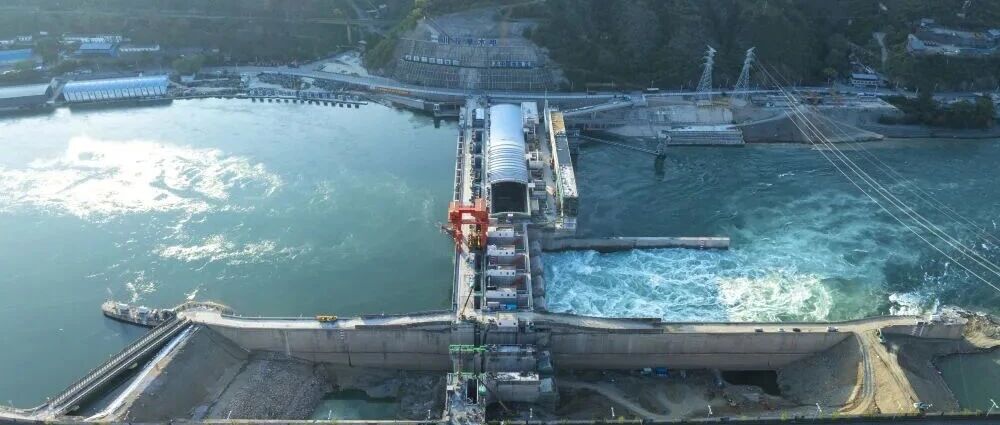
突破1亿千瓦:四川水电装机规模创新纪录
Xin Hua She· 2025-12-19 02:58
Core Insights - Sichuan province has become the first in China to surpass 100 million kilowatts in hydropower installed capacity, accounting for approximately one-fourth of the national total and equivalent to about 4.4 Three Gorges dams [1][2] Group 1: Hydropower Development - The last unit of the Yinjing Hydropower Station was successfully connected to the grid on December 19, marking a significant milestone in Sichuan's hydropower development [1] - Sichuan's hydropower development has a history of over 100 years, with the first hydropower station built in 1925 [1] - Major projects such as the Baihetan and Wudongde hydropower stations have been completed in recent years, showcasing advancements in high-end equipment manufacturing [1] Group 2: Energy Transmission and Environmental Impact - Sichuan is a key base for the "West-to-East Power Transmission" initiative, with approximately one-third of its annual electricity generation exported to other provinces [1] - Since 1998, Sichuan has delivered over 1.9 trillion kilowatt-hours of clean energy to regions such as Central and Eastern China, equivalent to the annual electricity consumption of Jiangsu, Zhejiang, and Anhui provinces combined [1] - The Yinjing Hydropower Station has a total installed capacity of 390,000 kilowatts and is expected to deliver over 1.6 billion kilowatt-hours of clean energy annually, reducing carbon dioxide emissions by 1.3 million tons [2] Group 3: Future Energy Strategy - Sichuan is accelerating the planning and construction of a new energy system that promotes the complementary development of hydropower, wind, solar, hydrogen, and natural gas [2] - The province aims to transition from merely generating power to stabilizing and optimizing its energy system, enhancing its role in supporting national carbon neutrality goals [2]