
硬科技

Search documents
扬州市智造基地项目二期工程顺利竣工交付
Zhong Guo Jing Ji Wang· 2026-01-09 06:43
Core Viewpoint - The successful completion of the second phase of the Yangzhou Future Industry Joint Research Institute's intelligent manufacturing base project, constructed by China Railway Construction Corporation (CRCC), is expected to significantly boost the future development of Yangzhou by providing a tailored infrastructure for industries such as artificial intelligence and the metaverse [1] Group 1: Project Overview - The total construction area of the project is 180,400 square meters, with the second phase covering 113,300 square meters [1] - The second phase includes 11 high-standard intelligent manufacturing factories along with supporting infrastructure such as roads and landscaping [1] - The project layout is designed to meet the needs of large-scale high-tech equipment, providing an excellent research and production environment for "hard technology" enterprises [1] Group 2: Recognition and Impact - The project has received dual honors as a "Green Smart Construction Site" and a "Civilized Construction Site" in Yangzhou since its inception [1] - The completion of the intelligent manufacturing base is set to provide a modern development platform for key projects in artificial intelligence and new materials, enhancing the city's regional innovation competitiveness [1] - This initiative aims to lay a solid foundation for cultivating new productive forces in the region [1]

“微”观行业之变|从一只AIC探索设立的70亿元母基金看耐心资本如何浇灌硬科技
Xin Hua Cai Jing· 2026-01-09 04:41
Core Viewpoint - The Shenzhen Jianyuan Zhengxing Fund, a 7 billion yuan mother fund, is accelerating its operations and aims to leverage its structure to enhance investment in key industries, particularly in hard technology sectors [1][2]. Group 1: Fund Structure and Strategy - The Jianyuan Zhengxing Fund is initiated by several entities including Jianxin Financial Asset Investment Company and aims to expand its scale to over 20 billion yuan through the establishment of sub-funds [2]. - The mother fund structure allows for diversified investments across various sectors, addressing the limitations of direct investment funds in covering the broad "20+8" industrial cluster in Shenzhen [2][3]. - The fund's strategy includes collaborating with specialized investment institutions to enhance industry insights and project identification, thereby improving investment outcomes [3]. Group 2: Evolution of AIC's Role - The evolution of AIC from primarily engaging in debt-to-equity swaps to becoming a "patient capital" provider reflects a significant shift in its operational focus [4][6]. - AIC's recent policy changes have expanded its investment capabilities, allowing for direct equity investments and enhancing its role in supporting long-term financing for technology enterprises [5][6]. - The transition from a risk management tool to an active participant in the growth cycle of enterprises positions AIC as a crucial link between financial capital and technological innovation [6][7]. Group 3: Challenges and Future Outlook - AIC faces challenges such as misalignment in incentive mechanisms, short assessment cycles, and insufficient risk tolerance in equity investments [7][8]. - Recommendations for AIC's future include enhancing long-term performance evaluation systems and fostering deeper collaboration with local governments and industry funds to create a sustainable technology finance ecosystem [8].
国产培养基龙头澳斯康拟冲刺港股 罗顺要做“硬科技”生物制造平台
Cai Jing Wang· 2026-01-09 04:34
Core Viewpoint - The company Auscan Biotech is preparing for an IPO on the Hong Kong Stock Exchange, aiming to strengthen its position in the biopharmaceutical industry and enhance its platform value as a profitable "hidden champion" in the sector [1]. Group 1: Company Background and Market Position - Auscan Biotech was founded in 2011 and is recognized as China's first serum-free cell culture medium company, contributing to the reduction of reliance on imported biopharmaceutical raw materials [1][2]. - The company has developed a full industry chain platform covering cell culture media and CRDMO (Contract Research and Development Manufacturing Organization) services, witnessing a significant shift from dependence on imports to self-sufficiency in key biopharmaceutical materials [1][3]. - Auscan has established itself as the market leader in commercial biopharmaceutical culture media in China, with its sales of dry powder culture media surpassing the total sales of all domestic competitors since 2017 [3][4]. Group 2: Product Development and Innovation - The company has invested three years to establish a "chemically defined + animal-free" culture medium system, achieving full domestic production of raw materials by 2017 [3]. - Auscan's strategy includes not only supplying culture media but also developing proprietary formulations and large-scale production capabilities, which is crucial for the biopharmaceutical industry [4][5]. - The company has built the world's largest single-line dry powder culture medium production line, exceeding the scale of overseas competitors [3]. Group 3: Business Expansion and Future Outlook - Auscan is expanding its services to cover the entire lifecycle of biopharmaceuticals, from early research to commercial production, through its CRDMO platform [5][6]. - The company has established a commercial production base for ADC (Antibody-Drug Conjugates) in Shanghai, which has already generated revenue in the millions since its launch in August 2023 [5][6]. - Auscan is actively pursuing next-generation biopharmaceutical technologies, particularly in the ADC and AXC (Antibody-Oligonucleotide Conjugates) sectors, indicating a strong growth potential in the coming years [9][10].
解码上海GPU四小龙上市加速度
财联社· 2026-01-09 02:23
Core Viewpoint - The rapid listing of five AI industry chain companies in Shanghai, particularly the "GPU Four Little Dragons," highlights the city's accelerating pace in capital markets and reflects the strength of its innovation environment [1]. Group 1: Capital Support and Investment - The "GPU Four Little Dragons" (Moxi Co., Biran Technology, Tianshu Zhixin, and Suiyuan Technology) have received significant capital support at various stages, demonstrating a trend of early, small, and long-term investments in hard technology [2]. - Local state-owned funds and investment institutions play a crucial role in supporting these companies, as seen with Biran Technology's financing rounds involving Shanghai's local capital [5]. - The investment ecosystem in Shanghai is designed to support the entire lifecycle of tech companies, with a focus on early-stage funding and overcoming challenges during critical growth phases [7]. Group 2: Listing Acceleration Mechanisms - The Shanghai Securities Regulatory Bureau has implemented effective mechanisms to facilitate the listing process for quality tech companies, ensuring a streamlined path from IPO application to listing [10][11]. - The regulatory body collaborates with various local government departments to enhance the nurturing of high-quality companies, resulting in a significant number of companies receiving listing approvals [11]. - As of the end of 2025, there are 122 companies in the listing guidance and review stages in Shanghai, indicating a robust pipeline for future listings [11]. Group 3: Industry Growth and Economic Impact - The listing of these companies is not just a financial milestone but also a means to enhance their operational capabilities and support technological innovation, with Shanghai's tech firms raising over 230 billion yuan through IPOs since the launch of the Sci-Tech Innovation Board [14]. - The integrated circuit industry in Shanghai has shown remarkable growth, with revenues reaching 391.2 billion yuan in the first 11 months of 2025, reflecting a year-on-year increase of 23.72% [15]. - The AI industry in Shanghai is also thriving, with an expected revenue of over 550 billion yuan in 2025, marking a growth rate exceeding 30% [15]. Group 4: Strategic Alignment with National Goals - The focus on technology development and capital circulation aligns with national strategies, aiming to cultivate globally influential enterprises and enhance the overall innovation ecosystem in Shanghai [14][17]. - The local government is actively promoting financial support for strategic industries, including AI, integrated circuits, and biomedicine, to ensure sustainable growth and innovation [12].


硬科技领衔驱动 A股市值破百万亿元
Nan Fang Du Shi Bao· 2026-01-08 23:12
Group 1: Market Performance - In 2025, the Shanghai Composite Index returned to the 4000-point mark for the first time in ten years, reflecting a significant recovery in market confidence [3] - The total market capitalization of A-shares exceeded 100 trillion yuan for the first time, reaching 118.91 trillion yuan by December 31, 2025 [3] - The cumulative trading volume for the year was 420.21 trillion yuan, a substantial increase of 62.64% compared to 2024 [3] Group 2: Regulatory Reforms - The "1+6" reform policy was implemented on the STAR Market, allowing unprofitable companies to list under a new growth tier, enhancing market inclusivity [4] - The new merger and acquisition regulations established a phased payment mechanism for share exchanges and extended the registration decision period to 48 months, improving regulatory flexibility [5] Group 3: Technology Sector Growth - The launch of DeepSeek-R1 sparked significant interest in the AI sector, leading to a surge in the Sci-Tech 50 Index, which saw a maximum increase of over 50% from its low point [5][6] - The rise of companies like Cambrian, which surpassed Kweichow Moutai to become the new "king of stocks," indicates a shift in investment focus from traditional consumer sectors to hard technology [6][7] Group 4: IPO and Fundraising Trends - The STAR Market and ChiNext received over 10 applications for IPOs from unprofitable companies, indicating a growing acceptance of high-tech firms in the capital market [4] - The total number of IPOs on the STAR Market and ChiNext reached 49, raising 619.12 billion yuan, accounting for 47.3% of the total IPO financing in the market [7] Group 5: Investor Engagement and Returns - A record cash dividend of 2.63 trillion yuan was distributed by A-share listed companies in 2025, with 37 companies announcing dividends exceeding 10 billion yuan [9] - The implementation of fee reforms in public funds has shifted the focus from scale to returns, enhancing investor satisfaction and encouraging long-term investment [8] Group 6: Market Discipline and Exit Mechanisms - Regulatory authorities intensified enforcement against financial fraud, with 17 cases investigated and fines totaling 230 million yuan, a 40% increase from 2024 [10] - The normalization of the delisting mechanism has accelerated the market's selection process, with over ten companies forced to delist due to significant violations [10]



又一家AI独角兽上市!这一波,上海为什么赢?
Xin Lang Cai Jing· 2026-01-08 22:15
Core Viewpoint - Shanghai's AI unicorn MiniMax is set to go public on the Hong Kong stock exchange, marking a significant moment for the city's hard technology sector, particularly in AI and large models, with five local AI companies having listed in less than a month [3] Group 1: Investment Landscape - The funding requirements for hard technology are substantial, and there is a persistent contradiction between high financing needs of companies and investors' risk preferences [4] - The call for "patient capital" has been recognized socially, with the central government emphasizing the cultivation of such capital, particularly through state-owned funds in Shanghai [5] - Shanghai aims to establish a 100 billion yuan industry investment mother fund targeting integrated circuits, biomedicine, and artificial intelligence, with a focus on critical areas like computing chips [5] Group 2: Investment Mechanisms - The mother fund model allows for most funds to be invested in other funds, which then invest in specific projects, creating a leverage effect [6] - Unlike traditional financial investments, Shanghai's state-owned capital is deeply involved in technological breakthroughs and ecosystem building, supporting companies like Biran Technology in developing high-performance GPGPU chips [6] Group 3: Ecosystem Development - A strong innovation ecosystem, characterized by a dense concentration of industry elements, can significantly lower innovation costs and enhance company survival and growth rates [9] - The "Mosu Space" serves as a professional incubator for large models, fostering a complete ecosystem that integrates various aspects from foundational chips to core algorithms and applications [9][10] Group 4: Market Dynamics - The competitive landscape in artificial intelligence is dominated by the US and China, with China focusing on both technological breakthroughs and application expansion [8] - The successful scaling of AI applications across various sectors, such as manufacturing and finance, relies on providing innovative companies with real-world scenarios for development and experimentation [11] Group 5: Continuous Improvement - The cultivation of hard technology requires a positive feedback loop involving more nurturing and openness, necessitating reforms beyond mere investment [12][13]
520亿市值,“大模型第一股”来了
Sou Hu Cai Jing· 2026-01-08 20:04
Group 1 - The core viewpoint of the article highlights the successful IPOs of AI companies in Hong Kong, marking a strong start for VC/PE investments in the new year, with two "first stocks" emerging in the first week of January [2][3] - The market has shown significant enthusiasm for these IPOs, with Zhipu's market capitalization exceeding 52 billion HKD and an oversubscription rate of 1164 times during its public offering, indicating strong market recognition [3][5] - The article emphasizes the impressive investment history of Zhipu, which has raised over 8.3 billion RMB across 8 financing rounds, attracting major investors including Meituan, Ant Group, Alibaba, Tencent, and Xiaomi, as well as top-tier VC firms [5][6] Group 2 - The article discusses the broader implications of these IPOs, suggesting that they signal a resurgence in the hard technology sector and a collective acknowledgment of the long-term value of Chinese AI core assets by global capital [9][10] - It notes that early investors in Zhipu have seen substantial returns, with its market value increasing 17 times from a previous valuation of 2.8 billion RMB, and other companies like Biran Technology achieving returns exceeding 1150% [11] - The article identifies future investment opportunities in emerging industries supported by China's "14th Five-Year Plan," including new energy, aerospace, and quantum technology, indicating a growing interest from investors in these sectors [13][15]
复星系再拓资本版图
Xin Lang Cai Jing· 2026-01-08 16:56
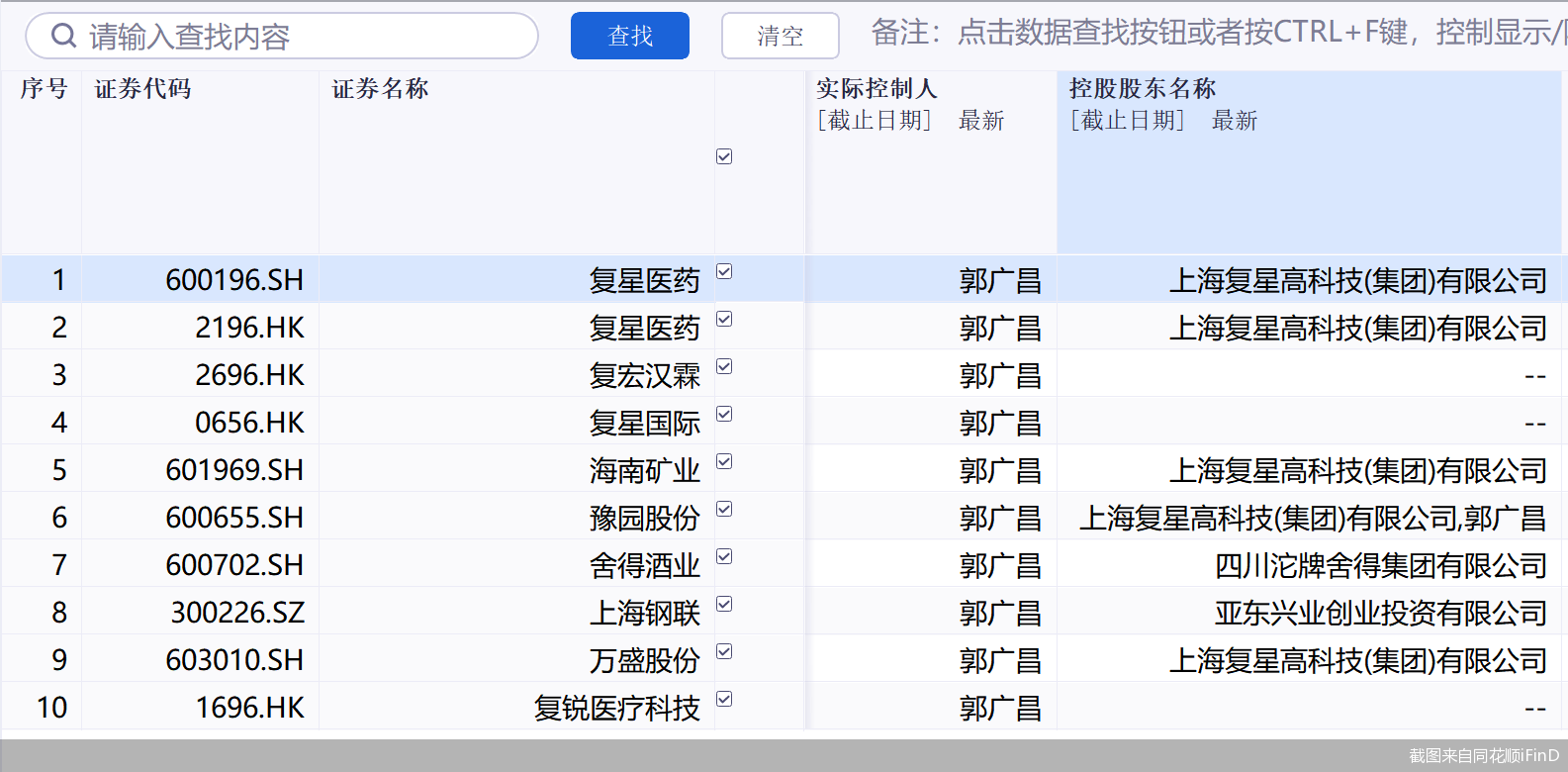
Group 1 - Fosun International's subsidiary, Shanghai Yiyao Technology Co., Ltd., has initiated the IPO process, aiming to expand its capital footprint in the A-share market [1][3] - Fosun has developed into an innovative global family consumption industry group over 30 years, focusing on a happiness ecosystem centered around health, happiness, and wealth [1][4] - Currently, Fosun controls six A-share listed companies and four Hong Kong-listed companies, with four of the A-share companies having a market capitalization exceeding 100 billion [1][5] Group 2 - The performance of Fosun's listed companies shows significant divergence, with six companies reporting a decline in net profit, reflecting operational pressures in certain sectors [1][8] - Shanghai Yiyao Technology, established in July 2018, aims to provide high-tech solutions across various intelligent manufacturing sectors, including automotive and food automation [3][4] - Fosun's total assets exceeded 796.5 billion as of December 31, 2024, with a global presence in over 35 countries and regions [4][6] Group 3 - The latest financial reports indicate that among the six A-share companies, Shanghai Steel Union and Fosun Pharma reported net profit growth, while others like Yuyuan and Hainan Mining experienced declines [8][9] - Fosun's strategic focus is shifting from diversified expansion to deepening its core sectors, particularly in health and intelligent manufacturing, to optimize cash flow and enhance capital efficiency [7][8]

大动作!翌耀科技启动上市辅导 复星系再拓资本版图
Bei Jing Shang Bao· 2026-01-08 15:03
Group 1 - Fosun International's subsidiary, Shanghai Yiyao Technology Co., Ltd., has initiated the IPO process, aiming to expand its capital footprint in the A-share market [1][3] - Under the leadership of Guo Guangchang, Fosun has evolved into an innovation-driven global family consumption industry group, focusing on a happiness ecosystem centered around health, happiness, and wealth [1][4] - Currently, Fosun controls six A-share listed companies and four Hong Kong listed companies, with four of the A-share companies having a market capitalization exceeding 100 billion [1][6] Group 2 - The performance of Fosun's listed companies shows significant divergence, with six companies reporting a decline in net profit, reflecting operational pressures in certain sectors [1][8] - In the first three quarters of 2025, six A-share companies reported revenues exceeding 2 billion, with Shanghai Steel Union leading at approximately 57.32 billion [8] - Among the A-share companies, only Fosun Pharma and Shanghai Steel Union reported year-on-year growth in net profit, while others, including Yuyuan and Hainan Mining, experienced declines [8][9] Group 3 - Yiyao Technology, established in July 2018, focuses on providing high-tech solutions across various intelligent manufacturing sectors, including automotive and food automation [3][4] - Fosun's total assets exceeded 796.5 billion as of December 31, 2024, with a significant portion of revenue coming from international operations [4][6] - The group is shifting its strategy from diversification to deepening its core sectors, particularly in health and intelligent manufacturing, to optimize capital structure and enhance cash flow [7]
科士达联合申菱环境、投资机构 布局数据中心产业链
Zheng Quan Shi Bao Wang· 2026-01-08 14:13
Core Viewpoint - The company Keda (002518) has announced the establishment of a partnership with Shiling Environment (301018) and professional investment institutions to invest in sectors related to data centers, hard technology, AI, and renewable energy, including wind power, solar energy, and energy storage [1][2] Group 1: Investment Details - The partnership involves the creation of the Jiaxing Mutong Equity Investment Partnership (Limited Partnership) with a total investment amount of approximately 200 million yuan, with Keda contributing 50 million yuan, accounting for 24.99% of the total investment [1] - The partnership will have a duration of 7 years, with the first 4 years designated as the investment period and the remaining years as the management exit period [2] Group 2: Strategic Implications - Keda aims to strengthen its core business in data centers while expanding into the renewable energy sector, capitalizing on the current development cycle in these industries [2] - The investment is expected to enhance the company's competitive edge and create more value for shareholders by identifying high-quality targets with strong industry synergy [2] - Shiling Environment also emphasizes that this investment will not adversely affect its financial and operational status, and it is expected to have a positive impact on future financial conditions and business layout [2]
