
端侧AI

Search documents
上市AI芯片公司落地数个千卡集群;国内有万卡经验的公司不超过3个;拆机DDR4半公开售卖;智算中心建设遇到「死结」
雷峰网· 2025-12-09 10:55
Group 1 - The eighth GAIR Global Artificial Intelligence and Robotics Conference will be held on December 12-13, 2025, in Shenzhen, focusing on topics such as large models, computing power transformation, and world models [1][20]. - The conference will feature three thematic forums, gathering builders and thinkers from AI chips, intelligent computing centers, cloud computing, infrastructure, and capital fields to discuss the realities and trends of the computing power revolution [1][20]. Group 2 - AI chip companies listed on the Sci-Tech Innovation Board are strictly controlling the production quality of computing power servers, with the latest flagship product offering a single card computing power of approximately 0.5P, priced at 250,000 yuan [2]. - The previous generation flagship product, an 8-card integrated machine, was priced between 600,000 to 650,000 yuan, and the company has already collaborated with partners to implement several thousand-card cluster projects [2]. Group 3 - Leading AI chip companies have recently secured significant orders, including a procurement order for 200,000 chips from a major internet company for their search and recommendation services [4]. - The CEO of the chip company has committed to "unlimited supply" for core computing power needs during discussions with another major internet company, further solidifying partnerships with key clients [4]. Group 4 - Major internet companies are accelerating the exploration and implementation of domestic computing power alternatives due to geopolitical influences, aiming to build a self-controlled computing power supply system [5]. - These companies are adopting a "scene adaptation first, gradual optimization" approach, prioritizing business scenarios where domestic chips can meet core needs [5]. Group 5 - The exploration of alternatives to CUDA is accelerating globally, with initiatives like Triton and domestic projects such as FlagOS and TileLang aiming to create a Chinese version of CUDA [6]. - However, the development of FlagOS faces challenges, as the resource and effort investment among participating companies varies significantly [6]. Group 6 - The price of storage chips has doubled, significantly impacting the overseas business of some domestic technology companies, leading to a reduction in overseas orders [7][8]. - The rising storage costs are forcing product prices up, causing foreign clients to adopt a wait-and-see approach, which directly affects export volumes [8]. Group 7 - The market for DDR4 storage chips is experiencing a shortage, leading to the emergence of "used" chips being sold semi-publicly, as manufacturers begin to use parts from dismantled equipment [9]. - These used chips undergo performance and quality testing before entering the market, with minimal price differences compared to new chips [9]. Group 8 - The number of companies capable of deploying and operating ten-thousand-card clusters in China is limited to fewer than three, with most manufacturers still at the thousand-card cluster construction stage [11][12]. - The evaluation standards for computing power card performance in intelligent computing centers are shifting towards the ability to manage data flow and collaboration between large clusters [11]. Group 9 - The cost of financing for intelligent computing center projects has increased significantly, with financial leasing companies now requiring higher returns, leading to a "deadlock" where projects struggle to find funding [13]. - Without strong personal connections or favorable interest rates, advancing intelligent computing center projects has become increasingly difficult [13]. Group 10 - A certain chip manufacturer has implemented a strict "original factory authorization sales" mechanism, requiring downstream customers to undergo direct review and approval from the original factory [14]. - Recent projects in a certain eastern city have adopted this manufacturer's chips, with many procurement parties having connections to the chip manufacturer [14]. Group 11 - The rise of edge AI is driving interest in NPU startups, with significant capital attention on companies founded by individuals with backgrounds in major tech firms [15]. - Leading smart hardware companies and self-developed chip firms are actively recruiting NPU talent as edge AI enters a new phase [15]. Group 12 - A leading AIDC manufacturer is planning to establish a large-scale B200 computing power cluster in Southeast Asia, attracting attention from various supply chain partners seeking collaboration [16][17].


谷歌将举行Android XR特别发布会 端侧AI或迎重磅催化
Ju Chao Zi Xun· 2025-12-08 17:08
Core Insights - Google announced a special event for Android XR on December 8, focusing on XR-related content, including smart glasses and head-mounted devices, enhanced by the Gemini AI model for interactive demonstrations [1][3] - The event is seen as a critical step from vision to product realization, with potential for mass production and open development kits, which could lower entry costs for manufacturers and developers [3][4] Group 1: Technology and Development - Google aims to integrate AI capabilities into edge devices, reducing reliance on cloud services while enhancing response speed and privacy [3] - The successful deployment of Gemini's lightweight or layered inference capabilities on wearable devices could drive advancements in chips, sensors, low-power neural network engines, and system-level scheduling [3] - The actual implementation of edge AI requires collaboration across software, hardware, and ecosystem components, including developer tools and power management [3] Group 2: Market Impact and Industry Response - AI smart glasses and head-mounted devices are becoming a competitive focus for tech giants, with potential benefits for related A-share companies such as Changying Precision, Hengxuan Technology, GoerTek, Crystal Optoelectronics, and Dongshan Precision [4] - The announcement may boost sentiment and valuation for related concept stocks in the short term, while long-term success will depend on product shipment rates, supply yield, and channel expansion [4] - Key details to watch from the event include hardware partnerships, developer support specifics, and timelines for the first commercial models, which will directly influence investment and inventory strategies in the supply chain [4]

电子行业周报(12.01~12.05):豆包发布手机助手预览版,看好端侧AI投资机会-20251208
Xiangcai Securities· 2025-12-08 14:18
Investment Rating - The industry investment rating is maintained at "Overweight" [1] Core Views - The report highlights the potential investment opportunities in edge AI, particularly with the release of the "Doubao Mobile Assistant" by ByteDance, which showcases the capabilities of AI in mobile applications [5][6] - The electronic industry has shown a recovery trend in consumer electronics, with continuous releases of foldable smartphones and sustained high demand for AI infrastructure [19] Market Performance - The electronic industry index rose by 1.09% during the week of December 1 to December 5, 2025, closing at 6300.64 points [3][10] - The semiconductor sector reported a slight increase of 0.88%, while consumer electronics saw a rise of 1.61% [3] - Year-to-date, the electronic industry index has increased by 42.15%, outperforming the CSI 300 by 25.65 percentage points [10] Valuation Metrics - The electronic sector's Price-to-Earnings (PE) ratio (TTM, excluding negative values) is 57.70X, which is at the 39.97th percentile of the past 10 years [4][11] - The Price-to-Book (PB) ratio is 4.81X, positioned at the 57.57th percentile historically [4][11] Industry Dynamics - The report emphasizes the collaboration between Doubao and smartphone manufacturers to integrate AI capabilities into mobile operating systems, enhancing user experience through complex task automation [5][6] - The ongoing advancements in AI technology are expected to drive demand for edge hardware upgrades, particularly in sectors like SOC and thermal materials [19] Investment Recommendations - The report suggests focusing on investment opportunities in AI infrastructure, edge SOC, the supply chain for foldable smartphones, and the storage industry [19] - Specific companies to watch in the AI infrastructure sector include Cambricon, Chipone, and Aowei Technology, while in the edge SOC sector, companies like Rockchip, Hengxuan Technology, and Espressif Systems are recommended [19]
曦华赴港,押宝端侧AI
Bei Jing Shang Bao· 2025-12-08 14:06
Group 1 - The core viewpoint of the article highlights the rapid rise of edge AI technology and its implications for privacy and data processing, particularly in the context of the recent controversies surrounding Doubao Mobile Assistant's use of sensitive permissions [2][4] - Doubao's team has responded to privacy concerns by clarifying that the permissions used are standard in the industry and that AI usage will be restricted in certain applications to address market concerns [2][4] - The discussion around edge computing is gaining traction, with local processing capabilities being seen as a viable solution for balancing user experience and data security [2][4] Group 2 - Xihua Technology, a leading player in edge AI chips, has filed for an IPO in Hong Kong, aiming to capitalize on the growing demand for local processing capabilities [2][3] - The company specializes in edge AI chips and solutions, utilizing MCU and ASIC architectures to enable low-latency, high-privacy local data processing across various emerging markets [3][5] - The demand for edge AI chips is expanding as AI technology integrates deeply with sectors like automotive and IoT, driving innovation in personalized health monitoring and smart home interactions [6][7] Group 3 - The growth of edge AI chips is supported by multiple factors, including technological advancements and policy support, with a clear growth trajectory expected in the industry [6][7] - The global shipment volume for edge AI chips is projected to grow at a compound annual growth rate (CAGR) of 10.3% from 2025 to 2029, with automotive-grade MCUs expected to grow even faster at 16.6% [6][7] - The increasing penetration of AI in consumer electronics, expected to rise from 16.2% in 2024 to 54.0% by 2029, is driving upgrades in display and sensing chips [7][8] Group 4 - Xihua Technology's core business focuses on smart display and sensing chips, with significant market presence in consumer electronics and automotive sectors [9] - The company has achieved a revenue growth from 0.87 billion to 2.44 billion from 2022 to 2024, with a CAGR of 67.8%, and its AI Scaler product ranks first in China [9][10] - Despite revenue growth, the company faces challenges with net losses recorded from 2022 to 2025, indicating ongoing profitability pressures [10][11] Group 5 - The company’s high R&D expenditures are crucial for maintaining its competitive edge in the rapidly evolving edge AI chip market, with R&D spending reaching approximately 1.143 billion in 2022 [10][11] - The opportunity to list in Hong Kong under the 18C special technology system provides Xihua Technology with a critical funding channel to alleviate financial pressures related to R&D and commercialization [11]
算力爆发催生新风口,如何把握?端侧AI重塑消费电子生态
证券时报· 2025-12-08 08:54
Core Viewpoint - The article emphasizes the rapid shift of AI applications from cloud to edge devices, highlighting the increasing investment by tech giants in edge AI hardware, which is reshaping the consumer electronics landscape [1][3]. Group 1: Edge AI Market Dynamics - Major tech companies are actively launching edge AI products, such as AI glasses and smartphones, indicating a strong market interest [3]. - According to Frost & Sullivan, the Chinese edge AI market is projected to reach 307.7 billion yuan by 2029, with a compound annual growth rate of 39.9% [4]. - The profitability of edge AI is driven by the demand for AI servers and smart hardware components, benefiting Chinese supply chain companies [4]. Group 2: Edge AI Characteristics - Edge AI operates on local devices, ensuring faster response times and better privacy protection compared to cloud AI, which relies on remote servers [4]. - Edge AI models are generally smaller and designed for lightweight tasks, focusing on hardware compatibility and low power consumption [4][5]. Group 3: Primary Device for Edge AI - Smartphones are currently viewed as the primary device for edge AI due to their mature hardware and extensive user base, making them the most logical application scenario [6][7]. - While smart glasses show potential, they may require a longer adoption period and are likely to complement rather than replace smartphones [7][8]. Group 4: Investment Opportunities - Investment in edge AI should focus on innovative supply chain companies, assembly manufacturers, and key components like cooling, storage, and system interaction technologies [10][11]. - Companies with strong brand capabilities and ecosystems are expected to gain a first-mover advantage in the edge AI market [10][11]. Group 5: Valuation and Market Sentiment - Despite rising valuations in the edge AI sector, concerns about market "bubbles" are seen as a lack of patience regarding industry development [13]. - The ongoing investments by major players like Apple, Samsung, and Google in edge AI products indicate a long-term commitment to building competitive advantages [13][14].


算力爆发催生新风口,如何把握?端侧AI重塑消费电子生态
券商中国· 2025-12-08 07:30
Core Viewpoint - The article discusses the rapid shift of AI applications from cloud to edge devices, highlighting the increasing investment by tech giants in edge AI hardware, which is reshaping the consumer electronics landscape [1][2]. Group 1: Edge AI Market Growth - The edge AI market in China is projected to reach 307.7 billion yuan by 2029, with a compound annual growth rate (CAGR) of 39.9% [3]. - The profitability of edge AI is driven by the demand for AI servers and smart hardware components, benefiting Chinese supply chain companies [3]. Group 2: Technology and Product Development - Major tech companies are actively launching products in the edge AI space, including AI glasses and smart terminals, indicating a competitive landscape [2]. - Edge AI models operate locally on devices, enhancing response speed and privacy compared to cloud-based models, which focus on complex tasks [3][4]. Group 3: Mobile Devices as Primary Edge AI Carrier - Mobile phones are identified as the primary carrier for edge AI due to their mature hardware, extensive user base, and strong payment willingness [5][6]. - While AI glasses show potential, they may require a longer adoption period compared to mobile phones, which have established usage habits [6][7]. Group 4: Investment Opportunities - Investment in edge AI should focus on innovative supply chain companies, assembly manufacturers, and key components like cooling and storage solutions [8]. - Companies with strong brand capabilities and ecosystems are likely to gain a first-mover advantage in the edge AI market [8][9]. Group 5: Valuation and Market Sentiment - Despite rising valuations in the edge AI sector, concerns about market "bubbles" are noted, with a call for patience regarding the industry's long-term potential [10][11]. - Companies with strong traditional business foundations that integrate edge AI may present lower risk of overvaluation compared to those with weaker fundamentals [11].

豆包手机助手发布,关注端侧 AI 产业进展
Changjiang Securities· 2025-12-08 07:02
丨证券研究报告丨 报告要点 [Table_Summary] 12 月 1 日,豆包手机助手以技术预览版正式亮相,搭载该功能的努比亚(nubia)M153 工程 样机同步开售。当前时点,以字节为代表的国产大模型企业,正持续布局手机、耳机等端侧流 量入口,希望通过将大模型能力、超级 App 与硬件终端结合,推动 AI 时代的交互模式变革。 在此背景下,我们认为端侧 AI 或将成为 AI 在日常使用中重要的落地场景,推动 AI Agents 能 力持续提升,进而加速国产 AI 的商业化。建议关注:1)国产大模型厂商;2)AI Infra:AI Infra 有望核心受益;3)AI Agent 相关厂商;4)中国推理算力产业链。 分析师及联系人 [Table_Author] 宗建树 陈耀文 SAC:S0490520030004 SAC:S0490525070002 SFC:BUX668 请阅读最后评级说明和重要声明 %% %% %% %% research.95579.com 1 行业研究丨点评报告丨软件与服务 [Table_Title] 豆包手机助手发布,关注端侧 AI 产业进展 软件与服务 cjzqdt11111 ...
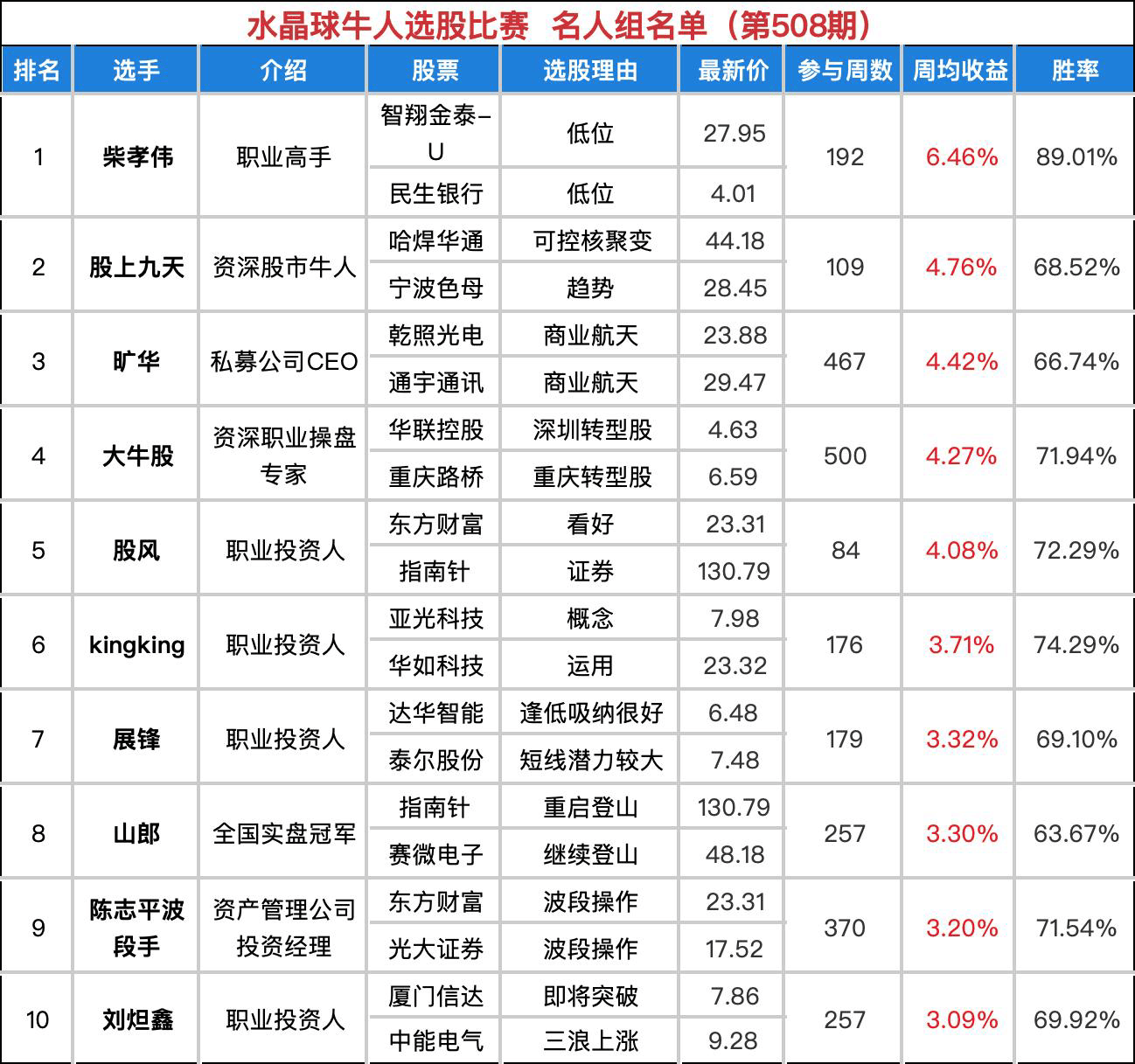
水晶球牛人选股比赛第508期名单!
Sou Hu Cai Jing· 2025-12-08 04:27
Group 1 - The stock of Guanghetong experienced a maximum increase of over 29% this week, driven by themes such as edge AI, AI glasses, and robotics [1] - The stock of Xiamen Xinda achieved a weekly increase of 16%, with a maximum weekly increase of nearly 23% [2] - Fulong Technology saw a weekly increase of 27.63%, with a maximum weekly increase exceeding 43% [1] - The stock of Shida Group gained nearly 20% this week, with a maximum increase of 28% [1] Group 2 - The aerospace and satellite navigation sectors continue to be the focus of attention, with stocks like Qianzhao Optoelectronics and Tongyu Communication being highlighted [1] - Financial and brokerage stocks showed unusual activity, with attention on stocks such as Dongfang Caifu and Guizhen [2] - In the optical communication sector, stocks like Saiwei Electronics and Taicheng Light were noted for their potential [2] Group 3 - The top performers in the stock selection competition included stocks like Zhixiang Jintai and Minsheng Bank, with notable price points of 27.95 and 4.01 respectively [3] - The competition featured a variety of stocks, with participants selecting based on themes such as commercial aerospace and market trends [3] - The weekly average returns for top competitors ranged from 4.38% to 6.10%, indicating strong performance in stock selection [4][5]
科技巨头加码端侧AI 基金经理看好上游供应链率先受益
Jing Ji Guan Cha Wang· 2025-12-08 03:36
Core Viewpoint - Major technology giants are intensifying their efforts in hardware development, indicating a rapid shift of AI applications from cloud to edge devices, driven by the explosion of computing power [1] Group 1: Product Developments - Alibaba Group launched its first self-developed Quark AI glasses on November 27, integrating the Qianwen large model with Alibaba's ecosystem services, featuring navigation, payment, and AI Q&A functions [1] - ByteDance, in collaboration with ZTE, introduced a preview version of the Nubia M153 engineering prototype equipped with Doubao mobile assistant technology on December 1, with limited sales [1] - Internationally, companies like OpenAI and Google have also released multiple smart terminal products [1] Group 2: Market Trends - The shift towards edge hardware signifies that edge AI is reshaping the consumer electronics landscape with faster response times and better privacy protection [1] - Fund managers believe that smartphones will continue to be the primary device for AI applications, while AI glasses are also seen as a promising category [1] Group 3: Investment Opportunities - Edge hardware brands and upstream supply chains are expected to benefit first from this trend [1] - Key areas such as system interaction and voice recognition are anticipated to see significant growth opportunities [1]

探路者收购贝特莱和通途,构建AI“感知+显示”双引擎
Cai Jing Wang· 2025-12-08 02:40
Core Insights - The acquisition of 51% stakes in Beitelai and Shanghai Tongtu for a total of 680 million yuan marks a strategic move by the company to solidify its presence in the semiconductor and edge AI sectors, creating a comprehensive layout from "graphics to display to touch to perception" [1] - The core value of the acquisition lies in the leading market positions and strong technological barriers of the target companies, providing a stable revenue foundation for the company [1] Group 1: Beitelai - Beitelai has over a decade of experience in mixed-signal chain chips, holding the top market share in fingerprint recognition chips for smart locks and significant positions in touch chips for laptops [1][2] - The company’s unique technology innovations, such as the FD wake-up technology, have reduced standby power consumption to the lowest in the industry, while its latest floating touch control chip addresses interaction bottlenecks in emerging scenarios like AI glasses and wearable devices [1][2] - Beitelai's product line includes touch chips, biometric sensors, and dedicated MCUs, which enhance security and interactivity when combined with edge AI, with expectations of benefiting from a projected 30% growth in AI penetration in security and finance by 2025 [2] Group 2: Shanghai Tongtu - Shanghai Tongtu has established competitive barriers in display processing and IP licensing, with its RISC-V architecture-based screen bridge SOC chip leading the high-end OLED smartphone market [2][3] - The company’s proprietary compression algorithm achieves a compression ratio of 1:8, saving 50% storage space compared to similar products, which is a critical advantage in the context of high memory costs for AI terminals [2] - Shanghai Tongtu plans to develop PQ image enhancement chips and scaler chips, which are highly compatible with edge AI applications, optimizing video processing for AI photography without cloud uploads [3] Group 3: Strategic Implications - The integration of Beitelai and Shanghai Tongtu into the company’s chip business represents a qualitative change, creating a complete ecosystem from chip design to IP licensing to terminal solutions [3] - The expected cumulative net profit of 300 million yuan from the two companies between 2026 and 2028, along with a performance incentive mechanism, aligns with the company's strategic goals [3] - The trend of integrating "technology and scenarios" is gaining traction in the capital market, with the company leveraging its outdoor ecosystem to enhance its chip business and maintain its leadership in the outdoor sector [4]
