
科技成果转化

Search documents
杭州首单“创新保”理赔落地 在临安可以“放心闯”
Mei Ri Shang Bao· 2025-12-12 08:32
Group 1 - The company, Xingkong Shen Zhi (Hangzhou) Technology Co., Ltd., received a 500,000 yuan insurance payout under the "Innovation Insurance" policy, marking the first claim in the city since the policy's launch [1] - Founded in 2023, the company focuses on two core R&D directions: AI smart diagnosis systems and innovative ophthalmic products, specifically "multi-surface lenses" [1] - The company halted the "multi-surface lens" project after clinical validation showed unsatisfactory results, but had previously insured the project, minimizing their losses [1] Group 2 - "Innovation Insurance" offers comprehensive risk coverage for enterprises, addressing risks from R&D to production safety, distinguishing it from traditional insurance products [2] - The Hangzhou Insurance Company established the first national center for technology achievement and intellectual property assessment in Zhejiang, integrating assessment services into the insurance process [2] - This insurance product employs a risk classification management system to provide analytical support for key risk points in technology transformation [2]

跃升“十四五”科技成就|塞上江南创新与产业双链“合璧”
Ke Ji Ri Bao· 2025-12-12 03:43
Group 1 - Ningxia has achieved significant advancements in technology and innovation during the 14th Five-Year Plan, including the domestic production of 12-inch tantalum targets and the development of the world's largest low-temperature control valve, breaking foreign monopolies [1] - The region has seen a rapid increase in R&D investment, with a projected growth rate of 11.4% in research and experimental development funding for 2024, ranking fourth nationally and first among the nine provinces along the Yellow River [3] - The number of national high-tech enterprises in Ningxia has reached 701, and the number of national technology-based small and medium-sized enterprises has increased to 3,002, representing growth rates of 142% and 516% respectively since the end of the 13th Five-Year Plan [3] Group 2 - Ningxia has established 11 research and development centers outside the region and signed contracts with 24 companies at the Ningxia Shanghai Innovation Center, facilitating technology transfer and collaboration [4] - The introduction of "science and technology innovation specialists" has helped bridge the gap between academic research and industry needs, with 300 specialists selected to assist local enterprises [6] - The "Ningke Loan" program has provided 300 million yuan in special funds to support technology-driven small and micro enterprises, significantly accelerating the funding process for innovation projects [6] Group 3 - Ningxia has implemented a comprehensive policy framework to enhance the conversion of scientific and technological achievements, resulting in nearly 2 billion yuan allocated for technology transfer projects by 2024 [8] - The number of registered technological achievements in the region has increased from 628 in 2021 to 1,770 in 2024, reflecting an annual growth rate of 41.3% [8] - The region has successfully facilitated the application of 441 external technological achievements and 428 internal achievements in local enterprises, demonstrating effective collaboration between research institutions and industry [8]
用“算法”让硬科技创业“少撞南墙” 专家探寻光子科技成果产业化之路
Zheng Quan Ri Bao Wang· 2025-12-11 11:31
Core Insights - The development of artificial intelligence technology is significantly advancing the transformation of scientific achievements in the photonics field, as discussed in the recent event held in Shanghai [1][2] - The event, organized by Zhongke Chuangxing Technology Investment Co., aims to bridge the gap between innovation and industry, focusing on the commercialization of photonics technology [2][4] Group 1: Event Overview - The "Good Hope Science Salon" has been ongoing since July 2024, serving as a platform for professionals from various sectors to discuss cutting-edge topics such as AI, photonics, quantum computing, and more [1][2] - The recent session specifically addressed the challenges of transforming scientific achievements into marketable products, emphasizing the need for a systematic approach or "algorithm" [2][3] Group 2: Expert Insights - Zhang Long, director of the Shanghai Institute of Optics and Fine Mechanics, highlighted that despite significant annual research funding of nearly 1 trillion yuan, the conversion rate of scientific achievements remains below 5%, indicating a lack of effective strategies [2][3] - The proposed "algorithm" involves a structured ecosystem for the selection, nurturing, and investment of scientific achievements, aiming to improve the success rate of commercialization [3] Group 3: Industry Challenges and Perspectives - Experts discussed the necessity of aligning technological breakthroughs with market needs to facilitate the commercialization process [4] - The event also emphasized the importance of nurturing entrepreneurial talent and enhancing the efficiency of technology transfer to support the development of the tech industry [4][5]

高校院所成果转化不足5%
Di Yi Cai Jing Zi Xun· 2025-12-11 11:14
Core Insights - Photonic technology is emerging as a core support for future information technology, penetrating various downstream industries such as semiconductors, new energy, and biomedicine [2] - The global photonics market is experiencing explosive growth, with a total market size of $920 billion in 2023, expected to exceed $1.2 trillion by 2027, driven primarily by the surge in AI computing power demand [2] Industry Development - The Ministry of Industry and Information Technology and six other departments in China issued a plan to promote future industry innovation, aiming to establish incubators and pilot zones by 2025, and to break through over a hundred key core technologies [2] - The increasing demand for computing power and energy efficiency in the era of big data and AI is pushing the development of photonic chips, which utilize photons for signal processing [3] Technology Transfer Challenges - Despite significant annual research funding of nearly $1 trillion, the technology transfer rate remains below 5%, indicating a gap between innovation and market application [3] - The market's harsh reality is that the best technology does not always equate to market success, emphasizing the need for alignment between technological breakthroughs and market needs [3] Incubation and Investment Strategies - A new industrialization "algorithm" has been implemented in Hangzhou, focusing on a systematic approach to technology transfer that includes selection, nurturing, and integration of scientific achievements [4] - The establishment of the Xihe Optoelectronics Industry Incubator in Shanghai marks a collaborative model involving government, research, and capital to foster innovation and entrepreneurship [4] Supportive Ecosystem - The Pudong New Area has developed the largest and most comprehensive photonic scientific facility cluster globally, providing robust research support [5] - The 895 Incubator in Zhangjiang focuses on high-tech startups, having invested in 20 projects with a total investment of approximately 700 million yuan, with five companies already listed [5] - Shanghai's "Technology Innovation Action Plan" aims to cultivate small technology giants with competitive advantages, offering various support services for project implementation [5]

高校院所成果转化不足5%
第一财经· 2025-12-11 10:19
Core Viewpoint - Photonic technology is emerging as a core support for future information technology, with significant applications in semiconductor, renewable energy, and biomedicine industries. The global photonics market is expected to grow explosively, reaching $1.2 trillion by 2027, driven by the surge in AI computing power demand [3][4]. Industry Overview - The global photonics market reached $920 billion in 2023, with projections indicating it will exceed $1.2 trillion by 2027. The growth is primarily fueled by the increasing demand for AI computing capabilities [3]. - The Chinese government aims to establish future industry incubators and pilot zones by 2025, focusing on breakthroughs in over a hundred key technologies and the development of significant products [3]. Technological Challenges - The current microelectronic chips are struggling to meet the demands for computing power and energy efficiency in the era of big data and AI. Photonic chips, which utilize photons for signal processing, are seen as a revolutionary solution for future computing, internet, and AI applications [4]. - The transformation of scientific research results into marketable technologies remains a significant challenge, with a conversion rate of less than 5% despite substantial annual research funding of nearly $1 trillion [4]. Innovation and Incubation Models - A new industrialization "algorithm" has been proposed, focusing on a systematic approach to technology transfer that includes selection, nurturing, and integration of scientific achievements into the market. This model has successfully incubated nearly 50 photonic technology startups, achieving an average project value increase of five times [5]. - The establishment of the Xihe Optoelectronics Industry Incubator in Shanghai represents a collaborative model involving government, research institutions, and capital investment, aimed at fostering innovation and entrepreneurship in the photonics sector [5]. Regional Development Initiatives - The Pudong New Area has developed the largest and most comprehensive photonics research facility cluster globally, providing robust support for scientific research. The 895 Incubator has invested in 20 projects with a total investment of approximately 700 million yuan, with five companies already listed [6]. - Shanghai's "Technology Innovation Action Plan" aims to cultivate a new generation of competitive technology companies, offering various support services including technology research and development, financial assistance, and talent training [6].

用“算法”让硬科技创业“少撞南墙”,专家探寻光子科技成果产业化之路
半导体芯闻· 2025-12-11 10:11
Core Viewpoint - The article discusses the ongoing transformation of scientific achievements in the field of photonics, emphasizing the need for effective algorithms to facilitate the commercialization of technology [3][6]. Group 1: Event Overview - The "Good Hope Science Salon" held a special session on photonics in Shanghai, gathering over a hundred participants from various sectors including scientists, tech entrepreneurs, and investment institutions [5][6]. - The event aims to bridge the gap between scientific innovation and industrial application, focusing on the challenges of technology commercialization in China [6][13]. Group 2: Key Insights from Experts - Zhang Long, director of the Shanghai Institute of Optics and Fine Mechanics, highlighted that while China invests nearly 1 trillion yuan in research annually, the technology commercialization rate is below 5%, indicating a lack of effective algorithms for transformation [6][7]. - The proposed "algorithm" for technology commercialization involves a structured ecosystem of selection, nurturing, and investment, ensuring that scientific achievements are effectively transitioned into market-ready products [7][10]. Group 3: Challenges and Solutions - The discussion revealed that the best technology does not always guarantee market success, emphasizing the need for alignment between technological breakthroughs and market demands [10]. - Participants stressed the importance of cultivating entrepreneurial talent and improving the efficiency of technology transfer to enhance the development of the tech industry [10][11]. Group 4: Future Directions - The salon serves as a platform for ongoing dialogue about the future of photonics technology and its commercialization, with a focus on fostering collaboration among academia, industry, and investment sectors [8][13]. - The event's organizers plan to continue focusing on hard technology and innovation, contributing to the development of a robust ecosystem for scientific achievement transformation [13].

经济大省挑大梁|上海高质量孵化器再扩容,至今共启动建设18家
Xin Lang Cai Jing· 2025-12-11 09:21
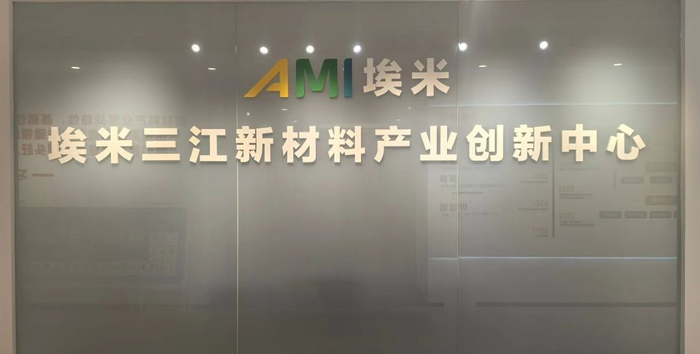
Core Insights - Shanghai has expanded its list of high-quality incubators, adding six new entities, bringing the total to 18 by the end of 2024, focusing on emerging industries such as large models, quantum optics, intelligent sensing, humanoid robots, synthetic biology, and cell and gene therapy [1] Group 1: New Incubators - The newly added incubators include Nest Shanghai Innovation Incubator, Sinan Brain-Machine Intelligence Incubator, Shanghai Aimi Sanjiang New Materials Industry Innovation Center, "Shutong Chain Valley" Blockchain Application Innovation Incubator, "D Zero Bay" Sci-Tech Innovation Incubator, and Zhangjiang High-Tech 895 Incubator [1] - The expansion aligns with Shanghai's implementation plan for cultivating high-quality incubators, which was released in June 2023 [1] Group 2: Focus on New Materials - Shanghai Aimi Sanjiang New Materials Industry Innovation Center is the only high-quality incubator in the city focusing on the new materials sector, emphasizing membrane materials, carbon-based materials, and special alloys [4] - The center aims to create a closed-loop innovation ecosystem for the new materials industry by providing technical empowerment, market connections, and capital support [4] Group 3: Specialized Incubator Models - The core incubation model of the Shanghai Aimi Sanjiang New Materials Industry Innovation Center includes project co-creation, equity incubation, industry acceleration, and precise empowerment, enhancing the success rate and feasibility of projects [4] - The center is also focusing on hardware materials related to artificial intelligence and embodied intelligence industries, such as lightweight materials for humanoid robot joints and flexible sensing materials for robot skin [5] Group 4: Other Incubator Focus Areas - Nest Shanghai Innovation Incubator focuses on the biopharmaceutical industry, particularly synthetic biology and cell and gene therapy, providing comprehensive support for project transformation [7] - Sinan Brain-Machine Intelligence Incubator targets brain-machine interfaces and cognitive disorder interventions, establishing a collaborative model with academic and medical institutions for accelerated development [9] - "Shutong Chain Valley" Blockchain Application Innovation Incubator emphasizes core blockchain technology and application scenarios, integrating various resources to support startups [11] - "D Zero Bay" Sci-Tech Innovation Incubator focuses on electronic information and advanced equipment, promoting technology transfer and entrepreneurship [13] - Zhangjiang High-Tech 895 Incubator specializes in integrated circuits, creating a comprehensive incubation system that connects talent, services, and applications [15]
高校院所成果转化不足5% 问题出在哪里?
Di Yi Cai Jing· 2025-12-11 09:15
Group 1 - The core viewpoint of the articles emphasizes the rapid growth and potential of photonic technology as a key support for future information technology, impacting various industries such as semiconductors, renewable energy, and biomedicine [1][2] - The global photonics market is projected to reach $920 billion in 2023 and is expected to exceed $1.2 trillion by 2027, driven primarily by the surge in AI computing power demand [1] - The Chinese government aims to establish a number of future industry incubators and pilot zones by 2025, focusing on breakthroughs in key technologies and the development of iconic products [1] Group 2 - The increasing limitations of microelectronic chips in meeting the demands of big data and AI have led to the emergence of photonic chips, which are expected to revolutionize computing, the internet, and artificial intelligence [2] - The transformation of scientific research results into marketable technologies remains a significant challenge, with a conversion rate of less than 5% despite substantial annual research funding [2] - The establishment of a collaborative model involving government, research institutions, and capital is exemplified by the launch of the Xihe Optoelectronics Industry Incubator, aimed at fostering innovation and entrepreneurship in Shanghai [3] Group 3 - The Hangzhou Institute of Optics and Fine Mechanics has implemented an industrialization "algorithm" to enhance the conversion of scientific achievements into marketable products, focusing on a structured approach to selection, nurturing, and investment [3] - The 895 Incubator in Pudong has invested in 20 projects with a total investment of approximately 700 million yuan, with five companies already listed, showcasing the effectiveness of the incubator model in supporting high-tech startups [4] - Shanghai's "Technology Innovation Action Plan" aims to cultivate a new generation of technology-driven enterprises with competitive advantages, providing various support services for project implementation [4]
实验室成果加速“跑”进生产线
Ren Min Ri Bao· 2025-12-11 07:37
舞动腰肢扭起秧歌,妙语连珠现场带货……在"中国光谷"湖北武汉东湖新技术开发区的人形机器人销售 店内,10余款机器人各展其才,吸引了不少顾客。 "这款人形机器人搭载直线驱动模组,走得更稳、负载更高,搬运重物对它而言是'举重若轻'。"湖北荆 楚人形机器人有限公司总经理、华中科技大学机械科学与工程学院教授赵兴炜正忙着向客户介绍机器人 产品。 习近平总书记强调:"强化企业科技创新主体地位,促进科技成果转化应用。" "科技自立自强水平大幅提高",是党的二十届四中全会提出的"十五五"时期经济社会发展主要目标之 一。"十五五"规划建议提出,"推动科技创新和产业创新深度融合"。 难以想象,此时兴致勃勃的赵兴炜,一年前还在因找不到市场而忧心忡忡。 赵兴炜却没多大信心:"如果不能实现量产,做得再好也只是'自娱自乐'。" "只要技术过硬,剩下的交给我们。"王新峰鼓劲道,"我们不仅会给予资金支持,还可以帮助你们更好 对接市场需求。" 当时,赵兴炜作为华中科技大学丁汉院士团队的骨干成员,和同事敏锐地发现人形机器人产业的巨大潜 力,"我们要抢抓产业发展机遇,尽快推动直线驱动型人形机器人技术成果转化落地。" 在团队组会上,大家很快达成了" ...
上海高质量孵化器增至18家
Jie Fang Ri Bao· 2025-12-11 05:27
Core Insights - Shanghai has added 6 new high-quality incubators, bringing the total to 18, focusing on emerging industries such as synthetic biology, brain-machine intelligence, and integrated circuits [1][2]. Group 1: New Incubators - The newly added incubators include: - Nest Shanghai Innovation Incubator, focusing on synthetic biology and gene therapy [1] - Sinan Brain-Machine Intelligence Incubator, concentrating on brain-machine interfaces and cognitive disorder interventions [2] - Shanghai Aimi Sanjiang New Materials Innovation Center, targeting new materials and membrane materials [2] - "Shutong Chain Valley" Blockchain Application Innovation Incubator, focusing on blockchain core technologies [2] - "Zero Bay" Science and Technology Innovation Incubator, emphasizing electronic information and advanced equipment [2] - Zhangjiang Gaoke 895 Incubator, serving the integrated circuit design industry [3] Group 2: Focus Areas and Objectives - The high-quality incubators aim to accelerate the construction of local technology enterprises and nurture future industries, with a focus on areas such as large models, quantum optics, intelligent sensing, humanoid robots, and cell and gene therapy [1]. - The Nest Shanghai Innovation Incubator aims to support the biopharmaceutical industry by exploring disruptive life science technologies and establishing a mechanism for technology transfer [1]. - The Sinan Brain-Machine Intelligence Incubator collaborates with academic and medical institutions to create a comprehensive incubation model [2]. - The Shanghai Aimi Sanjiang New Materials Innovation Center has established a full-cycle incubation chain for technology commercialization [2]. - The "Shutong Chain Valley" incubator integrates various application scenarios for blockchain technology to empower startups [2]. - The "Zero Bay" incubator focuses on identifying commercially valuable technologies and projects through collaboration with universities [2].