
绿色经济

Search documents
东盟经贸促进会:以东博会为平台推动双边合作升级
Zhong Guo Jing Ji Wang· 2025-09-17 09:09
第22届中国-东盟博览会(简称"东博会")9月17日至21日在广西南宁举办,东盟经济贸易促进会(简称"东 盟经贸促进会")会长波尚琅率代表团出席系列活动,并表示将重点推动中国和东盟在绿色经济、数字经 济、跨境服务等领域的合作。 东盟经贸促进会是区域性国际组织,秉持"互利共赢、开放包容"的理念,围绕东盟经济共同体建设目 标,积极促进东盟十国与中国在多领域的友好交流与务实合作。其核心职能包括促进政企对接沟通、推 动务实合作以及服务企业发展。 "今年以来,东盟经贸促进会在推动双边经贸往来方面做了大量工作。"波尚琅介绍,一是签署合作、深 化联动,与中国10余个省市地区政府、贸促机构及行业龙头企业建立良好对接机制,签署多项合作协 议。二是搭建平台、促进对接,8月牵头举办首届东盟秘书长北京圆桌会,搭建起政企对话、行业交 流、项目对接的高端平台,达成多项合作意向。三是智库支撑,赋能决策,正式成立东盟研究院,整合 多方资源,定期发布相关报告,为政府和企业提供参考。 在本届东博会上,东盟经贸促进会也取得了一系列合作成果。一方面,联合中国资源循环集团、广西现 代物流集团主办"中国-东盟资源循环产业合作对接"圆桌会,明确了在新能源 ...
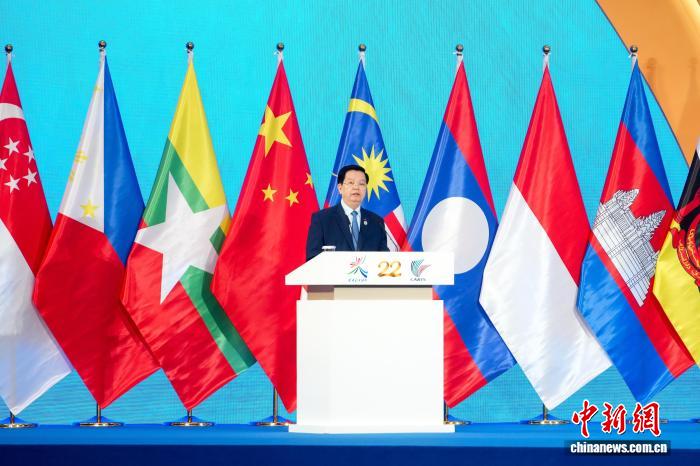
越南副总理:加强东盟与中国铁路公路互联互通
Zhong Guo Xin Wen Wang· 2025-09-17 07:26
Core Points - The Vice Premier of Vietnam, Pham Minh Chinh, emphasized the importance of enhancing connectivity between ASEAN and China through railway and road infrastructure development [1][3] - Vietnam is accelerating the construction of transportation networks with China, Laos, and Cambodia to facilitate better access for ASEAN goods to Central Asia and Europe [1][3] Group 1: Trade and Investment - The political relationship between China and ASEAN has led to significant growth in trade cooperation, with China being a major source of foreign direct investment for many ASEAN countries [3] - Vietnam is currently China's fourth-largest trading partner, with rapid growth in direct investment from China [3] Group 2: Economic Cooperation - The China-ASEAN Expo has played a vital role in promoting economic, trade, and investment cooperation between ASEAN and China over the past 21 years [3] - Approximately 200 booths at the current expo showcase high-quality Vietnamese products, including agricultural products, processed foods, consumer goods, home goods, wooden products, and handicrafts [3] Group 3: Innovation and Future Cooperation - The Vice Premier highlighted the need to expand cooperation into new areas such as digital economy, green economy, and technological innovation, particularly in artificial intelligence [3]

北京绿色发展论坛将于9月22日开幕 涵盖19场专项活动
Zhong Guo Xin Wen Wang· 2025-09-17 03:34
Group 1 - The Beijing Green Development Forum will be held from September 22 to 24, featuring a total of 19 specialized activities, including a green industry expo, five green development salons, and 13 parallel forums [1] - The forum aims to serve as a platform for major policy and achievement releases related to green development, promote green technology transformation, and enhance international cooperation in green initiatives [1][2] - The green industry expo will showcase 78 outstanding enterprises across seven strategic green industry sectors, including advanced energy, synthetic biology manufacturing, and green finance [2] Group 2 - Thirteen parallel forums will take place at various venues, focusing on low-carbon pathways, regional governance experiences, and innovative water treatment technologies, along with the release of significant reports and frameworks [3] - The forum will announce major achievements in building Beijing as an international green economy benchmark city, including the establishment of green industry clusters and the promotion of green technology innovation [3][4] - The event will also unveil the "Beijing Green Economy Development Blue Book (2025)," which aims to provide actionable policy recommendations for global mega-city green transitions [4]
中国—东盟自贸区3.0版为区域繁荣注入新动力
Xin Hua She· 2025-09-16 10:07
Core Points - The China-ASEAN Free Trade Area (CAFTA) 3.0 negotiations began in November 2022 and are set to conclude in October 2024, with the completion of negotiations announced on May 20, 2023 [1][2] - CAFTA has evolved from its initial version in 2010 to a 2.0 version in 2015, and now to a 3.0 version, reflecting a commitment to regional economic integration and cooperation [2][3] - The trade volume between China and ASEAN has shown significant growth, with an average annual increase of 11.54% from 2010 to 2023, outpacing China's overall import and export growth [3] Summary by Sections Upgrade Rationale - The upgrade from CAFTA 2.0 to 3.0 is aimed at enhancing regional economic integration and addressing the challenges posed by unilateralism and protectionism in the global economy [2] - The 3.0 version is designed to be a high-level free trade agreement that meets the strategic needs of both parties while promoting inclusivity and mutual benefits [2][3] Key Features - CAFTA 3.0 encompasses nine areas including digital economy, green economy, supply chain connectivity, and consumer protection, addressing core issues of global industrial transformation and sustainable development [4][6] - Notable highlights include the addition of digital and green economy cooperation, a shift from tariff reduction to standard regulation, and new rules for supply chains [4][5] Benefits - The design of CAFTA 3.0 aims to benefit both macroeconomic strategies and micro-level enterprises, simplifying market access for high-tech products and enhancing the business environment [7] - The agreement includes provisions for small and medium-sized enterprises, promoting credit data sharing and streamlined customs procedures [7] - The upgrade is expected to facilitate cross-border trade and create more job opportunities, particularly in digital technology and green economy sectors [7][8] Digital Economy Impact - The implementation of CAFTA 3.0 is anticipated to help bridge the "digital divide" among ASEAN countries, enhancing digital cooperation and providing local populations with access to modern services [8] - The upcoming 22nd China-ASEAN Expo will further promote trade and investment opportunities, showcasing the benefits of the upgraded free trade area [8]

19场专项活动 首届北京绿色发展论坛将于9月22日开幕
Huan Qiu Wang· 2025-09-16 09:48
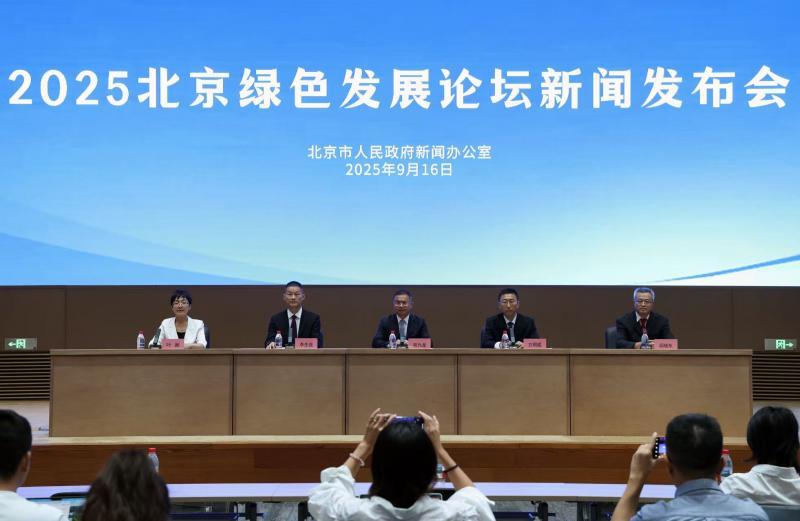
9月16日,2025北京绿色发展论坛新闻发布会举办。北京青年报记者从会上获悉,2025北京绿色发展论坛将于9月 22日—9月24日在北京城市副中心举办。论坛组织19场专项活动,包括1场绿色产业博览会、5场绿色发展会客厅、 13场平行论坛,为北京建设国际绿色经济标杆城市提供新助力,为京津冀打造绿色发展高地提供新动能。 论坛将邀请北京城市副中心、中新天津生态城两个国家绿色发展示范区和作为绿色发展城市典范的河北雄安新区 交流绿色发展经验,助推京津冀三地协同建设绿色发展高地。通州区委常委、常务副区长李先侠介绍,论坛还将 进一步扩展参与主体,邀请城市副中心(通州区)、顺义区、昌平区、房山区、平谷区举办城市会客厅,共同开 展推介,联合18家社会机构开展平行论坛、绿色科普、低碳生活等系列活动,线下线上参与活动的专家、企业、 市民和政府部门数量将创新高,发挥凝聚共识、促进合作、服务发展的积极作用。 市发展改革委二级巡视员方明成介绍,论坛将系统发布北京市建设国际绿色经济标杆城市重大成果,举办国家绿 色技术交易中心揭牌及相关签约活动,发布《北京市氢能产业标准体系》和《北京绿色经济发展蓝皮书 (2025)》,举行2025"北京绿色 ...
中国—东盟自贸区3.0重塑区域经济格局
Zhong Guo Xin Wen Wang· 2025-09-16 07:54
Core Viewpoint - The China-ASEAN Free Trade Area 3.0 is set to reshape the regional economic landscape through rule innovation, digital transformation, and supply chain restructuring amid rising global trade protectionism and unilateral measures [1][2]. Group 1: Economic Cooperation and Trade - The upgraded version of the China-ASEAN Free Trade Area includes nine new rule chapters focusing on digital economy and green economy, establishing mutual recognition standards and a mechanism for small and medium-sized enterprises [2]. - In the first eight months of 2025, the bilateral trade value reached 4.93 trillion yuan, a year-on-year increase of 9.7%, accounting for 16.7% of China's total foreign trade [2]. - The 3.0 version promotes the expansion of the "one place, two inspections" model, significantly enhancing customs efficiency and reducing trade costs [2]. Group 2: Supply Chain Resilience - The 3.0 version deepens regional supply chain integration, creating a more resilient regional production system, enhancing the stickiness of supply chains, and increasing bilateral trade's risk resistance [2][3]. - External pressures have strengthened ASEAN countries' commitment to cooperation with China, with notable projects like the China-Malaysia "Two Countries, Two Parks" and the China-Laos Railway serving as models for regional supply chain collaboration [3]. Group 3: Digital Economy and Infrastructure - The digital economy is highlighted as a key aspect of the 3.0 version, with significant potential for cooperation in artificial intelligence and smart city development, leveraging China's technological advantages and ASEAN's transformation needs [5]. - The upcoming China-ASEAN Artificial Intelligence Ministerial Forum aims to establish a regular high-level dialogue mechanism, indicating a focus on digital collaboration [5]. - New infrastructure areas such as power grids, computing centers, and renewable energy are expected to be focal points for future China-ASEAN cooperation [5]. Group 4: Future Outlook - The upgrade protocol for the China-ASEAN Free Trade Area 3.0 is expected to be officially signed in October, positioning it as a vital platform for maintaining a multilateral trade system and promoting regional economic stability [6]. - Despite challenges in areas like digital standard unification and green technology transfer, there is an increasing consensus among parties, providing new opportunities for enterprises and contributing to global economic governance [6].
2025年服贸会圆满落幕 达成900余项成果
Zhong Guo Fa Zhan Wang· 2025-09-16 06:52
Group 1 - The 2025 China International Service Trade Fair concluded with over 900 achievements in fields such as construction, information technology, and finance, attracting more than 250,000 attendees [1] - The fair focused on the digitalization, intelligence, and greening of service trade, highlighting national-level positioning, professional characteristics, and international features [1] - Over 480 Fortune 500 and industry-leading companies participated, accounting for more than 25% of exhibitors, with an increase in both the number and proportion of top enterprises compared to the previous event [1] Group 2 - International participation was significant, with 85 countries and international organizations, including Ireland and the World Intellectual Property Organization, exhibiting [2] - The overall internationalization rate of participating companies exceeded 20%, covering 26 of the top 30 countries and regions in service trade [2] - New exhibition methods were employed, utilizing digital humans and VR simulation devices to better showcase new technology applications and services [2] Group 3 - The Ministry of Commerce released a work plan to support Beijing in piloting the WTO's Electronic Commerce Agreement, accelerating the implementation of global digital trade rules in China [3] - A total of 113 enterprises and organizations released 198 achievements in fields such as artificial intelligence, fintech, and green low-carbon technologies during the event [3] - Approximately 11,600 professional attendees were invited, marking a 12% increase from the previous year [3] Group 4 - Australia, as the guest country, engaged in discussions with various Chinese provinces and exhibitors, resulting in 15 cooperation intentions in sectors like finance and education [4] - The digital platform supply-demand hall announced over 3,000 matching projects, with nearly 8,500 business meeting invitations sent out [4]
首届北京绿色发展论坛将举办
Bei Jing Wan Bao· 2025-09-16 05:42
Group 1 - The first Beijing Green Development Forum will be held from September 22 to September 24 in the Beijing Urban Sub-center, featuring 19 specialized activities including a green industry expo and multiple parallel forums [1][2] - The forum aims to serve as a platform for major policy announcements, green technology transformation, international cooperation, and promoting Beijing's image as a green economy benchmark city [2][3] - The forum will invite representatives from key enterprises and green development demonstration zones to share experiences and promote collaboration among the Beijing-Tianjin-Hebei region [2][3] Group 2 - The green industry expo will take place in an outdoor circular corridor between three cultural facilities in the urban sub-center, showcasing the city's direction in building an international green economy benchmark [4] - This year's expo will cover all seven green industry directions proposed for the city's development, with over 30% of exhibitors coming from outside Beijing, and an expected daily visitor count of 10,000 [4] - Various financial institutions will share their practices in green finance, while the expo will also highlight the green development practices in the urban sub-center [4]



首届北京绿色发展论坛将于9月22日开幕
Xin Jing Bao· 2025-09-16 05:32
在加强绿色城市经验交流方面,论坛邀请了北京城市副中心、中新天津生态城两个国家绿色发展示范区 和作为绿色发展城市典范的河北雄安新区交流绿色发展经验,助推京津冀三地协同建设绿色发展高地。 在推动绿色产业在城市副中心发展壮大方面,北京绿交所、北投集团、华夏银行、北京建院等领军企业 将发挥东道主角色,吸引更多合作伙伴到城市副中心共享机遇、共创新业。 在讲好绿色北京、美丽中国故事方面,论坛设置了2025"北京绿色发展榜样人物"颁奖、"绿色之行 不止 所见"全球影像创作计划颁奖、绿色科普等,面向全社会讲述绿色故事,倡导绿色生活风尚,增强全社 会绿色发展自觉。 将发布国际绿色经济发展指数 在聚焦国家绿色发展示范区与国际绿色经济标杆城市建设任务的基础上,论坛扩展参与主体,邀请城市 副中心(通州区)、顺义区、昌平区、房山区、平谷区举办城市会客厅,共同开展推介,联合18家社会 机构开展平行论坛、绿色科普、低碳生活等系列活动,线下线上参与活动的专家、企业、市民和政府部 门数量将创新高。 在提升国际性方面,本届论坛邀请了联合国相关代表、国际知名专家和企业参与致辞、演讲与对话,发 布国际绿色经济发展指数,有助于提升北京作为绿色经济标杆 ...
东博会有力维护多边贸易秩序
Jing Ji Ri Bao· 2025-09-16 01:08
9月17日至21日,第22届中国—东盟博览会将在广西南宁举行。日前,中央党校(国家行政学院)国 际战略研究院副院长、教授陈建奇就东博会有关问题接受经济日报记者采访。 陈建奇:东博会以AI为主题,对于深化相关地区AI合作具有重大促进作用,也有助于缓解数字鸿 沟问题。特别是在全球AI发展面临霸权国家遏制打压围堵背景下,中国—东盟AI合作尤其迫切。东博 会将推动相关方深化合作,加快形成AI生态体系,营造创新开放合作的稳定环境。 记者:作为中国—东盟自由贸易区建设"助推器",东博会如何通过推动3.0版谈判和《区域全面经 济伙伴关系协定》(RCEP)深化实施制度型开放,促进区域经济一体化发展? 陈建奇:东博会作为中国—东盟合作的重要治理机制,已经成为推动中国—东盟自贸区3.0版和 RCEP等重要协定落地的重要平台,特别是通过东博会立体化的政商对话体系,将深化各方对新规则新 标准的认识,强化各方积极推动协定落实的意愿。 东博会不仅是政府间的对话,更是企业等微观主体之间的交流,东博会通过举办经贸合作系列论 坛,推动企业在新规则新标准下对话交流。同时,东博会还通过开展相关规则标准的线上专题培训,全 面提升了企业熟悉并运用中国 ...