市值管理

Search documents
渝农商行(601077):深度报告:蓄力半载,扬帆起航
Orient Securities· 2026-01-13 09:22
Investment Rating - The report maintains a "Buy" rating for Chongqing Rural Commercial Bank (渝农商行) [1] Core Views - The bank's net profit is expected to grow by 5.1% in 2025, 10.1% in 2026, and 9.5% in 2027, with corresponding book value per share (BVPS) of 12.05, 13.13, and 14.32 yuan [7] - The target price is set at 8.29 yuan per share, reflecting a 10% premium over comparable companies [7] Summary by Sections 1. Local State-Owned Capital Continues to Increase - The new chairman's appointment is expected to drive the execution of strategies aimed at addressing weaknesses and tapping potential [14] - The local state-owned assets management committee has a strong focus on market value management, with significant shareholding in the bank [14][18] 2. Actively Expanding Scale Based on Regional Endowments - The economic turning point in Chongqing is expected to drive demand for the bank's services [24] - The bank is increasing its public loan issuance, with public loans accounting for 54% of the total [39] 3. Improvement in Net Interest Margin and Asset Quality - The bank is experiencing a narrowing of interest margin decline, with asset quality showing clear improvement [10] - The credit cost is expected to remain low, with non-performing loans being effectively managed [10] 4. Plans for ROE Improvement - The bank's return on equity (ROE) is projected to improve, supported by strategic initiatives and management experience [10][19] 5. Financial Forecast and Investment Recommendations - The report provides detailed financial projections, including revenue and profit growth, alongside a valuation analysis [9][7]
汇中股份:二级市场股价走势受多重因素综合影响
Zheng Quan Ri Bao Wang· 2026-01-13 09:13
Core Viewpoint - The company emphasizes its commitment to the ultrasound flow measurement business and aims to enhance company value through steady operations and quality improvements while maintaining shareholder interests [1] Group 1: Company Operations - The company focuses on its core business of ultrasound flow measurement and is dedicated to deepening its presence in this key sector [1] - The company is committed to strict adherence to corporate governance standards and relevant laws regarding information disclosure [1] Group 2: Market and Shareholder Communication - The company acknowledges that its stock price in the secondary market is influenced by multiple factors and carries uncertainties [1] - The company is actively working to optimize the quality of information disclosure and improve communication mechanisms with investors [1] Group 3: Disclosure and Shareholding - As of the date of the response, the company has no significant matters that should be disclosed but have not been, and has not received any notifications regarding potential share reductions from major shareholders or executives in the next three months [1] - The company will continue to fulfill its information disclosure obligations in accordance with relevant regulations [1]

A股科技型企业整体业绩为估值提供支撑——上市公司市值稳步抬
Jing Ji Ri Bao· 2026-01-13 02:50
Group 1: Market Overview - As of the end of 2025, there are 5,469 listed companies in A-shares with a total market capitalization of 123 trillion yuan, reflecting a year-on-year growth of 22.5% for existing companies [1] - The average price-to-book ratio of listed companies increased from 3.3 at the beginning of the year to 4.4 by the end of 2025, indicating a steady rise in overall market valuation [2] Group 2: Sector Performance - Technology-driven sectors, particularly manufacturing and scientific research, saw significant market value increases, with total market capitalization growing by 33.3% and 32.1% respectively, contributing to a 4.2 percentage point and 0.1 percentage point increase in their share of A-share market capitalization [2] - Nearly half of the listed companies in manufacturing and scientific research sectors achieved a net asset return rate greater than 5%, supporting their valuations [2] Group 3: Policy and Governance - The report highlights that market capitalization performance reflects national strategic directions, with notable performance in emerging industries such as integrated circuits, artificial intelligence, and high-end manufacturing [3] - Regulatory bodies have introduced a series of policies to enhance the framework for market capitalization management, including improvements in mergers and acquisitions, cash dividends, and share buybacks [3] - Over 98% of companies held their annual shareholder meetings by June 30, and more than 70% of boards consist of 7 or 9 members, indicating a trend towards improved corporate governance [4] Group 4: Corporate Governance - The governance structure is becoming more standardized, with over 96% of companies having a high attendance rate at board meetings and a low incidence of proposal rejections [4] - More than 99% of companies disclosed their 2024 audit reports and internal control audit reports, with over 96% receiving unqualified opinions [4] - The governance report indicates a positive trend in corporate governance, although attention is needed on issues like related party transactions and internal supervision effectiveness [5]
股市必读:何氏眼科(301103)1月12日董秘有最新回复
Sou Hu Cai Jing· 2026-01-12 18:57
截至2026年1月12日收盘,何氏眼科(301103)报收于20.84元,上涨2.86%,换手率1.99%,成交量3.14万 手,成交额6458.06万元。 董秘最新回复 投资者: 请问何星儒何总,贵公司股价长期处于低位,对公司品牌带来极大负面影响,为何不积极回 购股份提升公司的市场价值呢? 董秘: 尊敬的投资者您好,截止目前公司已累计回购股份2,722,719股。关于股份回购计划,公司管理 层将根据公司资金安排并结合实际经营情况及未来发展需求等多种因素考量,未来如有回购相关计划, 将严格按照法律法规及交易所规则,履行决策程序并及时披露相关信息。公司将继续做好经营管理,夯 实企业内在价值,坚持长期可持续发展战略、透明的信息披露与有效的投资者沟通,稳步推进资本市场 品牌建设,努力为投资者创造长期价值。谢谢! 投资者: 董秘你好,公司长期大幅破发,投资者毫无获得感,作为辽宁地区知名企业,后续公司有什 么具体的稳定提升股价的措施吗? 董秘: 尊敬的投资者您好,股价的波动受市场整体情绪、行业板块轮动、资金偏好等多重因素综合影 响。公司坚持聚焦主业,稳健经营,以投资者为本,通过不断完善公司治理,积极加强与国内外同领域 ...
德尔玛:2025年前三季度,公司研发投入1.4亿元
Zheng Quan Ri Bao Zhi Sheng· 2026-01-12 14:11
Core Viewpoint - The company emphasizes the importance of market value management and is actively taking measures to achieve stable operations and long-term value growth [1] Group 1: Company Strategy - The company maintains a keen market insight regarding changes in consumer policies within the small home appliance industry [1] - Resources are focused on core categories and innovative products to enhance product functionality, design, quality, and user experience, thereby strengthening consumer recognition of the brand value [1] Group 2: Research and Development - The company is committed to R&D investment, focusing on cutting-edge demands and market trends, particularly in the fields of cleaning appliances, water health, personal care, and sports health products [1] - In the first three quarters of 2025, the company invested 140 million yuan in R&D, accounting for 6% of its operating revenue [1] Group 3: Future Plans and Shareholder Returns - The company will provide updates on specific capital planning and equity incentive progress through formal announcements in designated information disclosure media [1] - There is a continuous commitment to improving the shareholder return mechanism and actively conveying the company's intrinsic value [1]
中盐化工:公司高度重视市值管理工作
Zheng Quan Ri Bao Zhi Sheng· 2026-01-12 14:08
Core Viewpoint - The company emphasizes the importance of market value management, focusing on strengthening its fundamentals and enhancing overall value to instill investor confidence [1] Group 1: Company Strategies - The company is committed to focusing on its core business and continuously improving corporate governance and internal operations to solidify its fundamentals and support performance [1] - The company is implementing share buybacks, cash dividends, and enhancing the quality of information disclosure to boost overall value [1] - Strengthening investor relations management is part of the company's strategy to communicate effectively with the market [1]

国机汽车:公司管理层高度重视市值管理
Zheng Quan Ri Bao Wang· 2026-01-12 13:45
Core Viewpoint - The company emphasizes the importance of market value management and has implemented a series of initiatives since 2025 to enhance its market value [1] Group 1: Market Value Management Initiatives - The company has established a "Market Value Management System" focusing on enterprise value [1] - A "Shareholder Dividend Return Plan" for the next three years (2025-2027) has been developed to stabilize dividend expectations and improve shareholder return mechanisms [1] - The company has initiated its first share buyback to convey confidence in its development to the market [1] Group 2: Future Focus - The company plans to continue focusing on its core business and improving operational quality to create greater value for shareholders [1]

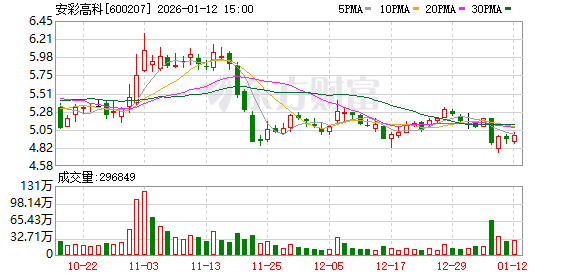
安彩高科:公司管理层高度重视市值表现
Zheng Quan Ri Bao· 2026-01-12 13:13
Group 1 - The company's stock price is influenced by multiple factors including macroeconomic conditions, industry environment, and market sentiment [2] - The management team places high importance on market value performance and is committed to solid operations to enhance core competitiveness [2]


物产金轮:公司持续开展市值管理相关工作
Zheng Quan Ri Bao Zhi Sheng· 2026-01-12 13:12
Core Viewpoint - The company acknowledges the concerns of investors regarding its current stock performance, attributing it to multiple influencing factors [1] Group 1: Company Strategy and Performance - As a state-controlled listed company, the company adheres to the requirements for improving the quality and efficiency of state-owned assets [1] - The company focuses on high-quality development as its core objective, continuously deepening its main business and enhancing operational quality and efficiency [1] - The company is committed to solidifying its intrinsic value and overall competitiveness [1] Group 2: Investor Relations and Market Management - The company is actively engaged in market value management efforts, aiming to reward investors with stable operational performance and positive development outcomes [1] - The company expresses confidence that its investment value will eventually be recognized by a broader range of investors [1]

贝斯美:公司将加强投资者关系管理和市值管理工作
Zheng Quan Ri Bao Wang· 2026-01-12 13:10
Core Viewpoint - The company, Bestme (300796), is committed to enhancing investor relations and market value management while exploring new media channels for promoting its main business segments [1] Group 1: Investor Relations and Market Value Management - The company plans to strengthen its investor relations management and market value management efforts [1] - Future strategies will include exploring new media channels to promote its key business segments, ensuring compliance [1] Group 2: Strategic Planning and Business Focus - The company will carefully evaluate strategic issues such as name changes in relation to its main business development [1] - It aims to continue focusing on its core business and improving management practices to create good investment returns for shareholders [1]