
主流媒体系统性变革

Search documents
回归新闻价值,突出在地化
Ren Min Ri Bao· 2025-09-17 22:22
Group 1 - The core viewpoint emphasizes the necessity for mainstream media to unify positive energy, high quality, and large traffic, which are essential for their survival and competitiveness [1] - Mainstream media must maintain political direction and influence, distinguishing themselves from self-media by adhering to guiding principles [1] - A thorough integration and transformation of mainstream media is required, focusing on technological innovation and enhancing self-platform construction while effectively utilizing third-party platforms [1] Group 2 - There is a need to return to news value and emphasize localization, addressing the unique demands of audiences in different regions, particularly for provincial mainstream media [1] - Future systemic reforms in mainstream media should optimize evaluation systems to stimulate assessment vitality, allowing provincial media to serve central work at a high level while daring to innovate [1] - The leading role of technology should be prioritized, using technological innovation to support adjustments in organizational structure, talent requirements, production processes, and creative scenarios [1]
融媒、文旅跨界聚力!广东中山推进市属媒体系统性变革
Zhong Guo Jing Ji Wang· 2025-09-04 06:48
Core Insights - The core focus of the news is the systemic reform of media in Zhongshan, Guangdong Province, aimed at creating a high-quality development platform for mainstream media that enhances regional influence and communication power [1][2]. Group 1: Media Reform Objectives - The "Zhongshan Plan" outlines the goal of establishing a new mainstream media platform that integrates mobile internet capabilities and enhances the media's role in supporting the city's high-quality development [1]. - The plan emphasizes the need for a transformation in response to the challenges posed by mobile communication and competition in public opinion [1][2]. Group 2: "Zhongshan+" Client App - The "Zhongshan+" client app is positioned as the only official news client and a comprehensive service platform for the city, aiming to become a critical entry point for policy interpretation and consensus building [2]. - The app will facilitate a seamless experience for users, allowing access to various city services through a single application, thereby empowering digital government and industry initiatives [2]. Group 3: Long-term Goals and Action Plans - The long-term objective of the media reform is to create a six-system framework centered on "mobile-first" media production and dissemination, including a media product system and a content-driven innovation system [2]. - The "Zhongshan Plan" includes ten key actions and 27 specific reform measures focusing on platform upgrades, team building, and industry expansion to enhance the core competitiveness of the new mainstream media [2].
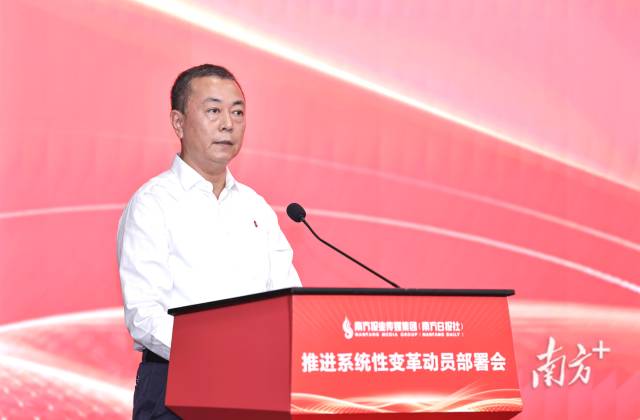
打造“双一流”新型主流媒体集团!南方报业召开推进系统性变革动员部署会
Nan Fang Nong Cun Bao· 2025-07-04 04:14
Core Viewpoint - The Southern Media Group is initiating a systematic reform to enhance its capabilities and position as a leading mainstream media group in China, focusing on innovation, integration, and talent development [1][2][4]. Group 1: Systematic Reform Initiatives - The Southern Media Group has launched 20 reform plans and 56 specific measures aimed at invigorating innovation and enhancing its media influence [2][8]. - The establishment of the Southern Smart Media Development Community aims to promote collaborative content creation and resource sharing among various media outlets [9][11]. - The South client has been upgraded to enhance international communication capabilities, creating a new ecosystem for global engagement [6][8]. Group 2: Strategic Goals and Vision - The strategic goal is to build a "double first-class" high-level new mainstream media group, focusing on content production and dissemination [1][4]. - The reform will emphasize a comprehensive integration mechanism across content production, operational management, technical support, and business coordination [2][5]. - The Southern Media Group aims to strengthen its influence in the Guangdong region while expanding its reach nationally and globally [2][8]. Group 3: Talent Development and Collaboration - The "All-Media Talent Strengthening Plan" will establish cross-media brand studios to cultivate top-tier media talent and innovative content [15][18]. - The initiative includes the launch of 15 media brand studios and 20 new media IPs to enhance content quality and engagement [12][15]. - The involvement of academic and industry experts as advisors and commentators will foster a collaborative environment for content creation [17][18].

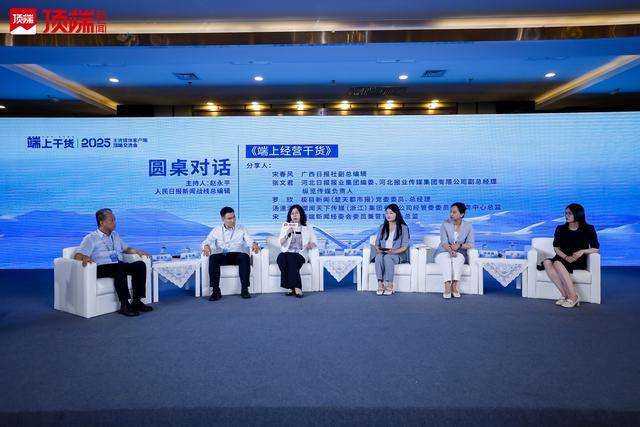
主流媒体客户端经营变现如何破题?这场大咖对话“端”上干货
Sou Hu Cai Jing· 2025-07-04 03:55
Core Viewpoint - The mainstream media is undergoing systematic transformation, focusing on sustainable development and exploring new operational models and marketing strategies to address profitability challenges [2][4]. Group 1: Industry Trends - The conference highlighted the importance of integrating traditional and new media, emphasizing the need for deep media fusion to tackle financial challenges faced by many media outlets [4]. - Media organizations are exploring innovative marketing strategies, including integrated marketing and overseas communication, to enhance value-added services for clients [6]. Group 2: Operational Strategies - Tide News is focusing on three key areas: integrated marketing, identifying core advantages, and enhancing overseas communication capabilities, leveraging its content strengths and social resource integration [6]. - The company is also implementing a talent optimization plan to empower young leaders, fostering innovation and responsibility within its teams [6]. Group 3: Technological Integration - The rise of AI and technological advancements is reshaping media operations, allowing for diversified business models and new application scenarios [9][11]. - Media organizations are transitioning from content monetization to information services, utilizing their content and platform advantages to meet the growing demand for information technology solutions [11]. Group 4: User-Centric Approach - The focus on user-centric strategies is crucial for media operations, with an emphasis on combining content creation with effective business practices [13]. - The integration of AI in content production and user profiling is being explored to enhance personalized services and unlock the value of data assets [13].
推进主流媒体系统性变革
Jing Ji Ri Bao· 2025-05-28 03:32
Core Viewpoint - The forum on "Systemic Reform of Mainstream Media" emphasizes the need for deep integration and transformation in response to the evolving media landscape and communication methods [1][2][3] Group 1: Systemic Reform Initiatives - The Central Radio and Television General Station is committed to a comprehensive transformation, focusing on supply-side structural reforms and enhancing the quality of content and audience engagement [1] - Shanghai Newspaper Group is implementing a top-level design approach, closing five apps and transforming two newspaper publishing methods to build a "3+3+N" all-media cluster [2] - The Salt Lake Dazhong Newspaper Group emphasizes the urgency of systemic reform, advocating for collaborative efforts across all levels to enhance grassroots media effectiveness [2] Group 2: Media Transformation Strategies - The transformation of mainstream media is viewed as an essential path for development, with a focus on nurturing talent and innovative hosting initiatives [3] - Journalists are seen as key participants in the reform process, with a shift from traditional metrics like circulation to engagement metrics such as likes and completion rates [2] - The narrative approach is evolving from grand narratives to emotional resonance, reflecting a shift in how stories are told and received [2]
惟改革者进 惟创新者强——主流媒体系统性变革观察
Xin Hua She· 2025-05-27 16:42
Core Viewpoint - The article discusses the systematic transformation of mainstream media as a significant reform task outlined in the 20th Central Committee's third plenary session, emphasizing the need for innovation and adaptation in the face of digital and market challenges [2][7]. Group 1: Systematic Transformation - The transformation of mainstream media is not merely about updating equipment but involves a fundamental awakening of thought and strategic confidence [4]. - Various mainstream media organizations are adopting new technologies to drive digital transformation, such as establishing technology companies and developing AI platforms [3][5]. - The Shenzhen media groups have proposed seven major reforms to enhance content production, media dissemination, and evaluation mechanisms, aiming to align with the city's mission and modernize their media operations [5][6]. Group 2: New Media Dynamics - The emergence of new media formats, such as drone technology, is creating new business models that integrate quality content, advanced technology, and emerging industries [3]. - The concept of "everyone is a media" reflects a shift towards respecting facts and truth in content creation, moving beyond mere entertainment to engage with serious topics [4]. - A new evaluation system focusing on high quality, positive energy, and large audience engagement is being developed to support media transformation [6]. Group 3: Cultural and Strategic Implications - The Deputy Minister of the Publicity Department emphasized the importance of implementing Xi Jinping's cultural thoughts and the need for media to act as reform practitioners and innovators [7]. - The commitment to systematic transformation is seen as essential for mainstream media to play a significant role in building a culturally strong nation [7].
国际传播如何走向情感共振?记者分享主流媒体系统性变革经验
Nan Fang Du Shi Bao· 2025-05-27 07:40
Core Insights - The forum focused on the transformative trends in media, emphasizing the need for adaptation in narrative, channels, and technology [1] Group 1: Narrative Transformation - The first transformation discussed is the shift from "grand narratives" to "emotional resonance," exemplified by a report titled "I Cried in the Great Hall of the People," which tells a relatable story of a representative dedicated to elderly care for 16 years, reflecting the theme of Chinese democracy [1] Group 2: Channel Reconstruction - The second transformation involves the reconstruction of communication channels, where traditional metrics like circulation and channel coverage are replaced by engagement metrics such as likes, completion rates, and algorithm recommendations. The rise of social media and short videos has created new opportunities for international communication, breaking language barriers [1][2] Group 3: Technological Disruption - The third transformation is the disruptive impact of technology, with the introduction of AI anchors in 2023 significantly enhancing the efficiency of multilingual news production. Large language models like DeepSeek have become standard tools in daily operations, and a media big data platform has been established to provide precise content recommendations and risk alerts [2] Group 4: Challenges and Vigilance - Despite the opportunities presented by social media, challenges such as algorithm suppression and threats to personal safety have been encountered. The company remains vigilant about the risks associated with AI technology while emphasizing the importance of truth, professionalism, and mission [2][3]
湖南广播影视集团(湖南广播电视台)党委书记、董事长、台长、总编辑龚政文: 以“文化+科技”重构发展基因 推动传统媒体系统性变革
Shen Zhen Shang Bao· 2025-05-26 17:17
Core Viewpoint - The speech by Gong Zhengwen emphasizes the necessity for mainstream media to undergo systematic transformation to adapt to the challenges posed by digitalization and market changes, aligning with the expectations of the central government and the media's own survival needs [1] Group 1: Systematic Transformation Pathways - **Conceptual Change**: Mainstream media's status should be supported by tangible dissemination power, guiding influence, impact, and credibility, rather than just traffic and results [2] - **Motivational Change**: Strong internal motivation is essential for mainstream media, driven by a sense of duty, social benefits, and economic support, alongside systematic backing from regulatory bodies [2] - **Structural Change**: Exploration of a media + platform model is crucial, prioritizing the creation of controllable platforms while avoiding self-isolation and over-expansion [2] Group 2: Content and Technological Innovations - **Content Change**: High-quality content remains the core competitive advantage, with a focus on integrating PGC, UGC, and AIGC to leverage institutional media expertise and crowd-sourced quality content [2] - **Technological Change**: A dual focus on "culture + technology" is necessary to reshape development genes, emphasizing the recruitment and training of new tech talents like algorithm engineers [2] Group 3: Communication and Management Strategies - **Communication Change**: Development of comprehensive policies to support cultural exports, creating a state-owned cultural export fleet with national mission and international competitiveness [3] - **Management Change**: Encouragement for mainstream media to explore new growth paths in the cultural industry, establishing a new evaluation system that balances quality, positive energy, and high traffic [3]
技术赋能 四川探索主流媒体系统性变革之路
Zhong Guo Fa Zhan Wang· 2025-04-23 08:42
Core Viewpoint - The event "2025 Tianfu Media Forum" held in Chengdu focused on the theme of "Technological Empowerment for Systematic Reform of Mainstream Media," discussing how innovative integration strategies and practical experiences can drive the sustainable development of the Tianfu Media Union and deepen the systematic reform of mainstream media [1][2]. Group 1: Event Overview - The forum was guided by the Sichuan Provincial Party Committee's Publicity Department and attended by over 300 guests, including experts and media representatives from various levels of government [1]. - The event featured keynote speeches, expert lectures, and the release of research topics, emphasizing the importance of digital transformation and intelligent revolution in mainstream media [2]. Group 2: Expert Insights - Li Peng, Secretary of the Party Committee and Director of Sichuan Radio and Television Station, highlighted the need for comprehensive digital transformation to achieve higher quality development in media [2]. - Professor Zhou Yong from Renmin University analyzed the paradigm shift in mainstream media from simple information output to using information as a tool for empowering diverse scenarios, providing theoretical guidance for media transformation [2]. - Professor Zhang Zhian from Fudan University discussed practical methods for implementing systematic reform in mainstream media, covering strategic planning, organizational adjustments, and content production optimization [2][3]. Group 3: Collaborative Ecosystem - Professor Zeng Xiangmin from Communication University of China emphasized the necessity of building a collaborative ecosystem for mainstream media reform, integrating internal and external resources to create a sustainable media ecology [3]. - The "Tianfu Media Union 2024 Development Report" was released, reviewing the past year's achievements and challenges in structural innovation and providing practical examples for media integration [3][4]. Group 4: Achievements and Innovations - Sichuan has made significant strides in mainstream media reform, establishing the Tianfu Media Union to enhance collaboration among various media entities, resulting in a sixfold increase in article views compared to the period before the union's formation [5]. - New media brands such as Chuan Guan News and Sichuan Observation have been developed, collaborating with major media and launching unique programs to enhance public engagement [6]. Group 5: Future Directions - The event adopted a hybrid format, allowing over 10,000 media professionals to participate online, facilitating the dissemination of cutting-edge theories and practices in the media industry [7]. - The Tianfu Media Union aims to continue addressing industry pain points and trends, contributing to the media integration development in Sichuan and nationwide [8].