产业链出海

Search documents
多家锂电企业抢滩东南亚 产业链协同“出海”再提速
Zheng Quan Ri Bao· 2025-07-02 16:30
Core Insights - Major Chinese lithium battery companies are expanding their operations in Southeast Asia, indicating a deeper collaboration in the lithium battery supply chain [1] Group 1: Major Investments - CATL has commenced a joint battery factory project in Indonesia with a total investment of $5.9 billion, covering the entire electric vehicle battery production chain [2] - Xingyuan Material's factory in Malaysia, with an investment of nearly 5 billion RMB, aims to produce 2 billion square meters of wet and coated separators annually, becoming the largest production base for lithium-ion battery separators [2] - EVE Energy announced an investment of up to 8.654 billion RMB for a new energy storage battery project in Kedah, Malaysia [2] Group 2: Strategic Importance - The expansion of production capacity overseas is crucial for meeting the growing global demand for energy storage solutions and enhancing the market position of these companies [3] - Chinese lithium battery companies possess advantages in technology, capacity, and cost, which complement the resource and market advantages of Southeast Asia [3] Group 3: Industry Trends - Various upstream and downstream companies in the lithium battery supply chain are also establishing operations in Southeast Asia, indicating a collective strategy to localize production [4] - Southeast Asia is rich in mineral resources, such as Indonesia's nickel reserves, which supports the development of the lithium battery industry [4] - The region's relatively low labor costs provide a competitive edge for production [4] Group 4: Market Dynamics - The clustering of electric vehicle manufacturing in emerging markets like Thailand is attracting battery companies to establish local production facilities, creating a localized production ecosystem [4] - The collaboration among lithium battery manufacturers around electric vehicle factories is a strategic move to maximize supply chain efficiency and market penetration [5]


用创新犁铧深耕中国制造沃土,从绿源28年坚守看产业高质量发展内生动力
Sou Hu Wang· 2025-07-02 08:01
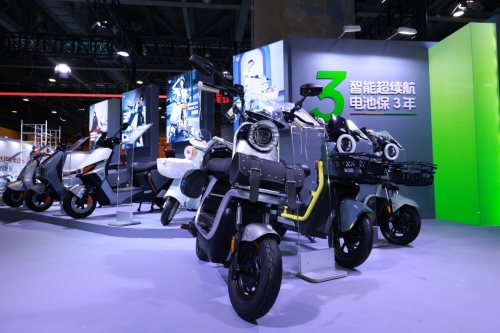
Core Viewpoint - The interview with Ni Jie, the founder and chairman of Luyuan Group, highlights the company's journey over 28 years, emphasizing the importance of innovation and product quality in establishing a sustainable competitive advantage in the manufacturing industry [1] Group 1: Precision Innovation - Luyuan's success is attributed to its "precise innovation" approach, addressing industry pain points and user needs, especially as the electric two-wheeler market shifts from growth to competition [2] - The "full-scenario light travel" strategy captures diverse user needs beyond commuting, including child transport, pet travel, instant delivery, and short-distance leisure [2] - Innovations such as liquid-cooled motors with a ten-year warranty and ceramic brakes with a three-year warranty significantly enhance product durability and safety [2][4] Group 2: Quality and Responsibility - Luyuan's commitment to "safety and durability" reflects a belief in quality and a sense of responsibility that transcends commercial interests, even amidst competitive pressures [5] - The ten-year commitment on liquid-cooled motors not only protects consumer rights but also reduces carbon emissions by extending product lifespan, aligning with green development principles [5] - The company's ethical stance and responsibility are seen as foundational to gaining market respect and achieving international recognition for Chinese manufacturing [5] Group 3: Diverse Scene Layout - Luyuan's strategic vision includes a comprehensive coverage of light travel scenarios and a global layout, addressing various user needs through products like electric bicycles and leisure tricycles [6] - The company's proactive approach to "going global" aligns with China's Belt and Road Initiative, focusing on emerging markets in Asia and Africa, and promoting collaborative industrial development [8] Group 4: High-Quality Development - Luyuan's 28-year history exemplifies a long-term perspective that prioritizes sustainable development over short-term profits, advocating for a development path based on technological innovation and user needs [9] - The company's focus on quality, responsibility, and innovation positions it well to navigate industry fluctuations and explore advanced fields like AI robotics and vehicle networking [9] - Luyuan's story serves as a model for high-quality development in Chinese manufacturing, emphasizing the need for determination, wisdom, and a broad perspective to solve real problems and maintain quality [9]

从青翠田垄到“世界货架”,潍坊临朐蒋峪镇三产链通全球
Qi Lu Wan Bao Wang· 2025-06-26 07:17
Core Insights - The article highlights the success of companies in Jiangyu Town, Linyi City, Shandong Province, in exporting agricultural products and tools globally, showcasing the transformation of local resources into profitable assets [2][3][4]. Group 1: Agricultural Exports - Sheng'an Food is a leading canned food exporter in Shandong, with over 200 product varieties, exporting to 42 countries, including Japan and Dubai [3][4]. - The company has established deep partnerships with 15 international retail giants, aiming for online export revenue to reach 20% by 2024, enhancing the reputation of Chinese agricultural products [3][4]. - In Japan, 1 in 10 canned fruit products is from Sheng'an, reflecting the company's commitment to quality [3]. Group 2: Tool Manufacturing - Jiexili Tools has transformed an old school into a global tool manufacturer, producing 25 million automotive tools and 35 million hand tools annually [4][5]. - The company has effectively utilized idle resources, generating over 68 million yuan in economic benefits by revamping 63 idle properties [5]. Group 3: Goose Liver Production - Chunguang Food has developed a modern goose farming and processing operation, with a capacity to process 265,000 geese and produce 1,650 tons of goose liver, generating 364 million yuan in revenue [6][7]. - The company is actively participating in international exhibitions and has established export channels for its goose liver products, aiming to strengthen brand promotion in the Greater Bay Area [8].
LED照明对美国出口恢复,企业继续推进全球化布局
Di Yi Cai Jing Zi Xun· 2025-05-13 13:19
Group 1 - The recent tariff adjustments have led to a significant reduction in tariffs on Chinese LED lighting products exported to the U.S., with tariffs on LED light sources increasing by 30% and on LED lighting fixtures by 55%, resulting in overall tariffs ranging from 30% to 67.5%, which is a substantial decrease compared to the previous month [2] - Chinese LED lighting companies are continuing to build overseas factories in Southeast Asia and Mexico, indicating a persistent global expansion strategy [2] - Industry experts predict that more Chinese lighting companies will shift from "product export" to "industrial chain export," with a notable increase in production bases in Southeast Asia and Central America [3] Group 2 - Companies like Mulinson have already established production facilities in Mexico, which began operations in Q3 of the previous year, primarily supplying the U.S. and Latin American markets, and will expand production significantly this year [3][4] - Sunshine Lighting has reported that its factory in Thailand will start exporting lighting products to the U.S. by the end of 2024, with an annual production capacity of 5 million sets [4] - Lida Xin has announced plans to increase production capacity in its Thai factory to meet U.S. market demand while also exploring non-U.S. markets [4] Group 3 - The stock prices of LED lighting companies have shown mixed results, with Mulinson down 0.47% to 8.39 CNY per share, Sunshine Lighting up 0.31% to 3.22 CNY per share, Lida Xin down 0.21% to 14.57 CNY per share, and Shiyida down 0.89% to 7.8 CNY per share [4]


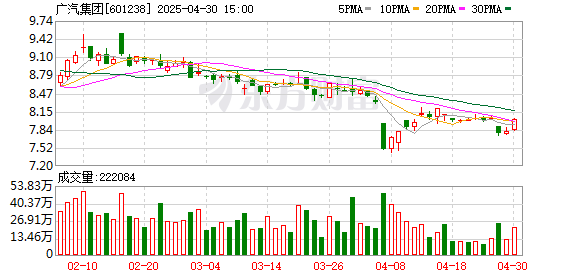
从product到solution——产业链、生态链、价值链出海,广汽构筑中国汽车出海护城河
Guang Zhou Ri Bao· 2025-04-30 07:32
Core Viewpoint - The article discusses GAC Group's ambitious international expansion plan, aiming to significantly increase its export volume and establish a strong presence in global markets, particularly in Southeast Asia and Europe, amidst a complex geopolitical landscape [2][3]. Group 1: GAC's Export Strategy - GAC Group has set a target to export 500,000 vehicles by 2027, tripling its current export volume within three years [2][4]. - The company aims to achieve an export volume of 172,000 vehicles by 2025, with a year-on-year growth rate exceeding 70% [4]. - Southeast Asia has been identified as a primary market, with GAC's international brand achieving over 100,000 units exported last year, outperforming the market average [4][5]. Group 2: Market Positioning and Product Strategy - GAC has launched the "one GAC 2.0" plan in Thailand, focusing on right-hand drive vehicles to cater to local market preferences [5]. - The company has introduced six right-hand drive models in Southeast Asia over the past two years, enhancing its competitive edge [5]. - GAC's brands, Aion, Trumpchi, and Haobai, have been restructured for international markets, with Aion focusing on pure electric vehicles and Trumpchi transitioning from traditional fuel vehicles to new energy models [9][10]. Group 3: Competitive Advantages - GAC's strength lies in its advanced new energy technology and strong emphasis on smart and connected vehicles, which resonate well with Southeast Asian consumers [6]. - The company has improved its product design and quality, addressing previous concerns about reliability and after-sales service [6]. - GAC's strategy includes not just exporting vehicles but also establishing a complete ecosystem, including production bases and charging infrastructure in target markets like Thailand [12]. Group 4: European Market Expansion - GAC views Europe as a significant growth opportunity, despite challenges such as tariffs, and plans to gradually enter markets like Poland and Portugal starting in 2025 [7]. - The company aims to create a localized value chain in Europe, enhancing its operational efficiency and market presence [7][12]. Group 5: Long-term Vision and Ecosystem Approach - GAC's approach to international expansion emphasizes long-term sustainability, focusing on the entire automotive ecosystem rather than just vehicle sales [11]. - The company is developing a comprehensive value chain that includes production, energy solutions, and local partnerships to enhance its competitive position [11][12]. - GAC's strategy aims to avoid over-competition among Chinese brands in international markets by promoting collaboration and shared growth [13][14].