
商业秘密保护

Search documents
武汉构建商业秘密保护新范式
Chang Jiang Ri Bao· 2025-11-19 00:23
Core Viewpoint - The article emphasizes the importance of trade secret protection as an "invisible asset" for enterprises, highlighting Wuhan's efforts to establish a comprehensive protection network through institutional innovation and multi-party collaboration [1][5]. Group 1: Institutional Framework - Wuhan has developed a systematic institutional framework for trade secret protection, including local standards and guidelines to provide clear guidance for enterprises [2]. - The local market supervision bureau has issued a standard for enterprise trade secret management, addressing challenges related to protection and compliance [2]. - A joint pre-processing center for trade secret infringement has been established, promoting a "full-chain closed-loop service" model that integrates administrative guidance, criminal investigation, and technical support [2][3]. Group 2: Mechanism Innovation - The city has broken down departmental barriers to create a multi-dimensional protection structure, involving administrative, judicial, and industry forces [3]. - Special enforcement actions have been conducted, resulting in the investigation of 9 infringement cases and recovering over 60 million yuan for enterprises [3]. - A commercial secret protection association has been established, bringing together 39 member units and 16 professionals to facilitate communication and industry self-regulation [3]. Group 3: Empowerment and Services - A public service platform for trade secret protection has been created, covering over 4,000 enterprises and nurturing 431 model enterprises [4]. - The platform offers differentiated services, including specialized training and compliance checks for various types of enterprises [4]. - An innovative financing model for trade secrets has been introduced, allowing enterprises to convert "invisible assets" into "tangible capital" [4]. Group 4: Future Outlook - The growth of the 431 model enterprises reflects the effectiveness of Wuhan's trade secret protection initiatives [5]. - With the deepening of collaborative mechanisms and the improvement of service systems, Wuhan aims to enhance its role in safeguarding trade secrets and fostering innovation [5].
保护商业秘密不是企业“私事”(人民时评)
Ren Min Ri Bao· 2025-11-06 22:11
Core Viewpoint - The establishment of a comprehensive commercial secret protection system integrating self-protection, administrative protection, and judicial protection is essential for maintaining fair market competition and safeguarding corporate innovation [1][2][3]. Group 1: Legal and Regulatory Developments - The Shanghai Third Intermediate People's Court ruled on a case involving the infringement of Huawei's HiSilicon chip technology commercial secrets, sentencing 14 former employees to prison and imposing a total fine of 13.5 million yuan [1]. - The State Administration for Market Regulation has intensified enforcement against commercial secret violations, handling 143 cases in 2024, demonstrating a strong corrective action against market disorder [2]. - The release of the draft regulations on commercial secret protection by the State Administration for Market Regulation indicates ongoing efforts to strengthen the legal framework [3]. Group 2: Importance of Commercial Secret Protection - Commercial secrets are crucial for companies' market competition, and businesses must act as the first line of defense in protecting these secrets through personnel management, technological innovation, and confidentiality education [2]. - The protection of commercial secrets is not merely a corporate issue but a public concern that affects the business environment, innovation ecosystem, and development security [1][3]. Group 3: Collaborative Efforts and Innovations - The establishment of the Smart Manufacturing Commercial Secret Protection Alliance in the Yangtze River Delta demonstrates collaborative efforts among government departments, associations, and enterprises for cross-regional protection of commercial secrets [3]. - Innovative protection models, such as the "blockchain evidence + commercial secret insurance" approach in Tianjin, are being explored to enhance commercial secret protection [3]. - The creation of nearly 30,000 commercial secret protection service stations nationwide reflects the ongoing efforts to build a robust protection network [2].
依法保护企业“不能说的秘密”(法治头条)
Ren Min Ri Bao· 2025-10-22 22:02
Core Viewpoint - The article highlights the successful crackdown on a major case of corporate trade secret theft in Ningbo, Zhejiang Province, emphasizing the importance of protecting trade secrets for the healthy development of businesses [1]. Group 1: Case Overview - A significant case of trade secret theft was uncovered involving three individuals who previously held key positions in a Ningbo-based electric vehicle company [2][3]. - The suspects were found to have conspired to steal sensitive company information, including the Bill of Materials (BOM) list, which is crucial for product components and pricing [5][7]. Group 2: Investigation and Evidence - The investigation revealed that the suspects used a former employee's computer to bypass company security measures and successfully transmitted 16 important internal documents to their personal email accounts [5][8]. - Evidence indicated that the suspects had shared sensitive information among themselves and altered file names to evade detection [7]. Group 3: Legal Consequences - The estimated value of the stolen trade secrets was conservatively assessed at over 33 million yuan [9]. - The three suspects were sentenced to prison terms ranging from two years to four years and two months, along with fines and civil compensation [9]. Group 4: Recommendations for Businesses - Companies are advised to strengthen their internal security measures, especially during employee transitions, to prevent unauthorized access to sensitive information [10]. - The article suggests implementing comprehensive risk prevention strategies, including employee lifecycle management, information security systems, and a whistleblower mechanism to enhance trade secret protection [12][13].
商业秘密保护国际倡议在广州发布
Zheng Quan Shi Bao Wang· 2025-10-22 04:31
Core Viewpoint - The National Market Regulation Administration (NMR) of China held an international seminar on the protection of trade secrets, emphasizing the need for a fair and effective international environment for trade secret protection [1] Group 1: International Initiative - The seminar introduced an international initiative for trade secret protection, urging countries to adhere to innovation-driven approaches, fair protection, integrity, and mutual learning [1] Group 2: Achievements in Trade Secret Protection - The NMR has made significant progress in trade secret protection, establishing nearly 30,000 service stations across the country [1] - A total of 434 institutional achievements, including regulations, guidelines, and standards, have been published by 46 national pilot regions for trade secret protection [1] Group 3: Financial Services Related to Trade Secrets - Eighteen innovative pilot regions, including Shanghai's Fengxian District and Wenzhou in Zhejiang Province, have implemented financial services such as trade secret pledge financing and insurance, with a cumulative amount exceeding 220 million yuan [1]
“亏光家底”后再创业,浙江富阳首富又要IPO了
Sou Hu Cai Jing· 2025-10-07 04:38
Core Viewpoint - The recent surge in Tianqi Materials' stock price is attributed to two significant announcements: a long-term procurement agreement for 800,000 tons of electrolyte with Ruipu Lanjun and the submission of an IPO application to the Hong Kong Stock Exchange, leading to a stock price increase of over 77% and a market capitalization exceeding 73 billion yuan [3][16]. Company Overview - Tianqi Materials has transformed from a contract manufacturer of shampoo ingredients to a leading global electrolyte producer, showcasing a remarkable entrepreneurial journey over nearly 30 years [5][23]. - The founder, Xu Jinfeng, has experienced significant ups and downs, including the success of Blue Moon, a failed venture in pharmaceutical intermediates, and a successful pivot to lithium battery materials in the 2000s [6][7][9]. Financial Performance - In 2022, Tianqi Materials reported revenue of 22.317 billion yuan and a net profit of 5.539 billion yuan, but faced a drastic decline in 2023 due to falling prices of lithium salts and electrolytes, with net profit dropping to 2.475 billion yuan, a 56.6% year-on-year decrease [11][12]. - The price of electrolytes plummeted from 48,300 yuan per ton in 2022 to 23,000 yuan in 2023, and is projected to fall further to 13,800 yuan in 2024, representing a total decline of 71.4% over two years [11]. Market Position and Strategy - Tianqi Materials has achieved a market share of 35.7% in global electrolyte shipments as of 2024, with a self-supply rate of nearly 100% for hexafluorophosphate lithium, positioning itself favorably against competitors [15][18]. - The company is focusing on global expansion, particularly through a project in Morocco aimed at serving the European market, which is currently reliant on imports for electrolytes [19][20]. Industry Context - The electrolyte industry has shifted from reliance on imports to a dominant position held by Chinese companies, with Tianqi Materials leading the charge since surpassing Japanese firms in global shipments in 2017 [18]. - The competitive landscape has evolved, with major players focusing on vertical integration and cost reduction, while smaller firms struggle with high costs and low orders [22]. Recent Developments - The recent long-term procurement agreement with Ruipu Lanjun and the IPO application are seen as strategic moves to stabilize revenue and enhance global presence, with the IPO expected to attract international investors [16][17]. - The stock price has shown a recovery, reflecting improved market sentiment and investor confidence in the company's growth trajectory [17].


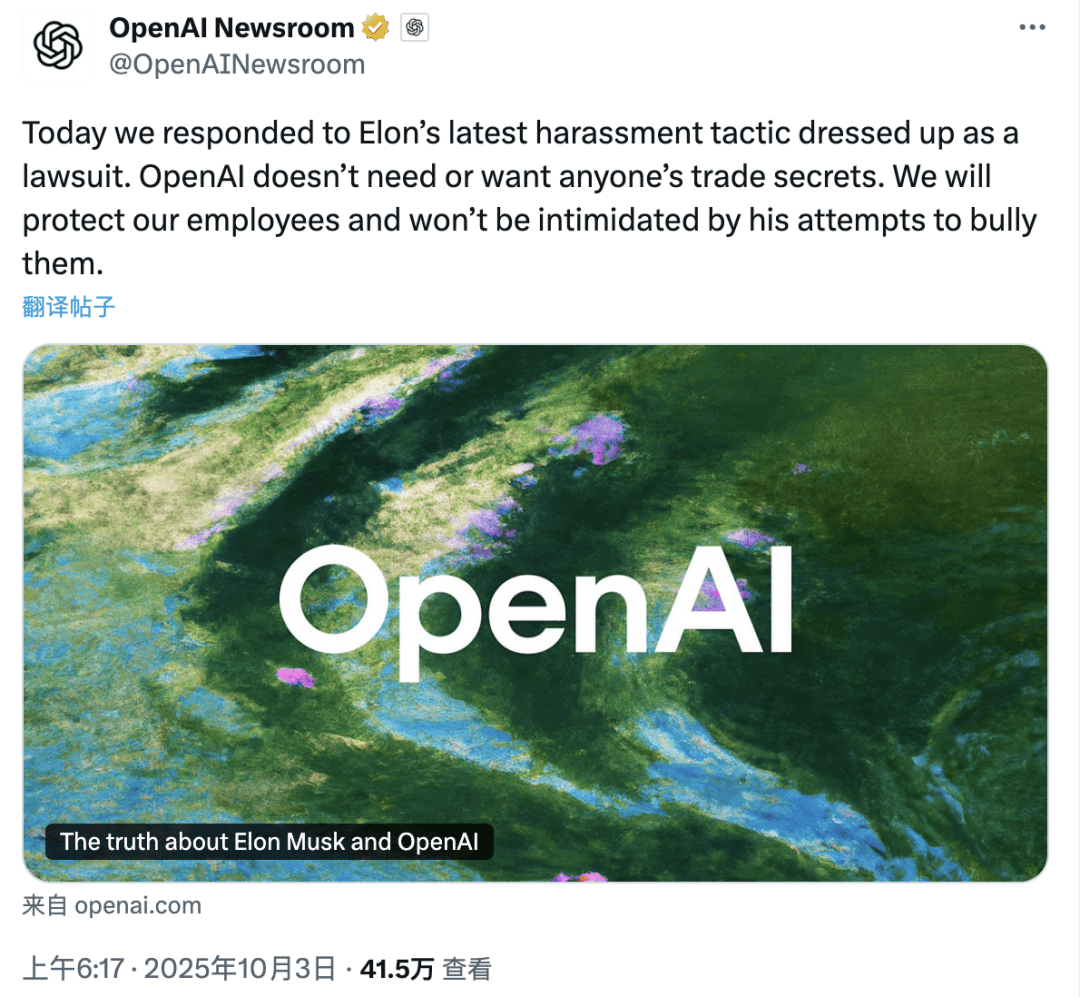
OpenAI强硬回击马斯克窃密诉讼!xAI被指恶意人肉离职员工
Sou Hu Cai Jing· 2025-10-04 04:34
Core Viewpoint - OpenAI has responded strongly to the lawsuit filed by xAI, denying all allegations of trade secret theft and accusing xAI of abusing legal rights to intimidate employees [1][3][4]. Group 1: Allegations by xAI - xAI has made three main allegations against OpenAI: violation of federal trade secret protection laws, intentional interference with xAI's economic relationships with employees, and violation of California's unfair competition laws [4]. - Specific incidents cited include the alleged theft of trade secrets by former xAI engineer Xuechen Li, who is accused of sharing confidential materials during the hiring process with OpenAI [4][5]. - Another engineer, Jimmy Fraiture, is also accused of transferring source code to personal devices during his "garden leave" period, indicating an intent to cover up his actions [5][10]. Group 2: OpenAI's Response - OpenAI has categorically denied all allegations, asserting that Xuechen Li never officially joined the company and did not transfer any confidential information [12][14]. - OpenAI claims that the actions of Fraiture during his garden leave were personal and not directed by OpenAI, and there is no evidence that he transferred any proprietary information [14][15]. - Regarding the unnamed former senior finance executive from xAI, OpenAI stated that the individual left xAI due to refusing to participate in "improper financial operations," and their subsequent hiring was unrelated to any alleged poaching [15][16]. Group 3: Legal Proceedings - OpenAI has filed a motion to dismiss xAI's lawsuit, arguing that the claims are baseless and intended to intimidate current and potential employees [17][18]. - A hearing for this motion is scheduled for November 18, which will address procedural aspects rather than the substantive issues of the case [18].
新财富最佳分析师评选法律行动进展公告
新财富· 2025-09-22 09:20
Core Viewpoint - Shenzhen New Fortune Multimedia Co., Ltd. has filed a lawsuit against Shenzhen New Fortune Magazine Co., Ltd. and its affiliates due to serious impacts on its legal rights caused by various actions during the "Best Analyst" selection process [1][2]. Group 1: Legal Actions and Allegations - The company has identified several actions that negatively affect its legal rights, including the illegal acquisition and use of its data, such as voter names, phone numbers, and email addresses for the "Best Analyst" selection [2]. - Unauthorized use of proprietary award names like "Platinum Analyst," "Diamond Analyst," and "Double Diamond Analyst," along with the use of the company's historical award records as a basis for their selection [2]. - Misleading promotional language that causes confusion in the market, leading the public to mistakenly associate the "Best Analyst" selection with the company's own awards [2]. - Direct copying of the company's rules and historical data in award settings, industry classifications, and leaderboard designs, resulting in a highly similar format to the company's "Best Analyst" selection [2]. Group 2: Protection of Commercial Secrets - The case involves the theft and use of the company's commercial secrets, including voter names, phone numbers, and email addresses, which have been used in the "Best Analyst" selection [3]. - The judicial authorities will review whether the actions constitute criminal offenses and will advance the corresponding investigations [3]. Group 3: Commitment to Industry Standards - The company remains committed to fairness, impartiality, and professionalism, aiming to protect industry order and promote the healthy development of capital market research [4]. Group 4: Relevant Legal Provisions - Relevant legal provisions include the Trademark Law, which prohibits the unauthorized use of similar trademarks that could cause confusion [6]. - The Anti-Unfair Competition Law, which prohibits acts of confusion and infringement of commercial secrets [6]. - The Civil Code, which protects intellectual property rights and holds infringers accountable [6]. - The Criminal Law, which may classify serious violations of commercial secrets as a crime if proven [6].

万亿宁德时代四度狙击百亿储能新贵 专利数差12倍海辰储能IPO或存变数
Chang Jiang Shang Bao· 2025-09-21 23:09
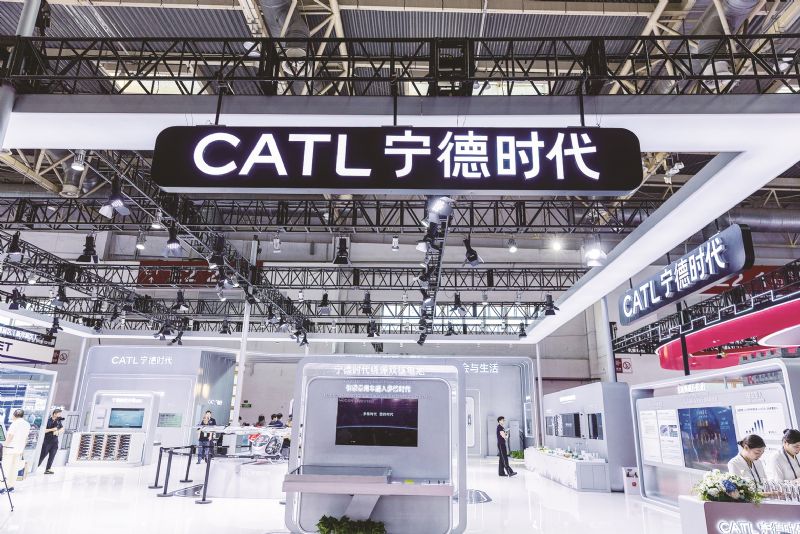
Core Viewpoint - The commercial dispute between Ningde Times and Haicheng Energy Storage has gained attention due to a "help request letter" from the wife of a former executive at Haicheng, who was arrested for allegedly infringing on trade secrets. This incident highlights the ongoing patent conflict between the two companies, with Haicheng's IPO facing uncertainties as a result [2][10]. Company Overview - Haicheng Energy Storage, founded on December 27, 2019, focuses on the research, production, and sales of lithium battery core materials and lithium iron phosphate energy storage batteries. The company plans to list on the Hong Kong Stock Exchange on March 25, 2025 [3][10]. - As of 2024, Haicheng is the only company in the GWh-level lithium-ion battery shipment category that specializes in the energy storage sector, ranking third globally in energy storage battery shipments [3]. Market Position and Performance - In 2024 and the first half of 2025, Ningde Times maintained its position as the global leader in energy storage battery sales, with shipments of 93 GWh and 55 GWh, respectively [4]. - Haicheng's energy storage battery shipments grew at a compound annual growth rate of 167% from 2022 to 2024, reaching 35.1 GWh in 2024, capturing an 11% market share [15]. Financial Performance - Haicheng's revenue has seen rapid growth, with figures of 3.615 billion yuan, 10.202 billion yuan, and 12.917 billion yuan from 2022 to 2024, representing a 2.57-fold increase over two years. The company turned a profit in 2024, achieving a net profit of 318 million yuan after adjustments [15]. Patent Dispute - The patent conflict between Ningde Times and Haicheng has escalated, with Ningde Times filing multiple lawsuits against Haicheng, including a claim for 150 million yuan for unfair competition [4][10]. - As of June 2025, Ningde Times holds 49,347 patents, significantly outnumbering Haicheng's 3,900 patents [15]. Key Personnel and Background - Haicheng's key personnel, including its founder Wu Zuyu, have backgrounds in Ningde Times, which has contributed to the company's rapid rise. Wu worked at Ningde Times for over seven years before founding Haicheng [10][11].

电解液“一哥”终审胜诉,前员工泄密被罚600万元,六氟磷酸锂行情传利好
Hua Xia Shi Bao· 2025-09-19 12:48
Core Viewpoint - Guangzhou Tinci Materials Technology Co., Ltd. has won a legal battle against former employees who leaked trade secrets, with the court upholding the conviction for commercial secret infringement [2][5]. Company Summary - Tinci Materials' subsidiary, Jiujiang Tinci, received a criminal judgment confirming the conviction of former employees Li Sheng and Zheng Feilong for infringing on commercial secrets, with adjusted sentences of 3 years and 2 years respectively [2][5]. - The company has been a leader in the electrolyte industry, being the only enterprise in China capable of industrializing the production of liquid lithium hexafluorophosphate and liquid lithium bis(fluorosulfonyl)imide [5]. - Tinci Materials has been expanding its business into lithium iron phosphate cathode materials and battery recycling [6]. Industry Summary - The electrolyte industry has faced challenges with low capacity utilization rates below 40% and profitability at cyclical lows over the past two to three years [2][6]. - However, starting in July, the price of lithium hexafluorophosphate began to rise due to improved demand and reduced supply, with current prices stabilizing around 56,000 yuan per ton [8]. - The overall market for electrolytes is showing signs of a tight balance between supply and demand, with expectations for continued demand growth in the second half of 2025 [8].

破解企业创新保密难题,自贸区长沙片区这一案例入选“全国最佳”
2 1 Shi Ji Jing Ji Bao Dao· 2025-09-16 11:34
Core Insights - The "new model for commercial secret protection" in Changsha Economic Development Zone has been selected as one of the "best practice cases" by the Ministry of Commerce, focusing on "preemptive protection" to assist enterprises in innovation and cost reduction [1][2] Group 1: Background and Challenges - In regions with intensive innovation, the protection of commercial secrets is becoming a new focus of the business environment [2] - Many enterprises in Changsha Economic Development Zone have faced issues such as rapid copying of new technologies by competitors and difficulties in proving ownership of key formulas and data due to frequent personnel turnover [3] - Traditional protection methods often lead to high costs and challenges in post-factum evidence collection, leaving companies in a passive position [3] Group 2: New Protection Model - The new model emphasizes "preemptive protection," integrating protection actions into the entire innovation process, moving from "post-factum evidence" to "daily documentation" [4] - A public service platform for "preemptive protection" has been established, allowing companies to create tamper-proof evidence chains without disclosing source files [4] - The platform operates at a low cost and is designed to reduce the risk of "secret leakage" during employee transitions [4] Group 3: Legal Integration and Effectiveness - The platform has been integrated with the blockchain system of the Changsha Intermediate People's Court, facilitating data sharing and verification of evidence, thus shortening the litigation cycle and reducing judicial costs [5] - As of now, the model has served 653 enterprises, generating over 7 million verifiable "innovation records" [5] - Leading companies in equipment manufacturing have successfully embedded this protection model into their R&D and operational processes, enhancing their intellectual property strategies [5] Group 4: Expanding the Value of Commercial Secrets - The Changsha Economic Development Zone is promoting the transition of commercial secrets from "defensive assets" to "productive elements" [6] - Three application scenarios are being developed: facilitating result transformation, serving financial risk control, and supporting international cooperation [6][7] - The model aims to create a credible, usable, and traceable mechanism system for innovation, indicating that optimizing the business environment requires both supportive services and robust legal frameworks [7]
