
多能互补

Search documents
全国第一,四川水电装机规模突破1亿千瓦
Xin Hua She· 2025-12-19 08:21
12月19日上午,随着四川攀枝花银江水电站最后一台机组顺利并网,四川水电装机规模突破1亿千瓦, 成为全国首个迈上这一量级的省份。 1亿千瓦有多大?约占全国水电装机总量的四分之一,相当于约4.4个三峡电站。 新中国成立以来,四川水电开发实现多点突破。特别是新时代以来,白鹤滩、乌东德、两河口等超级工 程建成发电。其中,白鹤滩水电站装备全球单机容量最大功率百万千瓦水轮发电机组,实现了我国高端 装备制造的重大突破。 站上新起点,四川正加快规划建设新型能源体系,促进水、风、光、氢、天然气等多能互补发展,着力 建设清洁能源强省。四川省能源局副局长曾光说,四川水电正由"发得出"向"调得稳"转变,由"资源优 势"向"系统能力"升级,努力在服务国家"双碳"战略目标中发挥更大作用,助力能源强国建设。(胡旭 卢宥伊) 四川被称为"千河之省",尤其是天然落差5100米的金沙江、3830米的雅砻江、4175米的大渡河,水电资 源丰沛。四川水电开发历程足有100年,可以上溯至建成于1925年的泸州龙溪河上装机140千瓦的洞窝水 电站。 责任编辑:于彤彤 如今,全球12大水电站,中国有5座,金沙江独占其4,雅砻江、大渡河上也有多座"世界水 ...
“十四五”能源成就·新能源篇丨我国新能源开创跃升式、集成式发展新阶段
Zhong Guo Dian Li Bao· 2025-12-16 07:29
Core Insights - China's renewable energy sector is experiencing a transformative leap, characterized by both quantitative and qualitative advancements, marking a new era of green electricity [1][2][10] Development Milestones - By 2025, China's wind and solar power installations are expected to reach approximately 370 million kilowatts, with a cumulative capacity exceeding 1.7 billion kilowatts, contributing about 22% to the total electricity consumption [3][4] - The average utilization rate of renewable energy in China remains stable at over 94%, indicating a balance between large-scale development and efficient consumption [4] Policy and Strategic Support - The Chinese government has prioritized the development of renewable and clean energy, implementing a series of strategic policies since the 14th Five-Year Plan to support rapid growth in this sector [5][6] Industry Infrastructure - China has established the world's largest and most complete renewable energy industry chain, with renewable energy generation accounting for 60% of total installed capacity [6][10] - The integration of renewable energy with traditional energy sources is being pursued, leading to a multi-energy complementary transformation [9] Systematic Upgrades - The development model of renewable energy is shifting from isolated advancements to a more integrated and collaborative approach, with large-scale wind and solar bases being developed in previously uninhabitable areas [7][8] - New energy storage solutions are being developed to enhance the flexibility of the power system, with a projected installed capacity of over 100 million kilowatts by 2025, accounting for more than 40% of the global total [8] Market Dynamics - The market for green certificates is expanding, with approximately 2.9 billion green certificates issued in 2025, reflecting a significant increase in market participation and value realization of green energy [9] Societal Impact - Renewable energy is becoming a part of daily life in China, with significant growth in electric vehicle charging infrastructure and distributed solar installations, enhancing the accessibility of clean energy [11][12] - The renewable energy sector is also contributing to ecological restoration and job creation, demonstrating a dual benefit for economic growth and environmental protection [12] Global Influence - China's renewable energy products are exported to over 200 countries, significantly contributing to global carbon reduction efforts, with the country accounting for over 70% of the world's solar components and 60% of wind power equipment [12]

青海德令哈 多能协同构筑高原标杆 全链赋能描绘绿色画卷
Ren Min Ri Bao· 2025-12-12 21:49
Core Insights - The Duhuang Multi-Energy Complementary Demonstration Base in Qinghai Province aims to establish a leading clean energy demonstration benchmark in Northwest China, focusing on "innovation demonstration + industrial application" as its dual driving force [1] Group 1: Resource Development and Energy Supply - The base plans to achieve a total installed capacity of over 6 million kilowatts by the end of 2025, including 5.07 million kilowatts of photovoltaic, 670,000 kilowatts of wind power, 310,000 kilowatts of solar thermal, 582,500 kilowatts of energy storage, and 3 megawatts of hydrogen energy [1] - The base is implementing a multi-energy complementary structure to enhance the stability and reliability of the power supply, addressing the challenge of renewable energy's intermittent nature [1] Group 2: Technological Innovation - The base focuses on collaborative innovation in high-altitude environments, achieving breakthroughs in key technologies such as solar thermal power generation and wind power adaptation [2] - Significant advancements include a solar thermal conversion efficiency of 48% and a concentration accuracy of 99.5%, with the establishment of a solar thermal power generation technology R&D center [2] Group 3: Industrial Collaboration and Economic Benefits - The base is developing a complete clean energy equipment manufacturing system, integrating manufacturing, system integration, and operation services [2] - It aims to create a closed-loop industry for "green electricity - green hydrogen - green ammonia," with a target of achieving over 80% green electricity usage in key industrial parks [2] Group 4: Infrastructure and Support - The base's power grid support capacity is being significantly enhanced, with the completion of the Tuo Su 750 kV substation expansion expected within the year [3] - The base is also focusing on optimizing the grid structure to facilitate both local consumption and cross-province electricity delivery [3] Group 5: Future Development Goals - The Duhuang Multi-Energy Complementary Demonstration Base will continue to focus on technological innovation, industrial upgrading, and demonstration promotion to contribute to carbon neutrality goals and provide a replicable model for energy transition in high-altitude regions [3]

“我们成功防止了2000起建筑碰撞事件”
人民网-国际频道 原创稿· 2025-12-09 09:12
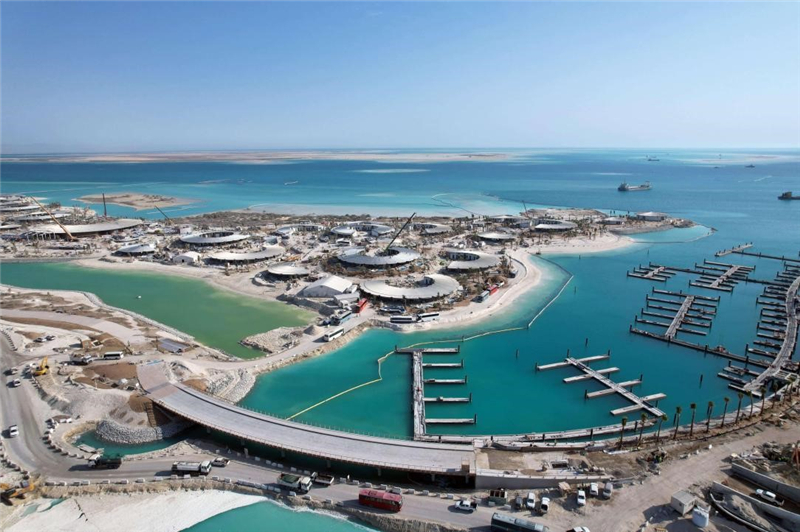
Group 1 - The Red Sea tourism project includes a large-scale commercial public utility project that integrates multiple energy sources, constructed by Shandong Electric Power Construction Third Company [1] - The project has been recognized for its outstanding performance, leading to the assignment of subsequent building structure engineering to the Chinese side [1] - The implementation of Building Information Management (BIM) and Geographic Information Systems (GIS) is mandatory for project management and digital operations [1][2] Group 2 - The application of BIM signifies a transformative change in traditional design and construction methods, allowing for integrated design and construction in a virtual space [2] - The company has mobilized internal resources to enhance training, resulting in a skilled workforce proficient in various management and design software [4] - The use of BIM has successfully prevented 2,000 instances of construction collisions over the past year, reducing potential design risks and on-site rework [4] Group 3 - The project team is working to systematize and model the practical experience gained from the Red Sea project to develop a high-quality BIM development path suitable for the Saudi market [5] - The project emphasizes green, intelligent, and high-quality development, contributing to the China-Saudi Arabia cooperation under the Belt and Road Initiative [5]

国内规模最大电网侧铅碳储能电站投运
Ke Ji Ri Bao· 2025-12-09 02:26
"该项目的并网投运有助于加快推进银川市储能产业和清洁能源配套产业一体化发展,提升电网灵活调 节能力,提高新能源消纳能力,缓解高峰供电压力,对推动'源网荷储'一体化和多能互补具有重要示范 意义。"国网银川供电公司相关负责人说。 (文章来源:科技日报) 12月3日,记者从国网银川供电公司获悉,宁夏银川吉洋绿储200兆瓦/400兆瓦时共享储能电站项目—— 典农第一储能电站电池仓日前首次带电成功,标志着国内规模最大电网侧铅碳储能电站成功并网投运。 吉洋绿储200兆瓦/400兆瓦时共享储能电站项目由宁夏吉洋绿储综合能源服务有限公司投资建设,占地 面积55.4亩,总计投资6.2亿元。项目刷新电网侧铅碳储能电站规模及功率纪录,落地银川市西夏区核心 能源走廊,配套80套定制化铅碳储能一体舱。项目系统循环寿命高达6000次以上,是传统铅酸电池的3 倍、锂电池的1.5倍,全生命周期成本较锂电池降低40%,成为国内性价比最高的大规模储能方案。 国网银川供电公司全面梳理项目建设进度,精准对接各个环节,组织电力调度、运维检修、营销、信通 等数十人的专业技术骨干团队开展并网服务工作,电力调度控制中心专人负责长达300多天的全流程重 点跟 ...
组件效率≥22.3%!该地风、光项目管理办法征求意见
Xin Lang Cai Jing· 2025-12-04 11:28
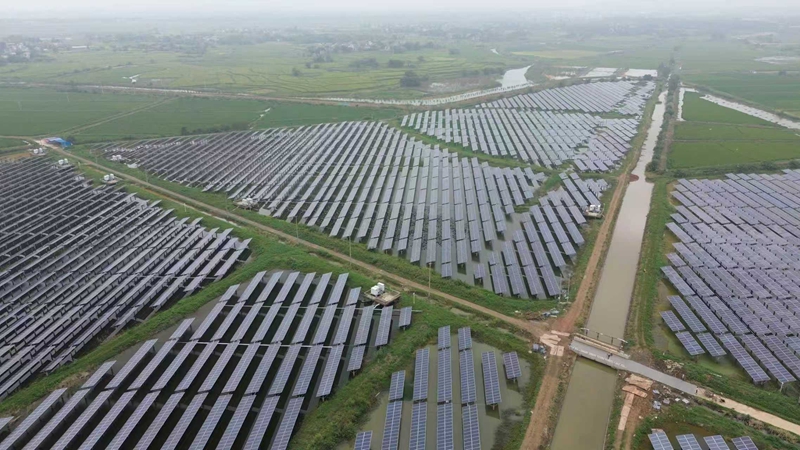
(来源:光伏产业网官微) 12月2日,贵州省能源局发布关于公开征求《贵州省风电光伏发电项目管理办法(征求意见稿)》意见的通知。 文件指出,有序推进风电、光伏发电多能互补、源网荷储一体化等发展,推动绿电直连、虚拟电厂等试点建设,合理规划布局新型储能,推动风电、光伏 发电全面参与市场化交易。 风电、光伏发电开发建设应高效利用资源,采用先进开发技术,集约节约利用土地。风电项目原则上采用单机容量5兆瓦及以上的风力发电机组,开发年 平均风速在每秒6米及以上的风能资源,应采用单机容量6兆瓦及以上的风力发电机组,鼓励运行15年及以上的单机容量2兆瓦及以下的风力发电机组设备 更新替代。光伏发电项目组件转换效率不低于22.3%,应充分利用各种边坡、边沟、填埋场、采矿沉陷区、矿渣堆场、矸石山等低效土地,探索林光互 补、农光互补、茶光互补等光伏发电模式,鼓励运行8年及以上的光伏发电项目设备更新替代。 省级能源主管部门根据规划目标及电网消纳能力,对全省集中式风电、集中式光伏发电项目实行年度建设计划管理,制定年度建设计划项目申报程序、申 报要求,按照"成熟一批、上报一批"的原则组织申报并及时下达年度建设计划。"千乡万村驭风行动"分散式 ...
兆新股份:构建新能源运维平台 掘金“瓦斯+锂电”多能互补新蓝海
Zhong Guo Zheng Quan Bao· 2025-12-04 00:29
Core Viewpoint - The article highlights the transformation of Zhaoxin Co., Ltd. from scale expansion to quality-driven growth, emphasizing the importance of "engineering thinking" in navigating market cycles and enhancing corporate resilience [1][2]. Financial Restructuring - The new management team prioritized cash flow management, developing an internal tracking and forecasting system, and made decisive asset sales during high market prices to recover liquidity for future strategic initiatives [3][5]. - These actions led to a significant improvement in the company's financial health, allowing it to resolve historical debt issues and achieve a healthier asset structure [3][5]. Business Capability Development - Zhaoxin Co., Ltd. digitized 30 years of formula research in the fine chemical sector, reducing customer response time from months to 30 minutes through AI-assisted R&D [3][5]. - The company standardized project evaluation and decision-making processes in the new energy sector, enabling rapid completion of assessments and decisions within a week [3][5]. Governance Improvements - The company established a clear authorization matrix and operational dashboards to institutionalize decision-making processes, ensuring accountability and traceability during rapid expansion [5]. Growth Strategies - Zhaoxin Co., Ltd. identified three growth curves: globalization and high value-add in fine chemicals, engineering replication in photovoltaic energy, and smart operation of new energy assets [6][7]. - The fine chemicals segment achieved a gross margin of over 28% despite a downturn in the construction materials sector, with plans to expand into Southeast Asia, the Middle East, Africa, and Europe [6][7]. - The photovoltaic EPC business saw a revenue increase of 928.91% year-on-year, contributing 26.13% to total revenue in the first half of 2025 [7]. Strategic Alignment with National Policies - The company is actively engaging in methane utilization and lithium extraction from salt lakes, aligning with national strategies for new energy systems and resource development [9]. - A strategic partnership with Zhejiang Yiyang Energy Technology Co., Ltd. aims to create a comprehensive energy station model that integrates resource recycling and new energy generation [9]. Future Vision - Zhaoxin Co., Ltd. aims to evolve into a platform-based enterprise focused on capability output rather than asset accumulation, emphasizing light asset operations as a key growth strategy [10]. - The company plans to leverage engineering and data capabilities to shift from one-time delivery to long-term service models, driving growth through knowledge, data, and algorithms rather than solely capital expenditure [10].

能源革命的中国答案: 技术创新赋能全球能源可持续发展
Zhong Guo Zheng Quan Bao· 2025-12-03 01:54
Core Insights - The global energy revolution is at a historic turning point, with renewable energy capacity expected to reach approximately 700 GW in 2024, marking the 22nd consecutive year of record growth [1] - Renewable energy and nuclear power will account for 80% of the new electricity generation in 2024, indicating a significant structural transformation in the global energy system [1] Group 1: Characteristics of the Energy Transition - Renewable energy costs continue to decline, with 91% of new renewable energy projects in 2024 being cheaper than the lowest-cost fossil fuel projects [1] - The acceleration of energy system intelligence is driven by AI and digital twin technologies, enhancing power generation forecasting, grid management, and energy storage [1] - A mature multi-energy complementary system is emerging, characterized by the integration of wind, solar, hydrogen, and storage [1] Group 2: China's Role in the Energy Transition - China is transitioning from a follower to a leader in the energy revolution, with its solar and wind capacity additions in the first half of 2025 surpassing the total of other regions [1][3] - By mid-2025, China's renewable energy capacity is expected to reach nearly 60%, with renewable energy generation accounting for 39.7% of the national total [3][4] - China's electrification level has reached 32%, increasing at a rate of approximately 1 percentage point per year, outpacing major economies in Europe and the U.S. [4] Group 3: Investment and Technological Advancements - Global clean energy investment is projected to exceed $2 trillion in 2024, double that of fossil fuel investments, with China contributing one-third of the total [2] - China leads in clean energy technology patents, holding over 75% of global patents in clean energy technology as of now [6] - Significant breakthroughs in various energy sectors, including nuclear, grid technology, and energy storage, have positioned China as a global benchmark [5][6] Group 4: Global Energy Cooperation and Impact - Different development models are enriching global energy transition practices, with collaborations such as China-Saudi Arabia in green hydrogen and U.S.-China in carbon capture technology [3] - China's technology exports have significantly reduced the costs of wind and solar energy globally, contributing to a reduction of approximately 810 million tons of CO2 emissions [7] - Through initiatives like the Belt and Road, China is fostering sustainable development in partner countries, enhancing their access to clean energy [7] Group 5: Future Outlook - The global renewable energy capacity is expected to increase by 4,600 GW by 2030, equivalent to the current total generation capacity of China, the EU, and Japan combined [2] - China's strategic focus on emerging industries, including hydrogen and quantum technology, is anticipated to create a trillion-dollar market in new energy [8] - The ongoing energy transformation is expected to foster a sustainable global energy governance system, with China playing a pivotal role [9]
中国资环风热光热示范项目投运
Zhong Guo Hua Gong Bao· 2025-12-02 04:26
据了解,该项目将风热、光热技术与示范基地现有地热系统进行了深度耦合与智能协同,既成功构建起 风能、光能与地热优势互补、稳定高效的多元化绿色能源供应体系,也探索出一条资源循环利用新路 径。 "我们将退役新能源设备梯次利用作为打通'双碳'链条的关键环节,让退役风机、光伏'二次上岗',既缓 解风光产业固废压力,又降低清洁供热成本,真正实现'循环利用、变废为宝'。"资环新能源党委书 记、董事长王冬容介绍,"未来,我们将持续优化风能、光能、地热、生物质等多能互补体系,构建'风 光供热+地热+储能调峰'一体化系统,让退役的风光储设备在清洁供热全领域充分发挥效能。" 中化新网讯 11月26日,中国资环旗下资环新能源的首个风热、光热示范项目,在位于天津港 (600717)保税区的中国资环绿色低碳循环经济示范基地正式投运。 该项目的核心装备是一台200千瓦风力磁涡流热泵机组。它应用了基于空气动力学与电磁涡流制热理论 的风—热转换技术,能够将风能直接、高效地转化为热能,从而实现风能"宜电则电、宜热则热"的灵活 应用。这一技术不仅能有效缓解现有风力发电的弃风限电问题,大幅提高能源和设备利用率,也实现了 对退役风机关键设备的梯次利用 ...
国内规模最大电网侧铅碳储能项目在银川投运
Zheng Quan Ri Bao Wang· 2025-12-02 04:09
该电站投运将加快银川储能与清洁能源配套产业一体化发展,提升电网调节和新能源消纳能力,缓解高 峰供电压力,对"源网荷储"一体化和多能互补有重要示范意义。 据悉,该项目由宁夏吉洋绿储综合能源服务有限公司投资6.2亿元建设,位于银川市西夏区,占地55.4 亩。它刷新了电网侧铅碳储能电站规模与功率纪录,配套80套定制化铅碳储能一体舱,系统循环寿命超 6000次,是传统铅酸电池的3倍、锂电池的1.5倍,全生命周期成本较锂电池降低40%。 本报讯 (记者李立平)近日,国内规模最大电网侧铅碳储能电站——宁夏银川吉洋绿储200兆瓦/400兆 瓦时共享储能电站项目(典农第一储能电站)电池仓首次带电成功,顺利并网投运。 ...