大模型

Search documents
“龙虾”出现后,大模型时代的共识被推翻了
虎嗅APP· 2026-03-27 10:12
Core Insights - The article discusses the rapid advancements in AI, particularly focusing on the emergence of a new model called OpenClaw, which is reshaping the industry dynamics and user interactions with AI models [9][10]. Group 1: OpenClaw's Impact - OpenClaw has significantly increased the model invocation rates, allowing various companies like Zhiyu and Xiaomi to benefit directly from this surge [9]. - The introduction of OpenClaw has shifted the user-model interaction from a question-answer format to a goal-execution framework, enabling users to set objectives that the model can help achieve [13]. - The model is described as a "scaffolding" that allows users to engage with top-tier models with minimal technical skills, thus democratizing access to advanced AI capabilities [25]. Group 2: Token Consumption Dynamics - Token usage has seen exponential growth, with companies reporting a doubling of token consumption every two weeks since late January [15]. - The cost of token consumption for agent tasks is significantly higher than traditional Q&A, with estimates suggesting it can be 10 to 100 times greater [16]. - This shift in token dynamics is expected to reshape the pricing structure in the industry, linking costs more closely to the value of tasks performed rather than merely being a cost burden [16]. Group 3: Transition to Inference Era - The emergence of OpenClaw has accelerated the transition from a training-focused era to an inference-driven one, with companies needing to innovate in their inference architectures to handle increased task complexity [18]. - Innovations such as Hybrid architectures and Long Context Efficient designs are being developed to manage longer context lengths and improve cost efficiency [19][31]. - The competitive landscape is shifting from model parameter size to inference efficiency and system scheduling, indicating a deeper focus on operational capabilities [20]. Group 4: System Capabilities and User Engagement - The introduction of agent frameworks has reduced the performance gap between models, allowing even mid-tier models to handle complex tasks through skill and tool combinations [22]. - User focus is shifting towards task outcomes rather than the models themselves, indicating a change in how success is measured in AI applications [23]. - The barriers to entry for utilizing AI capabilities are lowering, as the emphasis moves towards system engineering rather than just algorithmic proficiency [24]. Group 5: Industry Perspectives - Industry leaders express that OpenClaw represents a revolutionary shift, enhancing community engagement and participation in AI development [26]. - The discussion highlights the importance of structural innovations in AI models, particularly in the context of increasing demands for efficiency and lower inference costs [30]. - The anticipated growth in inference demand could reach 100 times this year, pushing competition to focus on computational power and energy efficiency [32].


会议通知 | 关于举办第二届智能机器人关键技术大会(IRCTC2026)的预通知
机器人圈· 2026-03-27 08:30
Group 1 - The second Intelligent Robotics Key Technologies Conference (IRCTC2026) will be held from May 15 to 17, 2026, in Hangzhou, China, focusing on "Embodied Intelligence and Large Model-Driven Robot Evolution" [2] - The conference aims to promote breakthroughs in key technologies of intelligent robotics and foster deep integration of industry, academia, research, and application [2] - The event will feature renowned experts and scholars in the field of intelligent robotics for specialized reports and academic discussions [2] Group 2 - Topics for discussion and paper submission include autonomous navigation and control, human-robot interaction, intelligent perception and control technologies, multi-sensor integration, machine learning, and collaborative robotics [3][4] - The conference will also cover soft robotics, medical and care robots, and other research topics related to the main theme [4] Group 3 - Registration for the conference is required, with fees varying by participant category, including students, teachers, and corporate representatives, with early bird discounts available [9] - Payment must be made in advance to a specified bank account for successful registration [9] Group 4 - The conference schedule includes registration on May 15, opening ceremony and forums on May 16, and additional forums on May 17 [7]

大模型收入暴涨1076%,港股AGI第一股首份年报:一年狂揽12亿,属实把商业化玩明白了
量子位· 2026-03-27 07:00
Core Viewpoint - The article discusses how AI companies, particularly Yunzhisheng, are successfully monetizing large models, highlighting their financial performance and strategic direction in the AI industry [1][2][27]. Financial Performance - Yunzhisheng reported a total revenue of 1.21 billion RMB in 2025, representing a year-on-year growth of 29% [4][10]. - The revenue growth accelerated in the second half of 2025, reaching 810 million RMB with a year-on-year growth rate of 34% [7]. - Revenue from large model-related businesses surged by 1076% to 610 million RMB, accounting for over 50% of total revenue [9][10]. Business Structure - The company's revenue primarily comes from two segments: Smart Living and Smart Healthcare, contributing 79.9% and 20.1% to total revenue, respectively [12][18]. - Smart Living generated 970 million RMB in 2025, a 30.8% increase year-on-year, while Smart Healthcare achieved 243.6 million RMB, growing by 22.3% [18]. Cost Management - Research and development expenses were 380 million RMB, a 2.9% increase year-on-year, representing 75% of adjusted total expenses [14]. - Sales expenses decreased by 7.7% to 65 million RMB, achieving a historical low expense ratio of 5.4% [14]. - The adjusted expense ratio significantly decreased by 10 percentage points, indicating improved efficiency in cost management [16]. Profitability - Yunzhisheng's adjusted net loss for 2025 was approximately 130 million RMB, narrowing by nearly 25% year-on-year [24]. - In the second half of 2025, the adjusted net loss was reduced by 92% to 4.07 million RMB, nearing breakeven [24]. Strategic Direction - The company emphasizes a "strong foundational model and deep application" strategy, focusing on self-developed large models and their application in various sectors [27][28]. - Yunzhisheng has established significant barriers in the healthcare sector through partnerships with nearly 450 hospitals, including top-tier institutions [42][46]. - The company plans to expand its revenue model to "MaaS (Model as a Service)" to enhance customer retention and predictability of income [75][77]. Market Position - The article notes a shift in the AI industry towards commercial applications, with Yunzhisheng demonstrating a successful transition from technology accumulation to monetization [71][73]. - The company is positioned to leverage its technological advancements to create a more stable and predictable revenue structure [78].

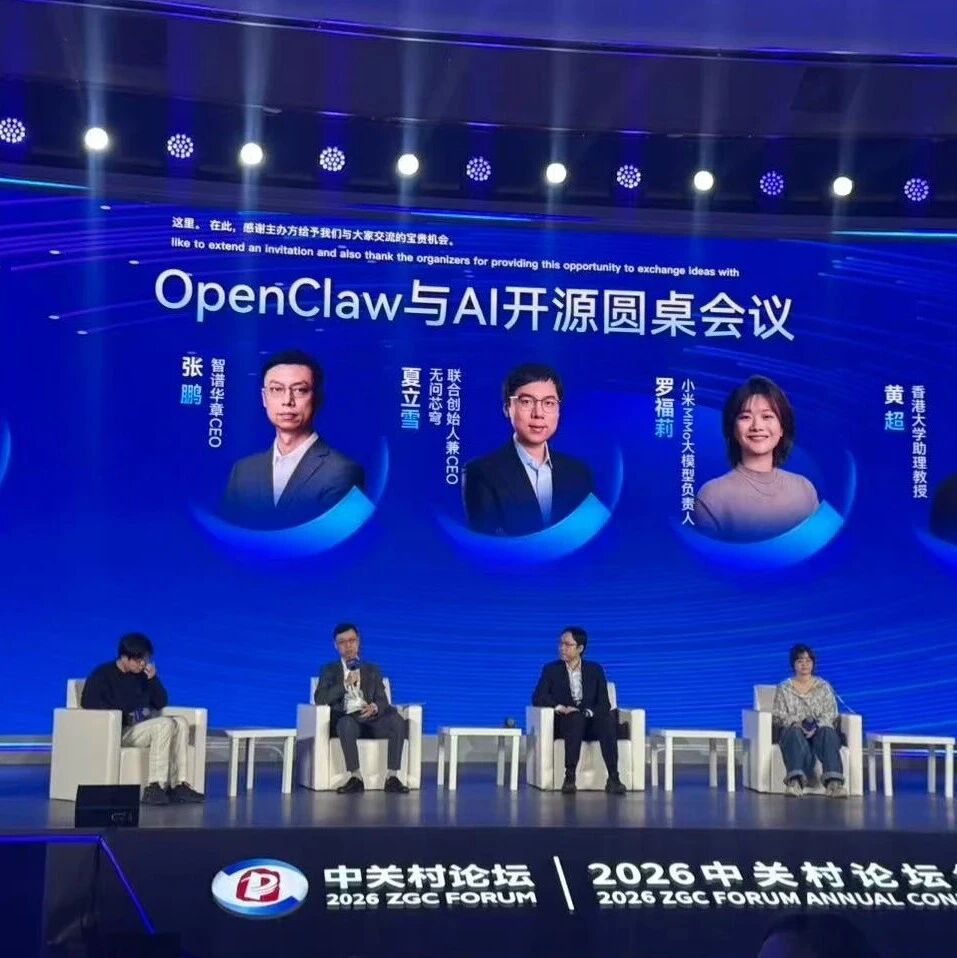
杨植麟、张鹏、罗福莉等齐聚一堂,他们关于OpenClaw的观点值得一听。
数字生命卡兹克· 2026-03-27 06:24
Core Viewpoint - The article discusses the developments and insights from the 2026 Zhongguancun Forum's AI theme day, focusing on the evolution of AI models, particularly the OpenClaw framework, and its implications for the industry. Group 1: Event Overview - The 2026 Zhongguancun Forum is the third year of the event, featuring a packed agenda including the establishment of an open-source alliance and the release of a white paper on sovereign large models [3] - The event gathered key players from the AI industry, including representatives from Eclipse Foundation, Zhiyuan, Xiaomi MiMo, and various embodied intelligence companies, showcasing the active roles in the current AI landscape [3] Group 2: Roundtable Insights - The roundtable discussion covered critical aspects of the AI industry, from model layers to computational infrastructure and agent applications, highlighting the importance of open-source and agent frameworks [5] - Zhang Peng from Zhiyuan explained the rationale behind the price increase of the GLM5 Turbo model, emphasizing the shift from simple chat interactions to task-oriented functionalities, which significantly increases token consumption [5][14] - The discussion revealed that the token usage has surged dramatically, with some companies experiencing a tenfold increase since the beginning of the year, reminiscent of the rapid growth seen during the 3G era [9] Group 3: Model Innovations - The GLM5 Turbo model has been enhanced to support complex task execution, requiring higher computational capabilities and efficient token usage, reflecting a shift towards more sophisticated AI applications [13][14] - The OpenClaw framework is viewed as a revolutionary agent framework that allows users to leverage AI capabilities without extensive programming knowledge, thus democratizing access to advanced AI tools [10][11] Group 4: Future Trends - Key trends identified for the next 12 months include the need for sustainable token usage, as the demand for AI capabilities continues to grow, necessitating efficient resource management [27][28] - The concept of self-evolution in AI models was highlighted, suggesting that models could autonomously improve their performance over time, particularly in scientific research contexts [26] - The importance of computational power was emphasized, with industry leaders expressing concerns that insufficient computational resources could hinder progress and innovation in AI applications [29]

林俊旸离职后首度发声:万字复盘,大模型下一站「智能体式思考」
机器之心· 2026-03-27 00:10
Core Insights - The article discusses the evolution of large language models over the past two years, particularly focusing on the transition from "reasoning" thinking to "agentic" thinking in AI development [3][29]. Group 1: Evolution of Large Models - The emergence of models like OpenAI's o1 and DeepSeek's R1 has taught the industry about the importance of deterministic, stable, and scalable feedback signals for expanding reinforcement learning in language models [6][7]. - The shift from expanding pre-training scale to expanding post-training scale for reasoning is highlighted as a significant transformation in model development [7]. Group 2: Integration of Thinking and Instruction - The Qwen team envisioned a system that merges "thinking" and "instruction" modes, allowing adjustable reasoning intensity based on user prompts and context [9][10]. - The challenge lies in the fundamentally different data distributions and behavior goals required for these two modes, making it difficult to achieve effective integration [10][11]. - Maintaining separation between "thinking" and "instruction" modes is seen as a more attractive option for practical applications, allowing teams to focus on specific training challenges [11][12]. Group 3: Anthropic's Approach - Anthropic's Claude 3.7 and Claude 4 models emphasize integrated reasoning capabilities and user-controllable "thinking budgets," aiming to enhance practical task performance [14][15]. - The development trajectory of Anthropic reflects a rigorous approach, shaping the thinking process based on specific workloads rather than generating verbose outputs [16]. Group 4: Agentic Thinking - Agentic thinking sets a different optimization goal, focusing on the model's ability to make progress through interaction with the environment rather than just internal reasoning quality [17][18]. - The transition to agentic reinforcement learning requires a more complex infrastructure, integrating various components like tool servers and APIs into the training framework [19][20]. Group 5: Future Directions - The next frontier is expected to be agentic thinking, which may replace static reasoning models by enabling systems to perform searches, simulations, and code execution in a robust manner [23][24]. - Challenges such as "reward hacking" and ensuring effective interaction with external tools will be critical in the development of these systems [25][26]. - The evolution from training models to training entire agent systems is anticipated, emphasizing the importance of environment design and coordination among multiple agents [27][30].

林俊旸离职后首发长文
第一财经· 2026-03-26 15:05
Core Insights - The article discusses the evolution of large model evaluation and expectations in the AI industry, highlighting a shift from reasoning-based thinking to agent-based thinking for actionable intelligence [3][7] - The author emphasizes the challenges of merging thinking and instruction modes in AI models, noting that achieving a balance between these modes is complex and often results in subpar performance [4][5] Group 1: Development of AI Models - The past two years have reshaped industry expectations for large models, with OpenAI's advancements demonstrating that "thinking" can be trained as a capability [3] - The focus in early 2025 is expected to shift towards agent-based thinking, which involves thinking for action and continuously updating plans based on environmental feedback [3][5] Group 2: Challenges in Merging Thinking and Instruction - The primary difficulty in merging thinking and instruction lies in the significant differences in data distribution and behavioral goals between the two modes [4] - The attempt to balance model merging with improved training data quality has often led to mediocre outcomes, where thinking behaviors become noisy and instruction behaviors lack clarity [4][5] Group 3: Future of AI Thinking - The article suggests that separating the instruction and thinking processes remains appealing, as demonstrated by Qwen's independent versions of Instruct and Thinking [5] - The successful merging of these processes requires a smooth spectrum of reasoning effort, allowing models to autonomously determine the appropriate level of thought required for different tasks [5][6] Group 4: Shift in Evaluation Criteria - The evaluation of models is transitioning from assessing the duration of thinking to determining if the thinking supports effective action [6] - The definition of "good thinking" has evolved to focus on the trajectory that best supports action under real constraints, rather than simply the longest or most complex reasoning chain [6]

云知声上市后首份年报超预期:大模型业务收入增超10倍,已接近盈亏平衡点
IPO早知道· 2026-03-26 12:58
Core Viewpoint - The article highlights the significant growth and operational improvements of CloudWalk (云知声) in 2025, showcasing its strong revenue increase and strategic advancements in AI technology and applications [3][5][10]. Financial Performance - In 2025, CloudWalk achieved total revenue of 1.21 billion RMB, representing a year-on-year growth of 29% [5] - Revenue in the second half of 2025 grew by 33% to 810 million RMB [5] - The large model business generated 610 million RMB, with a year-on-year increase exceeding 10 times, particularly strong in the second half with approximately 500 million RMB in revenue [5] Operational Efficiency - The net loss in the second half of 2025 narrowed by 84% year-on-year, with adjusted losses decreasing by 92%, nearing breakeven [5] - Adjusted operating expense ratio decreased significantly by 10 percentage points compared to 2024, with sales expenses dropping to 5.4% of revenue [7] - The per capita output for CloudWalk employees was 2.52 million RMB, a 25% increase from 2.02 million RMB in 2024, indicating strong operational efficiency [7] Business Strategy - CloudWalk adheres to a "strong foundational model + deep application" strategy, enhancing its full-modal technology base and expanding the global influence of its self-developed large model matrix in sectors like healthcare and voice recognition [7][10] - The company has effectively implemented a dual-driven strategy in smart healthcare and smart living, with smart living revenue reaching 968 million RMB, a 30.8% increase [8] - The smart transportation segment saw nearly 40% growth, with applications based on the mountain-sea large model deployed in over 10 cities [8] Technological Advancements - Cumulative shipments of AI chips surpassed 110 million units, validating CloudWalk's scalability in terminal AI products [9] - The smart healthcare business generated 244 million RMB, a 22.2% increase, with a 53.2% rise in average transaction value [9] - CloudWalk invested over 380 million RMB in R&D, accounting for 75% of adjusted operating expenses, with 69% of personnel dedicated to R&D [9] Future Outlook - CloudWalk plans to deepen its "strong foundational model + deep application" strategy, focusing on strategic investments in foundational large models and expanding its business in smart living and healthcare [10] - The company is set to launch a native intelligent model for programming and office applications in the second quarter to third quarter of 2026, aiming for significant improvements in smart density and token production efficiency [10]
第一批“首席龙虾官”,月薪6万
猿大侠· 2026-03-26 04:13
Core Viewpoint - The emergence of new job titles such as "Chief Claw Officer" and "OpenClaw Engineer" reflects the growing integration of AI technologies across various industries, indicating a shift in job roles and responsibilities driven by advancements in AI and automation [7][9][25]. Group 1: Job Market Trends - Companies are actively recruiting for positions related to "OpenClaw," with job postings appearing not only in major cities like Beijing and Shanghai but also in places like Xiamen and Chengdu [4][6]. - The salary range for these positions typically falls between 30K to 60K, with some companies offering over a million for top roles and even high daily rates for interns [8][19]. - The job titles are diverse, spanning across sectors such as healthcare, real estate, tourism, and intellectual property, indicating a broad application of AI technologies [7][25]. Group 2: Job Responsibilities and Requirements - The role of Chief Claw Officer (CCO) involves reporting directly to the CEO and is focused on driving the company's AI Native transformation, primarily through the development of Agent systems [12][13]. - Positions like "OpenClaw Engineer" require expertise in system design, technical architecture, and cultural promotion of AI tools within the organization, emphasizing the need for candidates with substantial experience in AI and automation [16][19]. - There are also roles aimed at non-technical individuals, such as content operations for "养虾达人" (Shrimp Enthusiast), which focus on leveraging AI to automate tasks rather than performing them manually [20][21]. Group 3: Industry Impact - The rise of new job titles like "Prompt Engineer" and "Vibe Coding Engineer" alongside "龙虾官" (Claw Officer) illustrates the ongoing evolution of job roles in response to technological advancements in AI [24][25]. - The integration of AI technologies is not limited to the tech sector but is also transforming traditional industries, suggesting a significant shift in work dynamics and job functions [25][26]. - The trend indicates a move towards a more blended work environment where AI tools are increasingly utilized, marking a significant change in how industries operate [26][27].

“具身智能很火,但我们对困难其实一无所知”
投中网· 2026-03-26 03:50
Core Viewpoint - The article discusses the challenges and potential of embodied intelligence, likening its development to the difficult "North Route" of climbing Mount Everest, emphasizing that many difficulties are underestimated in this field [4][30][36]. Group 1: Investment Landscape - The investment landscape for embodied intelligence is compared to a long and challenging journey, with the potential for significant rewards if navigated correctly [5]. - The podcast "Signal and Noise" by Oasis Capital ranks first in a recent evaluation, focusing on deep discussions about the future of AI and embodied intelligence [6][12]. - Oasis Capital has begun investing in embodied intelligence since 2023, with a portfolio that includes several pioneering companies in the field [6][7]. Group 2: Market Dynamics - There are at least nine domestic embodied intelligence companies valued over 10 billion, with significant market activity and over 90 financing events in the sector [7]. - The market for embodied intelligence has seen a surge in interest, particularly following high-profile events like the Spring Festival, leading to a wave of funding [7][36]. Group 3: Challenges in Development - The development of embodied intelligence is still in its early stages, with significant challenges ahead, including the need for vast amounts of training data and the integration of hardware and software [33][36]. - The article highlights that the industry is currently at the "foot of the mountain," with many unknowns and difficulties yet to be encountered [36][38]. Group 4: Future Exploration - The "North Route Plan" aims to showcase the journeys of young scientists in the field of embodied intelligence, emphasizing their innovative approaches and the challenges they face [34][39]. - The article suggests that the exploration of embodied intelligence will require a combination of scientific inquiry and practical application, with a focus on the experiences of leading researchers [34][35].

梅赛德斯-奔驰与索尼电影 联合呈现动画电影《奇迹梦之队》
Mei Ri Shang Bao· 2026-03-25 22:21
Group 1 - Mercedes-Benz and Sony Pictures have jointly released the animated film "Miracle Dream Team," showcasing several Mercedes-Benz vehicles including the all-new electric CLA and the all-new electric GLC SUV [2] - The all-new electric CLA features a design that embodies the beauty of Mercedes-Benz coupes, offering a new experience in design, efficiency, intelligence, and safety [2] - The vehicle is equipped with a unique electric two-speed transmission, achieving an ultra-low energy consumption of 10.9 kWh per 100 kilometers and a solid range of 866 kilometers under CLTC conditions [2] Group 2 - The all-new electric CLA is marketed as "the smartest Mercedes," featuring an AI-powered intelligent cockpit that utilizes ByteDance's Doubao large model [2] - It includes a navigation assistance system developed in collaboration with Momenta, tailored specifically for Chinese customers to enhance their intelligent travel experience [2]