工业智能化

Search documents
根的力量
Shang Hai Zheng Quan Bao· 2025-09-29 17:46
Group 1: Tree Root Technology - Tree Root Technology has been recognized in Gartner's Magic Quadrant for Industrial IoT Platforms for six consecutive years, highlighting its strong position in the Asia-Pacific region [3] - The company aims to empower intelligent manufacturing and support industrial progress, connecting over 2.5 million high-value industrial devices across more than 120 countries [3][4] - The Root Cloud platform, developed by Tree Root Technology, is compatible with over 1,100 industrial protocols, facilitating data mining and integration across various industries [4][6] Group 2: Manufacturing Innovations - Tree Root Technology has expanded its services from after-market support to smart manufacturing and intelligent management, focusing on creating standardized products and solutions [4][5] - The company has implemented smart operations in SANY Heavy Industry's factory, utilizing over 1,540 sensors and 200 interconnected robots to generate more than 30TB of data daily [5] - The integration of industrial data into a digital twin system allows for real-time synchronization between physical and virtual factories, enhancing operational efficiency [6] Group 3: Nasta Development - Nasta has evolved from a small ink cartridge manufacturer to a leading player in the laser printer industry, becoming the fourth-largest laser printer manufacturer globally [7][8] - The company launched China's first self-developed laser printer in 2010, marking a significant milestone in the domestic printing industry [9][11] - Nasta's chip subsidiary, Jihai Microelectronics, has expanded its chip technology applications beyond printing, targeting industrial control and new energy vehicles [12][13] Group 4: Mingyang Smart Energy - Mingyang Smart Energy has successfully navigated the challenges posed by Typhoon Haikui, demonstrating the resilience of its offshore wind turbines [15] - The company has transitioned from a follower to a leader in the wind energy sector, with significant advancements in technology and cost efficiency [16] - Mingyang's deep-sea wind turbine projects, including the world's largest floating wind platform, reflect its commitment to innovation and sustainability in the energy sector [18][19]



赛意信息:入选IDC工业大模型及智能体解决方案厂商评估“领导者”类别
Zhong Guo Zheng Quan Bao· 2025-09-29 13:57
Group 1 - The core viewpoint of the news is that Saiyi Information has been recognized as a "Leader" in the IDC MarketScape report for its capabilities in industrial large models and intelligent agents, highlighting its leadership in the field of industrial intelligence [1][2] - The IDC report emphasizes that 19.7% of Chinese manufacturing enterprises have deployed intelligent agents, while 47.9% are advancing PoC testing, indicating a surge in demand for AI solutions [2] - The report outlines that the promotion of MCP and A2A protocols enhances ecological collaboration capabilities, laying a technical foundation for the widespread application of industrial intelligent agents [1][2] Group 2 - Saiyi Information has developed a comprehensive AI layout based on its 20 years of experience in the manufacturing industry, focusing on "technical breakthroughs, scene implementation, and ecological collaboration" [2] - The company has successfully implemented AI solutions in various industrial scenarios, such as reducing the processing time of PCB engineering data from 4-6 hours to 2-4 minutes and achieving an 80% increase in operational efficiency in supply chain scenarios [3] - Saiyi Information aims to provide a replicable and implementable AI upgrade path for Chinese enterprises through its full-stack capabilities, which include computing power, models, AI toolchains, and manufacturing AI applications [3]

调研速递|上海海得控制系统股份有限公司接受多家投资者调研,透露业务布局与产品进展要点
Xin Lang Zheng Quan· 2025-09-19 10:21
Core Viewpoint - Shanghai Haide Control System Co., Ltd. held a mid-year performance briefing on September 19, 2025, addressing investor concerns regarding industry status, operational performance, and financial conditions [1] Group 1: Business Layout and Technology Reuse - The company focuses on industrial electrical automation and industrial information technology, developing hardware and software products such as medium redundancy PLCs and edge controllers [1] - The accumulated automation and information technology can be reused in intelligent industries like robotics, integrating with the company's "two-in-one" solutions for control and data interaction layers [1] - The company is advancing its digital business by focusing on automation control technologies and developing software and hardware products and solutions for multiple industries [1] Group 2: Industrial Internet Platform Achievements - The company is enhancing its "two-in-one" solutions by developing hardware and software for control and data interaction, particularly in the metallurgy sector for unmanned intelligent systems [1] - The company is addressing user needs by integrating OT and IT systems, focusing on adaptability and improving overall digital and intelligent system levels [1] Group 3: Product-Related Responses - The company does not engage in the research and manufacturing of high-density optical components but applies relevant devices in self-developed products [1] - Currently, the company is not involved in humanoid robot research, although related technologies can be reused [1] - Automation products are applied in the renewable energy sector, with stable year-on-year orders for wind power converters and increased orders for commercial energy storage products [1] Group 4: Energy Storage Business Situation - In the first half of 2025, the company focused on risk management in the centralized energy storage market, reducing market investment and concentrating on quality clients and projects [1] - The company implemented cost reduction and efficiency improvement measures, resulting in a significant year-on-year decrease in expenses [1] - The exploration of business models and market opportunities in commercial storage has shown initial success [1] Group 5: Shareholder Reduction Situation - The actual controller of the company, Mr. Xu Hong, has never reduced his shareholding, while Mr. Guo Menglong announced a reduction plan for the first time since the company went public in 2007 due to business investment needs [1] - In 2016, the two actual controllers collectively increased their shareholding by 9,778,067 shares [1] - Any future reduction information will be disclosed in accordance with legal regulations [1]

中创智领涨超7%创新高 与华为、联想等多家企业合作 推动工业智能化发展
Zhi Tong Cai Jing· 2025-09-19 06:12
Core Viewpoint - Zhongchuang Zhiling (601717) shares rose over 7%, reaching a new high of 23.14 HKD following a partnership announcement with Huawei focused on digital mining solutions and industrial applications [1] Company Developments - On September 17, Zhongchuang Zhiling Group (formerly Zhengmei Group) signed a cooperation agreement with Huawei, targeting four key areas: AI-based digital mining operations, industrial application scenarios, project-level specifics, and joint talent training programs [1] - The same day, Zhongchuang Zhiling held a ceremony for its strategic transformation, new product and technology launch, and rebranding in Zhengzhou, where it signed agreements with notable companies like Lenovo, SAP, Deloitte, and Hanbo Semiconductor to advance industrial intelligence [1] Technological Innovations - The coal machinery segment of Zhongchuang Zhiling unveiled eight innovative technologies and products for smart mining, including ten types of mining robots, electric supports, constant water supports, and fully continuous equipment for open-pit mining [1]

控制电机龙头 三协电机登陆北交所
Zhong Guo Zheng Quan Bao· 2025-09-07 23:01
Company Overview - Sanxie Electric plans to list on the Beijing Stock Exchange on September 8, with a share price of 8.83 yuan and a total fundraising amount of 159 million yuan [1] - The company specializes in control motors, including stepper motors, servo motors, and brushless motors, emphasizing small size, high power density, and energy efficiency [1][3] - Sanxie Electric has invested significantly in R&D, with expenditures of 10.64 million yuan, 12.54 million yuan, and 15.02 million yuan from 2022 to 2024, representing 3.71%, 3.46%, and 3.58% of revenue respectively [1] Market Position and Performance - The company has gained recognition in the AGV and collaborative robot sectors, with products already in mass production [2] - Sanxie Electric's revenue has shown consistent growth, with figures of 287 million yuan, 362 million yuan, and 420 million yuan projected from 2022 to 2024, alongside gross margins of 22.24%, 29.28%, and 29.12% [2] - For the first half of 2025, the company reported revenue of 256 million yuan, a year-on-year increase of 21.23%, and a net profit of 31.53 million yuan, up 12.25% [2] Industry Demand and Trends - The micro motor market is expected to grow from 46.74 billion USD in 2024 to 76.99 billion USD by 2032, driven by automation in manufacturing and emerging sectors like electric vehicles and smart homes [3] - China is the largest producer of micro motors globally, with an estimated production and sales volume of 15.1 billion units in 2023 [3] - Sanxie Electric's products meet international standards, competing with leading companies like Nidec and Panasonic in key technical specifications [3] Fundraising and Future Plans - The company aims to raise 159 million yuan to expand its green energy-saving intelligent control motor production, build a research center, and supplement working capital [4] - Sanxie Electric plans to leverage capital market resources to enhance investment in technology R&D, market expansion, and brand development [4]
控制电机龙头三协电机登陆北交所
Zhong Guo Zheng Quan Bao· 2025-09-07 20:51
Company Overview - Sanxie Electric Motor Co., Ltd. plans to list on the Beijing Stock Exchange on September 8, with a share price of 8.83 yuan and a total fundraising amount of 159 million yuan [1] - The company specializes in control motors, including stepper motors, servo motors, and brushless motors, emphasizing small size, high power density, and energy efficiency [1][2] - Sanxie Electric has invested significantly in R&D, with expenditures of 10.64 million yuan, 12.54 million yuan, and 15.02 million yuan from 2022 to 2024, representing 3.71%, 3.46%, and 3.58% of revenue respectively [1] Product Development and Market Position - The company has gained recognition in the AGV and collaborative robot sectors, with products already in mass production [2] - Sanxie Electric's products are also applicable in humanoid robots, with samples currently being sent to customers [2] - The company’s revenue has shown consistent growth, with projected revenues of 287 million yuan, 362 million yuan, and 420 million yuan from 2022 to 2024, and a gross margin of 22.24%, 29.28%, and 29.12% respectively [2] Industry Demand and Growth - The micro motor market is expected to grow from 46.74 billion USD in 2024 to 76.99 billion USD by 2032, driven by automation in manufacturing and emerging sectors like electric vehicles and smart homes [3] - China is the largest producer of micro motors globally, with an estimated production and sales volume of 15.1 billion units in 2023 [3] - The industry is undergoing rapid development, with increasing demands for production technology and equipment due to industrial upgrades and automation [3] Fundraising and Future Plans - The company aims to raise 159 million yuan to expand its green energy-saving intelligent control motor production, build a research center, and supplement working capital [4] - Sanxie Electric plans to leverage capital market resources to enhance investment in technology R&D, market expansion, and brand development for higher quality growth [4]
祥鑫科技重磅发布面向工业场景的新一代人形机械双臂
Quan Jing Wang· 2025-09-07 03:44
Core Viewpoint - Xiangxin Technology has launched a new humanoid robot arm optimized for industrial applications, achieving significant advancements in performance, including lightweight design, integrated appearance, control precision, and system stability, thereby supporting the intelligent upgrade of the industrial sector [1] Group 1: Simplified System Integration - The new robot arm features a driver-free plug-and-play design, allowing direct deployment on the main controller, which simplifies the system integration process and reduces deployment costs while improving work efficiency [2] Group 2: Flexible Deployment Solutions - The new robot arm supports multiple working modes, including independent single-arm operation and collaborative dual-arm operation, catering to diverse industrial scenarios and enhancing operational efficiency for tasks requiring high precision and flexibility [3] Group 3: Open Interface Ecosystem - The robot arm includes an open interface ecosystem compatible with the ROS2 system, allowing integration of various sensors and algorithm modules, and supports standard API interfaces for popular programming languages like Python and C++, facilitating secondary development [4] Group 4: High Precision and Easy Maintenance - The robot arm utilizes an asynchronous communication architecture with a command response time of less than 2ms, ensuring quick and accurate execution of operations, while its modular design allows for easy fault localization and maintenance, minimizing downtime [5] Group 5: Safety Assurance Mechanisms - The robot arm incorporates multiple layers of safety protection and intelligent fault handling, with automatic fault isolation capabilities to ensure the safety of operators and equipment, complemented by a visual monitoring interface for real-time status updates [6]
辽宁启动“工业高质量数据集”建设
Xin Hua Wang· 2025-09-06 21:12
Core Viewpoint - Liaoning Province has launched the "Industrial High-Quality Data Set" co-construction initiative to integrate high-quality industrial data, aiming to strengthen the data foundation for intelligent industrial development and support the transformation and upgrading of the manufacturing sector [1] Group 1: Data Integration and Industrial Transformation - Data is identified as a core production factor in the industrial internet, playing a crucial role in breaking down information barriers, stimulating innovation, and driving industrial transformation [1] - The initiative will leverage four trillion-level industrial bases and 22 key industrial clusters in Liaoning, with a focus on establishing a national-level data annotation base in Shenyang [1] Group 2: Collaboration and Innovation - The China Industrial Internet Research Institute will collaborate with key enterprises such as China Mobile and State Power Investment Corporation to advance the practical exploration and innovative application of high-quality industrial data sets [1] - The co-construction is expected to promote data circulation and sharing, accelerating the implementation of innovative applications in the industrial internet through in-depth data mining and analysis [1] Group 3: Future Goals - The initiative aims to propel the industrial sector towards intelligent, high-end, and green development [1]
【私募调研记录】健顺投资调研昆仑万维、震裕科技等6只个股(附名单)
Zheng Quan Zhi Xing· 2025-08-29 00:08
Group 1: Company Insights - Kunlun Wanwei reported that AI music and AI social monthly revenue has surpassed $1 million, with expectations for growth following a product upgrade in September. The annual ARR for short dramas has exceeded $240 million, with monthly revenue over $20 million, projected to reach $360 million by the end of 2025 [1] - Zhenyu Technology anticipates that its net profit growth will outpace revenue growth in the first half of 2025, driven by economies of scale and cost reduction. Revenue from lithium battery structural components has increased by over 40% year-on-year, with further growth expected in the second half [2] - Nengke Technology's revenue growth in AI products and services is supported by external conditions and internal strategies, with a focus on high-margin sectors. The company plans to increase R&D investment to enhance market share [3] - Lante Optics is expanding its production capacity in response to demand, with stable growth in the utilization rate of glass aspheric lenses. The company is also focusing on the semiconductor optics sector and has launched glass wafer products [4] - Giant Network achieved revenue of 1.662 billion yuan, a year-on-year increase of 16.47%, and a net profit of 777 million yuan, up 8.27%. The company is exploring overseas markets and plans to maintain user engagement through continuous content updates [5] - Huali Technology's revenue primarily comes from selling IP cards to amusement parks, with plans to explore more business models in the future. The company has received approval for a refinancing project to deploy 4,350 devices within two years [6] Group 2: Industry Trends - The AI industry is experiencing significant growth, with companies like Kunlun Wanwei and Nengke Technology capitalizing on the trend of intelligent manufacturing and technological innovation [1][3] - The robotics sector is evolving, with Zhenyu Technology positioning itself as a comprehensive service provider for humanoid robots, indicating a shift towards automation and advanced manufacturing [2] - The optical industry is seeing advancements in technology and production capabilities, particularly in the semiconductor optics and AR hardware sectors, suggesting a robust growth trajectory [4] - The gaming industry is leveraging user engagement strategies and content innovation to sustain growth, as evidenced by Giant Network's performance and plans for product development [5]

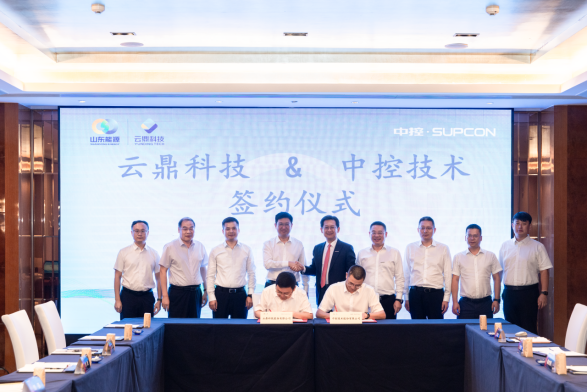
云鼎科技与中控技术签约,推动化工大模型规模化落地
Qi Lu Wan Bao· 2025-08-28 10:35
Core Viewpoint - The strategic cooperation agreement between Yunding Technology and Zhongkong Technology marks a significant advancement in their collaboration within the industrial intelligence sector, focusing on the mining and chemical industries. Group 1: Strategic Cooperation - The agreement emphasizes "complementary advantages, resource integration, information sharing, and collaborative development" as the pathways for cooperation [3] - Key areas of focus include the application of chemical large models, domestic innovation, joint tackling of critical technologies, and market collaboration [3] - The partnership aims to create leading intelligent solutions across all scenarios, facilitating the large-scale implementation of time-series large models in the coal chemical industry [3] Group 2: Industry Impact - The signing of the agreement is seen as a milestone in deepening industrial intelligence efforts and a new starting point for promoting digital upgrades in the chemical industry [3] - The collaboration is expected to foster intelligent upgrades and green low-carbon development in traditional industries like mining and chemicals [3] - The establishment of the "Industrial AI Data Alliance" during the signing event aims to build a credible ecosystem for industrial data, addressing industry challenges related to data utilization and collaboration [4] Group 3: Company Profiles - Zhongkong Technology is a leading enterprise in the global process industry, focusing on "industrial data as the foundation and AI large models as the core," driving innovation through technology and model advancements [6] - The company serves over 37,000 clients across more than 50 countries, contributing significantly to the high-quality development of the global process industry [6] - Yunding Technology, founded in 1993, specializes in information technology services and industrial intelligence applications, particularly in the mining sector, offering comprehensive intelligent solutions [6]