
工业生产者购进价格

Search documents
10月北京CPI同比由降转涨
Zhong Guo Xin Wen Wang· 2025-11-10 06:28
Group 1 - In October, Beijing's Consumer Price Index (CPI) turned from a decline to an increase year-on-year, with a 0.1% rise compared to a 0.6% decline in the previous month [2] - Month-on-month, the CPI increased by 0.4%, an expansion of 0.3 percentage points from the previous month [1] - Food prices decreased by 3.2% year-on-year, but the decline narrowed by 2.5 percentage points compared to the previous month [2] Group 2 - In October, the prices of fresh vegetables and fruits rose by 3.9% and 3.0% respectively, influenced by low temperatures and rainfall [1] - Airfare prices surged by 16.2%, with an increase of 15.7 percentage points from the previous month, reflecting increased travel demand during the Mid-Autumn and National Day holidays [2] - The price of gold jewelry rose significantly by 52.3%, while prices for gasoline and diesel fell by 5.6% and 6.0% respectively [2] Group 3 - The Producer Price Index (PPI) for industrial producers in Beijing decreased by 1.4% year-on-year and by 0.4% month-on-month [2] - The purchasing prices for industrial producers also saw a year-on-year decline of 2.0% and a month-on-month decrease of 0.5% [2]
【数据发布】2025年10月份工业生产者出厂价格同比降幅继续收窄 环比由平转涨
中汽协会数据· 2025-11-10 03:53
Core Viewpoint - In October 2025, the national industrial producer price index showed a year-on-year decline of 2.1%, with a month-on-month increase of 0.1%, indicating a slight recovery in industrial pricing trends [1][7]. Group 1: Year-on-Year Changes - The industrial producer's ex-factory prices decreased by 2.1% year-on-year, while the average from January to October showed a decline of 2.7% compared to the previous year [1][8]. - The prices of production materials fell by 2.4%, contributing approximately 1.77 percentage points to the overall decline in ex-factory prices [3][8]. - The mining industry experienced a significant price drop of 7.8%, while raw materials and processing industries saw declines of 2.5% and 1.9%, respectively [3][8]. Group 2: Month-on-Month Changes - In October, the ex-factory prices of industrial producers increased by 0.1% month-on-month, with production materials contributing an increase of 0.08 percentage points [6][8]. - The mining sector's prices rose by 1.0%, while raw materials remained stable, and processing industries saw a slight increase of 0.1% [6][8]. - The prices of life goods remained unchanged, with food and clothing prices decreasing by 0.1% and durable goods prices dropping by 0.3% [6][8]. Group 3: Purchase Price Changes - The industrial producer's purchase prices decreased by 2.7% year-on-year, with an average decline of 3.2% from January to October [5][8]. - Fuel and power prices fell by 7.4%, while agricultural products and chemical raw materials saw declines of 5.2% and 5.0%, respectively [5][8]. - Conversely, prices for non-ferrous metals and wires increased by 7.5%, indicating a divergence in price trends across different material categories [5][8].

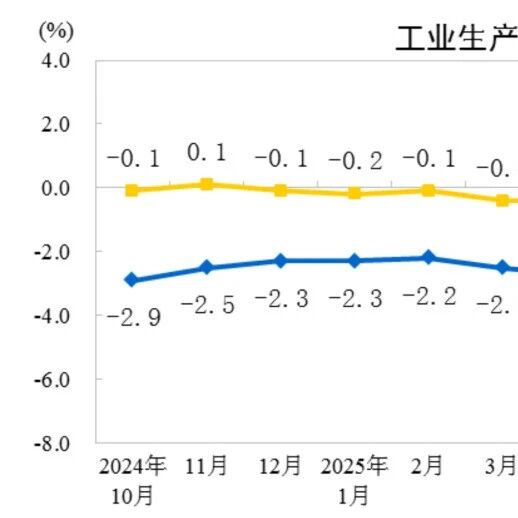
国家统计局:10月份工业生产者出厂价格同比降幅继续收窄 环比由平转涨
Jing Ji Guan Cha Wang· 2025-11-09 02:12
Core Insights - In October 2025, the national industrial producer price index (PPI) decreased by 2.1% year-on-year, with the decline narrowing by 0.2 percentage points compared to the previous month [1] - Month-on-month, the PPI shifted from flat to an increase of 0.1% [1] - The industrial producer purchase price index (PPPI) fell by 2.7% year-on-year, with the decline narrowing by 0.4 percentage points from the previous month [1] - Month-on-month, the PPPI increased by 0.1%, maintaining the same growth rate as the previous month [1] - From January to October, the average industrial producer PPI decreased by 2.7% compared to the same period last year, while the average PPPI dropped by 3.2% [1]
国家统计局:10月份PPI同比降幅继续收窄,环比由平转涨
Guo Jia Tong Ji Ju· 2025-11-09 01:51
Core Insights - In October 2025, the national industrial producer's ex-factory prices decreased by 2.1% year-on-year, with a narrowing decline of 0.2 percentage points compared to the previous month; month-on-month, prices shifted from flat to an increase of 0.1% [1] - The average industrial producer's ex-factory prices from January to October fell by 2.7% compared to the same period last year [1] Year-on-Year Changes - In October, the prices of production materials decreased by 2.4%, contributing approximately 1.77 percentage points to the overall decline in industrial producer's ex-factory prices [3] - The mining industry saw a significant price drop of 7.8%, while raw materials and processing industries experienced declines of 2.5% and 1.9%, respectively [3] - Prices for living materials decreased by 1.4%, with food prices down by 1.6% and clothing prices down by 0.3% [3] Month-on-Month Changes - In October, the prices of production materials increased by 0.1%, contributing approximately 0.08 percentage points to the overall increase in industrial producer's ex-factory prices [8] - The mining industry prices rose by 1.0%, while raw materials remained flat and processing industry prices increased by 0.1% [8] - Living material prices remained unchanged, with food and clothing prices both decreasing by 0.1% [8] Industrial Producer Purchase Prices - The purchase prices for fuel and power decreased by 7.4%, while agricultural and sideline products fell by 5.2% and chemical raw materials by 5.0% [7] - Prices for non-ferrous metal materials and wires increased by 7.5% [7] Key Industry Price Changes - The coal mining and washing industry experienced a price drop of 15.6% year-on-year, while the oil and gas extraction industry saw a decline of 8.4% [11] - The non-ferrous metal mining industry had a price increase of 18.9% year-on-year [11] - The chemical raw materials and products manufacturing industry saw a decrease of 5.0% year-on-year [11]
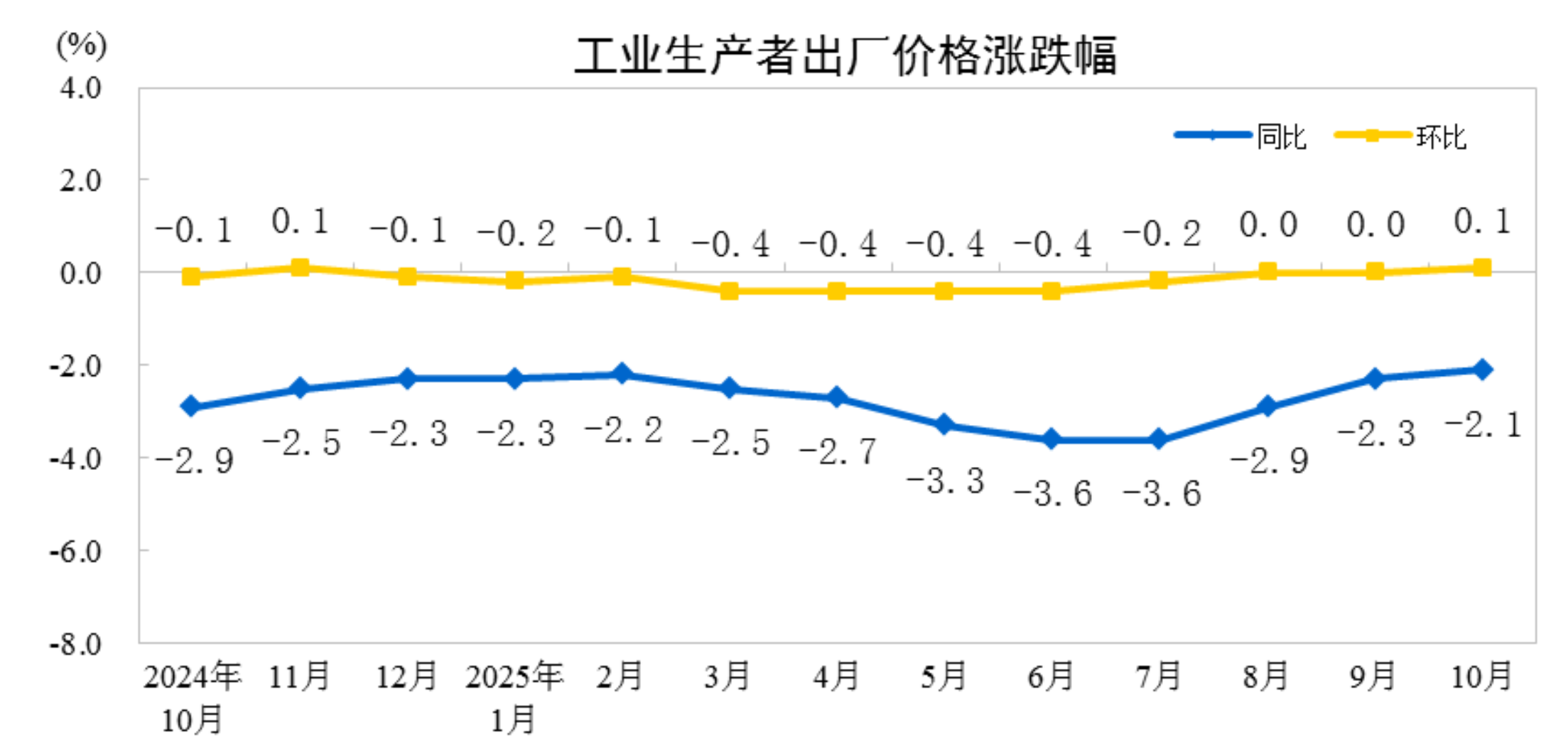
国家统计局:2025年10月份工业生产者出厂价格同比降幅继续收窄 环比由平转涨
Zheng Quan Shi Bao Wang· 2025-11-09 01:40
Core Insights - The Producer Price Index (PPI) for industrial producers in China decreased by 2.1% year-on-year in October 2025, with the decline narrowing by 0.2 percentage points compared to the previous month [1] - Month-on-month, the PPI shifted from flat to an increase of 0.1% [1] - The Purchasing Price Index (PPI) for industrial producers fell by 2.7% year-on-year, with a decline narrowing by 0.4 percentage points from the previous month [1] - On a month-on-month basis, the Purchasing Price Index remained unchanged with a 0.1% increase [1] - For the period from January to October, the average PPI for industrial producers decreased by 2.7% compared to the same period last year, while the Purchasing Price Index dropped by 3.2% [1]
国家统计局:10月份全国工业生产者出厂价格同比下降2.1%,降幅比上月收窄0.2个百分点
Mei Ri Jing Ji Xin Wen· 2025-11-09 01:40
Core Viewpoint - In October, the national industrial producer price index showed a year-on-year decline of 2.1%, indicating a narrowing of the decline compared to the previous month, while month-on-month, it increased by 0.1% [1] Group 1: Producer Prices - The year-on-year decline in industrial producer prices for October was 2.1%, which is a 0.2 percentage point improvement from the previous month [1] - The month-on-month change shifted from flat in the previous month to an increase of 0.1% in October [1] - The average industrial producer prices from January to October decreased by 2.7% compared to the same period last year [1] Group 2: Purchase Prices - The year-on-year decline in industrial producer purchase prices for October was 2.7%, with a 0.4 percentage point improvement from the previous month [1] - The month-on-month change for purchase prices remained stable, with an increase of 0.1% [1] - The average purchase prices from January to October decreased by 3.2% compared to the same period last year [1]
2025年前三季度全国居民消费价格(CPI)同比下降0.1%
Bei Jing Shang Bao· 2025-10-20 02:41
Core Insights - The National Bureau of Statistics reported a 0.1% year-on-year decline in the Consumer Price Index (CPI) for the first three quarters of the year [1] - The core CPI, excluding food and energy prices, increased by 0.6% year-on-year, with a 0.2 percentage point increase compared to the first half of the year [1] CPI Breakdown - Food, tobacco, and alcohol prices decreased by 0.8%, while clothing prices rose by 1.5% [1] - Housing prices increased by 0.1%, and prices for daily necessities and services rose by 0.6% [1] - Transportation and communication prices fell by 2.8%, while education, culture, and entertainment prices increased by 0.8% [1] - Medical care prices rose by 0.5%, and other goods and services saw a significant increase of 7.4% [1] - In September, the CPI decreased by 0.3% year-on-year but increased by 0.1% month-on-month [1] Producer Price Index (PPI) Insights - The Producer Price Index (PPI) for industrial producers fell by 2.8% year-on-year in the first three quarters [1] - In September, the PPI decreased by 2.3% year-on-year, with a narrowing decline of 0.6 percentage points compared to the previous month [1] - The purchase price index for industrial producers dropped by 3.2% year-on-year in the first three quarters [1] - In September, the purchase price index decreased by 3.1% year-on-year, with a narrowing decline of 0.9 percentage points compared to the previous month [1]
9月份化学原料和化学制品制造业出厂价格同比下降
Guo Jia Tong Ji Ju· 2025-10-17 05:39
Core Insights - In September 2025, the national industrial producer price index decreased by 2.3% year-on-year, with the decline narrowing by 0.6 percentage points compared to the previous month, while remaining stable month-on-month for two consecutive months [1] Group 1: Producer Prices - The producer prices in the oil and gas extraction industry fell by 8.6% year-on-year and decreased by 2% month-on-month [1] - The prices in the petroleum, coal, and other fuel processing industries dropped by 7.8% year-on-year and decreased by 0.8% month-on-month [1] - The chemical raw materials and chemical products manufacturing sector saw a year-on-year price decline of 5.2% and a month-on-month decrease of 0.4% [1] - The chemical fiber manufacturing prices decreased by 7.9% year-on-year and fell by 0.2% month-on-month [1] Group 2: Purchasing Prices - In September, the industrial producer purchasing prices decreased by 3.1% year-on-year, with the decline narrowing by 0.9 percentage points from the previous month, while showing a month-on-month increase of 0.1% [1] - The prices for chemical raw materials fell by 5.5% year-on-year and decreased by 0.4% month-on-month [1] Group 3: Year-to-Date Averages - From January to September, the average industrial producer prices decreased by 2.8% compared to the same period last year, while the industrial producer purchasing prices fell by 3.2% [1]
9月北京CPI同比降幅收窄 环比由降转升
Zhong Guo Xin Wen Wang· 2025-10-16 07:34
Group 1 - In September, Beijing's Consumer Price Index (CPI) turned from a decrease of 0.1% in the previous month to an increase of 0.1% [1] - The year-on-year decline in CPI narrowed to 0.6%, a reduction of 0.2 percentage points compared to the previous month [1] - Prices of fresh vegetables and fruits increased by 8.4% and 6.2% respectively, while prices for eggs and pork rose by 3.1% and 0.3% [1] Group 2 - The prices of industrial consumer goods increased by 0.2% month-on-month, reversing a previous decline [1] - Year-on-year, the prices of industrial producers decreased by 1.4%, while the purchase prices fell by 2.1% [2] - Notably, the price of gold jewelry surged by 43.1% year-on-year, indicating strong demand in that segment [1]
2025年9月CPI和PPI数据解读:9月通胀:物价偏弱运行
ZHESHANG SECURITIES· 2025-10-15 14:01
Inflation Data Summary - September CPI decreased by 0.3% year-on-year, lower than the market expectation of -0.1% and previous value of -0.4%[2] - Month-on-month CPI growth was 0.1%, compared to 0% in the previous month[2] - September PPI recorded a year-on-year decline of 2.3%, an improvement from -2.9% previously and above the expected -2.4%[5] Price Movement Insights - Food prices increased by 0.7% month-on-month, contributing approximately 0.13 percentage points to the CPI increase[3] - Year-on-year, food prices fell by 4.4%, impacting CPI by about 0.83 percentage points[3] - Core CPI, excluding food and energy, rose by 1.0% year-on-year, marking the first return to 1% growth in 19 months[4] Market Outlook - The fourth quarter's asset performance will largely depend on risk appetite, with a potential shift from technology growth stocks to low-volatility dividend stocks[1] - A gradual decline in risk appetite is anticipated post-APEC, particularly after November[1] - Bond yields are expected to decrease in Q4 due to weakening fundamentals and potential monetary easing[1]