战略调整

Search documents
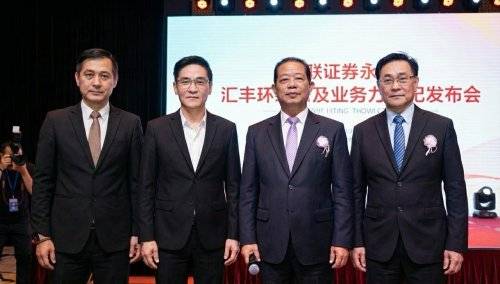
联德资本内地战略升级:纪俊朗正式出任内地运营总负责人
Sou Hu Cai Jing· 2026-01-05 13:28
Core Viewpoint - LianDe Capital has completed a significant strategic deployment for its mainland operations, marking a new phase in its development in the Chinese mainland market with a shift towards a more standardized, entity-based, and group-oriented operational model [2] Group 1: Leadership Appointment - Mr. Ji Junlang has been appointed as the President of the Market Department and the overall head of mainland operations, responsible for strategic advancement and system construction [2] - Ji Junlang has extensive cross-regional experience in finance and capital markets, having worked in various institutions including China Trust and Cathay Securities [3] Group 2: Operational Strategy - LianDe Capital has designated 2025 as a year for internal research and system organization, focusing on systematic analysis of mainland market demands through user feedback and operational data [4] - The company aims to identify the real needs of current partners regarding entity support, operational standardization, and team building, providing a basis for future strategic adjustments [4] Group 3: Mainland Operations Center - The company has announced a phased plan to establish operational centers in key mainland cities, providing brand authorization, team operation, and training support to enhance market service capabilities [6] - The operational structure will feature a dual-core mechanism with a technology focus led by founder Wu Zhiyu and a market focus overseen by Ji Junlang, aimed at improving operational processes and compliance systems [6] Group 4: Long-term Development - LianDe Capital emphasizes a steady approach to its mainland business development, aiming to enhance organizational structure and service systems while ensuring compliance and sustainability [7] - The strategic adjustment reflects the company's commitment to the mainland market and its consideration of standardized operations and entity support in the current industry environment [7]

高阳科技预计2025年度取得经营亏损
Zhi Tong Cai Jing· 2026-01-05 10:19
Core Viewpoint - Gaoyang Technology (00818) reported an operating loss of approximately HKD 240 million for the 11 months ending November 30, 2025, a significant decline from an operating profit of approximately HKD 106.5 million for the same period ending November 30, 2024 [1] Financial Performance - The operating loss for the 11 months ending November 30, 2025, is primarily attributed to: - Non-cash share option expenses of approximately HKD 198.6 million related to share options granted by a subsidiary in March 2025 [1] - Absence of approximately HKD 88.4 million in gains from the sale of subsidiaries [1] - Increased resource allocation to overseas and cross-border operations, alongside the traditional payment market being further replaced by digital payments [1] Future Outlook - The group anticipates an operating loss for the fiscal year ending December 31, 2025, compared to an operating profit of approximately HKD 99.8 million for the fiscal year ending December 31, 2024 [1] - The company believes that this strategic adjustment will lay a more solid foundation for long-term development [1]
高阳科技(00818)预计2025年度取得经营亏损
智通财经网· 2026-01-05 10:12
Core Viewpoint - Gaoyang Technology (00818) reported an operating loss of approximately HKD 240 million for the 11 months ending November 30, 2025, compared to an operating profit of approximately HKD 106.5 million for the same period ending November 30, 2024 [1] Financial Performance - The operating loss for the 11 months ending November 30, 2025, is primarily attributed to: - Non-cash stock option expenses of approximately HKD 198.6 million recognized in the payment and digital services category due to stock options granted by a subsidiary in March 2025 [1] - Absence of approximately HKD 88.4 million in gains from the sale of a subsidiary [1] - Increased resource allocation to overseas and cross-border operations as traditional payment markets are further replaced by digital payments [1] Future Outlook - The group anticipates an operating loss for the year ending December 31, 2025, in contrast to an operating profit of approximately HKD 99.8 million for the year ending December 31, 2024 [1] - The company believes that this strategic adjustment will lay a more solid foundation for long-term development [1]
巨子生物午后跌超3% 机构称公司投资逻辑已由增长转向战略调整 缺乏明显反弹催化剂
Zhi Tong Cai Jing· 2025-12-30 05:53
Core Viewpoint - The stock of Giant Bio (02367) has experienced a decline of over 3%, with a current price of HKD 33.54, and a trading volume of HKD 246 million. The downgrade of the stock rating from "Buy" to "Neutral" by China Merchants Securities International reflects the company's ongoing challenges, including reputation issues and a significant drop in sales during the Double Eleven shopping festival [1] Group 1 - China Merchants Securities International has reduced the target price for Giant Bio from HKD 64 to HKD 35, a decrease of 45% [1] - The report highlights that the core brand, Kefu Mei, has seen a double-digit decline in sales during the recent promotional period, indicating potential market difficulties [1] - The firm believes that the current market consensus may be overly optimistic regarding the company's future performance [1] Group 2 - The investment logic for Giant Bio has shifted from growth to strategic adjustment, with a cautious outlook for the company until clearer signs of stabilization emerge [1] - Revenue forecasts for 2025-2027 have been reduced by an average of 30% to align with the management's latest guidance and a more conservative view for 2026 [1] - The sales expense ratio forecast has been increased from 36% to 38% to account for execution challenges during the adjustment phase [1]
安诺其(300067.SZ):终止投资建设5万吨染料中间体项目
Ge Long Hui A P P· 2025-12-26 08:49
Core Viewpoint - The company has decided to terminate the investment in the 50,000-ton dye intermediate project due to significant uncertainties arising from changes in market conditions and relevant industrial policies since the board's approval [1] Group 1: Project Details - The company held its 18th meeting of the fifth board on December 26, 2022, where it approved the investment in the 50,000-ton dye intermediate project [1] - The project was to be implemented by the wholly-owned subsidiary Yantai Anuoqi Fine Chemical Co., Ltd., with a total investment of 420.6 million yuan [1] - As of the announcement date, the cumulative investment in the project was approximately 43.26 million yuan [1] Group 2: Decision Rationale - The company actively promoted the project after board approval but faced significant uncertainties affecting project implementation and expectations [1] - Following a comprehensive evaluation and alignment with the company's overall strategic adjustments, the decision was made to terminate the project [1] - The company plans to reallocate the resources already invested in the project to other projects based on actual needs [1]

A Big End to the Year for BP
Yahoo Finance· 2025-12-24 14:00
Core Viewpoint - BP is undergoing a significant strategic shift, marked by major portfolio changes, a leadership transition, and enhanced operational performance in upstream projects [1] Portfolio Changes - BP has agreed to sell a majority stake in its Castrol lubricants business, valuing the unit at over $10 billion, including debt, while retaining a significant minority interest [2] - This divestment is part of BP's strategy to streamline its portfolio, raise cash, and focus on higher-return businesses, particularly in oil and gas [2] Leadership Transition - The company is preparing for a leadership change as its chief executive will step down, indicating a reassessment of the company's strategic direction [3] - The board aims to emphasize capital discipline, operational execution, and cash generation, moving away from previous low-carbon investment strategies that impacted returns [3] Operational Performance - BP has successfully launched the Atlantis Drill Center 1 in the U.S. Gulf of Mexico, marking its seventh major upstream project startup of 2025, which adds new production capacity [4] - This project was delivered ahead of schedule and is expected to contribute significantly to production, reinforcing BP's focus on high-margin offshore output [4] Strategic Outlook - The combination of the Castrol divestment, CEO transition, and new upstream project highlights BP's recalibration towards simplifying its business and focusing on oil and gas [5] - The effectiveness of these strategic moves in reversing years of underperformance remains to be seen, but BP is positioned as a key player to monitor in 2026 [5]

清水源拟转让全资子公司思威达公司股权
Zhi Tong Cai Jing· 2025-12-24 11:27
Core Viewpoint - The company is planning to transfer its equity in a wholly-owned subsidiary, Siyida Environmental Technology Co., Ltd., to focus on its main business and improve asset structure and resource allocation [1] Group 1: Business Adjustment - The company aims to adjust its related business to meet strategic development needs and enhance the quality of its development [1] - The subsidiary involved, Siyida, is associated with a PPP project for the harmless treatment of municipal solid waste and the construction of a waste-to-energy facility [1] Group 2: Regulatory Approval - The company has sought approval from the Housing and Urban-Rural Development Bureau of the Jiyuan Integrated Development Demonstration Zone for the equity transfer [1] - The bureau has responded positively, granting consent for the company to proceed with the transfer of Siyida's equity [1]

清水源(300437.SZ):拟转让思威达公司股权
Ge Long Hui A P P· 2025-12-24 11:12
Core Viewpoint - The company, Qing Shui Yuan (300437.SZ), is planning to transfer its stake in its wholly-owned subsidiary, Jiyuan City Siweida Environmental Technology Co., Ltd., to focus on its main business and improve asset structure and resource allocation [1] Group 1 - The transfer of the subsidiary is part of the company's strategic development needs [1] - The subsidiary, Siweida Company, is involved in a PPP project for the harmless treatment of municipal solid waste and the associated waste-to-energy facility [1] - The company has received approval from the Jiyuan Urban-Rural Integration Demonstration Zone Housing and Urban-Rural Development Bureau for the stake transfer [1]
清水源:拟转让思威达公司股权
Ge Long Hui· 2025-12-24 10:59
Group 1 - The core viewpoint of the article is that Qing Shui Yuan (300437.SZ) is planning to transfer its stake in its wholly-owned subsidiary, Jiyuan City Siweida Environmental Technology Co., Ltd., to focus on its main business and improve asset structure [1] - The transfer is part of the company's strategic development needs and aims to optimize resource allocation and enhance the quality of company development [1] - The subsidiary, Siweida Company, is involved in a PPP project related to the harmless treatment of municipal solid waste and the supporting transfer station for waste incineration power generation [1] Group 2 - The company has already sought approval from the Jiyuan Urban-Rural Integration Demonstration Zone Housing and Urban-Rural Development Bureau regarding the transfer of the subsidiary's equity [1] - The company has received a response from the bureau, granting permission for the equity transfer [1]
筹划控制权变更!嘉美包装继续停牌
Xin Lang Cai Jing· 2025-12-11 13:08
炒股就看金麒麟分析师研报,权威,专业,及时,全面,助您挖掘潜力主题机会! 据记者梳理,此次嘉美包装控制权变更的筹划并非偶然。11月18日,嘉美包装披露控股股东中包香港、 大股东富新投资有限公司(以下简称"富新投资")和中凯投资发展有限公司(以下简称"中凯投资")的 联合减持计划,中包香港拟减持不超过0.16%股份,富新投资以及中凯投资拟合计减持不超过1%股份, 时隔一个月不到,嘉美包装便公告筹划控制权变更,或释放出控股股东以及大股东对该公司现有发展模 式的战略调整信号。 作为深耕食品饮料金属包装及灌装服务的企业,嘉美包装的客户涵盖养元饮品等知名品牌。今年前三季 度,嘉美包装实现营业收入20.39亿元,同比下降1.94%;归属于母公司所有者的净利润为3916.02万 元,同比下降47.25%。 "近年来,包装行业普遍面临成本压力与需求变革的双重挑战,原材料价格波动、消费端结构调整等因 素催化行业洗牌,行业集中度明显提升。"上海大学悉尼工商学院讲师王雨婷对《证券日报》记者表 示,在此背景下,通过控制权变更引入战略投资者,成为传统制造企业突破发展瓶颈的重要选择之一。 责任编辑:杨红卜 筹划控制权变更!这家公司继续停 ...