房地产市场低迷

Search documents
17省披露前5月财政数据
第一财经· 2025-06-30 12:59
Core Viewpoint - The article analyzes the fiscal revenue and expenditure situation of various provinces in China for the first five months of 2025, highlighting the growth in public budget revenues in some provinces despite overall economic challenges [1]. Group 1: Fiscal Revenue Growth - Among the 17 provinces that disclosed their fiscal data, 15 experienced growth in general public budget revenue, with Jilin Province showing the highest growth rate of 15% [2]. - Jilin's non-tax revenue increased by 30.6%, driven by the activation of state-owned assets, particularly in resource utilization, which saw a 104.6% increase in revenue from the paid use of state resources [2]. - Qinghai Province followed Jilin with a revenue growth rate of 7.4%, also attributed to a significant rise in non-tax revenue, which grew by 60.2% [2]. Group 2: Challenges in Revenue Growth - Other provinces, such as Jiangsu and Beijing, reported modest revenue growth of less than 3%, primarily due to economic pressures, a sluggish real estate market, and complex foreign trade conditions [3]. - National tax revenue decreased by 1.6% in the first five months, reflecting broader economic challenges, although the decline has been narrowing month by month [3]. Group 3: Expenditure Trends - Despite low revenue growth, public budget expenditures in 17 provinces generally maintained an upward trend, with Shanghai recording the highest growth rate of 14.2% [5]. - The increase in expenditures is primarily focused on social welfare, education, and healthcare, indicating a prioritization of human investment [5]. - The fiscal imbalance is evident as expenditures in 16 provinces exceeded revenues, a situation that is expected to be addressed through central government transfers and debt financing [5][6]. Group 4: Land Sales and Government Fund Revenue - Government fund revenues, heavily reliant on land sales, have declined due to a sluggish real estate market, with land transfer income dropping by 11.9% year-on-year [7]. - Provinces like Shaanxi and Jilin experienced significant declines in land sale revenues, with decreases of approximately 42.3% and 33.5%, respectively [7]. - Analysts suggest that without new policies, the short-term outlook for government fund revenue will remain bleak, as the real estate market continues to show downward trends [7].


比起房子“卖不掉”,或有“三大难题”,正逐步在各个城市上演
Sou Hu Cai Jing· 2025-06-30 08:17
Core Viewpoint - The real estate market has been increasingly sluggish over the past two years, with high property prices in major cities leading to a lack of buyers and a significant number of unsold properties [1][4][35]. Group 1: Market Challenges - The real estate market faces three major challenges: the issue of vacant properties, the surge in foreclosed properties, and the problem of unfinished buildings [2][6][16]. - The number of vacant properties in China is approximately 130 million, which could theoretically accommodate 300 to 400 million people, highlighting a significant waste of resources due to speculative buying [8][10]. - The increase in foreclosed properties has been dramatic, with over 1.6 million in 2021, rising to over 3 million in 2022, and projected to exceed 3.5 million in 2023, driven by economic uncertainty and rising defaults [17][19][21]. Group 2: Economic Implications - The rise in vacant and foreclosed properties is causing a strain on banks, leading to increased operational costs and potential liquidity issues, which could further destabilize the financial system [23][41]. - The unfinished buildings, or "zombie projects," are a result of developers mismanaging funds and facing tightening financing conditions, which negatively impacts urban development and the overall economy [27][29][39]. Group 3: Market Dynamics - The current real estate environment is characterized by a shift back to the fundamental value of housing, with location becoming a critical factor, while the overall market remains oversupplied [33][41]. - The government is attempting to stimulate the market by expanding the buyer pool and reducing restrictions, but significant disparities between property prices and income levels persist, complicating recovery efforts [35][43].

2025年,楼市为何持续低迷?房子卖不动的原因找到了
Sou Hu Cai Jing· 2025-06-30 04:50
Core Viewpoint - The Chinese real estate market faced a significant downturn in 2022, with a sharp decline in both new and second-hand housing sales, reflecting a shift from a previously booming market to a state of "poor operation" [1][3]. Group 1: Market Conditions - From January to July 2022, the sales area of commercial housing decreased by 23.1% year-on-year, totaling 780 million square meters [1]. - The second-hand housing market also showed weakness, with over 13 cities experiencing more than 100,000 listings [1]. Group 2: Demand Factors - The pandemic and economic pressures have led to a slowdown in household income growth, causing many families to abandon their home-buying plans. The central bank's survey indicates a significant increase in savings willingness, while investment and consumption intentions have weakened [3]. - Urbanization rate in China has reached 64%, limiting future growth potential in the housing market. The transition from large-scale shantytown renovations to old city renovations has diminished the purchasing incentives previously provided by demolition compensation [3]. Group 3: Price and Supply Issues - In August, the average housing price in 60 key cities reached 17,593 yuan per square meter, with typical homes costing between 2 to 3 million yuan. This high price level severely restricts purchasing power, especially as the average monthly income for ordinary residents ranges from 3,000 to 6,000 yuan [6]. - The housing ownership rate in China is as high as 96%, with 41.5% of families owning two or more properties. An estimated 10 million vacant homes exist nationwide, indicating a saturated market where demand has been largely met [6]. Group 4: Demographic Trends - The continuous decline in marriage rates and birth rates has further weakened housing demand. From 2013 to 2021, the marriage rate dropped from 9.9‰ to 5.4‰, significantly impacting the need for housing as high property prices and child-rearing costs deter young people from marrying and buying homes [8]. - The combination of high housing prices, low income, oversupply, and demographic changes has created a complex situation for the real estate market, indicating that future challenges will require collaborative efforts from the government, businesses, and individuals to achieve sustainable development [8].

买房砍价太狠!加拿大经纪自曝:所见降幅最大!有买家看房中失业
Sou Hu Cai Jing· 2025-06-27 07:47
Market Overview - The Toronto real estate market is experiencing a slow summer due to buyer hesitation and prolonged negotiations, with a significant increase in inventory compared to last year [1] - May typically marks the peak of the spring market, yet sales in Toronto remain at historical lows [1] Price Trends - The average price of a condominium in downtown Toronto in May was CAD 758,214, representing an 8% decrease from May of the previous year [4] - Condominium sales in downtown Toronto fell by 21% during the same period, while active listings increased by 14% [4] Buyer Behavior - Buyers are exhibiting strong negotiation tactics due to the abundance of available properties, leading to prolonged listing periods [5][8] - Some buyers are making offers significantly lower than previous bids, indicating a shift in market dynamics [8][10] Seller Challenges - Sellers are facing pressure as buyers perceive them to be in a difficult position, although many sellers are not in immediate distress [9][10] - There is a belief among some sellers that they can still achieve prices similar to those in 2021, despite current market conditions [11] Market Predictions - The number of new condominium listings is expected to slow down in the summer, with some sellers optimistic about the fall market [12] - Economic indicators such as potential interest rate cuts could stabilize the market, but the foundation for a strong rebound is considered weak [12][15] Economic Context - The current market conditions are described as the lowest since the 2008-2009 period, with a significant drop in sales compared to historical peaks [15] - The overall sales volume in May was 29% lower than the peak in November, despite an 8.4% increase from April [15] Buyer Sentiment - Many buyers are cautious due to economic and political uncertainties, despite having financing ready [16][20] - Concerns about job security are impacting buyer confidence, with some potential buyers experiencing job loss [19][20]

刚刚,三大利空!,银行全线大跌,工行大跌4%,银行有5个利空
Sou Hu Cai Jing· 2025-05-03 04:16
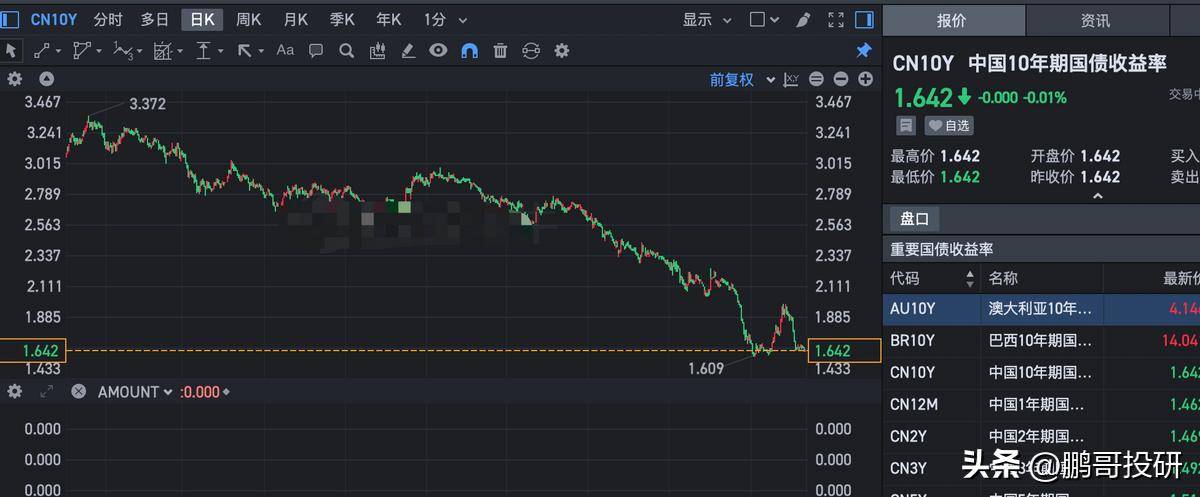
Core Viewpoint - The recent sharp decline in the A-share market, particularly in the banking sector, raises concerns about the sustainability of the previous recovery trend and the potential for panic selling in the near future [1] Group 1: Banking Sector Performance - The banking sector has shown a significant downturn, with major banks like Industrial and Commercial Bank of China, China Construction Bank, China Merchants Bank, and Industrial Bank reporting noticeable declines in both revenue and profit [1] - The performance of bank stocks has been a critical support for market stability, but the recent downturn may indicate a shift in sentiment among investors [1] Group 2: Contributing Factors to Decline - A major factor contributing to the decline is the drop in earnings, which has prompted profit-taking among investors [1] - The ongoing slump in the real estate market and weak consumer spending have made it difficult for banks to issue loans, further impacting their recovery prospects [2] - Expectations of interest rate cuts and reserve requirement ratio reductions are putting additional pressure on banks' interest margins, making long-term performance challenging [3] - Economic pressures are increasing, as indicated by a manufacturing PMI drop to 49 in April, suggesting significant economic strain and a rising non-performing loan ratio [3] - The dividend payout ratio for banks has stabilized around 30%, but declining profits could jeopardize future dividends, undermining shareholder confidence [5] Group 3: Market Outlook - The risks in the A-share market remain pronounced, with core sectors showing poor performance and economic data indicating a downward trend [7] - The impact of trade disputes since April has begun to reflect negatively in leading indicators, raising concerns about unexpected earnings declines in upcoming reports [7] - The rapid decline in the yield of China's ten-year government bonds signals a lack of clear recovery prospects for the economy, warranting close attention from investors [7]