收入分配改革

Search documents
中美贸易摩擦下的经济形势:抓住偶然背后的必然
3 6 Ke· 2025-07-08 02:33
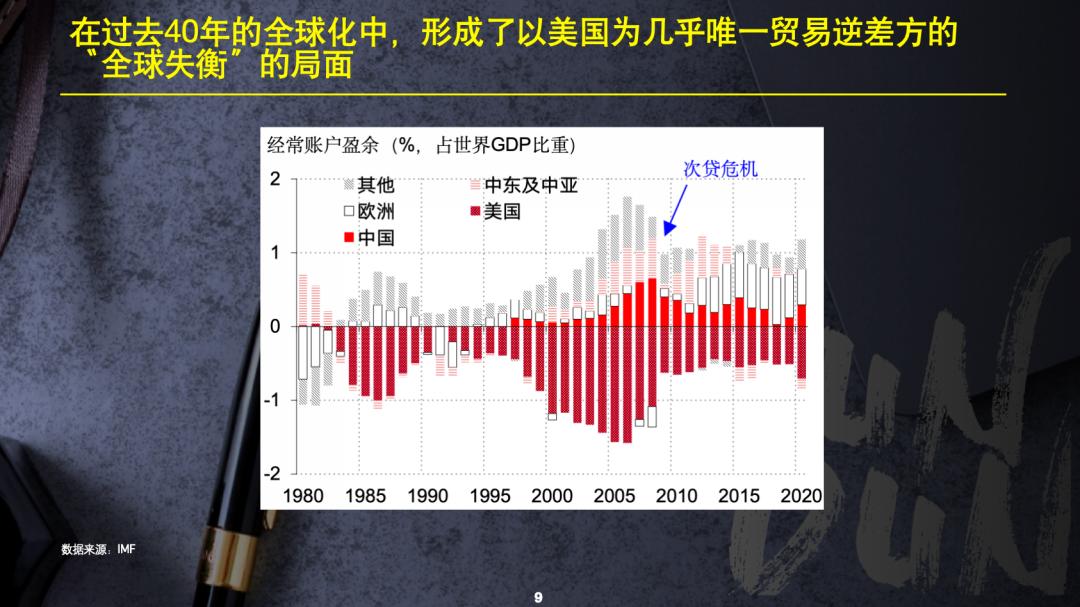
Group 1 - The trade conflict between the US and China has escalated significantly, with tariffs reaching as high as 125% before a temporary agreement to reduce them to 10% was reached [1] - Analysts predict that this trade competition will be a long-term struggle, as the economic goals of both countries are fundamentally at odds [1][3] - The US's "equal tariffs" policy aims to reduce its trade deficit by imposing high tariffs on countries with which it has a trade deficit, particularly China [3][5] Group 2 - The root cause of the global imbalance is linked to the unique position of the US dollar, which allows the US to maintain a trade deficit due to its ability to print money without cost [5][6] - The dollar's dominance has led to the hollowing out of the US manufacturing sector, with its share of GDP dropping from 24% in the 1970s to an estimated 10% in 2024 [6] - The benefits of globalization have been unevenly distributed in the US, leading to increased social tensions and a growing income gap between workers and capital owners [7] Group 3 - The US has two potential strategies to address the challenges posed by globalization: abandoning dollar hegemony and implementing a universal basic income policy [10] - However, these strategies are difficult to implement due to the entrenched interests in the current system, leading to a retreat into "de-globalization" as a secondary option [10][11] - The economic relationship between the US and China has become increasingly imbalanced, with China experiencing trade surpluses and low consumption while the US faces trade deficits and high consumption [11][14] Group 4 - China faces significant challenges in boosting effective demand, which is crucial for economic growth, as income distribution has historically favored capital over labor [16][18] - The country has three potential strategies to address demand issues: a fundamental shift towards consumption, investment-driven growth, and managing excess capacity [18][21] - The current policy focus is on investment to stabilize economic growth, particularly through infrastructure and real estate initiatives [25] Group 5 - The Chinese market is currently experiencing bottom-level fluctuations across stock, bond, and currency markets, with expectations for government intervention to support growth [26][29] - The stock market is supported by state intervention, while the bond market faces limited room for further interest rate cuts due to low demand sensitivity [26][29] - The Chinese yuan is expected to remain stable against the dollar, with the central bank actively managing its value to prevent significant depreciation [29]

盛松成:想方设法缓解消费不足,充分发挥消费对经济增长基础性作用
Di Yi Cai Jing· 2025-07-03 11:42
Group 1 - The core viewpoint emphasizes that releasing consumption potential is a crucial engine for China's economic growth in the near future, as highlighted by government reports and policy meetings [1][2]. - In the context of increasing external trade uncertainties and slowing economic growth, domestic demand is expected to play a more significant role, with consumption having substantial potential yet to be tapped [2][3]. - China's consumption rate in 2024 is projected to be only 56.6%, significantly lower than the 70%-80% typical levels in developed countries, indicating a considerable gap and room for improvement [2]. Group 2 - Income distribution reform is seen as a key factor in stimulating consumption vitality, with current policies showing positive effects, such as a 5.0% year-on-year increase in retail sales from January to May 2023 [3][4]. - The consumer price index (CPI) has shown a slight decline, indicating weak internal momentum for sustained consumption recovery, which needs to be addressed [3][4]. - The low ratio of disposable income to GDP in China (60.8%) compared to developed countries (70%-85%) suggests that improving income distribution could enhance consumption [4]. Group 3 - There is a significant service deficit in areas like travel and healthcare, with high demand from middle and high-income groups for quality services that are currently insufficient domestically [6][7]. - The government has proposed expanding pilot programs for telecom, healthcare, and education to enhance service supply and meet domestic demand [6][7]. - Learning from past manufacturing sector reforms, opening up the service sector to foreign investment could stimulate competition and improve service quality [7]. Group 4 - Consumption and investment are interrelated, with consumption driving production, employment, and investment, which is crucial for economic growth [8]. - The current low capacity utilization rate of 74.1% indicates that boosting consumption can help stimulate effective investment and economic activity [8]. - Policies aimed at enhancing consumption are aligned with improving investment efficiency, particularly in high-tech sectors, which are experiencing robust growth [8]. Group 5 - Local governments play a vital role in stimulating consumption, with recent measures to enhance domestic demand and suggestions to include consumption metrics in government assessments [9][10]. - Optimizing the value-added tax (VAT) distribution mechanism could incentivize local governments to promote consumption more actively [9][10]. - Establishing a compensation mechanism for consumption-based tax distribution could enhance local government motivation to implement consumption-boosting policies [10].
郭树清:推动中低收入群体增加收入是当前提振消费最直接也最有效的措施|聚焦两会
清华金融评论· 2025-03-11 10:21
Core Viewpoint - The article emphasizes the importance of "investing in people" as a crucial strategy for China's long-term development, addressing both the quantity and quality of the population [1][3][5]. Group 1: Investment in Human Capital - The government aims to increase fixed asset investment to 52 trillion yuan in 2024, with a focus on enhancing human capital rather than just physical assets [2][3]. - The concept of "investing in people" has gained attention, highlighting the need for more resources directed towards education, health, and social services to improve the quality of the population [2][3][5]. Group 2: Economic Development and Consumption - Increasing income for the middle and low-income groups is identified as the most direct and effective measure to boost consumption [6]. - The article discusses the importance of addressing consumption bottlenecks in the economy, with a focus on enhancing domestic demand through various fiscal policies [6]. Group 3: Social Insurance and Welfare Reforms - There is a call for deepening social insurance reforms, including improving the national coordination of basic pension insurance and expanding medical insurance coverage [7]. - The article suggests that addressing the needs of vulnerable populations, such as rural residents and the elderly, is essential for fostering a more inclusive economy [7]. Group 4: Policy Recommendations - The article advocates for the integration of "investing in people" into the 14th Five-Year Plan, emphasizing the need for financial resources to support high-quality population development and urban-rural integration [5][6]. - It also recommends optimizing immigration policies to attract global talent, which can enhance the workforce and contribute to economic growth [5].

如何提振内需?学者集中建言:财政支出不松劲,深化改革增动能
券商中国· 2025-02-27 10:28
Group 1 - The core viewpoint emphasizes the importance of expanding domestic demand as a primary task for economic work in 2023, with a focus on both short-term and long-term strategies to boost consumption and improve living standards [1] - Short-term measures include maintaining counter-cyclical fiscal policies, increasing spending, and adjusting the expenditure structure to focus more on improving people's livelihoods and promoting consumption [3][4] - Long-term strategies involve continuous reforms in key areas such as the household registration system, income distribution, and social security to provide sustainable growth benefits [4][5] Group 2 - Economic forecasts suggest a stable macroeconomic performance in 2025, with a smoother quarterly fluctuation compared to 2024, although concerns about insufficient consumer demand and export pressures remain [2][3] - The need for fiscal policy to play a crucial role in stabilizing growth is highlighted, with suggestions to shift investment focus from physical assets to human capital to create a long-term mechanism for expanding consumption [3][4] - Reforms in income distribution and social security are critical for increasing household consumption, with proposals to enhance the distribution of corporate profits to residents and improve social safety nets for vulnerable groups [5][6]

深度丨学者建言扩内需之策:财政支出不松劲 深化改革增动能
证券时报· 2025-02-27 00:22
Core Viewpoint - The article emphasizes the importance of expanding domestic demand as a primary task for economic work in 2024, with a focus on how to stimulate internal demand being a common concern among scholars [1]. Group 1: Short-term and Long-term Strategies - A combination of short-term and long-term strategies is essential for expanding domestic demand, with short-term measures focusing on fiscal policies and structural adjustments to enhance consumer spending [2]. - In the short term, it is crucial to maintain counter-cyclical fiscal policies and increase spending, particularly in areas that benefit people's livelihoods and promote consumption [2][5]. - Long-term reforms in areas such as the household registration system, income distribution, and social security are necessary to provide sustainable growth benefits [2][7]. Group 2: Economic Stability and Challenges - The macroeconomic outlook for 2025 is expected to be stable, with fewer fluctuations between quarters compared to 2024, although there are concerns about insufficient consumer demand leading to increased economic downward pressure [4][6]. - The stability of the exchange rate is highlighted as a strategic measure to revitalize domestic demand, with the central bank's policies playing a significant role in stabilizing asset prices and boosting consumption [4]. Group 3: Reform and Incentives - Reforming the household registration system is identified as a critical challenge that could significantly boost domestic demand, particularly for the nearly 300 million rural migrant workers [8][9]. - Establishing effective incentive mechanisms for local governments to implement reforms related to household registration can enhance public service provision and stimulate consumption [8][9]. Group 4: Income Distribution and Social Security - The article discusses the low proportion of GDP that residents receive from corporate dividends, suggesting that improving channels for profit distribution could enhance consumer spending [9]. - A proposal to transfer non-financial state-owned capital to social security funds could potentially increase the assets under management and significantly boost the income of low-income groups, thereby stimulating overall consumption [9]. Group 5: Rural Economic Support - Increasing financial support for rural elderly populations is proposed as a means to stimulate domestic demand, with evidence suggesting that enhanced social security can lead to improved labor productivity and economic growth [10].