数据隐私

Search documents
到底什么是web3.0?(小白也能看懂的web3.0知识)
Hu Xiu· 2025-09-05 06:39
Core Insights - The article discusses the evolution from Web1.0 to Web3.0, highlighting the differences and significance of each phase [1] - It emphasizes the transition from users being "products" in Web2.0 to a more decentralized and user-centric model in Web3.0 [1] Summary by Topics - **Difference between Web3.0 and Web2.0**: The article outlines the fundamental distinctions, focusing on user control and data ownership in Web3.0 compared to the centralized nature of Web2.0 [1] - **Concept of DAO**: The article explains Decentralized Autonomous Organizations (DAOs) and their role in governance within the Web3.0 ecosystem [1] - **Digital Identity**: It discusses how wallet addresses can serve as digital identities in the Web3.0 landscape [1] - **Problems Solved by Web3.0**: The article addresses the issues that Web3.0 aims to resolve, including data privacy and user empowerment [1] - **Web3 Applications**: Examples of Web3 applications like Arweave and Mirror are provided, illustrating their operational mechanisms [1]
突发!科技巨头,被罚27亿元!
Zhong Guo Ji Jin Bao· 2025-09-04 03:27
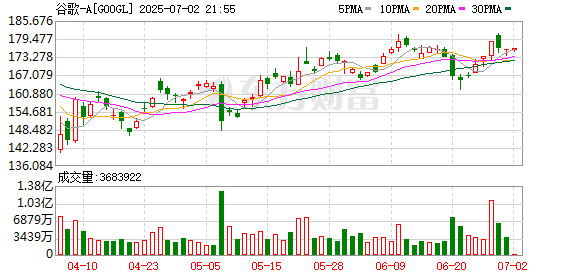
Core Points - Google has been fined €325 million (approximately ¥2.7 billion) by the French National Commission on Informatics and Liberty (CNIL) for displaying ads to Gmail users without their consent [1][2][3] - The fine is due to violations of French data protection laws, specifically regarding the use of cookies and the display of ads in Gmail without obtaining valid consent from users [3][4] - The CNIL's decision is influenced by the large number of affected users, with 74 million accounts involved in cookie violations and 53 million accounts receiving ads without consent [4] Company Response - A Google spokesperson stated that users have control over the ads they see and that the company is evaluating the CNIL's penalty [4] - The spokesperson also mentioned improvements made in the past two years, including a one-click option to refuse personalized ads during account creation [4] Legal Issues in the U.S. - A U.S. jury found that Google violated the privacy rights of nearly 100 million users, requiring the company to pay $425 million in collective lawsuit damages [4] - The jury determined that Google misled users regarding privacy settings, allowing data collection even when users opted out [4] Market Reaction - On the same day as the fine announcement, Google's stock price surged over 9%, resulting in a market value increase of $234 billion, reaching a total market capitalization of $2.79 trillion [5] - Analysts view the court ruling favorably for Google, suggesting that the company can now focus on its fundamentals without regulatory distractions [6]


数码港与香港科研制药联会合办论坛 推动AI在医疗可信应用
智通财经网· 2025-08-27 07:41
Core Viewpoint - The forum "Maintaining Trust: AI and Data Privacy in Healthcare" co-organized by Cyberport and HKAPI focuses on how AI drives innovation and transformation in the healthcare industry while addressing data privacy and security challenges [1][2] Group 1: AI in Healthcare - AI is identified as a core driver of innovation in the healthcare sector, with significant potential to enhance administrative efficiency, optimize medical processes, improve diagnostic accuracy, and enable personalized treatment [2] - The successful acquisition of ISO/IEC 27001:2022 information security certification by Cyberport's AI Supercomputing Center (AISC) signifies its commitment to providing data security and privacy protection that meets international standards [1] Group 2: Data Privacy and Trust - Data privacy is emphasized as a cornerstone for the sustainable development of medical technology, necessitating a close collaboration between AI advancements and data privacy measures [1] - The importance of maintaining patient privacy and public trust while exploring advancements in medical technology is highlighted, indicating a need for careful management of sensitive medical data [2] Group 3: Future Developments - Cyberport aims to further develop a comprehensive AI ecosystem centered around AISC, which will support innovation and application across various industries, including healthcare [1] - The forum is expected to facilitate expert exchanges that could lead to more practical applications of medical AI, ultimately benefiting the public [1]
美FTC主席警告苹果、谷歌:不要因欧盟、英国法律弱化数据隐私
Feng Huang Wang· 2025-08-21 23:14
Core Viewpoint - The chairman of the Federal Trade Commission (FTC), Andrew Ferguson, warned major tech companies, including Apple and Alphabet, that compliance with digital content laws in the UK and Europe could lead to violations of U.S. laws if it compromises user privacy and data security [1] Group 1 - Ferguson expressed concerns about the EU's Digital Services Act, the UK's Online Safety Act, and the Investigatory Powers Act, which aim to combat illegal and harmful online content [1] - He highlighted the risk that foreign governments could exploit companies' motivations to simplify operations and legal compliance by implementing uniform policies across jurisdictions, potentially limiting U.S. free speech and data security [1] - Ferguson has sent letters to major tech firms, including Apple, Alphabet, Amazon, Microsoft, and Meta, as well as smaller companies like X, Signal, and Slack, to discuss their plans for balancing compliance with U.S. laws while facing competitive pressures from abroad [1] Group 2 - The letters are part of a broader initiative by the Trump administration to resist foreign regulatory demands [1] - U.S. officials indicated that they have instructed diplomats in Europe to lobby against the Digital Services Act [1]

Apple Won't Have to Provide an Encryption Backdoor in the UK, Says US Official
CNET· 2025-08-19 15:38
Group 1 - The US Director of National Intelligence announced that Apple will not be required to provide an encryption backdoor in the UK, alleviating concerns about privacy and security [1][2] - The UK had initially demanded that Apple provide access to iCloud data for both British citizens and citizens of other countries for criminal investigations [3] - Apple previously removed the Advanced Data Protection feature in the UK due to the government's demands, expressing disappointment with the UK's Home Office [4] Group 2 - Recent reports indicated that the UK was reconsidering its original demands and seeking a resolution [5] - The agreement reached is expected to protect Americans' private data and uphold constitutional rights and civil liberties [2]
8大赛道与29起融资并购,拼出上半年广告业的新版图
3 6 Ke· 2025-08-11 01:43
Core Insights - The advertising industry is undergoing significant transformation, focusing on building digital marketing infrastructure rather than just increasing advertising budgets [1][42] - Investment and merger activities in the first half of 2025 highlight eight clear evolutionary paths in the advertising sector, including programmatic systems, CTV and DOOH, data privacy, AI-driven creativity, creator economy, retail media, content delivery, and regional integration [1][42] Group 1: Programmatic & Media Operating Systems - The need for a comprehensive media operating system that integrates cross-channel management, dynamic creative, and privacy-safe data collaboration is emerging [2] - StackAdapt raised $235 million to enhance its cross-channel programmatic capabilities, while Mediaocean acquired Innovid for $500 million to unify creative and media management [3][5] - Liftoff's valuation reached $4.3 billion after a strategic investment, focusing on enhancing its CortexAI engine for programmatic optimization [6] Group 2: CTV and DOOH - T-Mobile acquired VistarMedia for $600 million, enhancing DOOH capabilities with first-party location data [10] - tvScientific raised $26 million to improve CTV advertising performance through automated buying and real-time optimization [7][12] - UpscaleAI secured $600,000 to develop a generative AI-driven CTV creative and automation engine [13] Group 3: Data/Identity/CleanRoom - WPP's acquisition of InfoSum for $63 million aims to enhance privacy-compliant data collaboration [15] - Publicis acquired Lotame, expanding its Epsilon database from 2.3 billion to 4 billion user profiles [16] - Optable raised $20 million to strengthen its privacy-safe audience activation capabilities [17] Group 4: AI Creativity & Marketing Automation - AI is transforming content production and marketing automation, with companies like Superscale and UpscaleAI focusing on integrating AI into marketing strategies [19] - OpusClip raised $20 million to enhance its AI-driven video editing services for social media platforms [20] - ManyChat secured $140 million to expand its AI-driven conversational marketing capabilities [23] Group 5: Creator Economy & Social Advertising - ShopMy raised $78 million to improve creator collaboration and tracking systems [25] - Whalar received strategic investment to enhance its creator ecosystem and performance measurement tools [26] - Publicis acquired Captiv8 for $150 million, integrating creator marketing into its data and advertising ecosystem [27] Group 6: Retail Media & E-commerce Advertising - Button received strategic investment to launch CreatorMedia, integrating retail media with creator traffic [29][33] - Fermat raised $45 million to enhance AI-driven e-commerce content and transaction management [31] - Tracksuit secured $25 million to provide brand measurement tools for retail advertising [32] Group 7: Content & Experience Delivery - Amplience raised $40 million to enhance its headless content management capabilities [36] - Havas acquired EnvertaDigital to strengthen its customer experience and digital marketing services [38] Group 8: Regional Integration & Agency Network Evolution - Omnicom and IPG announced a merger to create a global advertising technology and data giant [41] - Banzai acquired Act-On to enhance marketing automation for mid-market clients [40] - LLYC's acquisition of DigitalSolvers aims to strengthen its capabilities in the Latin American market [42]

AI办公战场:飞书领跑,钉钉奋力追赶
Sou Hu Cai Jing· 2025-07-12 00:03
Core Insights - The competition between Feishu and DingTalk in the office automation sector is intensifying, particularly with the launch of DingTalk's new AI spreadsheet product just before Feishu's Future Unlimited Conference [1][3] - Feishu's multi-dimensional spreadsheet has nearly reached 10 million monthly active users since its launch in 2020, and it is set to integrate with WeChat Work and DingTalk, marking a significant step towards interoperability among major office software [1][4] - Feishu's Chief Commercial Officer emphasized the need for open collaboration and urged DingTalk to expedite its application market review process to keep pace with WeChat Work [3] Feishu's Competitive Edge - Feishu has a first-mover advantage in the AI spreadsheet domain, with its multi-dimensional spreadsheet being recognized for its long-term investment, attention to detail, and continuous innovation [3][4] - The CEO of Feishu highlighted the extensive use of its intelligent document creation feature in large enterprises, showcasing its strength in knowledge accumulation and AI application [3][6] - Feishu has established a strong customer base in various industries, including new energy, tea, and beauty, which enhances its competitive position against DingTalk [4][7] DingTalk's Response - DingTalk has also launched its AI spreadsheet, which aims to transform each cell into an AI entry point for data analysis and automation [3][4] - Since the return of its former leader, DingTalk has been under pressure to revitalize its commercial capabilities, and it has made significant strides in the AI office space [4][7] - Despite DingTalk's large user base exceeding 100 million daily active users, it still faces challenges in commercializing its offerings compared to Feishu [4][7] Market Dynamics - The competition between Feishu and DingTalk is not only limited to the domestic market but also extends to international markets, where Feishu aims to challenge Microsoft's dominance [6] - Both companies are actively exploring ways to leverage AI to enhance productivity for B-end enterprises, aiming for maximum commercial value [7]

安卓关机后仍自动下载广告 谷歌被判赔22亿
2 1 Shi Ji Jing Ji Bao Dao· 2025-07-03 13:38
Group 1 - The jury in Santa Clara County ruled that Google misused Android phone data without user consent, requiring the company to pay over $314 million (approximately 2.2 billion RMB) to California Android users [2] - The lawsuit, initiated in August 2019, represents 14 million California Android users, claiming Google unlawfully accessed mobile network data even when devices were locked or turned off [2] - The plaintiffs argue that these unauthorized actions contribute to Google's annual advertising revenue exceeding $200 billion, with users unaware and bearing the costs of mobile data usage [2] Group 2 - The judge in May's trial noted the lack of legal definition regarding whether mobile networks constitute property, referencing a previous case where Google's use of mobile data was deemed "illegal appropriation" [3] - The jury agreed with the plaintiffs that users bore unavoidable burdens for Google's benefit, while Google plans to appeal, claiming the ruling misinterprets the security and reliability of Android devices [4] - A similar class-action lawsuit is underway in federal court, led by plaintiffs from 49 states, seeking billions in damages, with a trial expected in April next year [5] Group 3 - Testing on a Samsung Galaxy S7 revealed that the device transmitted data to Google 389 times over 24 hours while idle, sending 8.88 MB of data daily, with 94% of that data going to Google [6] - In contrast, an idle iPhone transmitted significantly less data to Apple, only one-tenth of what the Android device sent to Google, indicating better user control over data transmission on iOS devices [6]
谷歌,被判赔超3亿美元!
新华网财经· 2025-07-03 02:59
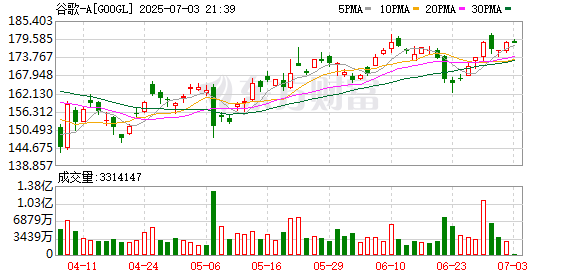
Core Viewpoint - Google has been ordered to pay over $314.6 million in damages for misusing Android phone users' data without their consent, highlighting significant privacy concerns and potential legal repercussions for tech companies [1]. Group 1: Legal Case Details - A jury in Santa Clara County, California, ruled that Google unlawfully collected user data while devices were in standby mode, which was used for commercial purposes, including targeted advertising [1]. - The lawsuit was initiated in 2019 by representatives of approximately 14 million California users, claiming that Google imposed an "inevitable burden" on users by collecting data without permission [1]. - Google argued that its terms of service and privacy policy adequately informed users about data transmission, asserting that no harm was caused to Android users [1]. Group 2: Implications and Reactions - The jury sided with the plaintiffs, indicating that Google violated user rights by sending and receiving information without authorization [1]. - The plaintiffs' attorney emphasized that the ruling underscores the seriousness of Google's misconduct [1]. - Google announced plans to appeal the decision, claiming that the ruling misinterprets essential services related to the security, performance, and reliability of Android devices [1]. Group 3: Related Legal Actions - In addition to this case, another similar class-action lawsuit is pending in federal court in San Jose, representing Android users from the other 49 states, with a trial expected to commence in April 2026 [1].

谷歌非法使用安卓用户数据 被判赔超3亿美元!回应将上诉
Nan Fang Du Shi Bao· 2025-07-02 13:55
Core Viewpoint - A California jury ruled that Google illegally collected and used data from idle Android phones without authorization, resulting in a compensation order of approximately $314.6 million to California Android users [2][5]. Group 1: Lawsuit Background - The class-action lawsuit dates back to 2019, representing around 14 million California residents [5]. - Plaintiffs accused Google of programming Android devices to transmit data to Google servers even when users were not connected to the internet, leading to unnecessary data consumption and economic losses for users [5]. Group 2: Google's Defense - Google contends that the data transmission service is essential for maintaining the security and reliability of Android devices, arguing that the jury misunderstood this functionality [6]. - The company claims that the data usage during transmission is minimal, even less than sending a single photo, and asserts that no users were harmed in the process [6]. - Google also highlighted that Android users had agreed to multiple user agreements and privacy policies, consenting to such data transmission practices [6]. Group 3: Future Implications - This case is not the only lawsuit against Google regarding data transmission; another class-action lawsuit representing Android users from the other 49 states is set to be heard in April 2026 [6].