
文学创作

Search documents
民航作家廉涛荣获冰心散文奖座谈会在西安召开
Zhong Guo Min Hang Wang· 2025-11-25 04:09
Core Insights - The event "Creating Quality Works and Telling the Story of Xixian" was held to celebrate Lian Tao winning the Bingxin Prose Award, highlighting the significance of this achievement for both Lian Tao and the Xixian literary community [1][2] - The award is seen as a recognition of Lian Tao's dedication to both his work in the civil aviation system and his literary pursuits, emphasizing the integration of literature and cultural tourism in the region [1][2] Group 1 - Lian Tao's work "Walking Qilian" is praised for its unique material selection, deep observation of local customs, and vivid language that resonates with readers [1] - The event featured notable attendees including former Vice Chairman of the Chinese Writers Association, Jia Pingwa, and various literary figures who expressed their support for Lian Tao and the local literary scene [1][2] - The discussions emphasized the importance of local writers grounding their work in the region's culture and history, aiming to create impactful literary pieces that reflect the essence of Xixian [2] Group 2 - Lian Tao expressed that his writing is rooted in the vastness of the western land, and this award marks a new beginning for his literary journey, encouraging him to continue sharing stories from the local community [2] - The attendees discussed the artistic and ideological aspects of Lian Tao's prose, noting the significance of perspective in writing and the importance of engaging with local communities to create relatable content [2] - The collective sentiment was to transform the spirit of the meeting into motivation for enhancing the cultural profile of Xixian and contributing to its high-quality development [2]
半月涨粉超100万,年轻人迷上这位文学大佬
3 6 Ke· 2025-11-24 00:15
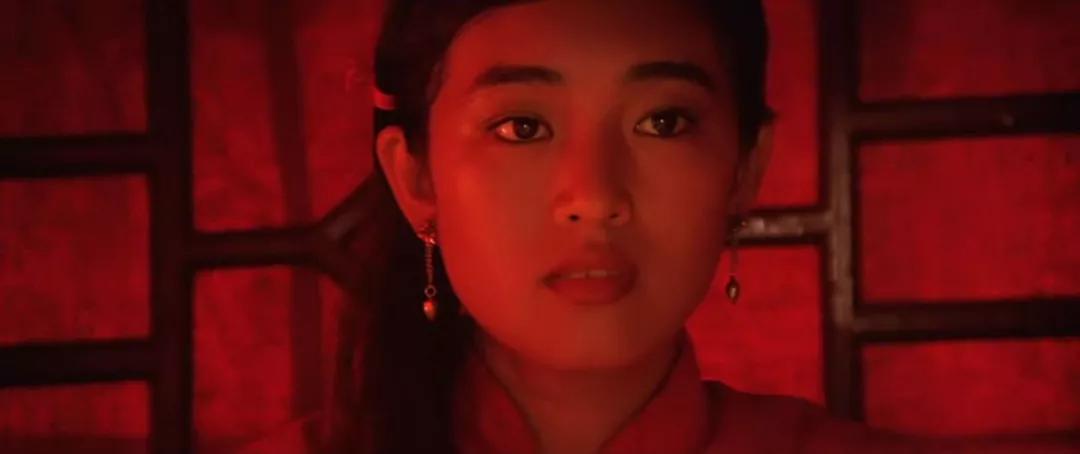
Group 1 - Mo Yan has recently gained over 1 million followers on social media, expressing curiosity about the world and a desire to engage with young people [1] - He is the first and only Chinese recipient of the Nobel Prize in Literature, awarded 13 years ago, with the citation highlighting his unique voice in world literature [1] - Mo Yan's early fame began in the 1980s with his novel "Red Sorghum," which was adapted into a film that won the Golden Bear at the Berlin Film Festival [6] Group 2 - Mo Yan's literary career is characterized by a blend of magical realism and brutal realism, often drawing comparisons to Gabriel Garcia Marquez [10][12] - His works frequently explore themes of land and humanity, reflecting his rural upbringing and experiences [17] - Mo Yan's writing process is noted for its speed, with him capable of producing up to 10,000 words in a single day [18][46] Group 3 - Despite achieving international acclaim, Mo Yan maintains a simple lifestyle, often working in an office at Beijing Normal University and living modestly [20] - He emphasizes the importance of food in his life and writing, with early experiences of hunger shaping his literary themes [26][31] - Mo Yan's works often contain elements of humor and satire, contrasting with the darker themes present in his narratives [12][67] Group 4 - Mo Yan's self-perception as a storyteller is rooted in his childhood experiences, where he developed a passion for narrative through oral traditions [50][52] - His literary contributions aim to demystify the role of the writer, presenting himself as an accessible figure rather than an enigmatic one [67][78] - The author expresses a desire to connect with younger generations while acknowledging the generational gap in understanding their perspectives [71]

西子湖畔再添文学星光
Hang Zhou Ri Bao· 2025-11-18 03:00
11月17日,第十届"西湖·新锐文学奖"在浙江工业大学屏峰校区颁奖。 "西湖·新锐文学奖"是《西湖》杂志于2007年创办的文学双年奖,旨在发掘中短篇小说创作领域的 新锐作家。本届评奖于2025年1月启动,评选范围是自2023年1月至2025年7月在全国各文学刊物发表的 中短篇小说。经过严格遴选,最终,张玲玲的中篇小说《阿耆尼》、龚万莹的中篇小说《出山》、周于 旸的中篇小说《雪泥鸿爪》捧得大奖。 张玲玲出生于江苏,已出版小说集《嫉妒》《夜樱与四季》,曾获2021年首届短篇小说双年奖。她 的中篇小说《阿耆尼》以两个相对独立的故事,展开对中年人婚姻、情感的精微观照。评委会认 为:"张玲玲以结实如大理石的零度叙事,书写两性间的相互摧折,为当代人的情感生活写下了传记。" 龚万莹生于福建,2024年出版首部中短篇小说集《岛屿的厝》,曾获郁达夫小说奖·中篇小说 奖。"出山",是闽南语"出殡"的意思。小说《出山》借助殡葬业这一职业设定,将小岛上人们的生死悲 欢一一呈现,每个人都幽默、顽强、坚韧,在艰难的生活中活出勃勃生机。评委会的评语是:"龚万莹 以结实成熟的现实主义笔法,专注于对人的生命、死亡与救赎的探索,是向死而生。" ...
马来西亚华语作家黎紫书:我适合在俗世里和俗人打交道
Di Yi Cai Jing· 2025-11-10 04:02
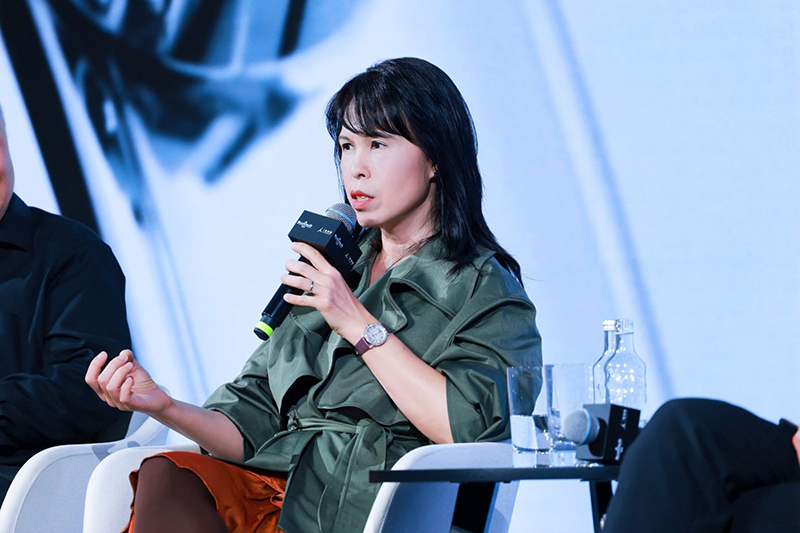
Core Insights - The article highlights the journey and achievements of Malaysian Chinese writer Li Zishu, particularly focusing on her novel "Flowing Common Land" and its upcoming adaptation into a television series. The author expresses gratitude for the readers' support and reflects on the significance of literary awards in gaining visibility for writers in Malaysia [1][5][7]. Group 1: Author's Journey and Achievements - Li Zishu has gained significant recognition in the literary world, with her novel "Flowing Common Land" achieving a high rating of 9.2 on Douban from nearly 40,000 users [1]. - The author has been actively engaging with readers through lectures and book signings across various cities in China, indicating a strong connection with her audience [1]. - She has been appointed as a judge for the 2025 Baofeng Ideal Country Literary Award, marking her first involvement in literary award evaluations in China [4]. Group 2: Themes and Style of "Flowing Common Land" - The novel features a blind protagonist, Yin Xia, who observes the lives of Malaysian Chinese in the 1960s and 70s, presenting a detailed narrative of ordinary lives and societal dynamics [2][7]. - Li Zishu's writing style is characterized by a focus on the mundane aspects of life, avoiding grand narratives, which she believes resonates more authentically with readers [11][12]. - The author emphasizes the importance of reader engagement in her work, suggesting that literature is a collaborative experience between the writer and the audience [4]. Group 3: Challenges and Perspectives in Malaysian Literature - Li Zishu acknowledges the challenges faced by Malaysian Chinese writers, including a lack of stories, platforms, and readership, which complicates the literary landscape [7][9]. - She reflects on her evolution as a writer, moving away from writing for awards to focusing on personal standards and authentic storytelling [11][12]. - The author expresses a desire to see more ambitious and daring works in the Malaysian literary scene, encouraging younger writers to pursue their unique voices [5][9].
师恩厚泽,永留在心(零时差)
Ren Min Ri Bao Hai Wai Ban· 2025-11-01 06:09
Group 1 - The article highlights the significant impact of a teacher, referred to as Teacher Cao, on students' love for reading and writing, emphasizing the importance of engaging with literature beyond the classroom [1][4] - Teacher Cao's teaching methods included using personal experiences and humor, which made lessons more relatable and enjoyable for students, fostering a deeper understanding of the material [1][2] - The narrative describes a memorable field trip organized by Teacher Cao to the Ming Tombs, which served as an experiential learning opportunity, allowing students to connect history with real-life observations [2][3] Group 2 - The article illustrates how Teacher Cao encouraged students to observe their surroundings and draw inspiration from real life for their writing, promoting a practical approach to literature [2][3] - The influence of Teacher Cao extended beyond academics, as he instilled a lifelong passion for writing in students, leading to their eventual literary achievements [3][4] - The lasting gratitude and respect for Teacher Cao's mentorship are expressed, highlighting the profound and enduring effects of his guidance on students' personal and professional lives [4]
浮来山银杏与刘勰的《文心雕龙》
Qi Lu Wan Bao· 2025-10-30 11:55
Core Viewpoint - The ancient ginkgo tree in Juxian Fulaishan is recognized as the oldest ginkgo tree in the world, with a trunk circumference of approximately 16 meters and a height of about 27 meters, symbolizing the passage of time and cultural heritage [1][2]. Group 1: Historical Significance - The ginkgo tree has historical importance, as it was the site of a significant alliance meeting between the rulers of the Ju and Lu states in 715 BC, as recorded in the historical text "Spring and Autumn" [1]. - The tree is estimated to be over 3,000 years old, as noted by a stele erected in 1654 during the Qing Dynasty [1]. Group 2: Cultural Impact - The ginkgo tree has inspired numerous literary works throughout history, with poets and writers praising its beauty and significance, such as Sima Xiangru's "Upper Forest Fu" and Ouyang Xiu's poetry [3][4]. - The ginkgo leaf's unique golden color in autumn has been celebrated in literature, evoking feelings of nostalgia and beauty [2][4]. Group 3: Connection to Liu Xie - Liu Xie, a prominent literary figure, is associated with the Fulaishan area, where he spent years studying and writing, leading to the creation of his influential work "Wenxin Diaolong" [5][6]. - The connection between Liu Xie and the ginkgo tree reflects the deep cultural roots of the region, as both represent the enduring legacy of Chinese literature and philosophy [8].
“文学映照时代生活 十月汇聚青春力量”,第十届北京十月文学月启幕
Bei Jing Ri Bao Ke Hu Duan· 2025-10-29 02:59
Core Points - The 10th Beijing October Literature Month officially commenced with the theme "Literature Reflecting Contemporary Life, October Gathering Youth Power" [1] - Notable authors and poets, including Wang Meng, A Lai, Mai Jia, and others, participated in the event [1] Group 1: Authors' Perspectives - A Lai emphasized the importance of literature in understanding humanity and life, advocating for an open mindset to embrace new expressions while maintaining a connection to the past [5] - Mai Jia discussed the necessity for writers to distill the essence of humanity from complex realities, likening the creative process to steel refining, which requires continuous tempering [7] - Liu Liangcheng shared his "Literature on the Ground" philosophy, highlighting the significance of rootedness in reality while exploring literary fiction [9] Group 2: Interactive Activities - The event featured performances of classic literary excerpts by renowned artists, fostering a connection between different generations through shared literary memories [11] - A reader interaction segment allowed "October" signed authors to engage with readers, enhancing the sense of community and literary participation [13] Group 3: Literary Initiatives - The "Wang Meng Young Writer Support Program" announced its selected young authors, encouraging them to weave personal experiences into their narratives [15] - The "New Popular Literature Beijing Creation Plan" was launched, encompassing various literary forms and aiming to integrate literature into everyday life [15] Group 4: Event Overview - The 10th Beijing October Literature Month is organized by multiple cultural and governmental bodies, featuring a series of activities aimed at promoting literary creation and public reading [16]

匈牙利作家拉斯洛获诺贝尔文学奖,他最喜欢的诗人是李白
Di Yi Cai Jing· 2025-10-09 14:51
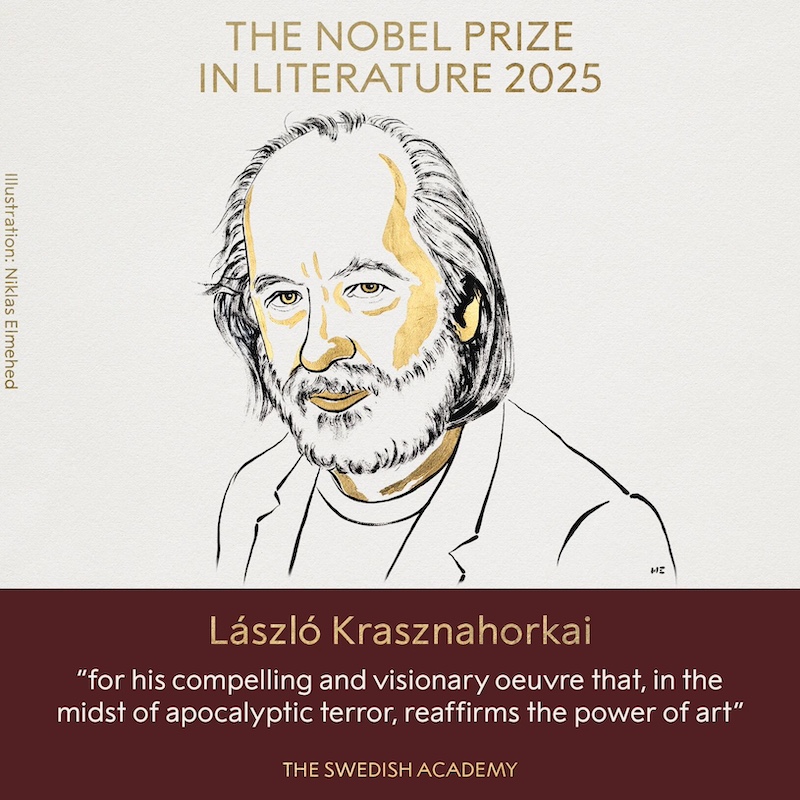
Core Points - Hungarian writer László Krasznahorkai won the 2025 Nobel Prize in Literature for his captivating and visionary works that reaffirm the power of art amidst apocalyptic fears [1] - Krasznahorkai is recognized as one of Hungary's most significant contemporary writers, having won numerous prestigious literary awards including the 2015 International Booker Prize [4] - His notable works include "Satan's Tango," which was published in Chinese in 2013, and a recent collection of short stories titled "The World is Advancing" [4][9] Author Background - László was born in 1954 in Győr, Hungary, and initially pursued a career in law before turning to literature [5] - He has a long-standing friendship with translator Yu Zemin, who has introduced his works to Chinese readers [5] - Krasznahorkai's early experiences, including a period of unemployment and various odd jobs, inspired the themes and narratives in his writing [6] Literary Style and Themes - His writing is characterized by a complex structure and philosophical reflections on human despair and hope, often drawing comparisons to Kafka [8] - The narrative style is described as challenging, requiring readers to engage deeply with the text to appreciate its nuances [8] Cultural Influence - Krasznahorkai has a profound appreciation for Chinese culture, having traveled to China and written books reflecting his experiences [9] - He has expressed admiration for Chinese poet Li Bai, considering him a modernist figure in Tang Dynasty literature [9]
何建明:新疆70年,大地如诗
Zhong Guo Qing Nian Bao· 2025-09-25 22:37
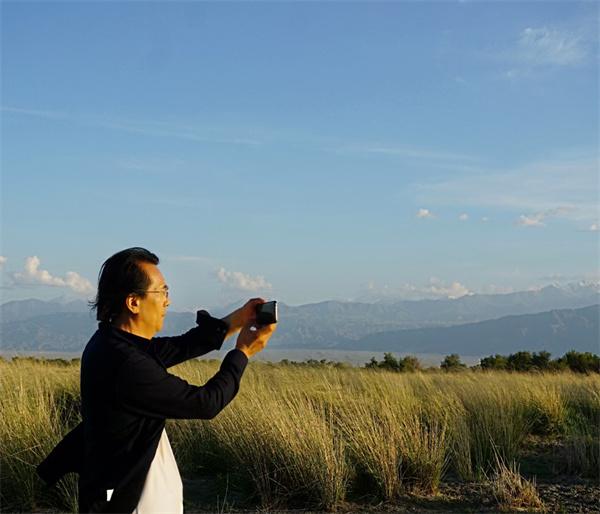
Core Viewpoint - The work "Like a Poem on the Land - Chronicles of Xinjiang in 70 Years" by He Jianming aims to highlight the beauty of Xinjiang, not just in its natural landscapes but also in the struggles and achievements of its people over the past 70 years [1][2]. Group 1: Preparation and Research - He Jianming undertook a comprehensive preparation process, reviewing historical materials and conducting over 200 research and interview points across a journey of more than 50,000 kilometers over 13 months [2][3]. - The challenges faced during the research included high altitude reactions, extreme weather conditions, and physical exhaustion, which tested his resilience [3]. Group 2: Structure and Themes - The book is structured into three parts: historical, poetic, and epic, reflecting the grandeur of Xinjiang's history, its poetic landscapes, and its significance in the broader narrative of China's history [5][6]. - The choice to begin with the stories of intellectuals and revolutionaries emphasizes the foundational role of these figures in the development of Xinjiang [5][7]. Group 3: Character Selection and Narrative - The narrative weaves together individual stories to create a larger theme, portraying Xinjiang as a land of diverse experiences and contributions [6][9]. - He Jianming focuses on ordinary yet remarkable individuals whose stories reflect the spirit of dedication and resilience, aiming to present a rich tapestry of human experience in Xinjiang [7][9]. Group 4: Insights and Reflections - The author expresses a newfound understanding of Xinjiang, recognizing the complexity and beauty of its narrative, and emphasizes the importance of portraying the region's grandeur and beauty in literature [15]. - The writing style incorporates poetic language to convey the emotional and historical significance of Xinjiang, aiming to resonate with readers and evoke a sense of pride [15].
让文学照亮生活
Zhong Guo Qing Nian Bao· 2025-09-24 22:54
Core Points - The "New Youth Literature Forum" aims to promote the creative transformation and innovative development of traditional Chinese culture, nurturing a new generation of literary creators and enhancing contemporary literary creation and dissemination [1] - The event marks the 110th anniversary of the publication of "New Youth," emphasizing the importance of historical awareness and the role of youth in contributing to literature and culture [2] - The discussion highlighted the challenges faced by young writers in the digital age and the importance of personal experience in literary creation [3][5] Group 1 - The "New Youth Literature Forum" was launched to foster the development of contemporary literature and support young writers [1] - The event featured discussions on the historical significance of literature and the role of youth in shaping cultural narratives [2] - The speakers emphasized the need for young writers to engage with history and literature as a means of personal and cultural expression [2][3] Group 2 - The forum addressed common concerns among young writers, such as the fear of obscurity and the challenge of finding a unique voice [3] - The speakers advocated for continuous writing and encouraged young authors to express their thoughts and experiences without the pressure of grand themes [5] - The importance of balancing digital platforms with traditional literary practices was highlighted, with a call for young writers to engage in both reading and real-world experiences [5]