智驾

Search documents
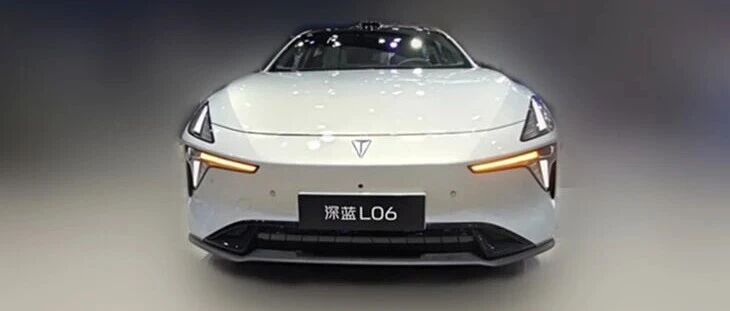
深蓝L06:紫色占比达到六成,对比最多的是自家兄弟启源A06
车fans· 2025-12-01 00:30
Core Viewpoint - The article discusses the recent launch of the L06 vehicle, highlighting its market performance, customer demographics, and promotional offers to attract buyers [2][3][12]. Group 1: Market Performance - The number of customers visiting the dealership has decreased by 30-40% due to changes in provincial subsidy policies, with weekday visits dropping from 6-7 groups to 3-4 groups and weekend visits from 15-16 groups to just over 10 [2]. - The official launch of the L06 on November 18 has generated renewed interest, leading to an increase in customer visits, particularly through online inquiries [2]. Group 2: Customer Offers and Financing - Customers can enjoy various incentives when purchasing the L06, including a cash discount of 2,000 yuan from the manufacturer, 3,000 yuan for trade-ins of other brands, and 5,000 yuan for trade-ins of the same brand. Additional limited-time offers include free purple paint, a magnetic suspension system, and a technology comfort package [3]. - Financing options through the Bank of Communications allow for a loan of 100,000 yuan with a "5免3" policy, meaning no interest for the first three years, with a monthly interest of 250 yuan thereafter [7]. Group 3: Customer Preferences - The most popular configuration among customers is the 560 Ultra+, with the trendy purple exterior and interior color combination accounting for 60% of sales [4]. - The target demographic for the L06 is primarily young individuals under 30, including recent graduates and young professionals looking for their first vehicle [12]. Group 4: Competitive Landscape - The L06 competes with models such as the Seagull 06 EV, XPeng M03, and Leapmotor B01, but is often compared to its sibling model, the Qiyuan A06, which offers a lower price and higher configuration [10]. - The L06 features a full suite of advanced technologies, including laser radar and a magnetic suspension system, making it a strong contender in its segment [10][17]. Group 5: Customer Feedback - Initial customer feedback has been limited due to low delivery volumes, but some concerns have been raised regarding space constraints and the lack of covering in the trunk area, which are common issues in sporty hatchback designs [19].

陆盛赟:广州车展释放四大信号 车 + 生活从概念照进现实
Zhong Guo Jing Ying Bao· 2025-11-26 12:21
Core Insights - The 2024 Guangzhou International Auto Show highlights significant trends in the automotive industry, showcasing 29 standout new models from over 100 launches, indicating a shift towards integrating vehicles into daily life rather than merely serving as transportation tools [1][2]. Group 1: Key Trends in the Automotive Industry - The trend of increasing penetration of new energy vehicles (NEVs) continues, with a clear commitment to advancing NEV development in China [2]. - Traditional foreign automakers are intensifying their investments in the Chinese market despite facing challenges, with brands like Mercedes-Benz and Audi developing models specifically for this market [2]. - The concept of "car + life" has transitioned from theory to practice, with vehicles increasingly becoming integrated into consumers' lifestyles through advancements in technology [2]. Group 2: International Perspectives on Chinese Automotive Brands - There is a notable increase in acceptance of Chinese electric vehicles (EVs) in overseas markets, particularly in emerging markets like Brazil, where local brands have established a presence [3]. - Competition in different markets varies, with Brazil still focused on traditional vehicles due to inadequate infrastructure for EVs, highlighting a need for performance and range as key competitive factors [3][4]. Group 3: Technological Advancements and Ecosystem Development - The importance of ecological and open-source standardization is emphasized, with a focus on creating a collaborative environment among automakers to enhance innovation [5]. - The potential for integrating various applications into vehicles is significant, as cars evolve into living spaces that can accommodate diverse functionalities [5]. - The rollout of Level 3 autonomous driving technology is progressing, with a focus on how it will transform user experiences and the implications for safety and insurance [6]. Group 4: Future Outlook for the Automotive Industry - The future of the automotive industry is expected to center around smart technology as a core competitive element, with a strong emphasis on self-sufficiency in the supply chain, particularly regarding chips and operating systems [7]. - There is an anticipation for joint ventures and partnerships to continue strengthening the Chinese market, with hopes for a diverse and competitive landscape among brands [7].
小鹏汽车-W(09868):港股研究|公司点评|小鹏汽车-W(09868.HK):小鹏汽车-W(09868):小鹏汽车2025年Q3业绩点评:大众服务收入超预期,整体毛利率超20%,持续减亏
Changjiang Securities· 2025-11-20 10:15
Investment Rating - The investment rating for the company is "Buy" and is maintained [6]. Core Insights - In Q3 2025, the company achieved revenue of 20.38 billion, representing a year-on-year increase of 101.8% and a quarter-on-quarter increase of 11.5%. The gross margin was 20.1%, up 2.8 percentage points from the previous quarter. The net loss was 380 million, narrowing by 1.43 billion year-on-year, while the Non-GAAP net loss was 150 million, narrowing by 1.38 billion year-on-year [2][4][8]. - The company is expected to see accelerated sales growth due to its leading smart driving capabilities, a strong new vehicle cycle, channel transformation, and enhanced marketing systems. Financial improvements are anticipated from scale increases, cost reductions from platforms and technology, and the expansion of software profitability and overseas growth [2][8]. Summary by Sections Revenue and Profitability - The company reported a total delivery volume of 116,000 vehicles in Q3 2025, a year-on-year increase of 149.3% and a quarter-on-quarter increase of 12.4%. The automotive business revenue was 18.05 billion, up 105.3% year-on-year and 6.9% quarter-on-quarter, with a single vehicle revenue of 176,000, down 0.8% quarter-on-quarter. The automotive business gross margin was 13.1%, up 4.5 percentage points year-on-year [8]. - Service revenue reached 2.33 billion in Q3 2025, a year-on-year increase of 78.1% and a quarter-on-quarter increase of 67.3%. The service business gross margin was 74.6%, up 14.5 percentage points year-on-year and 21.1 percentage points quarter-on-quarter [8]. Cost Management - The company’s R&D expenses were 2.43 billion, a year-on-year increase of 48.7% and a quarter-on-quarter increase of 10.1%, with an R&D expense ratio of 11.9%. Selling and general expenses were 2.49 billion, up 52.6% year-on-year and 15.0% quarter-on-quarter, with a selling and general expense ratio of 12.2% [8]. Future Outlook - For Q4 2025, the company expects delivery volumes between 125,000 and 132,000 vehicles, representing a year-on-year growth of 36.6% to 44.3%. Revenue is projected to be between 21.5 billion and 23 billion, a year-on-year increase of 33.5% to 42.8% [8]. - The company is positioned for a strong new vehicle cycle with multiple new models expected to enhance sales. The advancements in AI technology and smart driving capabilities are anticipated to create a significant competitive advantage, with revenue projections of 77.3 billion and 130.2 billion for 2025 and 2026, respectively [8].
美团首款AI IDE产品CatPaw开启公测,科创100指数ETF(588030)盘中最高涨超1%
Xin Lang Cai Jing· 2025-11-11 02:40
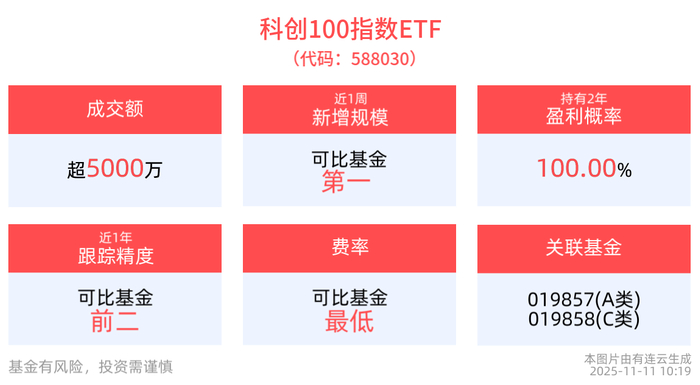
Group 1 - The Shanghai Stock Exchange Sci-Tech Innovation Board 100 Index experienced a slight decline of 0.01% as of November 11, 2025, with mixed performance among constituent stocks [3] - Weisheng Information led the gains with an increase of 5.08%, while Jinpan Technology saw the largest decline at 6.27% [3] - The Sci-Tech 100 Index ETF (588030) rose by 0.15%, with a recent price of 1.33 yuan, and has accumulated a 19.03% increase over the past three months [3] Group 2 - The liquidity of the Sci-Tech 100 Index ETF showed a turnover rate of 1.02% with a transaction volume of 58.9474 million yuan, and the average daily transaction volume over the past year was 376 million yuan, ranking first among comparable funds [3] - Meituan's first AI IDE product, Meituan CatPaw, has entered public testing, focusing on collaboration between agents and humans, supporting features like code completion and project debugging [3] Group 3 - Huayuan Securities highlighted that the core bottleneck in the current AI industry is not a lack of computing power but rather insufficient electricity supply to support large-scale GPU operations [4] - Global data center electricity consumption reached 415 terawatt-hours in 2024, accounting for 1.5% of global electricity usage, and is expected to double to 945 terawatt-hours by 2030 [4] - Several power equipment companies on the Beijing Stock Exchange may see development opportunities due to rising electricity demand driven by AI [4] Group 4 - CITIC Construction Investment indicated that the AI sector is leading the development of the computer industry, with opportunities arising from domestic production, quantum technology, financial IT, and intelligent driving sectors [4] - The Sci-Tech 100 Index ETF saw a significant growth in scale, increasing by 13.65 million yuan over the past week, ranking first among comparable funds [4] - The latest financing buy-in amount for the Sci-Tech 100 Index ETF reached 11.7686 million yuan, with a financing balance of 127 million yuan [4] Group 5 - The Sci-Tech 100 Index ETF closely tracks the Shanghai Stock Exchange Sci-Tech Innovation Board 100 Index, which selects 100 securities with medium market capitalization and good liquidity from the Sci-Tech Innovation Board [5] - As of October 31, 2025, the top ten weighted stocks in the Sci-Tech 100 Index accounted for 25.77% of the index, including companies like Huahong Semiconductor and Guo'an Quantum [6]


中信建投汽车2026年投资策略展望:智驾蓄力,机器人突破,汽车科技属性进阶
Zheng Quan Shi Bao Wang· 2025-11-10 23:57
Core Viewpoint - CITIC Construction Investment (中信建投) released its automotive investment strategy outlook for 2026, highlighting three investment directions: cyclical growth, expansion overseas, and industry trends [1] Group 1: Investment Directions - The automotive industry is characterized by cyclical growth, with expectations for policy support weakening by 2026, leading to a diminished cyclical attribute [1] - The focus should shift from overall domestic demand to industry structure and trend changes [1] - Overseas expansion and growth are expected to become core investment directions, particularly in commercial vehicles which are seen as undervalued with stable dividend attributes [1] Group 2: Growth Areas - The main growth areas identified include intelligent driving, Robotaxi, and AI applications in robotics [1] - The technological attributes of complete vehicle stocks are expected to strengthen, leading to a potential revaluation [1] - Automotive parts are anticipated to benefit from breakthroughs in the supply chain related to robotics, opening new growth opportunities [1]

中信建投计算机2026年投资策略展望:建议重点关注AI、国产化及前沿科技方向
Zheng Quan Shi Bao Wang· 2025-11-10 23:57
Core Viewpoint - The investment strategy outlook for the computer industry in 2026 by CITIC Securities highlights AI as the leading development theme, with additional focus on domestic production, quantum technology, financial IT, and intelligent driving sectors, suggesting a dual recovery in performance and valuation for the industry [1] Group 1: AI Development - The rapid iteration of AI models and high demand for computing power are accelerating commercialization [1] - The AI ecosystem is gradually forming, which supports the industry's growth [1] Group 2: Domestic Production - Domestic production is advancing into a "deep water zone" driven by policies and orders [1] - Industrial software is identified as a core support for becoming a manufacturing powerhouse [1] Group 3: Quantum Technology - Quantum technology is recognized as a future industry, initiating a new global competitive landscape [1] Group 4: Financial IT and Intelligent Driving - The financial IT and intelligent driving sectors continue to present structural opportunities due to their high growth potential [1] - There is a recommendation to focus on AI, domestic production, and cutting-edge technology areas [1]
中信建投:建议淡化汽车内需总量预期 把握产业趋势下结构性成长主线
智通财经网· 2025-11-10 02:25
Core Viewpoint - The automotive industry presents three investment directions: cyclical recovery, growth, and overseas expansion, with a recommendation to focus on industry structure and trends rather than total domestic demand expectations [1] Group 1: Industry Overview - The "old-for-new" policy supports domestic demand, with wholesale sales of passenger cars reaching 20.8 million units from January to September, a year-on-year increase of 13.2%, and retail sales at 17 million units, up 9.2% [1] - Exports of passenger cars showed strong performance, with 4.2 million units exported in the same period, a year-on-year increase of 15.6%, and the penetration rate of new energy vehicle exports rising to 40.7% [1] - Domestic new energy retail penetration reached a historical high of 57.8% in September, with domestic brands increasing their market share to 70% [1] Group 2: Passenger Vehicles - The focus for 2026 is on the high-end passenger vehicle market, with expectations of improved product cycles and brand momentum from manufacturers like Hongmeng Zhixing [2] - The competitive landscape is expected to continue optimizing, with new energy exports maintaining good growth [2] - Technological advancements in smart driving (including Robotaxi) and robotics are anticipated to create valuation reshaping opportunities [2] Group 3: Auto Parts - Traditional auto parts leaders are seen as undervalued, with structural performance growth driven by overseas expansion and market optimization [3] - The potential implementation of L2/L3 smart driving policies is expected to create opportunities for high-level smart driving technology and Robotaxi business model expansion [3] - The robotics sector is viewed positively, focusing on supply chain and technology iteration from leading manufacturers like Tesla [3] Group 4: Commercial Vehicles - Commercial vehicles are characterized as undervalued assets with stable returns, with exports showing resilience [4] - Heavy truck exports exceeded expectations, with attention on domestic subsidy continuity and leading companies' performance [4] - The motorcycle export market is noted for its growth sustainability, with a focus on low-valuation leading companies [4] Group 5: Investment Recommendations - The investment strategy emphasizes structural growth lines in the context of industry trends, recommending investments in robotics, high-end passenger vehicles, and undervalued auto parts [5] - Specific recommendations include Tesla as a high-probability target in the robotics sector, and leading manufacturers in the passenger vehicle market during low-point expectations [5] - For commercial vehicles, focus on high-quality, undervalued leaders with strong overseas performance and new growth opportunities [5]
将被一汽收购?零跑汽车紧急辟谣:不实信息
Ju Chao Zi Xun· 2025-11-05 05:02
Core Viewpoint - Recent rumors regarding China FAW's acquisition of Leap Motor have been denied by both companies, emphasizing the importance of verifying information in the automotive industry [3][4]. Group 1: Strategic Investments - In August, there were reports that China FAW intended to make a strategic investment in Leap Motor, potentially acquiring a 10% stake, but this was later refuted by China FAW as false information [3]. - Leap Motor publicly denied the rumors of an acquisition by China FAW on November 4, reiterating that such claims are untrue [3]. Group 2: Stock Purchases - On October 20, Leap Motor announced that its chairman and CEO, Zhu Jiangming, along with shareholder Fu Liqian, purchased a total of 3,243,500 shares of the company's H-shares at an average price of approximately 63.19 HKD per share, amounting to around 200 million HKD [3]. - From August 2024 to October 20, 2025, Zhu Jiangming and Fu Liqian plan to increase their holdings by approximately 850 million HKD [3]. Group 3: Sales Performance - Leap Motor achieved a record high in total deliveries in October, reaching 70,289 units, which represents a year-on-year increase of over 84%, marking the first time monthly sales surpassed 70,000 units [4]. Group 4: Technology and Upgrades - Leap Motor has denied rumors regarding collaboration with Huawei for smart driving technology [4]. - In October, Leap Motor conducted OTA upgrades for multiple models, including the Leap B10, B01, and the 2024 versions of C10/C16 and C11/C01, with the first OTA updates for the 2026 models C10 and C16 announced on October 13 [4].

比亚迪(002594):关注核心技术升级与海外需求共振
HTSC· 2025-10-31 06:49
Investment Rating - The report maintains an investment rating of "Buy" with a target price of RMB 136.93 [2][9][12] Core Insights - The report highlights the company's core technological upgrades and the resonance of overseas demand as key growth drivers [1] - The company achieved a revenue of RMB 195 billion in Q3, with a year-on-year increase of 13% for the first three quarters [5][6] - The report emphasizes the improvement in single-vehicle profitability and ongoing internal cost reduction efforts [6][7] - The company has seen a significant increase in overseas sales, with a year-on-year growth of 144% in Q3 [7][8] - The report discusses the continuous breakthroughs in intelligent driving and high-end product offerings, which are expected to enhance brand strength [8] Financial Performance Summary - For 2024, the company is projected to achieve a revenue of RMB 777 billion, with a year-on-year growth of 29.02% [4] - The net profit attributable to the parent company is expected to be RMB 40 billion in 2024, reflecting a growth of 34% [4] - The report forecasts a decline in net profit for 2025 to RMB 35 billion, a decrease of 13.13% [4] - The earnings per share (EPS) is projected to be RMB 4.42 in 2024, decreasing to RMB 3.84 in 2025 [4] Sales and Market Expansion - The company sold 1.14 million new vehicles in Q3, with a slight decrease of 2% year-on-year [6] - The average selling price (ASP) per vehicle is estimated at RMB 140,000, showing a slight increase [6] - The report notes that the company has expanded its product coverage to over 110 countries, with exceptional performance in the European market [7][8] Technological Advancements - The company has sold over 1.7 million assisted driving vehicles, leveraging a large user base to enhance its driving algorithms [8] - The report highlights the launch of the new high-end SUV model, Tengshi N8L, which is expected to achieve monthly sales of 3,000 to 5,000 units [8] Valuation and Market Position - The report adjusts the target price to RMB 136.93 based on a segmented valuation approach, reflecting the company's leading position in the passenger vehicle market [9][12] - The automotive business is valued at a 60% premium compared to comparable companies, indicating strong competitive advantages [9][12]

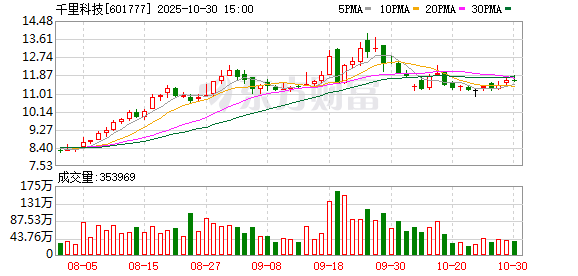
601777 三季度扣非净利下跌超650% 利润全靠政府补贴?
Di Yi Cai Jing· 2025-10-30 15:43
Core Insights - Q3 2025 financial results show significant revenue growth for the company, driven by increased sales in the automotive and motorcycle sectors [2][3] - The company reported a net profit increase primarily due to government subsidies and foreign exchange gains, despite a substantial loss when excluding non-recurring items [3][4] - The company is undergoing a transformation towards an "AI + vehicle" strategy, with plans for a Hong Kong IPO, although its new business segments have yet to generate revenue [4] Financial Performance - Q3 revenue reached 2.762 billion yuan, a year-on-year increase of 51.2% [2] - Net profit attributable to shareholders was approximately 22.11 million yuan, up 60.75% year-on-year [2] - For the first three quarters, total revenue was 6.946 billion yuan, a 44.27% increase year-on-year, with a net profit of about 53.28 million yuan, reflecting a 33.37% growth [2] Business Segments - The growth in revenue is attributed to the sales of the company's automotive business, particularly the micro electric vehicle "Blue Balloon" and the A0-level fuel SUV "Rui Lan X3 PRO" [3] - The "Blue Balloon" model sold over 3,000 units in September, while the "Rui Lan X3 PRO" had sales exceeding 5,700 units in July and August, but dropped to 2,381 units in September [3] - Despite increased sales, the company reported a sales profit margin of -2% in Q3 [3] Government Support and R&D - The company received 87.59 million yuan in government subsidies during Q3, which significantly contributed to the net profit [3] - Excluding non-recurring gains, the company faced a net loss of 42.41 million yuan, primarily due to increased advertising expenses and R&D costs for a new intelligent vehicle cockpit operating system [3] Strategic Transformation - The company, originally known as Lifan Automotive, has undergone a transformation after judicial restructuring and the introduction of new stakeholders [4] - In September, the company announced its strategic focus on three main business areas: intelligent driving, intelligent cockpit, and Robotaxi services [4] - The company plans to list on the Hong Kong Stock Exchange, although its new business segments have not yet generated any revenue [4]