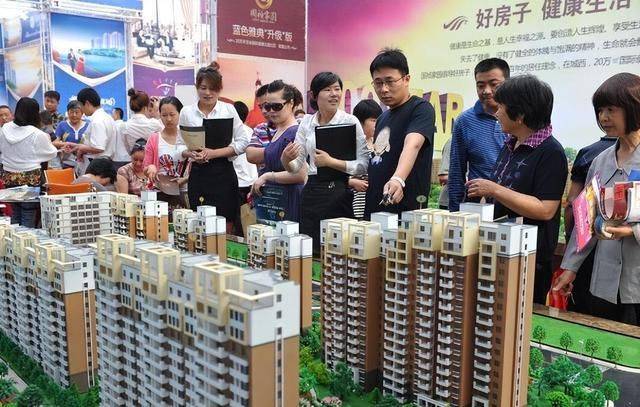
楼市调整

Search documents
未来的楼市只会更卷!
Sou Hu Cai Jing· 2025-06-08 19:30
Core Viewpoint - The real estate market is experiencing a downturn, with both suburban and urban properties seeing price declines, leading many homeowners to sell at lower prices despite expert advice against it [1] Group 1: Reasons for Price Decline - Homeowners are forced to sell at lower prices due to financial strain, particularly those who purchased properties at high prices during 2021-2022 when mortgage rates were significantly higher [3] - Many homeowners are looking to upgrade to newer properties with better designs and higher usable space, as current new homes offer better layouts and amenities compared to older properties [4][5][8] - A panic selling trend is emerging, where homeowners are lowering prices in response to others doing the same, leading to a broader decline in property values across neighborhoods [9][10] Group 2: Impact of Financing Conditions - Stricter bank lending policies are exacerbating the real estate downturn, making it difficult for even affluent individuals to secure loans, which further reduces market liquidity [11][12] - The disparity in loan accessibility creates a "Matthew effect," where only those who do not need loans can obtain them, leaving regular homebuyers struggling to secure financing [12] Group 3: Future Market Outlook - The real estate market is expected to undergo a prolonged adjustment period, with a shift towards a "quality over quantity" approach, where only high-quality properties will withstand market fluctuations [15]

楼市深蹲背后:A股牛市正在加速
Sou Hu Cai Jing· 2025-05-27 16:50
Group 1 - The core viewpoint is that the real estate market is undergoing adjustments, but a collapse is not imminent. New home prices have not yet bottomed out, and second-hand homes are currently 25%-40% cheaper than new homes, with a month-on-month decline of 0.2% in first-tier cities and 0.4% in second and third-tier cities [1][3]. - Historical reference indicates that while the Chinese real estate market is currently in a downturn, similar to Japan's experience in the 1990s, recovery is possible after a period of adjustment [3]. Group 2 - Retail investors often make the mistake of solely focusing on K-line charts, which can lead to losses as institutional investors may manipulate the market. The article highlights that last year, a stock surged by 130%, but its price fluctuated significantly, causing many retail investors to miss out [4][6]. - The article emphasizes the importance of understanding institutional trading patterns to avoid being misled. Key indicators include the density of orange bars (indicating institutional activity) and blue circles (indicating intentional price drops to shake out retail investors) [6][8]. Group 3 - The article advises investors to focus on two key points: asset rotation is a common occurrence, and institutional operations often precede K-line movements. Utilizing quantitative data to uncover the truth behind market movements can help prevent the regret of selling before a price increase [10].
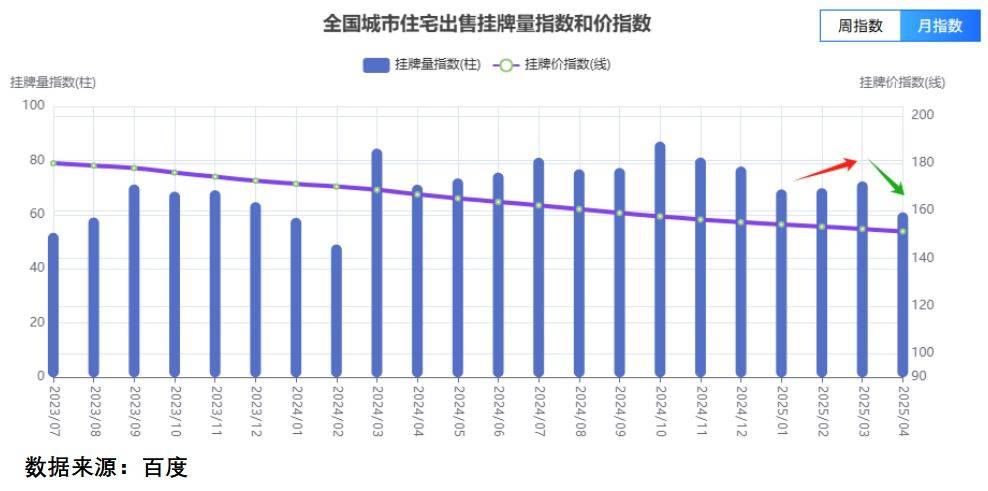
楼市释放两大信号,A股即将变天?
Sou Hu Cai Jing· 2025-05-27 11:54
Group 1: Real Estate Market Trends - The current new home prices have not yet reached the bottom, with second-hand home prices generally 25% to 40% lower than new homes, and continuing to decline. In April, first-tier cities saw a 0.2% month-on-month decrease in second-hand home prices, while second and third-tier cities experienced a 0.4% decline [1][3] - Concerns about a prolonged downturn similar to Japan's are unfounded, as China's real estate market is currently in an adjustment phase following rapid growth from 2015 to 2017. This adjustment does not equate to a market collapse, as cyclical recovery is expected [3] Group 2: Stock Market Insights - Both the stock and real estate markets exhibit cyclical behavior, with bull markets often emerging during periods of market despair. Despite recent index declines, underlying support mechanisms remain [4] - The presence of institutional investors in stocks does not guarantee profitability for retail investors, as institutional strategies may shift with market conditions. The focus should be on the trading behavior of institutions rather than mere participation [6] Group 3: Understanding Institutional Trading - Institutional trading is characterized by large volumes and discreet operations, making it essential to utilize quantitative analysis to uncover their true actions, such as accumulation or distribution of shares [8] - Indicators such as the density of orange bars (indicating active institutional trading) and blue circles (indicating potential washout tactics) can provide insights into institutional strategies. For instance, repeated downward movements may signal preparation for a significant upward movement [10][13] Group 4: Identifying Market Signals - To determine the end of a washout phase, it is crucial to analyze two sets of data: a shift from blue candlesticks to blue bars indicates a return of previously sold funds, while dense orange bars suggest concentrated institutional holdings [13] - Retail investors often face losses due to a lack of understanding of institutional trading behaviors. By interpreting data accurately, investors can avoid being shaken out of positions during volatile periods [15]
今明两年卖掉房子,是假“聪明”还是真“蠢”?内行人直言相告
Sou Hu Cai Jing· 2025-05-12 01:58
Market Sentiment - The real estate market has undergone three years of adjustment, leading to differing opinions on whether selling properties now is wise or shortsighted [1] - Opponents argue that selling now would result in guaranteed losses, asserting that the market has bottomed out and that external factors like population decline do not significantly impact property prices [3] - Proponents believe that property prices may continue to decline, and selling now could prevent larger losses, citing examples of individuals who have already incurred significant financial losses by waiting too long to sell [4] Expert Insights - Experts suggest that selling a property should be a comprehensive decision; for those in urgent need of cash, selling may not be the best option, and property collateralization could be a more prudent choice [6] - For individuals planning to upgrade to a larger home, selling before buying is recommended to avoid financial pressure and potential losses from an unsold property [7] - In cases of high mortgage pressure due to job loss or reduced income, selling may be a necessary step to clear debt and navigate financial difficulties [8] Industry Perspective - The current real estate market is undergoing profound changes, with significant inventory pressure and the need for new growth drivers to stabilize the market [10] - Historical precedents from Japan and the U.S. illustrate the potential long-term impacts of real estate market corrections, emphasizing the importance of adapting to policy changes and market dynamics [11] - The future of the real estate market suggests a shift towards viewing properties primarily as places to live rather than investment vehicles, with a recommendation to liquidate underperforming assets [11][13]

5年后房价到底是“白菜价”还是“黄金价”?其实早就说清楚了!
Sou Hu Cai Jing· 2025-05-09 05:04
Policy Changes - The real estate market in China is experiencing significant fluctuations due to a series of favorable policies, including relaxed purchase and sale restrictions, historical lows in mortgage rates, and reduced down payment requirements [1] - Major cities have implemented policies such as "recognizing the house, not the loan," which were previously unimaginable [1] Market Response - Despite the favorable policies, the market remains unresponsive, with declining sales figures and increasing inventory levels [1] - Major developers like Evergrande and Country Garden are facing severe financial difficulties, leading to project delays and an increase in unfinished buildings [1] Housing Supply and Demand - The number of unsold homes in China is approaching 120 million, sufficient to accommodate 300 to 400 million people, while 14 million new homes are added to the market annually, indicating a supply surplus [5] - Urbanization rates are nearing 70%, and demographic trends such as aging populations and declining birth rates are expected to further impact housing demand [5] Future Price Predictions - Predictions suggest that housing prices in first-tier cities will stabilize and align more closely with income levels, avoiding significant increases or decreases [6] - In contrast, third and fourth-tier cities may experience a "cabbage price" scenario due to population outflow and oversupply, leading to a market characterized by "price without market" [8] Shift in Market Dynamics - The introduction of affordable housing projects is expected to disrupt the commodity housing market, shifting the focus back to housing as a necessity rather than an investment vehicle [6] - The changing landscape suggests that housing will return to its primary function as a place to live, rather than a speculative asset [8] Investment Considerations - As housing becomes more accessible, new investment strategies may emerge, prompting individuals to consider alternatives such as stocks, mutual funds, or entrepreneurship [8]
中国楼市调整趋势下,多套房家庭面临的四大现实挑战
Sou Hu Cai Jing· 2025-05-06 11:27
Core Viewpoint - The real estate market in China has experienced a significant downturn since 2022, leading to financial distress for families holding multiple properties as property values continue to decline and the market shows no signs of recovery [1][3][8] Market Trends - Starting in 2022, cities like Tianjin, Zhengzhou, and Shijiazhuang saw initial declines in property prices, which extended to first-tier cities such as Shanghai and Shenzhen by 2023 [3] - As of January 2025, the average price of second-hand residential properties in 100 cities in China was 14,130 yuan per square meter, marking a 0.51% month-on-month decline and a continuous drop for 30 months [3] - In certain third and fourth-tier cities around Beijing, property prices have plummeted by as much as 50% [3] Market Supply and Demand - The second-hand housing market is currently oversaturated, with a surge in listings since 2024; for instance, Chongqing has nearly 340,000 listings, while cities like Wuhan, Hefei, and Xi'an have close to 200,000 each [4] - The oversupply has made it difficult for homeowners to sell their properties, even at reduced prices, leading to a situation where properties are seen as burdens rather than assets [4] Financial Pressures - Many families with multiple properties are facing increased financial strain due to rising costs associated with property maintenance, such as property fees and utilities, alongside potential mortgage obligations [6] - The impending implementation of property taxes in 60 cities, starting from 2024, is expected to further escalate the holding costs for families with multiple properties [6] Changing Rental Market Dynamics - The "rent-to-pay mortgage" strategy has become increasingly unviable, especially in third and fourth-tier cities where demand has plummeted, leading to high vacancy rates and low rental income [6] - In first and second-tier cities, despite relatively higher demand, economic conditions have led to reduced job opportunities and increased living costs, causing a decline in rental prices; for example, rental prices in Shanghai have dropped from 4,500 yuan to 3,800 yuan for a 40 square meter apartment [6] Asset Management Challenges - Approximately 45% of households in China own two or more properties, and these families are now facing significant challenges including asset depreciation, difficulties in liquidating properties, and increased holding pressures [8] - In light of the current market conditions, families are advised to reassess their asset allocations and consider selling excess properties to optimize their financial positions [8]
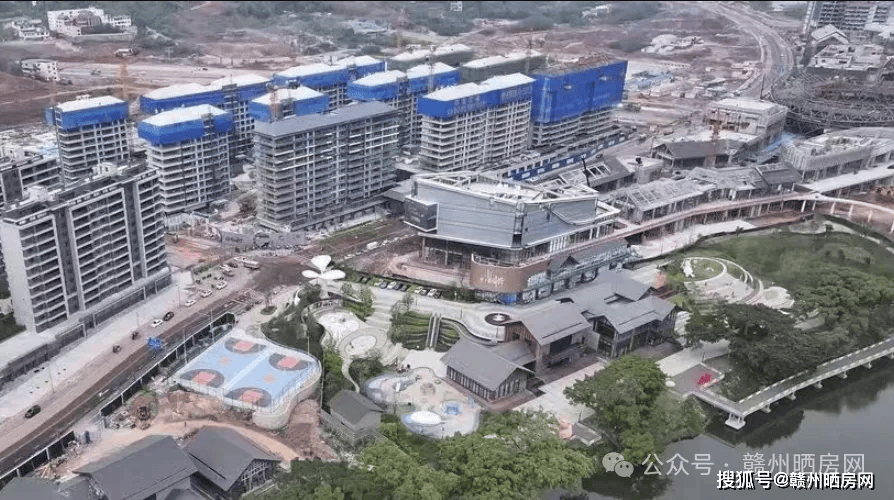
突然发现!赣州这种楼盘,竟然越来越少了
Sou Hu Cai Jing· 2025-04-29 11:01
Group 1 - The number of new residential projects in Ganzhou's main urban area has significantly decreased, with only 2 new projects launched in Q1 2025 compared to 5 in the same period last year [1][3] - The reduction in new projects is attributed to a significant decrease in land auctions, which are the primary source of new housing supply, leading to a scarcity of development land [3][4] - Developers are now more cautious in acquiring land, focusing on core urban areas, and the overall land supply has slowed down, impacting the number of new housing projects [3][6] Group 2 - As of 2025, no residential land has been officially auctioned in Ganzhou's main urban area, indicating a tightening supply of new projects in the near future [4][6] - Upcoming new projects are limited, with only a few known to be launching soon, such as the fourth-generation residential project Zhangjiang Shangjing and the villa project Banshan Yunshu [6] - Current homebuyers in Ganzhou are more discerning, prioritizing quality, community environment, property services, and supporting facilities, reflecting a shift in market dynamics [8]
这个二线城市,房价怎么跌一半
虎嗅APP· 2025-03-30 23:46
以下文章来源于真叫卢俊 ,作者真叫卢俊团队 真叫卢俊 . 认认真真聊地产,实实在在谈买房。 本文来自微信公众号: 真叫卢俊 (ID:zhenjiaolujun0426) ,作者:余奔雷,题图来自:视觉中国 全国楼市很多都有传奇色彩,但第一城一定是15年前的温州,而且这个第一还不是在二线城市群里,而是和一线去比。 一张图展示下温州楼市曾经的江湖地位: 数据来源:公开信息,仅供参考 接连三年压过当时的北京和上海,涨幅也堪称神速。 京沪还在2字头的时候,温州已经率先破3、直接飞上天了,成为全国房价第一城。 毫不夸张地说,彼时的温州楼市就是中国楼市的风向标。 但最近,我们看到一份满天飞的数据,非常惊心:温州二手房价下跌幅度48.4%。 数据来源:公开信息,仅供参考 依然排全国第一,只不过变成了倒数第一。这也是温州楼市39年来的最大跌幅。 具体均价从高点的2.8万/平,跌到低点的1.4万/平,一个长三角二线城市的房价直接腰斩,这个数字是真的吗? 如果是,温州楼市到底发生了什么?又是哪些因素导致的? 这些去之前的疑惑,在我踏上前往温州的高铁后,逐渐有了清晰的答案…… 温州南站附近实景拍摄 亲身 感受下来,现实的确如此。 ...

我国楼市大局已定,未来全国将近45%的家庭,会面临的“4大难题”
Sou Hu Cai Jing· 2025-03-24 10:02
我国楼市大局已定,未来全国将近45%的家庭,会面临的"4大难题" 在进入到2025年之后,楼市调整趋势大局已定。根据最新数据显示,全国二手房均价较2021年高点下跌30%,部分三四线城市跌幅超40%。就连上海、深圳 等城市房价都出现了明显的下跌。与此同时,全国住房库存达7.4亿平方米,二手房挂牌量突破1.9亿套。不管是新房还是二手房,都卖不动了。 前些年,很多家庭看到房价在不断上涨,就把所有积蓄拿出来投资房产,希望通过投资房产能够实现财富保值增值。而在经历了多年疫情之后,现在实体经 济都不景气,这些家庭收入减少或失业。尽管现在银行一再下调房贷利率,但这些拥有二套以上房产的家庭还贷压力却不降反增。 举个例子,郑先生是一位IT工程师,之前工作和收入都很稳定。在2019年时,他看到国内房价一直在涨,就拿出毕生积蓄150万付首付,又贷款300万投资了 一套新房子。 而到了2025年1月,郑先生所在的公司宣布裁员,现在他已经失业在家二个多月了,没有了收入来源,银行多次来电敦促其偿还房贷,而他却不知该如何是 好。显然,随着很多家庭的收入减少或失业,持有多套房子的家庭持房的压力是越来越大。 实际上,房地产市场调整趋势形成, ...