海上丝绸之路

Search documents
文旅经贸双轮驱动 各界人士浙江温州共谋“海丝”合作新篇
Zhong Guo Xin Wen Wang· 2025-11-20 08:56
Core Insights - The "Maritime Silk Road" is being revitalized as a significant support for global open cooperation, with a focus on economic and cultural tourism collaboration among cities along the route [1][3]. Group 1: Event Overview - The 2025 Maritime Silk Road City Cooperation Development Conference and International Travel Business Conference was held in Wenzhou, Zhejiang, gathering nearly 400 participants from international organizations and countries along the Maritime Silk Road [1][3]. - The theme of the conference was "Innovation and Cooperation for Win-Win Outcomes," emphasizing deep collaboration in economic and cultural tourism sectors [1]. Group 2: Cultural Heritage and Economic Cooperation - Cultural heritage is highlighted as a vital carrier of the Maritime Silk Road spirit, with archaeological findings at the ancient Shumen Port in Wenzhou providing essential evidence for restoring the historical landscape of the Maritime Silk Road [3]. - The Regional Comprehensive Economic Partnership (RCEP) has been fully implemented, accelerating the construction of an open world economy among countries along the Maritime Silk Road, with China and ASEAN being each other's largest trading partners for five consecutive years, projecting a bilateral trade volume exceeding $982.3 billion in 2024 [3]. Group 3: City Development and International Collaboration - Cities are identified as the core carriers of Maritime Silk Road construction, with efforts to enhance port capabilities, strengthen industrial collaboration, and deepen cultural exchanges [3]. - During the conference, Wenzhou's government signed international cooperation agreements with travel representatives from ten countries, aiming to promote Wenzhou's cultural tourism globally [5]. - Wenzhou was awarded the title of "China-Europe Cultural and Creative Tourism Destination" by the EU Asia Center, marking it as a new hub for China-Europe cultural tourism cooperation [5].

海丝城市相聚浙江温州共商合作发展
Xin Hua She· 2025-11-19 17:15
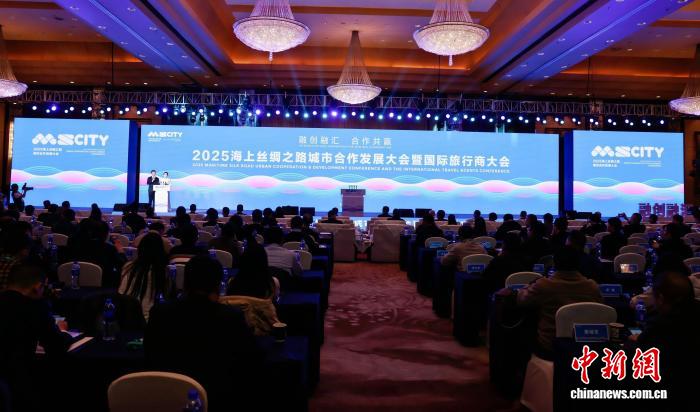
浙江省政协主席廉毅敏在致辞中表示,浙江深入践行"八八战略",全力打造高能级开放强省,全省综合 实力迈上新台阶。浙江将坚持创新合作,推动海上丝绸之路城市共享发展成果,为高质量共建"一带一 路"作出更大贡献。 新华社杭州11月19日电(记者朱涵、魏一骏)以"融创融汇合作共赢"为主题的2025海上丝绸之路城市合 作发展大会暨国际旅行商大会,11月18日至20日在浙江温州举行。近400位国内外嘉宾济济一堂,共享 机遇、共商发展。 新华通讯社社长傅华19日在大会开幕式致辞时表示,在习近平主席提出的共建"一带一路"倡议下,中国 坚持"写好海上丝绸之路新篇章",与沿线国家一道开拓出共同发展的合作之路、机遇之路、繁荣之路。 面向未来,新华社愿与各方一道,更加真实、立体、全面地向世界展现海丝合作的新理念新实践,为海 丝城市开展多领域合作搭建桥梁、提供服务,为高质量共建"一带一路"发挥积极作用。 (文章来源:新华社) 与会中外嘉宾表示,应持续展现历史与现代交相辉映的海丝城市魅力,弘扬海丝文化,通过此次大会类 似的活动,为全球发展开辟新空间,为国际合作打造新平台。 本次大会由新华通讯社浙江分社、温州市人民政府、浙江省文化广电和旅游 ...
宁波八千年向海而兴(上新了)
Ren Min Ri Bao· 2025-11-14 22:03
Core Viewpoint - The exhibition "From Ancient Fishing Village to International Port City: The Marine Gene in Ningbo Archaeology" showcases the rich maritime culture and history of Ningbo, highlighting its significance as a key hub in the Maritime Silk Road and its development over 8,000 years of maritime civilization [4][5][7]. Summary by Sections Exhibition Overview - The exhibition features three main thematic units and hundreds of artifacts, presenting a comprehensive view of Ningbo's maritime civilization from prehistoric times to the present [4][5]. Historical Significance - Ningbo is emphasized as an important source of Chinese maritime culture and a critical port in the Maritime Silk Road, reflecting the spirit of exploration and resilience of its people [5][7]. Archaeological Findings - Systematic excavations at sites like Jingtoushan, Hemudu, and Tianshuishan have revealed early practices of maritime utilization by Ningbo's ancestors, including a 35 cm wooden boat model from the Hemudu culture, indicating seafaring activities dating back approximately 7,000 years [5][6]. Notable Artifacts - The exhibition includes significant artifacts such as a bronze axe from the Warring States period, which depicts a maritime scene, suggesting the early development of Ningbo's port settlements and the importance of maritime activities in societal progress [5][6]. - A Tang Dynasty celadon tea bowl and a Goryeo Dynasty long-necked vase are highlighted as examples of Ningbo's role in international trade and cultural exchange, showcasing the region's craftsmanship and its connections with Korea [6]. Cultural Legacy - The exhibition illustrates Ningbo's deep-rooted cultural connection to the sea, presenting a 70-year timeline of archaeological discoveries that trace the city's maritime history and its ongoing relationship with the ocean [7].

中国交建:公司在福建海峡区域承建了一系列世界级跨海通道工程
Mei Ri Jing Ji Xin Wen· 2025-11-05 07:59
Core Viewpoint - China Communications Construction Company (CCCC) is actively involved in a series of world-class cross-sea channel projects in the Fujian Strait region, contributing significantly to the construction of the "Maritime Silk Road" and "Strong Marine Province" initiatives in Fujian [1] Group 1: Company Projects - The company is currently implementing several key projects, including the Xiamen-Jinmen Bridge (Xiamen section) and the Xiamen Xiang'an Tunnel renovation and upgrade project [1] - Additional projects include the construction of the Bai Lu Xi Tower, a super high-rise building [1] Group 2: Industry Impact - CCCC's projects form a complete industrial chain layout centered around cross-sea bridges, underwater tunnels, and port terminals [1] - The company's efforts position it as a main force in the development of Fujian's maritime infrastructure [1]

智通港股解盘 | 月底魔咒再起恒指跌破关口 医药目录谈判引发资金涌入
Zhi Tong Cai Jing· 2025-10-31 12:50
Market Overview - The Hang Seng Index closed down 1.43%, breaking below the 26,000-point mark [1] - U.S. Treasury Secretary indicated that a U.S.-China trade agreement could be signed as early as next week [1] - Concerns over AI investment returns were highlighted after Meta's stock fell 11% due to significant AI spending [1] AI Sector Developments - AI giants like NVIDIA and Samsung are increasing capital expenditures, with Samsung planning to build an "AI factory" [2] - Despite strong demand in AI, stocks like Hua Hong Semiconductor fell over 7% due to fund managers adjusting positions at month-end [2] - Oracle's CDS costs have risen, indicating market concerns about the sustainability of AI investments [1][2] Healthcare and Pharmaceuticals - The National Medical Insurance Directory negotiations are ongoing, with a focus on high-value clinical areas like oncology and chronic disease [4] - Companies like Junshi Biosciences and Kelun-Biotech are seeing stock increases due to their participation in the negotiations [4][5] - The introduction of a commercial insurance innovative drug directory is expected to drive investments in the pharmaceutical sector [3] Shipping and Logistics - The Ningbo Containerized Freight Index rose by 12.6%, with 16 out of 21 routes showing price increases [7] - VLCC freight rates have reached over $120,000 per day, marking a ten-year high [7] Company-Specific Highlights - Zoomlion reported a revenue increase of 8.06% and a net profit increase of 24.89% in Q3 2025 [8] - The company plans to issue up to 6 billion HKD in convertible bonds to enhance global competitiveness [9] - Zoomlion's overseas revenue accounted for 57.36% of total revenue, reflecting a 20.80% year-on-year growth [9]

广东外贸一千年:国宝里的外贸与商业智慧
2 1 Shi Ji Jing Ji Bao Dao· 2025-10-17 23:51
Core Insights - The exhibition "Mutual Benefit Under Heaven: A Thousand Years of Guangdong Foreign Trade" has opened at the Guangdong Provincial Museum and will run until October 15, 2026, showcasing 22 national first-class cultural relics [1] - The exhibition aims to present the historical trajectory of Guangdong's foreign trade over a millennium, featuring artifacts from various periods including the Tang, Song, Yuan, Ming, and Qing dynasties [1][2] - This is the largest and highest-standard foreign trade exhibition ever held in Guangdong, designed to highlight the region's role as a significant trade hub [1][2] Artifact Highlights - A notable display includes a collection of gold artifacts from the "Nanhai I" shipwreck, which serves as a testament to the prosperity of Chinese foreign trade during the Tang and Song dynasties [2][3] - The "Nanhai I" shipwreck, discovered in 1987, is the oldest and largest ocean-going trade ship found in China, with over 18,000 artifacts recovered, primarily ceramics [2][3] - Among the gold artifacts, a 1.72-meter-long "big gold chain" stands out, showcasing a unique design and indicating it was likely a personal item belonging to a wealthy foreign merchant [3][4] Cultural Exchange - The exhibition features a rare Yuan dynasty blue-and-white porcelain vase, which exemplifies the exchange of materials and techniques between China and the Middle East, highlighting Guangdong's significant role in overseas trade during the Yuan dynasty [5][6] - The artifacts reflect the deep cultural exchanges facilitated by maritime trade, with items like the Yuan blue-and-white vase being scarce and highly valued in global collections [6] Commercial Wisdom - A Ming dynasty ceramic jar from the "Nanao I" shipwreck illustrates the commercial strategies of foreign traders, as it contained a large quantity of goods, indicating efficient use of storage space to maximize trade profits [7] - The exhibition also showcases Qing dynasty porcelain pieces that demonstrate the collaboration between Chinese and European artisans, marking an early example of globalization in production [8][9] Conclusion - Each artifact in the exhibition serves as a historical messenger, embodying the spirit of openness, inclusivity, and mutual benefit that characterized Guangdong's trade history [9]
西安博物院:三百年前沉船瓷器吸引民众参观
Zhong Guo Xin Wen Wang· 2025-10-17 09:00
Core Viewpoint - The exhibition "Bowl Reef Porcelain Language - The Silk Road Time Capsule" at the Xi'an Museum showcases 115 precious artifacts from the "Bowl Reef No. 1" shipwreck, highlighting the trade prosperity and cultural exchange along the Maritime Silk Road during the Kangxi period of the Qing Dynasty [1][3][5]. Summary by Category - **Exhibition Details** - The exhibition features artifacts recovered from a shipwreck that occurred in the Fujian Pingtan sea area during the Kangxi period [1][3][5]. - A total of 115 valuable cultural relics are displayed, emphasizing the historical significance of maritime trade [1][3][5]. - **Cultural Significance** - The artifacts illustrate the cultural exchange and trade activities that took place along the Maritime Silk Road [1][3][5]. - The exhibition aims to educate visitors about the historical context and the importance of these artifacts in understanding the trade dynamics of the time [1][3][5].

广东外贸一千年威水史:谁是初代“带货王”?
2 1 Shi Ji Jing Ji Bao Dao· 2025-10-15 06:41
Core Insights - The article highlights the historical significance of Guangdong as a trading hub, showcasing its role in global trade over the past thousand years through a special exhibition titled "Mutual Benefit Under Heaven, Guangdong's Foreign Trade for a Thousand Years" [1][2] Group 1: Exhibition Overview - The exhibition opened on October 15 and will last for one year, featuring over 200 exhibits, including 22 national treasures, reflecting Guangdong's vibrant trade history [1] - The exhibition is divided into four sections, illustrating the development of foreign trade in Guangdong from the Tang Dynasty to the present, emphasizing its importance as a key node in the Maritime Silk Road [1][2] Group 2: Historical Context - The exhibition provides a clear historical narrative, showcasing the evolution of foreign trade institutions and the significance of events like the Canton Fair and the Guangdong Free Trade Zone [2] - It highlights the role of Guangdong in the global trade system, with artifacts representing maritime trade and the evolution of foreign trade policies [2] Group 3: Cultural Exchange - The article notes that Guangdong has served as a window for the world to understand Chinese culture, with historical merchants from the region achieving global prominence [2] - It mentions the historical significance of the Thirteen Hongs and the early travel guides used by foreign merchants visiting China, illustrating the long-standing cultural exchange [2]
阿联酋朱尔法遗址考古:中国陶瓷器输入时间为元代至清早期
Zhong Guo Xin Wen Wang· 2025-10-13 03:09
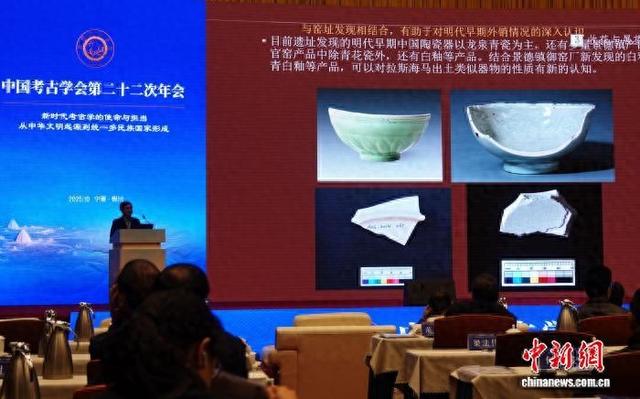
Core Insights - The research identifies the timeline for the export of Chinese ceramics to the Middle East via the Maritime Silk Road, specifically during the Yuan to early Ming and mid to late Ming to early Qing periods [1][3][4] Group 1: Archaeological Findings - A joint archaeological team has collected a significant number of ceramic specimens from the Julfar site, confirming the presence of Chinese ceramics, particularly from the Ming dynasty, as valuable evidence of trade relations with the Middle East [2][3] - The variety of foreign ceramics found at the Julfar site includes not only Chinese ceramics but also items from Iraq, Iran, Syria, Oman, Thailand, and Myanmar, indicating its importance in the trade network of the Indian Ocean [3][4] Group 2: Specific Ceramics Data - The joint archaeological team has documented and analyzed 486 ceramic specimens, with the highest proportion being blue-and-white porcelain from Jingdezhen, primarily from the late Ming period [4][5] - The Al-Nudud site has yielded a small number of Chinese export porcelain, glassware, and coins, suggesting its dating from the 14th to the first half of the 17th century, while the Al-Mataf site has ceramics primarily from the mid to late Ming to Qing periods [5] Group 3: Research Methodology and Implications - The research employs Chinese archaeological stratigraphy methods to establish a temporal framework for the Julfar sites, examining the historical changes from various perspectives, including natural geography and livelihood patterns [6] - A systematic study and technological analysis of Chinese export porcelain have led to the creation of a database that supports further research in overseas archaeology and multidisciplinary studies [6] - The findings from the Julfar site will be compared with other sites in the Persian Gulf and the Indian Ocean to enhance understanding of the trade routes of Chinese ceramics along the Maritime Silk Road [6]
路上一道辙
He Nan Ri Bao· 2025-10-06 23:20
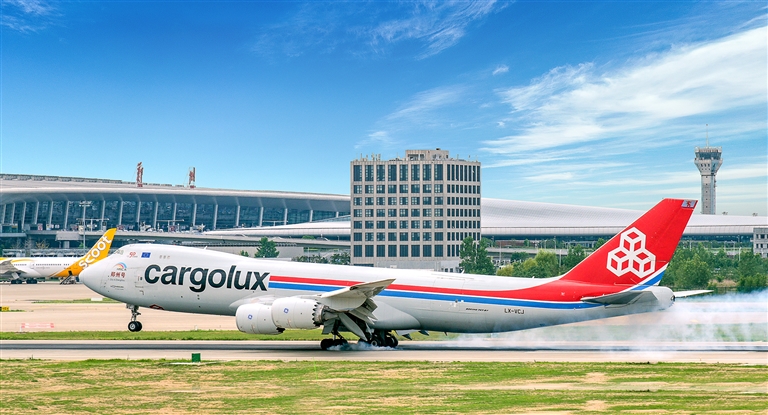
Core Insights - The article highlights the development of Henan's logistics and transportation infrastructure, emphasizing the synergy of four routes: air, land, sea, and digital, contributing to the Belt and Road Initiative [5] Air Silk Road - Zhengzhou Airport has seen a significant increase in cargo volume, surpassing 700,000 tons this year, a growth of over 24% compared to the previous year, with cross-border e-commerce goods now accounting for 52% of international outbound cargo [6][7] - The opening of the Zhengzhou-Luxembourg international cargo route in 2014 marked the beginning of a transformation for Henan, establishing a vital air link between Central China and Europe [6][8] - The airport's operational efficiency has improved, with daily peak cross-border e-commerce cargo exceeding 1,000 tons, and a typical delivery time of 72 hours from domestic manufacturers to global destinations [7][8] Land Silk Road - During the National Day and Mid-Autumn Festival, multiple China-Europe freight trains departed from Zhengzhou, transporting goods such as machinery parts and clothing to various destinations, including Belgium and Russia [8][9] - The Zhengzhou International Land Port has become a hub for logistics, with an average daily traffic of over 2,000 vehicles during the holiday period, reflecting the growing demand for international logistics [9][10] - Since the launch of the first China-Europe freight train in 2013, the service has expanded from 1 station and 1 port to 26 stations and 9 ports, with over 16,000 trains operated, enhancing trade and cultural exchanges [10] Sea Silk Road - The Luhe Port is experiencing increased activity, with logistics companies and shipping enterprises establishing operations, indicating a growing demand for inland waterway transport [11][12] - The port's expansion project aims to significantly enhance its throughput capacity to 18.25 million tons per year, improving logistics efficiency and integrating with other regional ports [12][13] - The port's strategic location offers logistical advantages, with water transport costs being significantly lower than rail and road, while also accommodating larger volumes [11][12] Digital Silk Road - The cross-border e-commerce sector in Henan is thriving, with over 50 companies in the China Post Zhengzhou Cross-Border E-Commerce Industrial Park, generating an annual sales volume of around 1 billion USD [13][14] - The park provides integrated services for e-commerce sellers, including logistics and customs clearance, reducing average customs clearance time from 24 hours to under 12 hours [14][15] - Henan's cross-border e-commerce exports have grown from over 76 billion RMB in 2016 to over 260 billion RMB projected for 2024, reflecting the province's deep integration into global supply chains [15]