
港产城融合

Search documents
靖江:高扬“东线第一帆”,激活港产城融合发展优势
Xin Hua Ri Bao· 2025-12-02 07:34
Economic Development and Trade Cooperation - Jiangyin's Party Secretary Shen Qiang led a delegation to Greece and Germany from October 27 to November 1 to enhance economic and trade exchanges, deepen industrial cooperation, and promote Jiangyin's opening-up [1] - On November 6, Jiangyin organized a delegation to Shanghai for investment promotion and to connect with quality resources and industry leaders, aiming to empower new productive forces [1] - A special meeting of the Taizhou Municipal Committee emphasized Jiangyin's role as a key area for reform and opening-up, aiming for high-quality development through major projects and modern infrastructure [1] Port and Transportation Development - Jiangyin Heavy Industry Co., Ltd. manufactured the first steel box girder for the Ningbo-Zhoushan Port project, showcasing its capabilities as a major steel structure production base [2] - Jiangyin is focusing on building a comprehensive transportation hub and enhancing the synergy between port, industry, and trade, with significant projects underway to support this development [2] Strategic Positioning and Infrastructure - Jiangyin is strategically located at the intersection of the Yangtze River Golden Waterway and the Yangtze River Delta Economic Circle, serving as a key node for the Belt and Road Initiative and the Shanghai International Shipping Center [3] - Jiangyin Port, established in 2012 and becoming a major port by 2015, has ranked among the top twenty ports in China by 2023, leveraging its advantages in industrial foundation and port resources [3] Industrial Development and Innovation - Jiangyin is enhancing its industrial ecosystem by focusing on high-end manufacturing, particularly in stainless steel processing, with significant investments and projects underway [5][6] - The city is developing four leading industries and five emerging industries, aiming to create a modern industrial system and establish itself as a new high ground for advanced manufacturing in the Yangtze River Delta [6][7] Regional Integration and Collaboration - Jiangyin is actively promoting regional integration with Suzhou and Shanghai, focusing on collaborative projects and leveraging its manufacturing advantages to enhance innovation and resource sharing [8][9] - The city is implementing cross-river transportation projects to strengthen its connectivity within the Yangtze River Delta, aiming to attract advanced technologies and investments from Shanghai [9]
杭州打造全球视觉智能产业标杆,请看《浪尖周报》第51期
Xin Lang Cai Jing· 2025-11-30 05:21
Core Insights - The "Wave Plan" aims to promote industrial collaboration and technological innovation in the Yangtze River Delta region [1] - The "Wave Weekly: Yangtze River Delta Industrial Dynamics" focuses on the latest industrial developments in nine trillion GDP cities, highlighting key news and leadership activities [1] Industry Highlights - Hangzhou's visual intelligence industry reported a revenue of 710.4 billion yuan in the first three quarters [2] - Shanghai's Xuhui district is developing a "Blockchain + AI" industrial cluster [2] - Nanjing is collaborating with Baiyun Electric to enhance the capabilities of the smart grid industry [2] - Hefei's major scientific facilities, including EAST, CRAFT, and BEST, are now open to global access [2] - Suzhou's Taicang is building a modern port to promote the integration of industry and city [2] - Ningbo's Qianwan New Area is strengthening its dual industrial clusters in biomedicine and new energy vehicles [2] - Wuxi is advancing the expansion of the 465 cluster in coordination with the new energy chain [2] - Nantong is deepening its layout in the new tracks of artificial intelligence and integrated circuits [2] - Changzhou's Nine Company ecological chain project has settled in the high-tech zone [2]
烟台混配 “链”接世界
Qi Lu Wan Bao· 2025-11-28 08:01
Core Viewpoint - Yantai Port is transforming into a global mineral product supply chain hub, leveraging its strategic location and policy support to enhance its mixed cargo operations and contribute significantly to regional economic development [1][8]. Group 1: Mixed Cargo Operations - From January to November this year, Yantai Port completed over 12 million tons of energy and metal ore mixing, establishing itself as an international bonded mixing center [1][2]. - The port has developed three core mixing bases for iron ore, crude oil, and copper concentrate, with a mixing capacity of 30 million tons annually, making it the largest iron ore mixing base in Northern China [2][3]. - Yantai Port has become a benchmark in the copper concentrate mixing sector, having completed 1.7 million tons of mixing in the past five years, significantly reducing costs for enterprises [5][3]. Group 2: Technological Innovation - Yantai Port has implemented a fully automated control system for bulk cargo operations, improving unloading and loading efficiency by 21.9% and 22.6% respectively, and achieving a mixing precision of 0.2% [4][6]. - The port has established the first national standard for copper concentrate mixing operations, which has streamlined customs processes and reduced cargo turnover time from five days to one day [5][4]. Group 3: Economic Impact and Integration - The mixed cargo business has contributed 160 billion yuan in foreign trade import and export value to Yantai City over the past five years, enhancing the integration of port, city, and industrial park [7][8]. - Yantai Port is evolving from a service provider to a supply chain integrator, offering comprehensive services that connect upstream mining companies with downstream smelting plants, thereby reducing logistics time and inventory costs [7][8]. Group 4: Future Outlook - Yantai Port aims to continue expanding its mixed cargo operations towards high-end, intelligent, and green development, further enhancing its role in regional economic transformation [8][6].
济宁港航梁山港二期项目高质量发展现场推进会举行
Zhong Guo Fa Zhan Wang· 2025-11-18 06:58
Core Viewpoint - The launch of the Liangshan Port Phase II project is a significant step for Jining in enhancing its inland waterway transportation capabilities and contributing to the development of a northern inland waterway hub [1][2]. Group 1: Project Overview - The Liangshan Port Phase II project has a total investment of 2.9 billion yuan and aims to construct 7 new berths and 27.6 kilometers of railway lines along with supporting facilities [2]. - The project is expected to be operational by the first quarter of 2027, with a projected cargo handling capacity of 80 million tons and container throughput exceeding 400,000 TEUs [2]. - The revenue for the logistics park is anticipated to surpass 30 billion yuan, contributing to the high-quality development of the regional economy [2]. Group 2: Strategic Importance - The project is positioned to make Liangshan Port the first "billion-ton inland port" in northern China, enhancing its role as a key logistics hub [2]. - Jining's inland waterway resources are highlighted as having significant development potential, with the project expected to stimulate industrial aggregation in the region [1][2]. - The port's strategic location at the intersection of the Wari Railway and the Grand Canal is emphasized, facilitating the movement of bulk commodities such as coal, steel, and building materials [2]. Group 3: Economic Impact - Since its initial investment of 2.2 billion yuan in 2015 and subsequent operation in 2017, Liangshan Port has handled a cumulative cargo volume of 150 million tons [2]. - The logistics park, centered around Liangshan Port, integrates port trade, logistics transportation, warehouse receipt pledge, and manufacturing, with projected revenues of 17 billion yuan in 2024 [2]. - The port's cargo handling volume is expected to exceed 42 million tons this year, with revenues anticipated to surpass 20 billion yuan [2].
辽宁港口股份有限公司关于副总经理离任的公告
Shang Hai Zheng Quan Bao· 2025-11-10 18:17
Group 1 - The resignation of Vice General Manager Yin Kaiyang is effective immediately upon delivery to the board, and it will not affect the company's operations or development [2] - Yin Kaiyang confirmed that there are no disagreements with the board or management regarding his departure [2][3] Group 2 - The company held a Q3 2025 performance briefing on November 10, 2025, with key executives present to discuss business and financial conditions [5] - The Q3 net profit showed significant growth, with the second quarter net profit exceeding 700 million, attributed to the recovery of long-term receivables and increased investment income [6][7] Group 3 - For the first three quarters of 2025, the company achieved a 5.99% year-on-year increase in revenue, driven by growth in core business segments such as container, grain, and oil products [7][8] - The company reported a 37.51% year-on-year increase in net profit, reaching 1.3 billion [14] Group 4 - Container throughput reached 8.323 million TEU, an increase of 4.7%, while oil products throughput increased by 8.6% to 47.048 million tons [10][11] - The company aims to become a leading port enterprise in Northeast Asia during the 14th Five-Year Plan, focusing on core business development and innovation [12][13] Group 5 - The company has implemented cash dividends totaling 563 million this year, with cumulative dividends of 1.438 billion over the past three years [14]
辽港股份:做精港口主业 推动创新发展
Zheng Quan Ri Bao Zhi Sheng· 2025-11-10 16:40
Core Viewpoint - Liaoning Port Co., Ltd. aims to become a leading port enterprise in Northeast Asia, focusing on enhancing its core business and driving innovative development [1] Financial Performance - In the first three quarters of 2025, the company achieved operating revenue of 8.426 billion yuan, a year-on-year increase of 5.99% - The net profit attributable to shareholders reached 1.3 billion yuan, up 37.51% year-on-year - The net profit excluding non-recurring gains and losses was 1.285 billion yuan, a significant increase of 65.18% year-on-year [1] Revenue and Profit Drivers - The strong performance in core profitability is attributed to the synergy of "increasing revenue" and "cost-saving efficiency" - The port business strategy focuses on stabilizing the core market, competing for new markets, and seeking innovative opportunities, leading to structural growth in key cargo types - Container business saw steady growth in throughput through enhanced market development - Grain business benefited from increased demand for grain transportation and a recovery in the breeding industry, leading to growth in both volume and added value - The oil and chemical products segment expanded revenue through trade oil storage and crude oil transshipment [2] Cost Management and Efficiency - The company optimized its revenue structure, with growth in container and grain businesses compensating for underperformance in other cargo types - Cost control measures, including lean operations and comprehensive benchmarking, led to a decrease in operating costs despite revenue growth - Various costs, such as outsourcing, energy, and facility maintenance, were reduced, resulting in a 7.6 percentage point increase in gross margin year-on-year [2] Strategic Development Initiatives - The company possesses a unique geographical advantage as a key maritime gateway in Northeast Asia, facilitating access to the Pacific and global markets - Post-merger integration has shown continuous improvement in development efficiency - Key initiatives include refining core port operations, promoting innovation through green, digital, and high-end services, and enhancing collaboration with local governments to build a comprehensive supply chain service network [3]
辽港股份:创新延展主业增值服务能力,培育港口新兴产业发展
Zheng Quan Shi Bao Wang· 2025-11-10 10:19
Core Insights - Liao Port Co., Ltd. reported a revenue of 8.426 billion yuan for Q3 2025, marking a year-on-year increase of 5.99%, and a net profit attributable to shareholders of 1.3 billion yuan, up 37.51% year-on-year, indicating steady growth in operational performance [1][2] Revenue Growth - The company's revenue growth is attributed to a combination of "increasing income" and "cost-saving efficiency," with strategies focusing on stabilizing core business, competing for market share, and seeking innovative opportunities [2] - The container business saw a steady increase in throughput due to enhanced market development, while the grain business benefited from the "North Grain South Transport" initiative and a recovery in the breeding industry, leading to simultaneous growth in volume and added value [2][3] - The oil and chemical products segment expanded revenue through trade oil storage and crude oil transshipment, contributing to the overall revenue increase [2] Profitability Improvement - Profitability was bolstered by optimizing revenue structure, with growth in container and grain businesses compensating for underperformance in other cargo types [2] - Cost control measures, including lean operations and a focus on comprehensive benchmarking, led to a decrease in operating costs despite revenue growth, resulting in a 7.6 percentage point increase in gross margin year-on-year [2] Operational Metrics - Container throughput reached 8.323 million TEUs, a year-on-year increase of 4.7%, driven by stable operations and market development [3] - Oil and chemical throughput totaled 47.048 million tons, up 8.6%, primarily due to increased crude oil procurement by coastal refineries [4] - Grain throughput increased by 18.2% to 12.93 million tons, supported by national controls on foreign grain imports and rising demand from southern feed enterprises [4] Strategic Goals - The company aims to become a leading port enterprise in Northeast Asia, focusing on enhancing core port operations and innovating development strategies [5] - Plans include strengthening market expansion, optimizing operational efficiency, and developing a variety of logistics service systems to enhance core competitiveness [5] - The company is committed to innovation through green, digital, and high-end development, fostering new industries and building a sustainable port-city integration ecosystem [5]
行进的海岸线丨从“锈带”到“秀带” 百年港口“蝶变”4A级景区
Yang Guang Wang· 2025-11-07 07:18
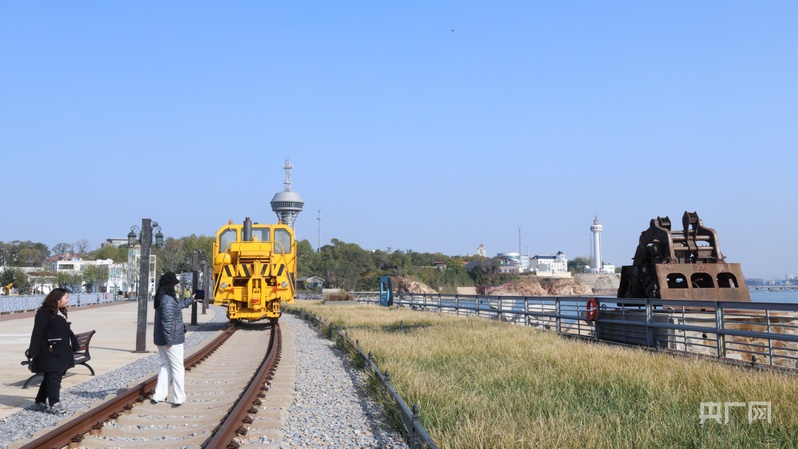
央广网秦皇岛11月6日消息(记者李瑶见习记者安适存)铁轨的尽头,不是荒芜,而是无垠的大海与勃勃生机。 这是近日记者踏入河北秦皇岛西港花园开埠地时,最直观也最震撼的感受。脚下古老的钢轨,如同历史的脉络, 静静延伸向波光粼粼的蔚蓝。铁轨两侧,经过精心改造的旧工业厂房,营造着一番静谧而文艺的新景象。 曾经,作为机器轰鸣的工业区,秦皇岛港肩负着"能源输出港"的国家使命。西港开埠地是百年秦港的发祥地,原 为秦皇岛港西港区的煤炭集疏作业区,包括开埠大码头、南栈房、铁路调车场等区域。 如今,包含西港开埠地、东港区能源专业化码头和西港区集装箱码头的秦皇岛港口工业旅游区依照"工业风、港 口范、时尚感"的设计思路,将百年的工业记忆与全新的海洋经济、海滩文旅完美融合,将开埠地打造成为集氛 围感、复古风、工业范儿于一身的潮流打卡地。2024年12月,秦皇岛港口工业旅游区正式获评国家4A级旅游景 区。 而那条曾经承载着港口货运重任的铁轨,也成为了连接过去与现在的时光隧道。 沿着铁轨来到开埠地码头,随处可见年轻人拍照打卡,在颇具岁月感的火车头或者具有现代文艺气息的建筑旁定 格幸福瞬间。洪豆和刘文杰在这里经营摄影工作室已经一年多,对他们而 ...

亿吨大港、百万标箱、千亿产业 如皋市港产城融合发展规划发布
Shang Hai Zheng Quan Bao· 2025-11-04 19:09
Core Viewpoint - The "Nantong Rugao Port-Industry-City Integration Development Plan" aims to promote high-quality development by integrating port, industry, and urban functions, targeting a billion-ton port, million standard containers, and a trillion-yuan industry within five years [5][6]. Group 1: Development Goals - Rugao aims to become a modern port city in the northern Yangtze River Delta, focusing on four positioning goals: important node for river-sea transport, high ground for intelligent manufacturing, open gateway for cross-river integration, and an eco-friendly city [5][6]. - The plan outlines a 3+2+X advanced manufacturing system, including three leading industries: high-end equipment and marine engineering, automotive and parts, and new power equipment, along with two emerging industries: new generation information technology and new materials [5]. Group 2: Strategic Initiatives - The development strategy includes "Core Engine Development," "Radiation Empowerment Collaboration," and "All-domain Integration and Co-prosperity," aiming to create a dual-core and four-system urban development pattern [5]. - Rugao is committed to enhancing its port's driving effect, building an efficient transportation system, and transforming the "golden coastline" into "golden benefits" for development [7]. Group 3: Collaborative Efforts - The Rugao Development Promotion Association was established to connect local talents and promote cooperation for shared development [8]. - The promotion event attracted over 300 local talents, 200 key business representatives, and nearly 100 experts, leading to the signing of several high-quality port-industry-city projects [7][8].
未来3年将有邮轮以青岛元素命名
Qi Lu Wan Bao· 2025-11-04 11:13
Core Viewpoint - Qingdao has released a development plan for the cruise industry from 2025 to 2035, aiming to establish itself as a leading international cruise tourism destination and a core node for "Belt and Road" cruise cooperation [1] Group 1: Development Goals - By 2028, Qingdao aims to receive over 50 cruise ships annually, with inbound and outbound tourists exceeding 200,000, and to cultivate 1-2 local cruise operating companies [1] - By 2035, the target is to receive over 200 cruise ships annually, with inbound and outbound tourists surpassing 1 million, attracting international cruise company headquarters, and establishing a high-quality cruise operation [1] Group 2: Key Tasks (2025-2028) - Implement port facility and service enhancement projects, including smart customs systems and cruise maintenance bases, to improve visitor services and cruise service capabilities [2] - Expand cruise routes and upgrade products by diversifying home port routes and developing coastal cruise lines and themed products [2] - Focus on market promotion and brand building, optimizing support policies for customer expansion and creating a unique international cruise tourism brand [2] - Develop the entire cruise industry chain, emphasizing the growth of cruise repair, operation management, and related sectors [2] - Foster integration of port, industry, and city, attracting high-end service institutions and promoting coordinated development between maritime and urban areas [2]