
视觉智能

Search documents
桐庐县推动“双百”攻坚全面扬势,奋力实现“两高”目标
Hang Zhou Ri Bao· 2026-02-28 02:05
Group 1 - The core task is to focus on high-quality development and the construction of a common prosperity demonstration zone, emphasizing the role of Tonglu as a leader in high-quality development in the western green development corridor [1] - The strategy includes deepening the integration with Hangzhou and promoting the "Double Hundred" initiative to achieve significant results in the first year of the 14th Five-Year Plan [1] Group 2 - The economic development strategy aims to drive growth through the Tonglu Economic Development Zone and the High-tech Zone, with a target of over 10% growth in the "296X" industrial cluster output [2] - Specific targets include logistics industry revenue exceeding 75 billion yuan and breakthroughs in various sectors such as visual intelligence, new energy, new materials, and life health industries [2] - The plan includes attracting over 36 projects worth over 100 million yuan and achieving breakthroughs in projects worth 5 billion yuan [2] Group 3 - The urbanization strategy focuses on building a modern county town model, aiming for an urbanization rate of 72.6% [3] - The initiative includes the integration of urban and rural services, with a goal of 100% coverage in water supply, waste disposal, and soil disposal [3] - Economic growth strategies aim to maintain high income growth rates for all residents, with collective economic growth exceeding 80% [3]
两会观察:杭州的新坐标,不止人工智能
Zhong Guo Xin Wen Wang· 2026-01-23 10:24
Group 1 - The core focus of Hangzhou's government work report is the establishment of the "296X" advanced manufacturing cluster, aiming to enhance the development of artificial intelligence and visual intelligence industries, along with nine trillion-level industrial clusters for high-quality growth [1][2] - The "296X" advanced manufacturing cluster is seen as a key driver for Hangzhou's high-quality manufacturing development, with a target to achieve an industrial output value exceeding 1.37 trillion yuan, reflecting a year-on-year growth of 7.9%, which is 2.7 percentage points higher than the overall industrial growth rate [2][3] - The city aims to cultivate over 650 "specialized, refined, distinctive, and innovative" small giant enterprises and increase the number of large-scale industrial enterprises to 8,000 [3] Group 2 - Artificial intelligence is identified as a critical variable within the "296X" advanced manufacturing cluster, with the establishment of a 2 billion yuan "Ruiniao Fund" to alleviate early-stage financing challenges for tech startups in this sector [4][6] - The nine trillion-level industrial clusters, including biomedicine and new materials, are considered the backbone of Hangzhou's modern industrial system [7][8] - Recommendations include enhancing support for biomedicine companies seeking to go public and establishing a scientific service mechanism to facilitate their development [8][9]


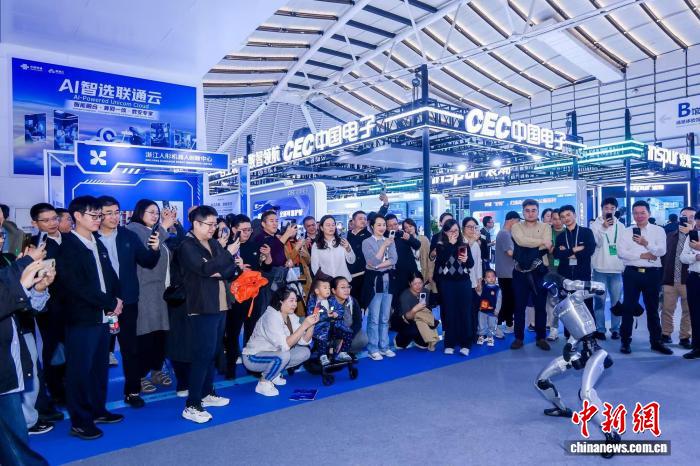
杭州市两会将启 邀请先进制造业集群企业负责人等旁听
Xin Lang Cai Jing· 2026-01-16 13:55
Group 1 - The core focus of the upcoming Hangzhou municipal meetings is the "296X" advanced manufacturing cluster, which aims to enhance the city's industrial capabilities and political participation [1][3][4] - The Hangzhou municipal government will hold the 14th People's Congress from January 21 to 24 and the 12th Political Consultative Conference from January 20 to 23, both lasting four days [1][3] - The "296X" advanced manufacturing cluster includes two trillion-level world-class industrial clusters in artificial intelligence and visual intelligence, along with nine hundred billion-level clusters in various sectors [4][5] Group 2 - The city of Hangzhou aims to strengthen the "296X" advanced manufacturing cluster as a key task in the 15th Five-Year Plan, emphasizing its importance for economic development [5] - In 2023, Hangzhou became the eighth city in China to achieve a GDP exceeding 2 trillion yuan, with a projected GDP of 21,860 billion yuan for 2024 [5] - Legislative priorities for the year include developing new productive forces and promoting innovation, particularly in artificial intelligence and service industries [5]
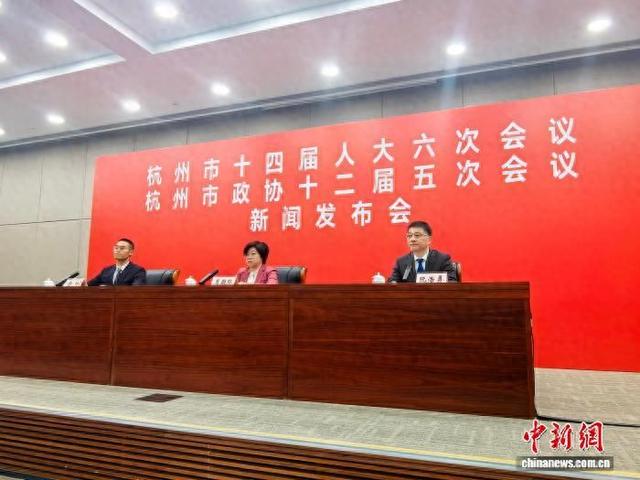
杭州“十五五”规划建议:聚焦具身智能机器人及其他智能终端、集成电路、生物医药与医疗器械、网络通信、智能网联汽车等9个领域 打造千亿级产业集群
Jin Rong Jie· 2026-01-16 02:56
Core Insights - The article discusses the Hangzhou Municipal Committee's recommendations for the 15th Five-Year Plan, emphasizing the strengthening and optimization of the "296X" advanced manufacturing clusters [1] - It highlights the goal of developing two trillion-level industrial clusters in artificial intelligence and visual intelligence, aiming for national recognition in AI manufacturing and global competitiveness in visual intelligence [1] Group 1: Advanced Manufacturing Clusters - The plan focuses on nine key areas to create billion-level industrial clusters, including intelligent robotics, integrated circuits, biomedicine and medical devices, network communication, smart connected vehicles, new energy equipment, new materials, high-end general equipment, and modern textiles and apparel [1] - There is an emphasis on establishing a growth mechanism for future industry investments and a foresight mechanism for disruptive technologies [1] Group 2: Future Industry Development - The initiative includes the exploration of various technological routes, typical application scenarios, feasible business models, and market regulatory rules for six future industry clusters, including synthetic biology, aerospace, low-altitude economy, quantum technology, optoelectronic technology, and brain-like intelligence [1] - The plan aims to build several pilot zones for future industries, enhancing the quality and standards of traditional industries through technological upgrades and ecological transformations [1] Group 3: Traditional Industry Upgrades - The article mentions the "腾笼换鸟, 凤凰涅槃" (replace the old with the new, rebirth of the phoenix) initiative to support the high-level inheritance and quality development of historical classic industries such as arts and crafts, silk, tea, and traditional Chinese medicine [1] - It also stresses the importance of accelerating the technological transformation and ecological upgrades of traditional industries like precision machinery, electrical machinery, and food and beverage [1]

杭州“十五五”规划建议:加快打造人工智能、视觉智能2个万亿级产业集群
Zheng Quan Shi Bao Wang· 2026-01-16 02:53
Core Viewpoint - The article discusses the strategic plan by the Hangzhou Municipal Committee to enhance the city's economic and social development through the establishment of advanced manufacturing clusters, particularly focusing on artificial intelligence and visual intelligence industries, aiming for trillion-level industry clusters [1] Group 1: Advanced Manufacturing Clusters - The plan emphasizes strengthening and optimizing the "296X" advanced manufacturing clusters [1] - It aims to accelerate the development of artificial intelligence and visual intelligence into trillion-level industry clusters [1] - The goal is to actively pursue the creation of a national-level advanced manufacturing cluster in artificial intelligence and elevate the visual intelligence industry cluster to a world-class level [1] Group 2: Key Industry Focus Areas - The strategy focuses on nine key areas: embodied intelligent robots and other smart terminals, integrated circuits, biomedicine and medical devices, network communication, intelligent connected vehicles, new energy equipment, new materials, high-end general equipment, and modern textiles and clothing [1] - The plan aims to establish billion-level industry clusters in these areas [1] Group 3: Future Industry Development - The proposal includes the establishment of a growth mechanism for future industry investments and a foresight mechanism for disruptive technologies [1] - It highlights six future industry clusters: synthetic biology, aerospace, low-altitude economy, quantum technology, optoelectronic technology, and brain-like intelligence, exploring various technological routes and viable business models [1] Group 4: Traditional Industry Upgrades - The plan promotes the "腾笼换鸟、凤凰涅槃" initiative to enhance traditional industries through technological upgrades and ecological transformations [1] - It supports the high-level inheritance and quality development of historical classic industries such as arts and crafts, silk, tea, and traditional Chinese medicine [1]
准2万亿城市,终于“破零”了
首席商业评论· 2025-12-28 04:12
Core Viewpoint - Nanjing is on the verge of becoming the first city in Jiangsu province to achieve a trillion-yuan software industry, which is crucial for its economic growth and competitiveness as it aims to surpass a GDP of 2 trillion yuan by 2025 [5][8][24]. Group 1: Economic Pressure - Nanjing's GDP reached 18,500.81 billion yuan last year, making it a strong contender for the 2 trillion yuan mark, but it faces significant competition from cities like Ningbo, Qingdao, and others that have also set similar targets [5][9]. - The pressure to advance economically is evident, as Nanjing has no trillion-yuan industry yet, unlike other major cities in the Yangtze River Delta region [6][12]. - The city has acknowledged the need for a "breakthrough battle" in its industry to enhance its competitiveness [6][8]. Group 2: Industry Development Challenges - Nanjing's software industry has not kept pace with national growth rates, with several other cities showing faster growth in software business revenue [8][14]. - The city has historically lagged in developing new industries, with traditional sectors like chemical and steel seeing significant migration, leading to a lack of new industry growth [14][18]. - The private economy in Nanjing is weaker compared to cities like Suzhou and Hangzhou, which affects its overall industrial development [17][18]. Group 3: Strategic Opportunities - Nanjing possesses strong research and development capabilities and is positioned to leverage its geographical advantages to expand its influence beyond its immediate region [17][20]. - The city is actively implementing policies to support the growth of its headquarters economy, attracting major companies like Huawei and Xiaomi to establish regional offices [18][20]. - Nanjing aims to enhance its role as a strategic hub within the Yangtze River Delta, focusing on high-level collaboration and innovation to drive economic growth [22][24].
奋战四季度 夺取全年胜丨瞄准智能赛道 杭州两大万亿级先进制造业集群呼之欲出
Xin Lang Cai Jing· 2025-12-17 14:19
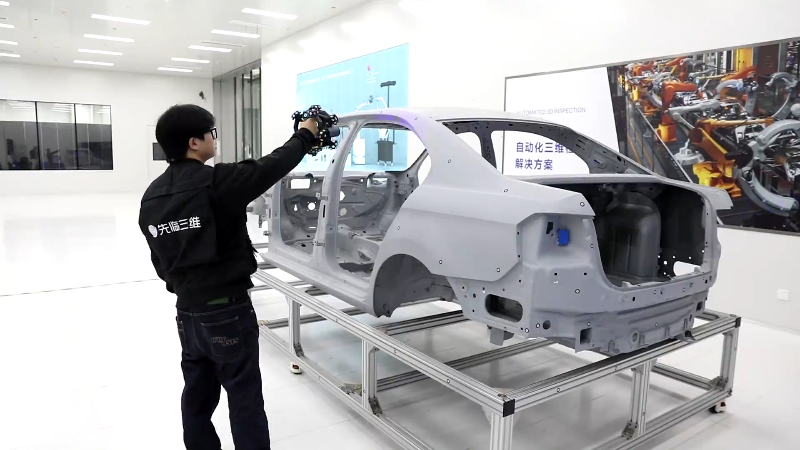
Group 1: Industry Development - Hangzhou is promoting high-quality development in manufacturing by advancing the "296X" industrial cluster system, focusing on artificial intelligence and visual intelligence as key trillion-level advanced manufacturing clusters [1][13] - In the first three quarters of this year, the core industries of visual intelligence and artificial intelligence in Hangzhou achieved revenues of 710 billion yuan and 390 billion yuan respectively, both showing double-digit growth [1][13] Group 2: Company Innovations - Xianlin 3D Technology Company showcased its latest tracking laser 3D scanning technology, which can produce a complete 3D model of a car in just a few minutes, benefiting from the industrial cluster advantages in "China Vision Valley" [3][15] - The CEO of Xianlin 3D Technology, Li Tao, noted that proximity to suppliers has facilitated collaborative development, reducing the need for long-distance travel for meetings [5][15] Group 3: Collaborative Ecosystem - YunJian Information Technology Company, located next to Xianlin 3D, focuses on computing power and hardware development, achieving a revenue of 4.26 billion yuan last year, with over 200% year-on-year growth [8][18] - The visual intelligence industry chain in "China Vision Valley" encompasses all segments from upstream algorithm and chip design to downstream cloud platforms, attracting over 1,200 large-scale enterprises [9][19] Group 4: Government Initiatives - Hangzhou has released a "scene opportunity list" and a "scene capability list" to match artificial intelligence technologies with practical applications, gathering 292 demands and 362 technologies from government and enterprises [11][21] - The West Lake District aims to provide at least 1,000 acres of industrial land annually for the next three years, prioritizing projects in artificial intelligence and future industry clusters [11][21] - The Deputy Director of the West Lake District Development and Reform Bureau, Chen Bin, stated the goal of exceeding 200 billion yuan in revenue from the core artificial intelligence industry by 2027 [23]
九层之台起于累土 杭州何以打造“296X”先进制造业集群
Jing Ji Ri Bao· 2025-12-07 22:00
Core Insights - The "China Vision Valley" industry ecosystem conference held in Hangzhou on November 16, 2025, highlights the rapid development of the visual intelligence industry, which is part of the "296X" advanced manufacturing cluster, achieving a significant transition from strategic conception to a new economic landmark [1][2] - Hangzhou aims to establish itself as a global advanced manufacturing base, focusing on the integration of new technologies and industries to create a modern industrial cluster [1][2] Group 1: Manufacturing Development - Hangzhou's manufacturing sector has seen significant achievements, including winning the "Zhejiang Manufacturing Tian Gong Ding" award and maintaining the highest quality development index in the province for six consecutive years [1][2] - The city has 42 national manufacturing "single champion" enterprises, ranking fifth among cities nationwide and first among provincial capitals [1][2] Group 2: Industry Ecosystem - The "296X" advanced manufacturing cluster includes two major industry clusters: artificial intelligence and visual intelligence, along with nine additional clusters such as robotics, biomedicine, and new materials [2][3] - The visual intelligence industry in Hangzhou generated revenue of 710.4 billion yuan in the first three quarters of 2025, reflecting a year-on-year growth of 14.4% [3] Group 3: Innovation and Future Industries - Hangzhou is focusing on five major industry ecosystems: intelligent IoT, biomedicine, high-end equipment, new materials, and green energy, aiming to enhance industrial concentration and scale [2][4] - The city plans to cultivate a robust ecosystem for artificial intelligence, targeting a scale of 300 billion yuan for the AI terminal industry by 2027, with a focus on key research projects and popular product development [4][5] Group 4: Future Growth and Innovation - The city has introduced a "new force" initiative, identifying 47 innovative enterprises across future industry clusters, including synthetic biology and quantum technology [5] - By 2027, Hangzhou aims to nurture four world-class enterprises, 55 national manufacturing champions, and 600 specialized and innovative "little giant" enterprises, with a target of 7,800 industrial enterprises [5][6]
杭州打造全球视觉智能产业标杆,请看《浪尖周报》第51期
Xin Lang Cai Jing· 2025-11-30 05:21
Core Insights - The "Wave Plan" aims to promote industrial collaboration and technological innovation in the Yangtze River Delta region [1] - The "Wave Weekly: Yangtze River Delta Industrial Dynamics" focuses on the latest industrial developments in nine trillion GDP cities, highlighting key news and leadership activities [1] Industry Highlights - Hangzhou's visual intelligence industry reported a revenue of 710.4 billion yuan in the first three quarters [2] - Shanghai's Xuhui district is developing a "Blockchain + AI" industrial cluster [2] - Nanjing is collaborating with Baiyun Electric to enhance the capabilities of the smart grid industry [2] - Hefei's major scientific facilities, including EAST, CRAFT, and BEST, are now open to global access [2] - Suzhou's Taicang is building a modern port to promote the integration of industry and city [2] - Ningbo's Qianwan New Area is strengthening its dual industrial clusters in biomedicine and new energy vehicles [2] - Wuxi is advancing the expansion of the 465 cluster in coordination with the new energy chain [2] - Nantong is deepening its layout in the new tracks of artificial intelligence and integrated circuits [2] - Changzhou's Nine Company ecological chain project has settled in the high-tech zone [2]
上海促G60科创走廊迈向世界级,请看《浪尖周报》第50期
Xin Lang Cai Jing· 2025-11-23 11:42
Core Insights - The "Wave Plan" launched by the Zhituo Finance's think tank, Pengpai Research Institute, aims to promote industrial collaboration and technological innovation in the Yangtze River Delta region [1] Industry Highlights - Shanghai is focusing on the G60 Science and Technology Innovation Corridor, targeting two major industries to achieve world-class status [1] - Nanjing is accelerating the establishment of more "Hema Village" direct supply bases [1] - Hangzhou is striving to develop the "China Vision Valley" into a trillion-yuan visual intelligence cluster [1] - Hefei has a significant presence in quantum enterprises, accounting for one-third of the national total [1] - Suzhou is deepening cooperation with Singapore to build a 600 billion yuan industrial cluster [1] - Ningbo's Cixi home appliance industry is rapidly transitioning to smart manufacturing, aiming to cultivate export brands [1] - Wuxi has seen a concentration of innovative pharmaceutical companies receiving approvals, with new Class I and Class III drugs being launched [1] - Nantong is collaborating with provincial coastal groups to establish a marine industry characteristic park [1] - Changzhou's Kangyuan Group is setting up a biopharmaceutical innovation base in Xitai Lake [1]