股市回调

Search documents
美股狂飙之际现不祥之兆 卖压低迷预示回调将近?
智通财经网· 2025-07-11 11:01
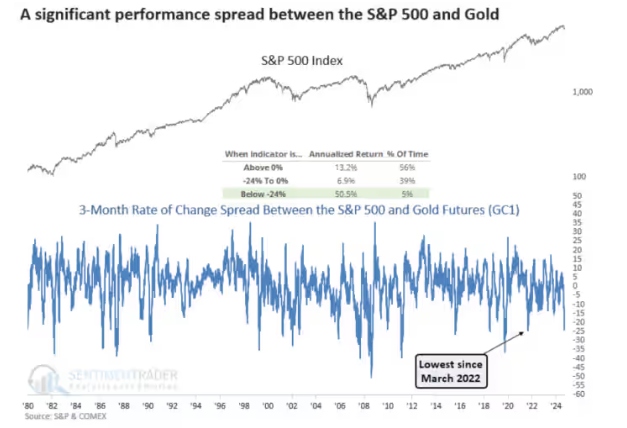
Group 1 - The core viewpoint indicates that the current market conditions, characterized by a lack of selling pressure and a high concentration of trading in large tech stocks, may suggest an overly optimistic sentiment among investors, potentially leading to a market correction [1][4][5] - The S&P 500 index has reached record highs multiple times recently, with a notable increase of approximately 26% since late April, yet the volume of declining stocks has dropped to its lowest level since 2020, indicating a possible overconfidence in the market [1][4] - Historical data shows that similar market conditions in the past have often preceded declines of at least 5% in the S&P 500, suggesting that a correction could be on the horizon, although it may be limited to a 3% to 5% range [1][3] Group 2 - Investors are currently favoring aggressive sectors such as technology and finance over defensive sectors, reflecting a strong risk appetite, which may lead them to view any market pullback as a buying opportunity [3][4] - The Chicago Board Options Exchange Volatility Index (VIX) has fallen to its lowest level since late February, indicating a decrease in demand for protection against market downturns, which could be interpreted as a sign of investor complacency [4][5] - Despite the low VIX levels, it is suggested that this does not indicate a lack of awareness regarding risks, as investors have already priced in known uncertainties such as trade tensions and economic growth concerns [5]

投行:如果霍尔木兹海峡关闭 股市可能暴跌20%
news flash· 2025-06-23 04:11
Core Viewpoint - The investment bank Panmure Liberum suggests that if Iran retaliates against attacks on its nuclear facilities without closing the Strait of Hormuz, the stock market may experience an initial decline of approximately 5%-10%. However, if Iran closes the Strait, a significant inflation shock could occur, potentially leading to a stock market drop of 10% to 20% [1]. Group 1 - If the Strait of Hormuz is closed, a severe stagflation shock similar to that of 2022 is expected [1]. - The bank indicates that the inflation impact from closing the Strait would be substantial but not enough to derail the markets and economies of the US, UK, and Eurozone in the long term [1]. - A potential new bear market could emerge if trade tensions escalate again in early July [1].
中东战火重燃市场忧虑!小摩率先撤回美股看涨立场
智通财经网· 2025-06-17 11:38
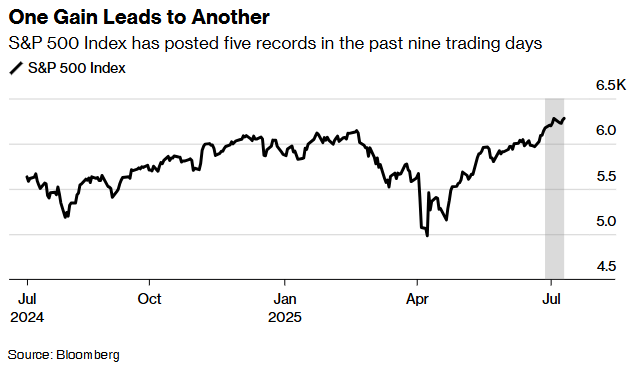
Group 1 - The escalation of tensions in the Middle East has heightened market concerns regarding inflation and the timing of interest rate cuts in the U.S., leading at least one Wall Street firm to adopt a cautious outlook on the prospects for new stock market highs [1] - Morgan Stanley's trading department has abandoned its tactical bullish stance on the U.S. stock market due to rising risks and an increased likelihood of market pullbacks, despite the S&P 500 index rising on expectations that the conflict between Iran and Israel will not escalate into a full-scale war [1] - The S&P 500 index has rebounded 21% since its April low, but signs indicate that the risk appetite driving this rebound is encountering resistance, with the index hovering around the 6000-point mark and the "fear index" VIX remaining below 20, reflecting ongoing investor concerns about geopolitical and other risks [1] Group 2 - Market strategists, including Matt Maley from Miller Tabak, share a similar view that even if the S&P 500 challenges historical highs, the downside risks currently outweigh the upside potential, especially given the index is only 1.8% away from its peak [3] - The U.S. stock market faces multiple headwinds amid escalating Middle Eastern conflicts, with economic growth slowing and earnings expectations being continuously revised downward, compounded by geopolitical uncertainties [3] - Concerns about overvaluation are becoming evident, as the S&P 500 index has stagnated over the past five trading days, showing little reaction to positive consumer and producer price index reports from the previous week [3] Group 3 - Investors are pricing in geopolitical benefits based on a valuation level exceeding 23 times the expected earnings for 2025, yet there is a lack of substantial evidence to support this pricing [4]

【环球财经】市场消化美国评级下调 纽约股市三大股指19日上涨
Xin Hua Cai Jing· 2025-05-19 22:51
Market Overview - The New York stock market indices opened lower but turned positive by midday, with all three major indices closing higher on May 19. The Dow Jones Industrial Average rose by 137.33 points to 42792.07, a gain of 0.32%. The S&P 500 increased by 5.22 points to 5963.6, up 0.09%. The Nasdaq Composite added 4.36 points to 19215.46, a rise of 0.02% [1]. Sector Performance - Among the eleven sectors in the S&P 500, seven saw gains while four experienced declines. The healthcare and consumer staples sectors led the gains with increases of 0.96% and 0.42%, respectively. Conversely, the energy and consumer discretionary sectors lagged, declining by 1.55% and 0.27% [1]. Credit Rating Impact - Moody's downgraded the U.S. sovereign credit rating from Aaa to Aa1 due to increased government debt and interest expenditures, changing the outlook from "negative" to "stable." Analysts noted that the report did not reveal any new information about the U.S. fiscal situation [1][2]. Economic Indicators - The Conference Board reported a 1% month-over-month decline in the U.S. leading economic index for April, which was worse than the market expectation of -0.8% [2]. Retail Sector Insights - UBS analyst Jay Sole highlighted a 4.8% year-over-year decrease in the number of stores selling soft goods like clothing and bedding in March, compared to a 2.7% decline in December. However, discount retailers like TJX Cos. and Burlington saw an increase of over 4% in store numbers during the first quarter [2]. Stock Recommendations - Sole rated the stocks of TJX Cos. and Burlington as "buy" due to their performance in the discount retail sector [3]. Individual Stock Performance - UnitedHealth Group Inc., the largest health insurance company in the U.S., continued its upward trend, rising by 8.21% to close at $315.89 per share [3].
美国失去“最后一个AAA评级”,穆迪下手的时点很“微妙”,华尔街:这给了美股回调理由
Hua Er Jie Jian Wen· 2025-05-17 02:28
Core Viewpoint - Moody's downgraded the U.S. credit rating from Aaa to Aa1, marking the first time all three major rating agencies have rated the U.S. below AAA, coinciding with Republican efforts to pass Trump's tax reform plan [1][2][4] Group 1: Credit Rating Downgrade - Moody's announced the downgrade on May 16, following a failed vote in the House Budget Committee on Trump's tax reform proposal, known as the "Beautiful Bill" [1][3] - The downgrade reflects concerns over increasing structural deficits, with Moody's warning that the proposed tax reform could add approximately $4 trillion to the deficit over the next decade [4][5] Group 2: Market Reactions - Following the downgrade, U.S. stock index futures fell, and Treasury yields rose, indicating a negative market reaction [2][5] - Analysts believe the downgrade could lead to a market pullback, as it adds to existing uncertainties regarding fiscal policy and economic conditions [5][7] Group 3: Political Context - The timing of the downgrade is seen as significant, occurring just hours after hardline Republicans blocked the tax reform proposal, highlighting the political tensions within the party [3][4] - The failed proposal aimed to extend tax cuts from the 2017 Trump administration, but faced opposition from within the Republican ranks, particularly regarding cuts to Medicaid and green energy tax credits [4]

黄金将美股远远甩在身后,小心命运之轮再次转动!
Jin Shi Shu Ju· 2025-03-24 08:14
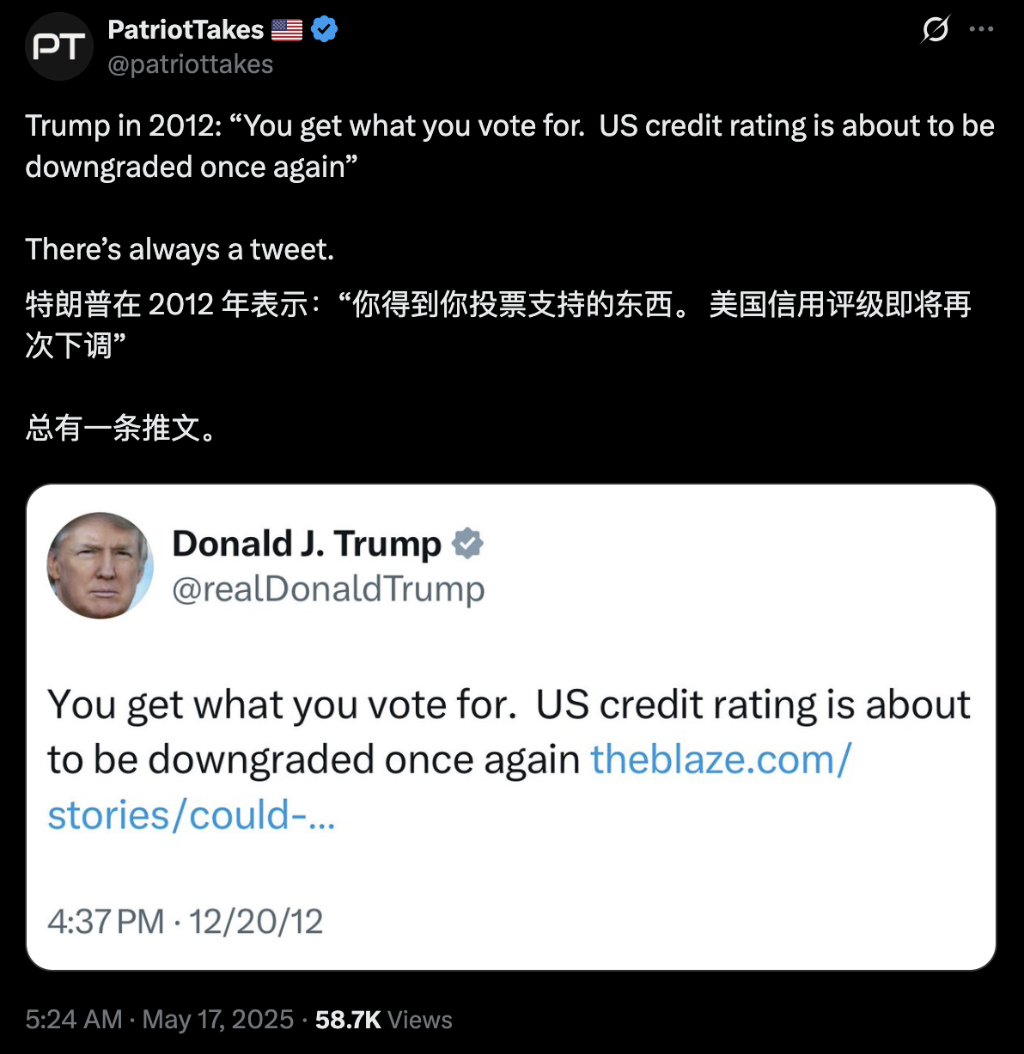
Core Insights - The U.S. stock market has underperformed this year, while gold prices have surged above $3,000 per ounce, indicating a potential shift in market dynamics in the coming months [1] - The S&P 500 index has lagged behind gold futures by 24% over the past three months, marking the largest gap since March 2022, characterized by market pressure and increased demand for safe-haven assets [3] Group 1 - The return rate gap between the S&P 500 and gold futures has reached its most significant level in over two years, with only 5% of historical instances since 1970 showing a gap below -24% [3] - This divergence suggests that traders' pessimism is intensifying, often indicating a market bottom followed by a rebound in the coming months [3] - Historically, when the return rate gap falls below -24%, the S&P 500 index tends to experience a volatile bottoming process, with a 65% probability of rising in the subsequent two months [3] Group 2 - Following the -24% return rate gap, gold may face pressure in the initial months, indicating traders' reluctance to hold safe-haven assets like gold [4] - If the stock market rebounds, gold could experience short-term pressure while remaining within its long-term upward trend [4]