
标普500指数

Search documents
格林大华期货早盘提示-20260330
Ge Lin Qi Huo· 2026-03-30 00:08
1. Report Industry Investment Rating - The report gives a "downward" rating for the global economy in the macro and financial sector [1] 2. Core Viewpoints - The closure of the Strait of Hormuz by Iran and the escalating Middle - East conflict will have a significant impact on the global economy and financial markets [1][2][3] - There is a high probability that the conflict will continue until June, which may cause oil prices to soar and gasoline prices in the US to rise [1][2] - The release of strategic oil reserves by the IEA cannot fully compensate for the supply gap caused by the blocked Strait of Hormuz [2][3] - The continuous high - oil prices will impact the global economy, and the decline of the US stock market may have a negative impact on US consumption [3] 3. Summary by Related Content 3.1 Important Information - Iran's Islamic Revolutionary Guard Corps has closed the Strait of Hormuz, and any attempt to pass through will be severely punished. Ships to and from "ports of US - Israeli hostile allies and supporters" are prohibited [1] - Israel has attacked three nuclear facilities and weapon bases in Iran [1] - The Houthi armed forces have launched missiles at Israel, and the Yanbu Port and the Bab - el - Mandeb Strait, which are important for oil transportation, are within the missile range [1] - The Pentagon is formulating a "decisive blow" military plan against Iran, which may include using ground forces and large - scale bombing [1] - The conflict in the Middle - East is difficult to resolve in the short term, and the closure of the Strait of Hormuz has broken the market's optimistic expectation of "cease - fire means navigation" [1] - The blockade of the Strait of Hormuz is causing an oil shock, with Asian inventories approaching the limit and Africa and Europe facing pressure in April [1] - The probability of the conflict continuing until June is as high as 40%, and if this happens, oil prices may exceed $200, and US gasoline may reach $7 per gallon [1][2] - There has been a significant price fluctuation in Brent crude oil futures, and market liquidity is thinning [1] - The S&P 500 index has fallen for five consecutive weeks, the Goldman Sachs panic index is in the panic zone, and hedge funds have been net - selling [1] 3.2 Global Economic Logic - Iran has made it clear that it will not negotiate until all its cease - fire conditions are met [2] - The control of the Strait of Hormuz is crucial for the Middle - East "ultimate battle" and is related to the global energy lifeline and the US dollar's foundation [2][3] - The IEA's release of 400 million barrels of strategic oil reserves cannot fully cover the supply gap of 11 - 16 million barrels per day caused by the blocked Strait of Hormuz [2][3] - Analysts from multiple institutions warn that oil prices may rise significantly, and traders face high risks [2] 3.3 Impact on the Economy - High - oil prices will impact the global economy, and the decline of the US stock market may have a negative impact on US consumption [3] - Due to the US's wrong policies, the global economy has passed its peak in late 2025 and is in a downward trend [3]
特朗普总在周末出手,华尔街已经不敢持仓过周末了
华尔街见闻· 2026-03-29 01:35
Core Viewpoint - The article discusses the impact of President Trump's weekend announcements on the financial markets, particularly focusing on the volatility and reactions from investors due to his military actions and statements regarding Iran [4][14]. Group 1: Market Reactions - Trump's announcement on Saturday regarding potential military action against Iran led to a significant drop in Brent crude oil prices, which fell over 14% on Monday [5][4]. - Following Trump's decision to extend the deadline for Iran to reach an agreement, oil prices initially rebounded but then reverted to previous trends, indicating market fatigue towards his verbal interventions [6][8]. - The Dow Jones Industrial Average has dropped over 10% from its peak this year, entering a correction phase alongside the Nasdaq [8]. Group 2: Investor Behavior - Traders are increasingly reluctant to hold large positions over the weekend due to the potential for drastic market movements on Monday following Trump's announcements [9][10]. - Kathy Jones from Charles Schwab noted that entering the weekend with any position size could lead to a challenging Monday morning for investors [10]. Group 3: Trump's Decision-Making Patterns - Trump's history of making significant announcements during weekends has been noted, with past actions including military strikes and geopolitical maneuvers occurring during market closures [11][14]. - The White House has denied any correlation between the timing of military actions and market hours, asserting that decisions are based on strategic considerations rather than market timing [12][13]. Group 4: Market Pressure Index - Deutsche Bank's pressure index, which assesses market conditions based on various economic indicators, has reached its highest level since Trump took office, suggesting that he tends to make impactful decisions during times of market stress [15][17]. - The index reflects the performance of the S&P 500, U.S. Treasury yields, inflation expectations, and Trump's approval ratings, indicating a correlation between market pressure and his decision-making [16]. Group 5: Future Risks and Uncertainties - Analysts warn that the potential for escalation in the Middle East remains high, with increased military presence in the region and the possibility of further actions against Iran [22][24]. - The ambiguity in Trump's signals regarding military engagement could lead to prolonged market volatility, as noted by former officials and analysts [24][25]. - There is a consensus that future weekends may see increased volatility, although caution is advised against overinterpreting patterns in Trump's actions [25][26].


波动率居高不下,油价会成为压垮市场的最后一根稻草?
美股IPO· 2026-03-26 16:03
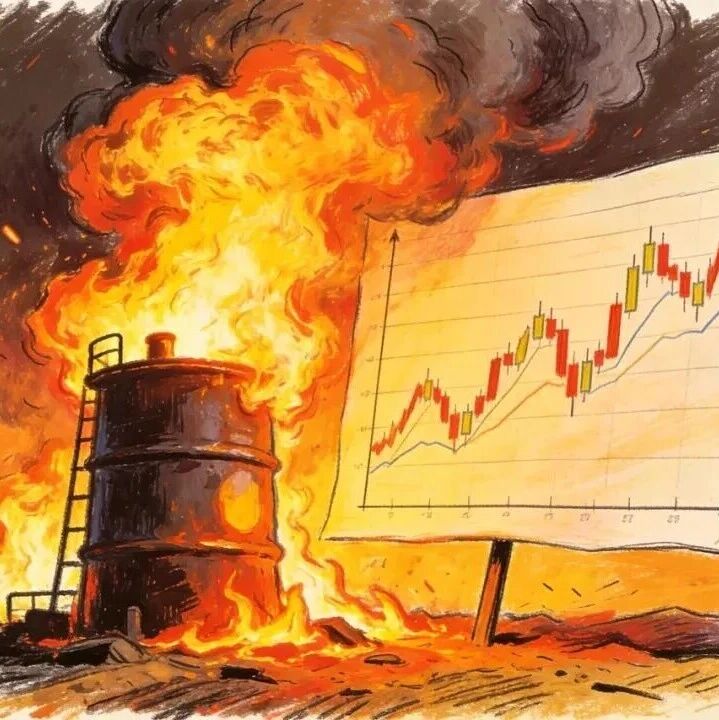
Group 1 - The core viewpoint of the article highlights that oil prices are experiencing a steep upward trend since early March, with a dominant bullish sentiment prevailing in the market. However, the oil volatility index (OVX) remains high at 90, indicating significant price fluctuations are expected [1][3][6] - Oil prices are now a central driver of cross-asset pricing, showing a strong inverse correlation with the S&P 500 index and a high positive correlation with U.S. Treasury yields. The 4.4% yield on 10-year U.S. Treasuries is identified as a critical threshold, and a breakout above this level could lead to a revaluation of the current market balance [3][8] - The market is facing a potential crisis as oil prices, U.S. Treasury yields, and inflation expectations are rising simultaneously, suggesting a "second wave of inflation" is being priced in rather than viewed as a temporary phenomenon [8] Group 2 - The article notes that the market sentiment regarding the situation in Iran is divided, with a 56% implied probability that the conflict will end by mid-May, while the likelihood of U.S. naval escorts through the Strait of Hormuz has increased from about 10% to 40%, indicating ongoing risks [3][6] - Analysts suggest that investors holding strategic long positions in oil may consider using an options overwriting strategy to manage risks, especially if they anticipate a stabilization in the geopolitical situation [6] - Emerging markets are under significant pressure from rising oil prices, interest rates, and volatility, with the Emerging Markets ETF (EEM) at a critical support level. If this support is breached, a rapid decline could occur [8]
“战时买黄金”不管用了?
财联社· 2026-03-26 06:17
Core Viewpoint - Despite ongoing geopolitical tensions and conflicts, gold, traditionally seen as a safe haven, has entered a bear market, primarily driven by a significant increase in retail investor participation in the precious metals market since the onset of the US-Iran conflict [1][2]. Group 1: Theories on Precious Metals Market Behavior - Three prevailing theories explain the current behavior of precious metals: 1. The pre-war surge in precious metal prices attracted many new retail investors, potentially altering trading dynamics to resemble risk assets rather than safe havens [2]. 2. Following substantial gains in precious metal positions at the end of 2025 and early 2026, increased uncertainty has led investors to lock in profits, resulting in selling pressure [2]. 3. Heightened market volatility has caused losses in other positions, particularly for hedge funds, prompting them to liquidate profitable positions, including gold, to meet liquidity needs [2][4]. Group 2: Performance Analysis of Precious Metals - Since the outbreak of the conflict, all precious metals have experienced declines: gold down 15%, silver down 25%, and platinum down 20%, while the S&P 500 index fell only 5%, indicating underperformance of precious metals relative to the broader market [4]. - The modest decline in the S&P 500 suggests that safe-haven sentiment has not been triggered, reinforcing the notion that recent declines in precious metals are residual effects of prior price surges [4]. - The lack of significant price increases in gold or other precious metals during the Russia-Ukraine conflict further supports the idea that the current situation may be a result of position liquidation rather than a flight to safety [4]. Group 3: Future Outlook on Precious Metals - The explanations provided do not negate the ongoing demand for precious metals as a hedge against currency devaluation, which is expected to persist as investors seek alternatives to debt monetization [5].
美伊谈判是真是假,至少华尔街已从特朗普引发的五分钟狂飙获得明确信号
华尔街见闻· 2026-03-24 00:11
Core Viewpoint - The article discusses the significant market reactions following Trump's statements regarding the de-escalation of tensions with Iran, highlighting the volatility in oil prices, U.S. Treasury yields, and stock markets, while also addressing investor skepticism about the sustainability of these changes [1][3][4]. Market Reactions - Oil prices, specifically Brent crude, experienced a sharp decline of 14%, dropping below $100 per barrel, following Trump's announcement to halt military actions against Iran [2][4]. - The S&P 500 index surged by 2.2% at one point, marking its largest increase since May, while the two-year U.S. Treasury yield fell by 22 basis points to 3.79% [4]. - Despite initial gains, the S&P 500's increase narrowed to approximately 1.2% by the end of the trading day, indicating a retreat in market confidence [4]. Investor Sentiment - Analysts suggest that Trump's statements were aimed at calming anxious investors and preventing a new wave of selling at the start of the week [3][4]. - There is a prevailing skepticism among investors regarding Trump's ability to effectively end the conflict, with concerns that his remarks may only serve as a temporary measure to stabilize the market [4][6]. Economic Implications - The ongoing conflict with Iran has led to rising energy prices, contributing to inflationary pressures and prompting traders to bet on further interest rate hikes by global central banks, which raises the risk of stagflation [7]. - The market has seen a significant loss, with over $2.5 trillion in value evaporating from the global bond market, potentially marking the largest monthly decline in over three years [7]. Political Dynamics - Trump's fluctuating stance on military actions and negotiations has raised doubts about his credibility in the financial markets, complicating investor positioning [9]. - The article notes that Trump's approach to market communication adds layers of uncertainty, making it difficult for investors to gauge the true state of the situation [9].

霍尔木兹海峡,大消息!伊朗:正在采取重大行动!
券商中国· 2026-03-21 11:49
Core Viewpoint - The article discusses the escalating tensions between Iran and the U.S., particularly focusing on military actions and their implications for global markets, especially oil prices and the S&P 500 index. Group 1: Iran's Military Actions - Iran's armed forces have announced significant actions in the Strait of Hormuz, warning that any attack on its infrastructure will lead to retaliation against critical U.S. and Israeli facilities [1][2] - Following an attack on Iran's Natanz nuclear facility by the U.S. and Israel, Iran emphasized its right to self-defense and maintaining regional security [2] Group 2: Market Reactions and Predictions - JPMorgan has lowered its S&P 500 index target from 7500 to 7200 points due to uncertainties stemming from the Iran conflict, predicting that disruptions in oil transport through the Strait of Hormuz could compress corporate profits and slow economic growth [4] - The S&P 500 index has experienced a decline of 1.51%, reaching its lowest level in six months, marking the longest consecutive weekly drop in over a year [4] Group 3: Oil Price Implications - The ongoing conflict has led to a significant increase in oil prices, with Brent crude rising over 50% this month, and the price of Abu Dhabi's Murban crude doubling [5] - JPMorgan analysts predict that if oil prices remain around $110 per barrel, the consensus earnings expectations for the S&P 500 could be adjusted down by 2% to 5% [5] - Concerns about rising oil prices are compounded by the potential for long-term disruptions in the Strait of Hormuz, which typically handles 20% of global oil transport [5][6] Group 4: Political and Economic Impact - Rising fuel prices due to the conflict are putting pressure on the U.S. administration and the Republican Party ahead of the midterm elections, potentially affecting their control in Congress [6] - Analysts warn that prolonged disruptions could push oil prices to $200 per barrel, exacerbating recession risks and tightening global energy supplies [6]


过去一周是一场清算,全球市场开始正视“伊朗战争不会很快结束”
华尔街见闻· 2026-03-21 10:05
Core Viewpoint - The article discusses the significant market turmoil following the outbreak of the Iran conflict, highlighting a shift in investor sentiment from expecting a quick resolution to recognizing the potential for a prolonged and damaging war, which has led to a reassessment of monetary policy expectations and market dynamics [2][3][21]. Market Impact - Global bond markets experienced severe declines, with the U.S. 10-year Treasury yield rising by 13.4 basis points in a single day and over 10 basis points for the week, while the 5-year yield surpassed 4% for the first time since July [5]. - European bond markets also faced pressure, with the UK 10-year yield increasing by 17.7 basis points, reaching 5% for the first time since 2008, and Germany's 10-year yield hitting a new high of 3.043% [6]. - Gold prices saw a dramatic drop, with spot gold falling over 10% and COMEX gold futures declining more than 11%, marking the largest weekly drop since March 1983 [7][8]. Investor Sentiment - Analysts indicate that the current market conditions reflect a fundamental shift in pricing logic, with investors now facing a sustained threat rather than a temporary price shock [3][4]. - The market's perception of the Federal Reserve's policy path has drastically changed, with a 50% probability of rate hikes by 2026 being priced in, contrasting with previous expectations of rate cuts [16][18]. Economic Outlook - The ongoing conflict is expected to increase recession risks, as the energy shock is deemed unprecedented, with no straightforward fiscal or monetary policy solutions available [13]. - The European Central Bank is also in a challenging position, facing inflation driven by energy costs while needing to support growth through potential easing measures [19]. Defensive Strategies - Institutional adjustments are underway, with firms like Societe Generale reducing global equity allocations and increasing commodity exposure, while BCA Research recommends raising cash positions and lowering stock allocations [24]. - Historical patterns suggest that U.S. equities typically bottom out around the 15th trading day following geopolitical shocks, with the S&P 500 currently down approximately 5.5% since the conflict began, indicating it may still be in a vulnerable position [25][26].
2026年美联储3月议息会议点评:滞胀为时尚早,关注通胀预期
CAITONG SECURITIES· 2026-03-19 03:45
1. Report Industry Investment Rating There is no information provided in the report regarding the industry investment rating. 2. Core Views - FOMC resolution landed as expected, keeping the interest rate unchanged with reduced divergence. The Fed announced to maintain the federal funds rate, with a neutral tone in the resolution statement and uncertainty about the impact of the Middle - East situation on the US economy. Only one voting member opposed the resolution [3]. - The market reaction was mild within 15 minutes after the resolution release as the market had almost fully priced in the unchanged interest rate. The S&P 500 index fell 0.10%, 2 - year US Treasury yield declined 0.01 basis points to 3.703%, 10 - year US Treasury yield dropped 0.08 basis points to 4.214%, spot gold fell 0.08% to $4890.64 per ounce, and the US dollar index rose 0.14% to 99.86 [3][7]. - The dot - plot shows one rate cut in 2026 and 2027 respectively. Powell's speech was hawkish, emphasizing inflation expectations. The latest economic forecast significantly raised the economic growth rate and inflation expectations. The market priced in the hawkish remarks, with the S&P 500 falling 0.39%, 2 - year US Treasury yield dropping 5.1 basis points to 3.567%, 10 - year US Treasury yield rising 4.3 basis points to 4.257%, spot gold falling 0.67%, and the US dollar index rising 0.28% to 100.09 [3]. - The short - term US Treasury yield curve may show a bear - steepening trend, and the US dollar will maintain a relatively strong oscillation. The short - term Treasury interest rate will continue to reverse the previous rate - cut expectations, and the long - term Treasury interest rate will rise due to higher inflation and economic expectations. The 2 - year US Treasury interest rate may oscillate between 3.44% - 3.8%, and the 10 - year US Treasury interest rate may oscillate between 4% - 4.4%. The US dollar index is expected to oscillate strongly in the range of 97 - 101. Chinese bond interest rates are mainly determined by domestic factors and are less affected by overseas factors [3][21]. 3. Summary by Directory 3.1 Fed Interest - Rate Meeting Focus 3.1.1 FOMC Resolution Keeps Interest Rate Unchanged - The 2026 March FOMC resolution had three points of concern compared to January: new description of stable unemployment rate, uncertainty about the impact of the Middle - East situation on the US economy, and reduced divergence with only one opposing vote [6]. - The market had almost fully priced in the unchanged interest rate before the meeting, so the immediate market reaction was mild [7]. 3.1.2 Dot - Plot Shows One Rate Cut in 2026 and 2027 Respectively - The Fed's economic forecast in March 2026 shows that economic growth is still guaranteed, and inflation is a more concerning issue. GDP growth rate forecasts for 2026 - 2028 were raised, unemployment rate forecast for 2027 was raised, and inflation expectations were also increased [11]. - The median of the federal funds rate for 2026 - 2027 is 3.4% and 3.1% respectively, with one rate cut expected each year. The dot - plot divergence has reduced, and the rate - cut幅度 of dovish voting members has generally decreased [11][12]. 3.1.3 Press Conference Speech is Hawkish - Powell's speech was hawkish, with the "employment - inflation" focus shifting slightly towards inflation, especially emphasizing inflation expectations [15]. - Regarding employment, he believes the labor market is balanced, but the zero net employment creation in the private sector implies risks. Regarding inflation, he is cautious, emphasizing the need to focus on the transmission of tariff inflation and the stickiness of non - housing service inflation. He avoids directly answering whether to ignore oil inflation [15][16]. - The current interest rate level is appropriate, between the boundaries of tight and non - tight. The market priced in the hawkish remarks clearly [16][17]. 3.2 How to View the Market - In the short term, the US Treasury yield curve may show a bear - steepening trend. The 2 - year US Treasury interest rate may oscillate between 3.44% - 3.8%, and the 10 - year US Treasury interest rate may oscillate between 4% - 4.4% [21]. - The US dollar index is expected to maintain a relatively strong oscillation in the range of 97 - 101 due to reduced rate - cut expectations and the US dollar's safe - haven and liquidity advantages [21]. - Chinese bond interest rates are mainly determined by domestic factors and are less affected by overseas factors, but attention should be paid to the depreciation pressure on the RMB caused by the strong US dollar [21].

霍尔木兹海峡持续关闭,但市场为何稳得住?
华尔街见闻· 2026-03-13 09:25
Core Viewpoint - Despite the closure of the Strait of Hormuz and escalating tensions in the Middle East, oil prices and the U.S. stock market have not experienced expected volatility, with current oil prices around $100 per barrel, significantly lower than historical crisis levels [3][4]. Oil Price Dynamics - The primary reasons for the restrained oil price increase include: 1. Low starting prices and ample inventory, with global oil stocks at a five-year high before the conflict, keeping prices manageable despite a nearly 40% surge in nine trading days [7]. 2. Market expectations of a quick resolution to the conflict, as indicated by futures market data showing that traders anticipate supply disruptions to last only a few weeks [7]. 3. Macro interventions, such as the release of 400 million barrels from reserves by the IEA and its member countries, which help stabilize oil prices despite a daily loss of 15 million barrels in shipping capacity [7]. Historical Context of Oil Crises - Historical oil crises have seen higher absolute prices, and current major economies have significantly reduced their dependence on oil for heating and power generation [11]. - Estimates suggest that oil futures may need to rise by an additional $40 to $50 to trigger an economic recession comparable to past crises, indicating a macroeconomic buffer that allows conflict parties to maintain their positions [12]. Impact on Global Economies - The price increase is causing more severe disruptions in developing economies, particularly in Asia, which face compounded risks from soaring oil prices and fuel shortages [14]. U.S. Stock Market Behavior - The U.S. stock market has shown resilience, largely due to the country's status as the largest oil producer, which insulates it from direct impacts of the energy crisis [15]. - An unusual market phenomenon has emerged where defensive sectors, typically seen as safe havens during geopolitical conflicts, have underperformed, with healthcare and consumer staples ETFs declining by approximately 5% and 6%, respectively [17]. Sector Rotation Insights - The rotation within the stock market is influenced by geographic exposure, with companies generating a higher percentage of revenue from North America showing better resilience against geopolitical shocks [22]. - Investors are shifting focus towards companies with strong growth potential rather than merely low valuations, favoring firms in the pharmaceutical sector that demonstrate solid earnings growth [22]. Cautionary Notes - Analysts warn that the current stability in asset prices relies on the fragile assumption that all parties desire a swift end to the conflict, with potential disruptions from unforeseen events capable of drastically altering market conditions [23][24].

中东地缘冲突:金融市场扰动前瞻
工银亚洲· 2026-03-11 11:13
Group 1: Historical Impact of Middle Eastern Conflicts - Since the 1970s, five major Middle Eastern conflicts have shown that oil prices are a core variable, inflation is the transmission mechanism, and policy is the ultimate anchor[2] - During the 1973 Yom Kippur War, oil prices surged over 130%, while gold prices increased by over 5%[5] - The Iran-Iraq War saw oil prices rise by over 160% and gold prices by over 110% due to a sharp reduction in oil production[6] - The Gulf War led to a 145% increase in oil prices and a nearly 20% rise in gold prices due to UN-imposed oil sanctions on Iraq[8] - The recent Israel-Palestine conflict has already seen gold prices jump by 1.42% and oil prices rise above $90 per barrel[9] Group 2: Future Market Projections - The ongoing conflict may evolve into three scenarios: short-term resolution, mid-term standoff, or long-term war[3] - In a short-term resolution scenario, oil and gold prices may spike and then retreat, with stock markets recovering[3] - A mid-term standoff could see oil prices remain volatile and inflation expectations strengthen, leading to higher U.S. Treasury yields and a stronger dollar[3] - If the conflict becomes prolonged, energy supply chains may be disrupted, leading to increased global inflation and economic stagnation concerns, with U.S. stock valuations under pressure[3] - The dollar's safe-haven status may weaken if inflation rises without timely monetary policy adjustments, as seen in previous conflicts[16]