
超级个体

Search documents
2026年,“一人公司”爆发,不被雇佣就不会“被裁”
3 6 Ke· 2026-01-03 06:10
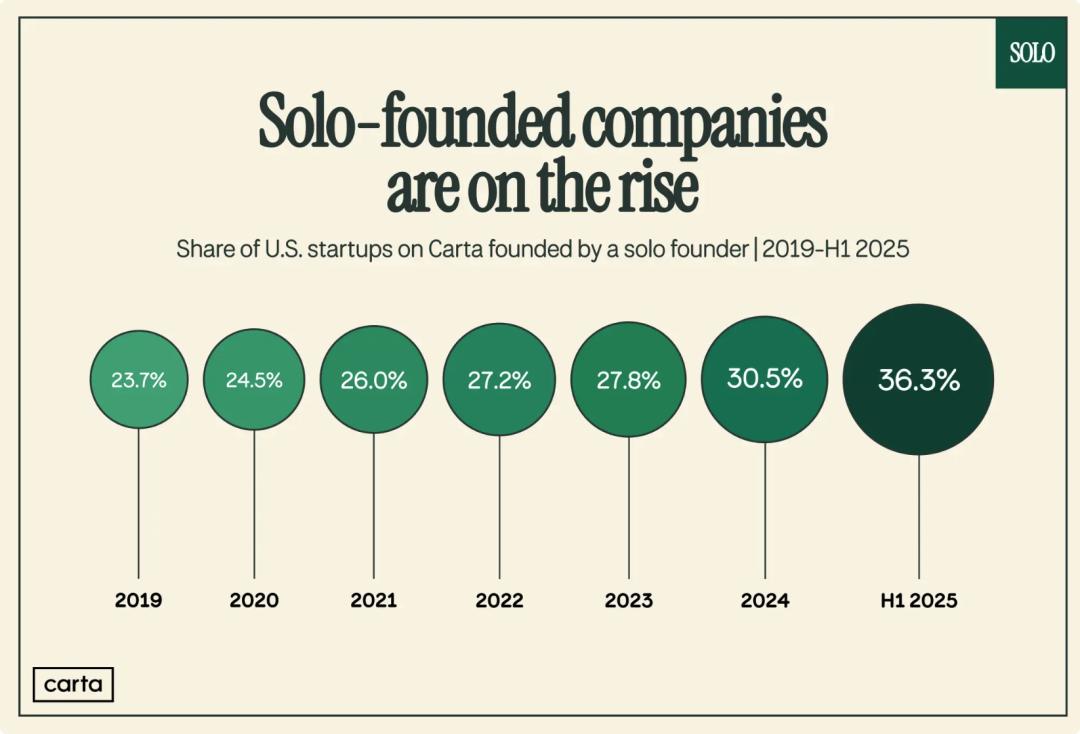
Core Insights - The rise of "one-person unicorn companies" is becoming a reality in the AI era, with predictions that individuals can establish companies valued at $1 billion [1][4] - Recent data shows that over one-third of new companies are founded by solo founders, increasing from 23.7% in 2019 to 36.3% in the first half of 2025, marking a 53% growth [1] Group 1: Definition and Characteristics of One-Person Companies - One-person companies are defined as businesses led by a single founder who utilizes AI and external resources to enhance their capabilities, rather than being limited to a single individual doing all tasks [5][6] - The traditional view of entrepreneurship, which emphasizes team formation and co-founders, is being challenged by the emergence of one-person companies [4][5] Group 2: Factors Contributing to the Rise of One-Person Companies - The capabilities of AI have expanded what a single individual can accomplish, making it feasible for one-person companies to thrive [9][10] - The cost of starting a business has significantly decreased, with 90% of one-person company founders reporting startup costs below $500, thanks to the availability of cloud computing and SaaS tools [13] - Successful examples of solo founders, such as Guillermo Rauch and Pieter Levels, are demonstrating the viability of this model, prompting investors to reconsider the necessity of co-founders [14] Group 3: Challenges and Considerations - While one-person companies offer independence, they also come with challenges such as loneliness and the burden of decision-making [20][30] - The traditional advantages of co-founders, such as risk-sharing and complementary skills, can be undermined by conflicts and misalignments, which are common in co-founder relationships [16][18] - The rise of one-person companies raises questions about the relevance of traditional organizational structures in the AI age, as AI can perform tasks that previously required teams [22][23] Group 4: Future Implications - The operational model of organizations is expected to evolve from hierarchical structures to dynamic networks of small teams and AI agents, allowing for greater efficiency and flexibility [26] - One-person companies are particularly suited for knowledge-intensive and creative fields, where individuals can leverage AI to create value independently [34]

吴晓波发表《AI闪耀中国》
Huan Qiu Wang Zi Xun· 2025-12-30 03:13
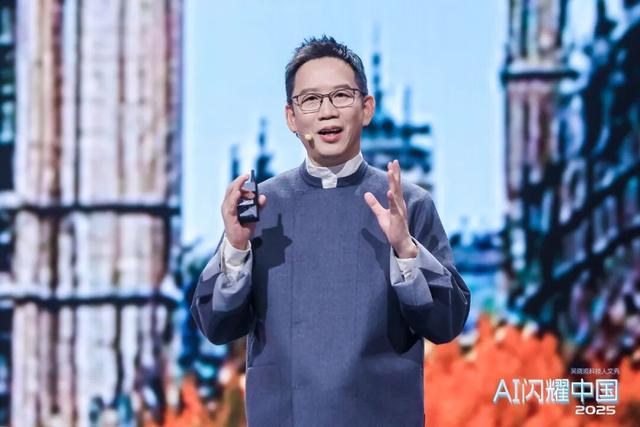
Group 1 - The core viewpoint of the article emphasizes that China, leveraging its largest manufacturing capacity and application market, is focusing on open-source large models and the industrial application of AI from "1 to N" [3] - AI multimodal technology is disrupting the content industry, with AI's value being realized in real-world "scenarios" that help traditional industries reshape their business models [3] - The era of artificial intelligence belongs to those who are quick to adopt and effectively use AI tools, with intelligent agents becoming efficiency pioneers for individuals [3] Group 2 - China occupies 65% of the global supply chain for embodied intelligence, driven by long-term accumulation in smart hardware, which is accelerating the formation of a comprehensive robot ecosystem from industrial collaboration to home services and specialized applications [3] - China is defining Industrial 5.0, centered around "machine vision and deep learning, large models and intelligent agents, embodied intelligence, and full-process AI management" [3] - Among the 189 global "lighthouse factories," China holds 79, accounting for 42% of the total [3] Group 3 - The use of intelligent agents in e-commerce is transforming product selection and marketing, allowing good products to emerge and consumers to regain sovereignty, leading to a "flow equity" shift [3] - The proliferation of AI tools is giving rise to "super individuals," and to support the AI entrepreneurship wave, a "Navigating and Running" plan has been initiated [3]
GenAI浪潮中,“气宗”为何比“剑宗”更重要|破晓访谈
腾讯研究院· 2025-12-29 08:34
Core Insights - Generative AI (GenAI) is igniting a profound paradigm shift in content production, breaking barriers in high-quality dynamic content generation and pushing complex creative work into the realm of machines [2] - The cultural industry faces both "strategic anxiety" and "opportunity desire" due to the disruptive potential of GenAI, prompting a comprehensive reshaping of existing value chains, business models, and content ecosystems [2] Group 1: GenAI Applications and Industry Transformation - GenAI technology is expected to reduce the production cycle of animated films from three to four years to about one year, and large advertising projects from two to three months to around two weeks, significantly lowering production costs while maintaining or improving quality [9] - The animation industry is transitioning from a labor-intensive model relying on large teams to a new model of lightweight, small teams collaborating with AI, leading to the emergence of new business forms characterized by "AI + high immersion + high sensory experience" [9] - AI-driven animation and short drama markets are anticipated to flourish, with the ability to adapt vast amounts of web literature and comic IPs into diverse styles at unprecedented speeds and lower costs, unlocking significant IP potential [10] Group 2: Structural Evolution of the Animation Ecosystem - A new breed of highly skilled "super individuals" will emerge, possessing top-notch aesthetic and narrative abilities, capable of leveraging AI tools for high-quality creation, replacing traditional large-scale collaborative teams with small, agile groups [11] - Major companies will evolve into "ecosystem builders" providing technology, tools, IP, and channels, while numerous small teams and super individuals will become creative content producers, enhancing overall content supply and quality [11] - The IP industry will see a multidimensional evolution, with GenAI increasing derivative efficiency and market validation speed, while the core standard for enduring IP remains the ability to "occupy user minds" and possess "cross-media narrative capabilities" [12][13] Group 3: Market Dynamics and Content Quality - The market value of real-time generated interactive content varies by application scenario, with gaming being the most promising area due to its non-linear narrative driven by player actions [14] - The acceptance of AI-generated content hinges on quality rather than origin, with the ultimate goal being "technical invisibility," where consumer judgment returns to the content itself [15] - The industry must be vigilant against potential risks posed by GenAI, including over-reliance on AI leading to diminished critical thinking and the risk of creating echo chambers for consumers [16] Group 4: Talent Development and Industry Challenges - Talent cultivation in the industry should focus on foundational skills rather than blind "AI-ification," emphasizing literary, aesthetic, and creative method training to produce individuals who can effectively express ideas using AI [17] - The industry is witnessing a shift towards smaller teams, with a typical configuration of 6-8 members, including specialized roles such as writers, directors, and AI animators, supported by AI technology [25] - The emergence of super individuals and small studios is a mainstream trend, with companies like "With Light and Dust" exploring industrial standards for AI film processes [26] Group 5: Future of IP and Content Creation - The core of IP remains the ability to "occupy minds" and "cross time," with AI facilitating rapid validation of concepts, but the potential for classic IP still relies on deep cultural connections with users [27] - The rise of AI-driven content, particularly in the form of interactive and real-time generated IP, is expected to gain market acceptance as quality improves and becomes indistinguishable from human-created content [29][30] - Companies are actively exploring the integration of AI in content creation, with successful projects demonstrating the commercial viability of AI-assisted original IPs [31]

吴晓波:“AI闪耀中国”2025(年度演讲全文)
吴晓波频道· 2025-12-29 01:26
Core Viewpoint - The article emphasizes that the AI revolution is a significant competition that will impact national fortunes, highlighting the rapid advancements and implications of AI technology in various sectors [2][22]. Group 1: AI Development History - The concept of artificial intelligence was first introduced in 1956 at the Dartmouth Conference, marking the beginning of a long journey in AI research [11]. - Key milestones include the introduction of deep learning by Geoffrey Hinton in 2006 and the launch of GPT-3.5 in 2022, which significantly advanced AI capabilities [17][18]. - The article notes that AI has now entered everyday life and industries, with significant developments in China and the U.S. [18][19]. Group 2: AI Investment Landscape - By 2025, the U.S. is expected to invest over $350 billion in AI infrastructure, while China’s investment is projected to reach 630 billion RMB [41]. - The article highlights that the U.S. currently dominates AI computing power, holding 74.5% of global capacity, compared to China's 14% [43]. - The investment in AI infrastructure in China is compared to the historical investment in high-speed rail, indicating a significant commitment to AI development [41]. Group 3: AI Applications and Innovations - The article discusses the emergence of AI in various industries, including banking, where Shanghai Bank has become the first AI-native mobile bank [75]. - It highlights the rapid growth of AI-driven content production, such as AI-generated comics, which have seen a 600% increase in production [67]. - The use of AI in sectors like healthcare, logistics, and manufacturing is emphasized, showcasing its transformative potential [78][81]. Group 4: Competitive Landscape - The article outlines the competitive dynamics between the U.S. and China in AI, with both countries pursuing different strategies: the U.S. focusing on closed-source models and China on open-source models [54][55]. - It mentions that by 2025, over 80% of the world's large models will be developed in the U.S. and China, with significant advancements in image generation and text capabilities [46][49]. - The competition extends to autonomous driving, with both countries making strides in developing self-driving technologies [57]. Group 5: Future Trends and Predictions - The article predicts that the next decade will see the emergence of four trillion-dollar markets in China, including the robotics sector, which is expected to play a crucial role in manufacturing upgrades [118][120]. - It discusses the potential for AI to redefine personal capabilities and the importance of adapting to new technologies in various industries [72][98]. - The article concludes with a call for recognition of the ongoing AI revolution and its implications for the future [58].
栖霞迎来首批OPC社区
Xin Hua Ri Bao· 2025-12-28 21:51
Group 1 - The "Qizhi OPC Community: AI Empowering Super Individuals Launch Season" event was held, marking the unveiling of the first OPC communities in Qixia, namely "Qizhi. Yuanli" and "Qizhi. Ruili," with 10 entrepreneurs receiving keys to enter the community [1] - The OPC concept refers to entrepreneurs who work independently using AI tools, characterized as "one-person companies" that leverage artificial intelligence for efficient and professional operations with high growth potential [1] - The "Qizhi. Yuanli" OPC community offers comprehensive support for entrepreneurs, including essential office hardware, shared meeting rooms, rest areas, and 24-hour access to facilities, catering to the irregular work rhythms of "super individuals" [1] Group 2 - Qixia has awarded the title of "Qizhi OPC Cloud Community Ecological Partners" to eight core institutions, including the Turing Artificial Intelligence Research Institute, to build a technology and service network [2] - The "Qizhi OPC University Alliance" has been launched with five universities to enhance industry-education integration and facilitate talent delivery [2] - The "Gemini Incubation Plan" was introduced to provide systematic skills and entrepreneurial training, pairing university professors with young OPC entrepreneurs to explore diverse business models [2]
陈天桥打造AI原生公司Tanka,称将为“开源一切”担责
第一财经· 2025-12-28 05:56
Core Viewpoint - The article emphasizes the importance of human responsibility and decision-making in the age of AI, where AI serves as a powerful tool but lacks the ability to take responsibility for outcomes [4]. Group 1: Company Overview - Tanka, an AI-native company founded by Chen Tianqiao, aims to develop a communication platform that integrates long-term memory capabilities using proprietary MemGraph technology [3]. - The core product of Tanka is an innovative messaging application that can remember and learn from past conversations, providing real-time situational insights and proactive follow-up features [3]. Group 2: Human-AI Interaction - Chen Tianqiao argues that while AI excels in execution, it cannot replace the human element of choice and accountability, which he refers to as "carbon-based flaws" that create an irreplaceable defense [4]. - The essence of AI is computation, while the essence of humanity is in decision-making and responsibility, which he describes as the last line of defense for humans [4]. Group 3: Pathways to Responsibility - Chen proposes a three-tiered approach to establish "minimum viable responsibility," which includes creating a "human-machine firewall," learning to predict success probabilities, and embracing chaos to address the challenges of human interaction [4]. - He believes that by developing capabilities in "signature rights," "probability forecasting," and "navigating complexity," humans can evolve into "super nodes" with credit records and decision-making abilities, while organizations will transform into "containers of responsibility" [4].

“科技人文秀”倒计时1天:12月28日晚8点,欢迎来到我的直播间
吴晓波频道· 2025-12-27 00:29
Core Viewpoint - The article emphasizes the transformative impact of AI on various sectors and individuals, highlighting the importance of adapting to new tools in the modern era [4]. Group 1: AI and Industry Transformation - The article discusses the "AI three elements" that have created a competitive landscape between China and the US, focusing on multi-modal content production, large models reshaping industries, and the emergence of intelligent agents [9]. - It identifies the robotics sector as a potential market worth 10 trillion [9]. - The article mentions that the service industry will experience a complete transformation due to AI, creating new experiences for consumers [10]. Group 2: Event Details - The "AI Shining China" event is set to showcase the results of a year-long AI research initiative, promising an engaging experience filled with insights and discussions [38]. - The event will take place on December 28, with a detailed schedule including check-in times and entry procedures [14][15]. - Various parallel activities are planned from December 27 to 29, focusing on topics such as global supply chain innovation and opportunities in Southeast Asia [24][25][26].

都说“一人公司”好,那为什么没有遍地都是?
虎嗅APP· 2025-12-24 10:17
Core Viewpoint - The article discusses the emergence of "One-Person Companies" (OPC) in the AI era, highlighting how individuals can leverage technology to create successful businesses with minimal resources, contrasting this with traditional business models [4][6][12]. Group 1: Emergence of One-Person Companies - A new business model is emerging where a few employees can connect seamlessly to global markets, generating millions in revenue as "super individuals" [5][6]. - Sam Altman predicted that the AI era would give rise to a new type of startup: the one-person unicorn company [6][7]. - Nathan Baschez noted that startups are becoming "smaller, faster, cheaper, and weirder" [9]. Group 2: Characteristics of One-Person Companies - The key differentiator for OPCs is leverage, with AI acting as a powerful tool that allows individuals to achieve productivity levels previously only possible with larger teams [14][16]. - Examples include Pieter Levels, who operates a one-person company generating $2.5 million annually without employees, and Vivian Kaye, who achieved over $6 million in sales with her brand [16][18]. - The operational model of OPCs often involves a "front-end individual, back-end network" approach, utilizing AI and outsourcing to manage tasks efficiently [19][20]. Group 3: Challenges Faced by One-Person Companies - Many OPCs face a revenue ceiling, with most generating between $100,000 and $500,000 annually, which can lead to operational challenges if they attempt to scale beyond this range [30][31]. - The lack of redundancy in OPCs makes them vulnerable; any personal issue can jeopardize the entire business [33][34]. - There is a risk of becoming overly dependent on platforms, where changes in algorithms can drastically affect business viability [36][37]. Group 4: The Chinese Context - Lingang Experiment - The Lingang area in China is developing a more resilient and systematic growth model for OPCs, addressing key pain points such as cost anxiety and resource isolation [38][39]. - The Lingang ecosystem, termed "OPC5," aims to provide support in cost, connectivity, opportunity, convenience, and community for individual entrepreneurs [40][41]. - The area offers significant cost advantages, such as rent-free first-year support, and fosters a collaborative community among entrepreneurs [43][44]. Group 5: Future Economic Structure - The article suggests a shift towards a "dumbbell" economic structure, with a few large platforms at one end and numerous super individuals at the other, while traditional mid-sized companies may struggle to survive [56][57]. - Investment strategies are evolving, focusing more on investing in individuals rather than companies, with a potential rise in revenue-sharing models [59][60]. - The Lingang OPC model presents an attractive option for young entrepreneurs, allowing them to achieve financial independence and creative freedom without the pressures of traditional corporate structures [62].

临港 “一人公司”门槛进一步降低
Xin Lang Cai Jing· 2025-12-19 07:25
Core Insights - The article discusses the launch of the "One Person Company" (OPC) initiative in the Lingang New Area, aimed at supporting individual entrepreneurs through a comprehensive service model [2][3]. Group 1: OPC Development and Support - The Lingang New Area has introduced an action plan to promote the development of OPCs, which lowers the barriers for individual entrepreneurship [2]. - The "C5 Engine" entrepreneurial support system is established, focusing on five core dimensions: Connect, Cost, Chance, Convenience, and Community, covering the entire entrepreneurial lifecycle [3]. - The first OPC community, named "Zero Boundary Cube," has opened with 100,000 square meters of space, achieving an occupancy rate of 85% and attracting nearly 500 entrepreneurs [3]. Group 2: Services and Resources - The Lingang New Area government and Lingang Group have launched the first batch of OPC service packages, which include public operations, digital empowerment, financial insurance, and promotional training [4]. - Specific services offered include international data lines, cross-border group purchases, computing power subsidies, and a youth fund, totaling over 60 items aimed at reducing the entrepreneurial burden [4]. Group 3: Ecosystem and Collaboration - The "Lingang New Area OPC5 Development Alliance" has been established to create a high-level innovation ecosystem by integrating government, industry, academia, research, finance, services, and users [5]. - The alliance signifies a shift from isolated support for "super individuals" to a more systematic and ecological approach to fostering innovation [5]. - A global OPC digital innovation competition named "Data Young Lingang" has been launched in collaboration with universities and youth organizations to explore future digital possibilities [5].


上海临港新片区:超级个体发展行动方案发布
Ren Min Ri Bao Hai Wai Ban· 2025-12-19 05:12
Core Insights - The Shanghai Lingang New Area Management Committee has released an action plan to promote the development of One Person Companies (OPC), aiming to empower individual entrepreneurship in the digital age [1][2] - OPC, defined as "one person is a company," represents a new entrepreneurial model centered around individuals leveraging digital technology for high-value innovation [1] Summary by Categories Entrepreneurship Support System - The action plan focuses on five core dimensions: connectivity, cost, opportunity, convenience, and community, creating a comprehensive support system for the entire entrepreneurial lifecycle [1] - Four specialized service packages for OPC entrepreneurs have been introduced, including over 60 specific services across 18 categories [1] Specialized Service Packages - The "Public Service Package" addresses fundamental needs across "enterprise, goods, and people" [1] - The "Digital Empowerment Professional Service Package" provides technical support in computing power and data services [1] - The "Financial Service Package" combines financing, insurance, and subsidies to alleviate financial pressures on companies [1] - The "Promotion and Training Service Package" aims to enhance brand influence and integration into the industrial ecosystem [1] Impact on Innovation and Development - The initiative is expected to lower the barriers for individual entrepreneurship and inject new momentum into high-quality innovation and entrepreneurship development in the Yangtze River Delta [1]