通用人工智能(AGI)

Search documents
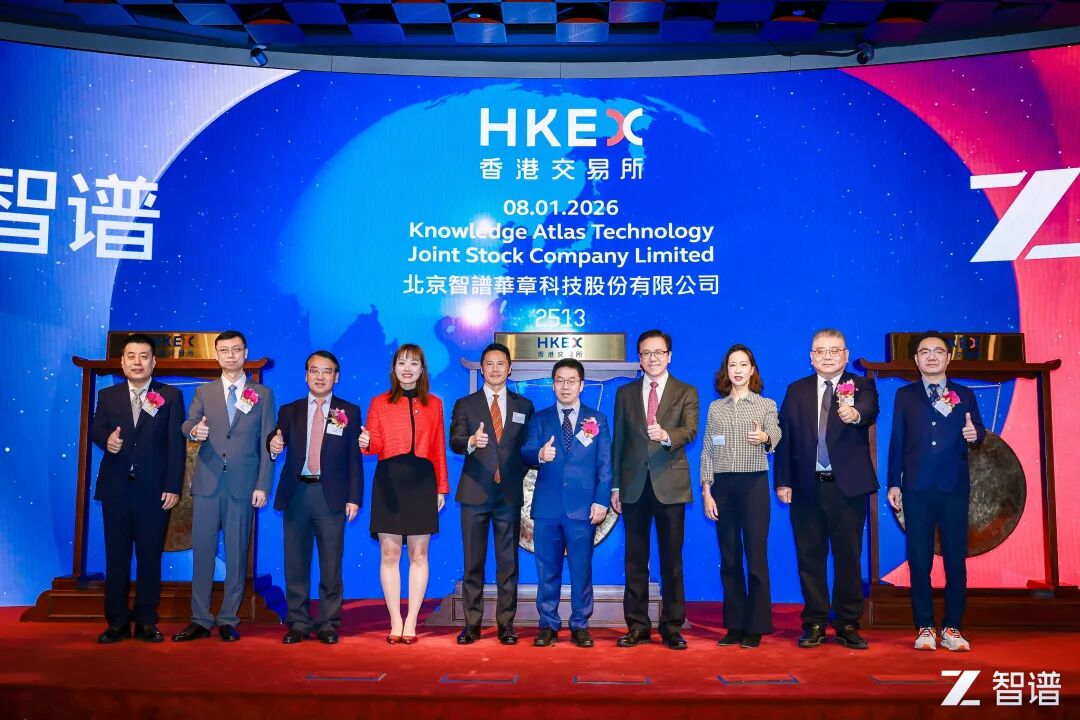
“全球大模型第一股”诞生!智谱正式登陆港交所,开盘涨超3%,市值528亿港元
Xin Lang Cai Jing· 2026-01-08 05:31
Core Viewpoint - Company Zhipu successfully listed on the Hong Kong Stock Exchange, becoming the "first global model stock" with a public offering subscription rate of 1159.46 times and an international offering rate of 15.28 times [2][26]. Group 1: Company Overview - Zhipu is a leading AI company in China, focused on developing advanced general models and was founded in 2019 with a vision for general artificial intelligence (AGI) innovation [3][27]. - The company operates a Model as a Service (MaaS) platform, providing intelligent capabilities to developers and enterprises through API calls, with over 2.9 million users [2][26]. - Zhipu has empowered over 12,000 enterprise clients and more than 80 million end-user devices, ranking first among independent general model developers in China [2][26]. Group 2: Financial Performance - Zhipu's revenue has shown significant growth, with figures of 57.4 million RMB in 2022, 125 million RMB in 2023, and 312 million RMB in 2024, reflecting a compound annual growth rate (CAGR) of over 130% [5][29]. - Despite revenue growth, the company recorded substantial losses of 144 million RMB in 2022, 788 million RMB in 2023, and 2.958 billion RMB in 2024, primarily due to significant investments in research and development [6][30]. Group 3: Research and Development - The company has made considerable investments in R&D, with expenditures increasing from 84.4 million RMB in 2022 to 5.29 billion RMB in 2023 and further to 21.95 billion RMB in 2024 [6][30]. - Zhipu has developed a comprehensive AI model portfolio, including language models, multimodal models, agent models, and code models, aimed at enhancing AI capabilities [8][32]. Group 4: Market Position and Strategy - According to Frost & Sullivan, Zhipu ranks first among independent general model developers in China and second among all general model developers, with a market share of 6.6% based on 2024 revenue [5][29]. - The Chinese large language model market is projected to grow from 5.3 billion RMB in 2024 to 101.1 billion RMB by 2030, with a CAGR of 63.5% [23][47]. - Zhipu's IPO proceeds will be allocated primarily to enhance R&D capabilities, optimize the MaaS platform, develop business partnerships, and cover operational expenses [24][49].

法巴看好谷歌(GOOGL.US)成“主导性AI平台”:Gemini已缩小与ChatGPT差距 AI变现渠道更广泛
Zhi Tong Cai Jing· 2026-01-08 04:10
谷歌(GOOGL.US)在去年11月发布的AI模型Gemini3重新点燃了投资者、企业以及更广泛科技圈对这家 科技巨头的热情。尽管OpenAI的ChatGPT在使用规模上仍领先于Gemini,但法国巴黎银行认为,两者之 间的差距正在迅速缩小。 法国巴黎银行分析师Nick Jones援引第三方数据表示:"去年12月,Gemini在网站访问量中的份额和应用 的月均日活跃用户数分别从11月的17.7%和11.7%,以及2024年12月的6.5%和11.2%,增长至22.5%和 13.2%。"他补充称,Gemini3在去年11月的发布似乎是用户增长的"关键催化剂",他对谷歌的增长加速 感到"振奋"。他还指出,这家科技巨头正成为"主导性AI平台",这对OpenAI和Meta(META.US)具有重 要影响,特别是考虑到Meta AI的"用户采纳度极低"。他同时强调,上个月在全球范围内推出的 Gemini3Flash现已集成至搜索的AI模式,这对该科技巨头构成利好,"支持了我们关于谷歌拥有多种AI 变现渠道的观点"。 OpenAI正面临竞争对手愈发强劲的追赶势头。Similarweb的数据显示,自Gemini3Pro发布 ...

智谱(02513)于12月30日至1月5日招股,拟全球发售3741.95万股H股
Zhi Tong Cai Jing· 2025-12-29 22:44
Core Viewpoint - The company, a leading AI firm in China, is set to launch an IPO for 37.42 million H-shares at a price of HKD 116.20 per share, aiming to raise approximately HKD 4.173 billion, with a significant portion allocated to enhancing its AI model development capabilities [1][4]. Group 1: Company Overview - The company was founded in 2019 with a focus on developing general artificial intelligence (AGI) and has made significant advancements in AI research and commercial applications [1]. - It operates in the large language model (LLM) market, providing services to both institutional clients and individual users [1]. Group 2: Financial Performance - The company has shown substantial revenue growth, with revenues of RMB 57.4 million, RMB 124.5 million, and RMB 312.4 million for the years 2022, 2023, and 2024 respectively, reflecting a compound annual growth rate (CAGR) of over 130% [2]. - As of June 30, 2025, the company supported over 8,000 institutional clients and approximately 80 million devices, holding a market share of 6.6% among general model developers in China [2]. Group 3: Strategic Partnerships - The company has entered cornerstone investment agreements with several notable investors, including JSC International Investment Fund and JinYi Capital, who have committed to purchasing shares worth approximately HKD 2.984 billion [3]. - These partnerships are expected to enhance the company's visibility and demonstrate investor confidence in its business and future prospects [3]. Group 4: Use of Proceeds - The estimated net proceeds from the global offering will be allocated as follows: approximately 70% for enhancing AI model R&D capabilities, 10% for optimizing the MaaS platform, 10% for developing business partnerships and strategic investments, and 10% for working capital and general corporate purposes [4].
智谱于12月30日至1月5日招股,拟全球发售3741.95万股H股
Zhi Tong Cai Jing· 2025-12-29 22:41
Core Viewpoint - The company, a leading AI firm in China, is set to launch an IPO for 37.42 million H-shares, aiming to raise approximately HKD 4.173 billion to enhance its capabilities in general AI model development and expand its business operations [1][4]. Group 1: Company Overview - The company was founded in 2019 with a focus on developing general artificial intelligence (AGI) and has made significant advancements in AI research and commercial applications [1]. - It operates in the large language model (LLM) market, providing services to both institutional clients and individual users [1]. Group 2: Financial Performance - The company has shown substantial revenue growth, with revenues of RMB 57.4 million, RMB 124.5 million, and RMB 312.4 million for the years 2022, 2023, and 2024 respectively, reflecting a compound annual growth rate (CAGR) of over 130% [2]. - As of June 30, 2025, the company supported over 8,000 institutional clients and approximately 80 million devices, holding a market share of 6.6% among general model developers in China [2]. Group 3: IPO Details - The IPO will consist of 5% of shares being offered in Hong Kong and 95% internationally, with an over-allotment option of 15% [1]. - The estimated net proceeds from the global offering will be approximately HKD 4.173 billion, with 70% allocated to R&D in general AI models, 10% for optimizing the MaaS platform, 10% for developing business partnerships, and 10% for working capital [4]. Group 4: Cornerstone Investors - The company has entered into cornerstone investment agreements with several investors, including JSC International Investment Fund and JinYi Capital, who have committed to subscribe for shares worth approximately HKD 2.984 billion [3]. - The involvement of cornerstone investors is expected to enhance the company's visibility and demonstrate confidence in its business prospects [3].
拆解智谱:会成为全球大模型第一股吗
3 6 Ke· 2025-12-25 23:54
Core Insights - Beijing Zhiyu Huazhang Technology Co., Ltd. and MiniMax have recently passed the hearing for their IPOs, marking a significant step for China's AI startup ecosystem, particularly in the large model sector [1][3] - The listings of Zhiyu and MiniMax are seen as a pivotal moment in establishing a closed loop of "technology research and development - capital financing - commercial realization" for large model enterprises, potentially setting a valuation benchmark for future entrants [3] - The entry of Chinese large model companies into the capital market signifies a new phase in the US-China AI competition, extending beyond technological rivalry to capital market dynamics [3] Company Overview - Zhiyu was founded in 2019, focusing on cognitive intelligence large model development, and is a partner for standardized innovation in AI chips for small and medium-sized enterprises in Beijing [4] - The company launched China's first proprietary pre-trained large model framework, GLM, in 2021, and has since developed a model-as-a-service (MaaS) platform [5] - As of June 30, 2025, Zhiyu's models have supported over 8,000 institutional clients and approximately 80 million devices [5] Financial Performance - Zhiyu's revenue has shown significant growth, with figures of 57.4 million, 124.5 million, and 312.4 million for 2022, 2023, and 2024 respectively, reflecting a compound annual growth rate of over 130% [12] - Despite revenue growth, the company has experienced increasing net losses, with figures of 143.7 million, 788.0 million, and 2,958.0 million for 2022, 2023, and 2024 respectively [12][14] - Research and development expenses have surged, constituting a significant percentage of total revenue, indicating a strong focus on innovation [14] Market Dynamics - The large model market is rapidly evolving, with projections indicating that the global market could exceed $300 billion by 2030 [15] - The Chinese large language model market reached 5.3 billion in 2024, with expectations to grow to 101.1 billion by 2030, driven primarily by institutional clients [17] - Independent providers like Zhiyu face different competitive dynamics compared to non-independent providers, as they rely on their native technology and business models [17] Technological Advancements - The AI landscape is undergoing a significant transformation, with large models emerging as a key technology paradigm shift, addressing the need for general-purpose AI [18] - The frequency of model updates among leading companies is accelerating, with major advancements in capabilities and performance [19] - Open-source developments are fostering rapid iteration among closed-source developers, enhancing the competitive landscape [20]

MiniMax M2.1 登顶多语言编程 SOTA,IPO 前夕秀硬核研发实力
Ge Long Hui· 2025-12-24 09:30
Core Insights - MiniMax, a Shanghai-based AI unicorn, has officially launched its flagship Coding & Agent model M2.1, which features 10 billion activation parameters and achieved a score of 49.4% on the Multi-SWE-bench leaderboard, surpassing top competitors like Claude Sonnet 4.5 and claiming the global SOTA [1] Company Overview - MiniMax was established in early 2022 and focuses on the research and development of multimodal models, positioning itself as one of the "only four global multimodal companies in the first tier" [1] Product Features - The newly released M2.1 model enhances usability across various programming languages and office scenarios, showcasing superior capabilities in multilingual programming, web and mobile development, and improved compliance with complex instruction constraints, receiving unanimous praise from developers both domestically and internationally [1]
北京跑出“全球大模型第一股”!CFO职位空缺,董秘负责财务管理
Sou Hu Cai Jing· 2025-12-22 11:08
Core Insights - The first large model IPO is set to take place in China, with the AI company Zhipu being the first among the "six small tigers" in the large model sector to initiate the IPO process [5][6] - Zhipu's listing will provide a quantifiable valuation reference for the long-lacking public market in the large model industry, marking a shift from a "technology race" to "capital validation" for China's AI sector [5][6] - Since its establishment in 2019, Zhipu has raised over 8 rounds of funding, accumulating over 8.3 billion RMB, with a pre-IPO valuation of 24.38 billion RMB [5][6] Company Overview - Zhipu is a leading AI company in China focused on developing advanced general large models, aiming for innovation in artificial general intelligence (AGI) [8] - The company provides general large model services to institutional clients and individual users, supporting over 8,000 institutional clients and approximately 80 million devices as of June 30, 2025 [7][8] - According to Frost & Sullivan, Zhipu ranks first among independent general large model developers in China, with a market share of 6.6% [7] Financial Performance - Zhipu's revenue has shown significant growth, with figures of 57.4 million RMB in 2022, 125 million RMB in 2023, and 312 million RMB in 2024, reflecting a compound annual growth rate of over 130% [7][8] - Despite revenue growth, the company reported substantial losses of 144 million RMB, 788 million RMB, 2.958 billion RMB, and 1.236 billion RMB for the years 2022, 2023, 2024, and the first half of 2025, respectively [7][8] Research and Development - Zhipu has made significant investments in R&D, with expenditures rising from 84.4 million RMB in 2022 to 529 million RMB in 2023, and further to 2.195 billion RMB in 2024 [8] - The company’s R&D spending for the first half of 2025 is projected to be 1.595 billion RMB, indicating an 85.6% increase from the previous period [8] Product Offerings - Zhipu's MaaS platform offers four types of models: language models, multimodal models, agent models, and code models, along with integrated tools for model fine-tuning and deployment [9][10] - The platform is designed to provide comprehensive model capabilities, extensive application scenarios, and adaptable computing infrastructure [9][10] Intellectual Property - As of the last feasible date, Zhipu holds 86 registered patents in China, with 84 being invention patents, and has filed 234 patent applications [10]

北京智谱华章科技股份有限公司(02513) - 聆讯后资料集(第一次呈交)
2025-12-18 16:00
香港聯合交易所有限公司及證券及期貨事務監察委員會對本聆訊後資料集的內容概不負責, 對其準確性或完整性亦不發表任何意見,並明確表示概不就因本聆訊後資料集全部或任何 部分內容而產生或因倚賴該等內容而引致的任何損失承擔任何責任。 Knowledge Atlas Technology Joint Stock Company Limited 北京智譜華章科技股份有限公司 (「本公司」) (於中華人民共和國成立之股份有限公司) 的聆訊後資料集 警 告 本聆訊後資料集乃根據香港聯合交易所有限公司(「聯交所」)及證券及期貨事務監察委員會 (「證監會」)的要求而刊發,僅用作提供資料予香港公眾人士。 本聆訊後資料集為草擬本,其內所載資料並不完整,亦可能會作出重大變動。 閣下閱覽 本文件,即代表 閣下知悉、接納並向本公司、其獨家保薦人、整體協調人、顧問或包銷 團成員表示同意: 倘在適當時候向香港公眾人士提出要約或邀請,有意投資者務請僅依據於香港公司註冊處 處長登記的本公司招股章程作出投資決定,其文本將於發售期內供公眾人士查閱。 62799 \ (Project 777_PHIP) \ 19/12/2025 \ M11 (a) 本文 ...
马斯克“新战书”:xAI最早明年实现AGI,两三年内超越竞争对手
Ge Long Hui· 2025-12-18 02:39
根据消息人士援引马斯克的说法,xAI有可能在未来几年内实现通用人工智能(AGI),即达到或超越人类 智能,甚至最早可能在2026年实现。 财经频道更多独家策划、专家专栏,免费查阅>> 责任编辑:栎树 全球首富埃隆•马斯克既是特斯拉的首席执行官,也是xAI的创始人,这两家公司目前都在推进人工智能 (AI)项目。而他本人似乎对xAI的未来很是乐观。 据几位知情人士透露,上周在xAI公司旧金山总部举行的全体员工大会上,马斯克扬言,只要公司能够 顺利挺过未来两到三年,xAI就能战胜竞争对手。 他补充称,该公司快速扩展其算力和数据容量的能力将是在所谓"超级智能"(即超越人类智能)的竞争中 致胜的关键,并最终有望让xAI成为最强大的AI公司。 ...
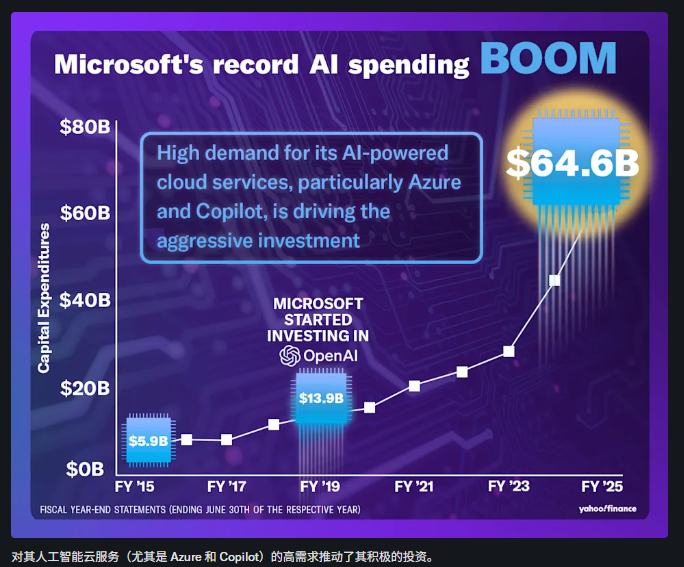
微软(MSFT.US)已摆脱OpenAI依赖,Copilot才是华尔街看好走向5万亿市值的“王牌”!
智通财经网· 2025-12-16 07:09
Core Viewpoint - Microsoft is poised to significantly increase its market value in the AI sector, potentially reaching $5 trillion by 2026, driven by its deep integration of AI technologies across its product suite and strategic partnerships, particularly with OpenAI [1][2]. Investment and Financial Insights - Microsoft has invested approximately $13 billion in OpenAI since their initial $1 billion investment in 2019, which has provided Microsoft with a competitive edge in AI technology [3][5]. - Despite holding a 27% stake in OpenAI, Microsoft's financial benefits from this investment are limited, as it primarily recognizes losses rather than profits from OpenAI [9][10]. - Analysts estimate that only 17% of Azure's total revenue comes from AI workloads, with a mere 6% directly linked to reselling OpenAI models, indicating that Microsoft's own AI infrastructure is the main revenue driver [9][10]. Strategic Partnerships and Collaborations - The revised partnership between Microsoft and OpenAI allows both companies to diversify their collaborations, with OpenAI seeking deals with other cloud providers and Microsoft exploring partnerships with other AI model providers [11][12]. - Microsoft has committed to investing $5 billion in Anthropic, which will purchase $30 billion worth of Azure computing capacity, securing substantial future revenue for Microsoft [12]. Future Outlook and Market Position - Analysts believe that Microsoft's broad AI strategy, encompassing various products from Azure to Office and even gaming, positions it uniquely in the market, with no other company having such a diverse product portfolio [14]. - The next major growth area for Microsoft is expected to be AI agents capable of executing complex workflows, with the company anticipated to compete closely with ServiceNow and Salesforce [14]. - Despite the optimism surrounding Microsoft's AI initiatives, there are concerns about over-investment and market sentiment, which could impact the company's performance if AI demand slows or if competitors outperform [15][16].