隐形冠军

Search documents
“隐形冠军”神话终破灭
创业邦· 2025-10-22 04:06
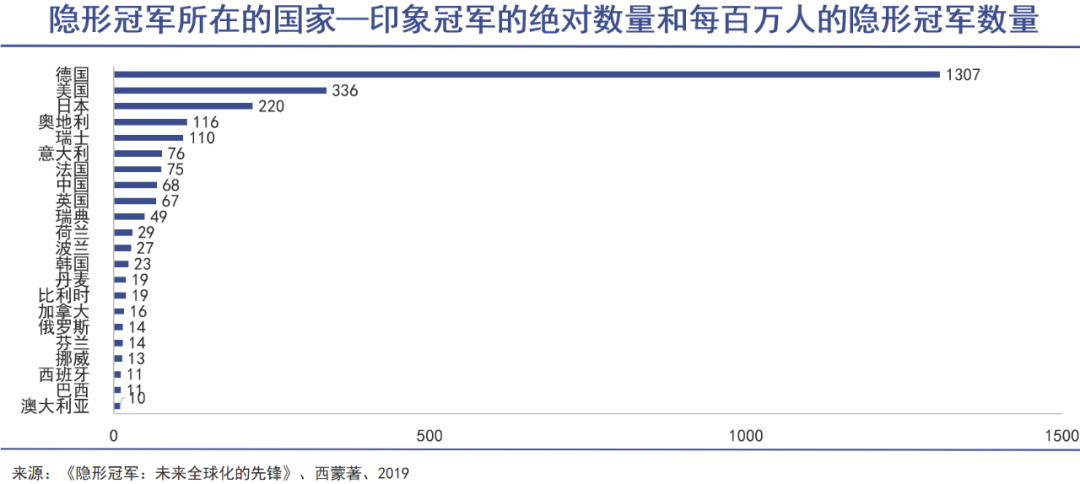
Core Insights - The article discusses the concept of "hidden champions," small and medium-sized enterprises (SMEs) that dominate niche markets but remain largely unknown to the public. These companies have been crucial to the economic success of countries like Germany, Japan, and the U.S. [5][7] - The number of hidden champions has increased significantly in China, with a growing number of SMEs emerging as global leaders in their respective fields. [33][34] Group 1: Definition and Characteristics of Hidden Champions - Hidden champions are defined as companies that hold a top two global market share position, have annual sales below $10 billion, and are not widely recognized by the public. This definition has evolved to include companies with annual revenues below $50 billion. [7][9] - As of 2023, there are 3,406 hidden champions globally, with Germany accounting for 1,573, nearly half of the total. The U.S. has 350, and Japan has 283. [7][9] Group 2: Current Challenges Faced by Hidden Champions - The article highlights a decline in the manufacturing sector in Germany, particularly in the automotive industry, which has seen an 80% increase in bankruptcies since 2021. [16][19] - Major automotive companies like Bosch and Volkswagen are implementing significant layoffs, with Bosch planning to cut 13,000 jobs and Volkswagen aiming to reduce 35,000 positions by 2030. [19][21] - The hidden champions that have historically supported these larger manufacturers are now facing severe challenges due to rising costs, supply chain disruptions, and increased competition from Chinese companies. [22][31] Group 3: The Rise of Chinese Hidden Champions - China has seen a rapid increase in the number of hidden champions, with over 14,000 specialized SMEs and 1,500 "single champion" companies. [33] - Chinese companies are increasingly entering the global market, with 15 Chinese firms now listed among the top 100 automotive suppliers, showcasing a shift in the competitive landscape. [31][32] - The article notes that the number of identified hidden champions in China has grown from about 100 to 300 in the past five years, indicating a robust growth trajectory. [33] Group 4: The Future of Hidden Champions - The article suggests that the traditional models of success for hidden champions in Germany and Japan are becoming outdated, as these companies struggle to adapt to new technological advancements and market demands. [34] - The rise of Chinese technology and innovation is reshaping the global industrial landscape, with Chinese firms increasingly dominating sectors like AI and renewable energy. [22][34]







数字化浪潮中,“隐形冠军”的旧世界正在瓦解
Xin Lang Cai Jing· 2025-10-22 02:39
Core Insights - The concept of "hidden champions" refers to small and medium-sized enterprises that dominate niche markets but remain largely unknown to the public, significantly contributing to the economic success of countries like Germany, Japan, and the U.S. [1][4] - The number of hidden champions has increased globally, with China witnessing a rapid rise in such companies, particularly in advanced manufacturing and digital technology sectors [28][29] - However, the myth of hidden champions is facing challenges as these companies in Germany and Japan are experiencing decline due to structural economic issues and competition from Chinese firms [3][19] Group 1: Definition and Characteristics of Hidden Champions - Hidden champions are defined as companies that hold a top two global market share, have annual sales below $5 billion, and maintain low public recognition [4] - As of 2023, there are 3,406 hidden champions globally, with Germany accounting for 1,573, nearly half of the total [4][7] - These companies often focus on overlooked niche industries, producing specialized products like fasteners and pet leashes [8][9] Group 2: Current Challenges Faced by Hidden Champions - Germany's economy is experiencing a structural crisis, with GDP declining by 0.2% last year and a further 0.3% drop in the second quarter of this year [15][19] - The automotive industry, a key sector for hidden champions, has seen a significant increase in bankruptcies, with over 80% growth since 2021 [15][16] - Major automotive suppliers are facing severe layoffs, with companies like Bosch planning to cut 13,000 jobs [15][19] Group 3: The Rise of Chinese Hidden Champions - China has rapidly increased its number of hidden champions, with over 14,000 specialized small and medium enterprises and 1,500 single-item champions [28][29] - Chinese companies are increasingly acquiring German firms, with 300 acquisitions between 2014 and 2020, enhancing their competitive edge in the automotive parts sector [27][28] - The number of identified hidden champions in China has tripled from about 100 to 300 in the past five years, indicating a strong growth trajectory [29] Group 4: Future Outlook - The traditional manufacturing powerhouses of Germany and Japan are struggling to adapt to new technological advancements, particularly in digitalization and AI [19][21] - The slow pace of digital transformation in these countries has left them vulnerable to competition from more agile and innovative firms in China and the U.S. [21][24] - The decline of hidden champions in Europe contrasts sharply with the rise of unicorns in China and the U.S., highlighting a shift in global economic dynamics [24][29]

“隐形冠军”神话终破灭
Hu Xiu· 2025-10-21 04:59
Core Insights - The article discusses the concept of "hidden champions," small and medium-sized enterprises (SMEs) that dominate niche markets but remain largely unknown to the public, particularly in Germany, Japan, and the U.S. [2][3][4] - The number of hidden champions has significantly increased in China, with a unique survival and operational philosophy that differs from Western companies [5][54] - However, the myth of hidden champions is facing challenges due to structural economic issues in Germany and Japan, leading to a decline in their prominence [6][23][36] Group 1: Definition and Characteristics of Hidden Champions - Hermann Simon defines hidden champions as companies that hold the top two global market shares, have annual sales below $1 billion, and are not widely recognized [8] - The number of hidden champions globally is estimated at 3,406, with Germany accounting for 1,573, nearly half of the total [9][13] - These companies often operate in overlooked industries, focusing on specialized products like fasteners and pet leashes, and maintain a low profile as part of their business model [14][15] Group 2: Economic Context and Decline - Germany's economy is experiencing a structural crisis, with GDP shrinking for two consecutive years, a rare occurrence since 1950 [27][28] - The automotive industry, a cornerstone of Germany's manufacturing sector, is facing systemic decline, with a reported 80% increase in bankruptcies since 2021 [28][30] - Major automotive suppliers are also struggling, with significant layoffs announced by companies like Bosch and ZF [28][29] Group 3: Comparison with China - In contrast to the decline of hidden champions in Germany and Japan, China's hidden champions are on the rise, with over 14,000 specialized small and medium enterprises identified [53][54] - Chinese companies are increasingly entering the global market, with 15 firms listed among the top 100 automotive parts suppliers, showcasing higher profit margins than their European counterparts [52] - The article notes that the number of identified hidden champions in China has tripled in the past five years, indicating a robust growth trajectory [54][55] Group 4: Future Outlook - The article suggests that the traditional manufacturing powerhouses of Germany and Japan are losing their competitive edge due to slow digital transformation and a lack of innovation [39][42][46] - The rise of Chinese technology and manufacturing capabilities is reshaping the global industrial landscape, with a notable absence of German and Japanese firms in the emerging sectors like AI and renewable energy [36][37] - The future of hidden champions in Germany and Japan appears uncertain as they struggle to adapt to changing market dynamics and increasing competition from China [58]


“隐形冠军”出海记
Jin Rong Shi Bao· 2025-09-30 02:38
Core Insights - A group of "invisible champion" companies in Jiangsu is steadily expanding globally, showcasing "China's intelligent manufacturing" through their core technology advantages in various sectors such as automotive lightweight components, ultra-high voltage equipment, and power semiconductors [1] Group 1: Company Developments - Xinan Technology, a high-tech enterprise specializing in automotive lightweight components, recently went public and has established a factory in Thailand to enhance its global manufacturing footprint [2] - Borui Electric, a leader in power automation equipment, has successfully delivered products to over 70 countries, marking a significant achievement for Chinese ultra-high voltage technology [4] - Yangjie Technology, a national champion in the semiconductor industry, has expanded its overseas presence and is the first in its sector to issue Global Depositary Receipts (GDR), raising $220 million for further development [6][7] Group 2: Financial Support and Risk Management - Financial institutions are providing tailored financial services to support these companies' global expansion, including customized foreign exchange risk management solutions [2][3] - Jiangsu's financial sector has implemented a "one enterprise, one policy" approach to address the foreign exchange risk management needs of high-tech and specialized enterprises, with a significant increase in the proportion of companies utilizing foreign exchange hedging [3] - The People's Bank of China in Jiangsu is promoting cross-border trade and simplifying processes for enterprises, resulting in a substantial volume of trade foreign exchange business [5] Group 3: Policy and Market Trends - Jiangsu Province is advancing its cross-border trade high-level opening pilot, enhancing the efficiency of fund settlement for enterprises [5] - The province has seen a notable increase in the number of quality enterprises engaging in foreign exchange business, positioning itself as a leader in this area [5] - The ongoing support from financial institutions and favorable policies is crucial for these companies as they transition from "China's intelligent manufacturing" to becoming global brands [7]
深耕中国丨560多家德企为何都选一座小城扎根?
Yang Shi Xin Wen Ke Hu Duan· 2025-09-27 08:28
Core Insights - Jiangsu Taicang, known as the "German enterprise hometown" in China, hosts over 560 German companies, including more than 60 "hidden champions" [1] - These "hidden champions" may be small in scale and low in visibility, but they hold a leading position in specific niche markets globally [1] - The recent Sino-German economic and trade cooperation event in Taicang highlighted the perspectives of German companies on what attracts them to China [1]
集团雨林中的冠军密码:中集集团产业隐形冠军群落的生成逻辑
Zhi Tong Cai Jing· 2025-09-25 05:32
Core Viewpoint - The article discusses how China International Marine Containers (CIMC) has maintained its status as a "hidden champion" in the manufacturing industry for over 40 years, focusing on its strategic positioning, innovation systems, and global market responsiveness [1][2][6]. Group 1: Strategic Positioning - CIMC has established a "champion product leading strategy" since the 1990s, aiming for each business unit to be the leader or unique in its global niche market, aligning with the theory of "hidden champions" [2][5]. - The company focuses on two main sectors: logistics and energy equipment, which have allowed it to develop a strong technological foundation [1][3]. Group 2: Innovation System - CIMC employs a "small team operation, large platform support" innovation system, where business units act as independent entities focusing on niche market breakthroughs, while the group provides unified planning and resources [2][3]. - The company has established a global R&D network with over 60 provincial and ministerial-level research platforms and 20 overseas research centers, facilitating technological advancements and collaboration [3][4]. Group 3: Market Responsiveness - CIMC's global operations cover over 100 countries, with overseas revenue increasing from 35% in 2010 to approximately 50% currently, allowing for quick responses to international market demands [3][4]. - The company has developed innovative products like the world's first 40-foot liquid helium tank container and the "Blue Whale 1" semi-submersible drilling platform, breaking foreign monopolies in various fields [4][5]. Group 4: Organizational Culture - CIMC emphasizes a long-term commitment to technological innovation and a culture that tolerates failure during the innovation process, fostering a spirit of craftsmanship [5][6]. - The company's success framework combines strategic focus, innovation-driven approaches, market penetration, ecological collaboration, and organizational empowerment, making it a model for other Chinese manufacturing enterprises [5][6].

集团雨林中的冠军密码:中集集团(02039)产业隐形冠军群落的生成逻辑
智通财经网· 2025-09-25 03:56
Core Viewpoint - The article discusses how China International Marine Containers (CIMC) has maintained its status as a "hidden champion" in the manufacturing industry for over 40 years, focusing on its strategic positioning, innovation systems, and global market responsiveness [1][2][6]. Group 1: Strategic Positioning - CIMC established a "champion product leading strategy" since the 1990s, aiming for each business unit to be the leader or unique in its global niche market, aligning with the theory of "hidden champions" [2][3]. - The company has developed several globally pioneering products, such as the "Blue Whale No. 1" semi-submersible drilling platform and the RAP active temperature-controlled air cargo container, breaking foreign monopolies [2][4]. Group 2: Innovation System - CIMC employs a "small team operation, large platform support" innovation system, allowing business units to focus on technological breakthroughs in niche markets while receiving unified planning and support from the group [2][3]. - The company has established a global innovation network with over 60 provincial and ministerial-level R&D platforms and 20 overseas research centers, facilitating technological advancements and collaboration [3][4]. Group 3: Market Responsiveness - CIMC's global operations cover over 100 countries, with a significant portion of revenue (approximately 50%) coming from overseas, demonstrating its ability to respond quickly to international market demands [3][4]. - The company has developed products like the world's first 40-foot liquid helium tank container to support the semiconductor industry, showcasing its proactive approach to market needs [4][5]. Group 4: Organizational Culture - CIMC emphasizes a long-term strategic focus on technological innovation and national industry contribution, fostering a culture that tolerates failure and encourages deep engagement in high-end manufacturing [5][6]. - The company's success framework combines strategic focus, innovation-driven approaches, market penetration, ecological collaboration, and organizational empowerment, making it a model for other Chinese manufacturing enterprises [5][6].
2025江苏—德国经贸合作交流会暨“隐形冠军·对话太仓”活动举行
Su Zhou Ri Bao· 2025-09-24 00:32
王宇鹏表示,江苏省在地方对德合作方面一直走在前列,拥有以太仓为代表的多个对德合作园区, 是中德经贸关系深度融合的缩影。希望太仓再接再厉,继续为企业提供宾至如归的服务,吸引更多优质 德企落户,擦亮"中国德企之乡"的金字招牌,为中德经贸关系健康稳定发展增光添彩。 于广生表示,投资促进事务局将发挥国内外资源和平台优势,持续推动德国隐形冠军企业与江苏、 苏州、太仓对接交流,挖掘合作潜力,培育更多合作增长点,实现共赢发展。 孙津说,今天的江苏创新氛围更加深厚、产业生态更加完备、发展环境更加开放,欢迎德国隐形冠 军企业来江苏投资发展,我们将优化营商环境,努力打造适合所有企业发展特别是培育隐形冠军的沃 土。 昨天(9月23日),2025江苏—德国经贸合作交流会暨"隐形冠军·对话太仓"活动在"中国德企之 乡"太仓举行。"隐形冠军"理论提出者、国际隐形冠军协会名誉主席赫尔曼·西蒙,国际隐形冠军协会主 席弗里德曼·霍费希,苏州市委副书记、市长吴庆文,商务部欧洲司副司长王宇鹏、投资促进事务局副 局长于广生,省商务厅副厅长孙津出席。 活动中,赫尔曼·西蒙教授作主题分享,隐形冠军协会合作签约。现场发布了国际隐形冠军企业评 价标准、解读 ...
德国中小企业总部集聚区(芜湖)揭牌
Zhong Guo Xin Wen Wang· 2025-09-20 16:01
Core Points - The German SME Headquarters Cluster in Wuhu was inaugurated as part of the 2025 World Manufacturing Conference, aiming to facilitate the "go out, bring in" strategy for Anhui's manufacturing industry [1] - The cluster will focus on German "hidden champion" companies in sectors like automotive parts and high-end intelligent manufacturing, establishing marketing and innovation centers [1] - By 2030, the cluster aims to gather a number of German SMEs, creating an open development model of "German technology + Anhui manufacturing + global market" [1] - A strategic cooperation agreement was signed among various organizations to support the establishment of the cluster [1] Industry Insights - "Hidden champions" refer to small and medium-sized enterprises that are globally leading in niche markets but are not widely known [2] - Hermann Simon, a German management scholar, emphasized the shift of German companies from merely exporting products to establishing local production facilities in China, indicating a significant change in the global value chain [2] - The collaboration between Germany and China is seen as essential for leveraging these changes in the industry landscape [2]
德国的世界第一,正在批量阵亡
创业家· 2025-09-19 09:59
Core Viewpoint - The article discusses the phenomenon of "invisible champions" in Germany, highlighting their significance in niche markets and the recent wave of bankruptcies affecting these companies, particularly in the automotive sector [4][12][31]. Group 1: Definition and Characteristics of Invisible Champions - "Invisible champions" are defined as small to medium-sized enterprises that dominate niche markets but remain largely unknown to the general public [12]. - These companies typically have strong technical capabilities, high product value, and are difficult for competitors to imitate [12]. - Key characteristics include being rooted in small towns, having low employee turnover, and focusing on highly specialized products [13]. Group 2: Comparison of Invisible Champions in Germany and China - Germany has nearly 3,000 invisible champions, with about half located in the country, while China has fewer than 100 [14]. - The article emphasizes that Germany's invisible champions are crucial to its economy, contributing significantly to GDP and employment [24]. Group 3: Recent Challenges Faced by Invisible Champions - The automotive industry, a backbone of the German economy, is experiencing significant challenges, leading to the bankruptcy of several invisible champions [31]. - Factors contributing to these bankruptcies include rising costs due to energy price increases and a shortage of skilled labor as the workforce ages [41]. - The emergence of Chinese automotive manufacturers has also reduced demand for products from German invisible champions, further exacerbating their financial struggles [43]. Group 4: Case Studies of Invisible Champions - Wanzl, a company specializing in shopping carts, holds over 50% of the global market share, illustrating the success of invisible champions in niche markets [17]. - Körber, a leader in high-speed cigarette manufacturing machines, showcases the technological prowess of these companies [17]. - Gerhardi, a supplier of automotive parts, recently declared bankruptcy, highlighting the vulnerabilities faced by even established invisible champions [33][40].