高端智能制造

Search documents
园区“握手” 创新奔涌
Ren Min Ri Bao· 2026-01-13 06:42
Group 1 - The core viewpoint of the news is the opening of the Hong Kong park in the Lok Ma Chau Loop, which signifies a significant achievement in the implementation of the Guangdong-Hong Kong-Macao Greater Bay Area development plan and the practical application of the "One Country, Two Systems" principle [1][2] - The Hong Kong park aims to create a world-class platform for industry-academia-research collaboration, establish an internationally competitive industrial pilot transformation base, gather global innovation resources, and serve as a testing ground for institutional and policy innovation [1] - The park will focus on cutting-edge sectors such as life and health technology, artificial intelligence and robotics, new energy, and high-end intelligent manufacturing, with over 60 companies already signed up and moving in [1] Group 2 - The collaboration between Hong Kong and Shenzhen parks is enhanced by the launch of the cross-river bridge project, which will facilitate the movement of researchers and the management of research goods and funding across borders [2] - The Lok Ma Chau Loop serves as a crucial platform for enriching the practical implications of "One Country, Two Systems," supporting Hong Kong's integration into and service for the national development agenda, and promoting high-quality development in the Greater Bay Area [2] - The synergy between the Hong Kong and Shenzhen parks is expected to generate strong momentum and create more possibilities for innovation and growth [2]
“一县一业”破局、“准千亿县”蓄势,湖北县域经济何以蜕变?
2 1 Shi Ji Jing Ji Bao Dao· 2026-01-12 06:33
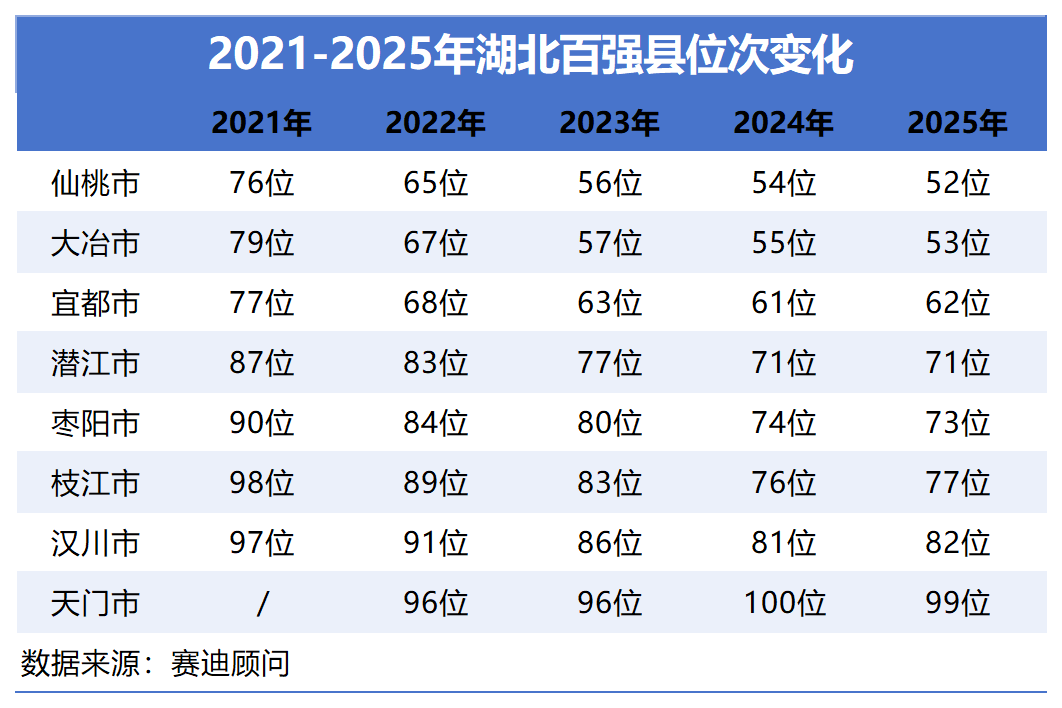
Core Insights - Hubei's county economy is a significant contributor to the province's overall economic strength, with a focus on "position improvement" and "characteristic growth" during the 14th Five-Year Plan period [1][2] Group 1: Economic Performance - Hubei's county-level GDP reached 3.5 trillion yuan in 2024, accounting for 58% of the province's total GDP, with a year-on-year growth of 6.3%, surpassing the provincial average by 0.5 percentage points [2] - The number of Hubei's top 100 counties has remained the highest in Central China and fourth nationwide, with eight counties consistently ranked among the top 100 from 2021 to 2025 [2][3] Group 2: County Rankings - From 2021 to 2025, Hubei's counties have shown significant ranking improvements, with Xiangyin rising from 76th to 52nd, and Daye from 79th to 53rd [3][4] - By 2024, five counties in Hubei are on the verge of becoming "billion-yuan counties," with GDPs nearing 900 billion yuan [4][5] Group 3: Industry Development - Hubei is focusing on developing characteristic industrial clusters, with an investment of 80 million yuan to incentivize counties to enhance their unique industries [1][8] - The province aims to cultivate one leading industry per county, promoting a diversified and resilient industrial structure [8][10] Group 4: Policy Support - Hubei has implemented policies such as the "Double Hundred" technology empowerment initiative, aiming to foster collaboration between universities and counties [11] - The "Double 20" assistance program pairs economically strong counties with those showing potential for comprehensive cooperation [11] Group 5: Future Outlook - The county economy in Hubei is expected to undergo a transformation with the expansion of "billion-yuan counties" and the growth of characteristic industrial clusters [2][5] - Hubei's counties are projected to play a crucial role in the province's high-quality economic development, contributing to a more balanced and robust economic structure [12]

技术为核、双轮驱动,毅昌科技战略转型成效显现
Quan Jing Wang· 2026-01-09 10:19
Group 1 - The core viewpoint of the article highlights Yichang Technology's successful transformation from a traditional home appliance component supplier to a high-end intelligent manufacturing solution provider, with a clear future blueprint presented during the investor briefing on January 9 [1] - The management revealed that the strategic transformation has begun to show results in financial and business structure, with the automotive and new energy businesses accounting for over 60% of total revenue by the first half of 2025, making them the main growth drivers, particularly with new energy revenue increasing by 177.09% year-on-year [1] - The company's confidence stems from its deep technological layout in the new energy sector, having acquired and integrated core technologies in battery thermal management, becoming a supplier to leading companies such as CATL, EVE Energy, and Sungrow, and successfully entering Huawei's HarmonyOS ecosystem [1] Group 2 - In the robotics sector, the company is not merely following trends but is leveraging its core capabilities in mold and injection molding to extend into this area, having signed strategic agreements with technology companies for the development and delivery of components for embodied intelligent robots [1] - The unique qualification of having a "national-level industrial design center" is continuously translating into competitive advantages in customer acquisition and product premium, enabling the company to participate in early joint development with clients and upgrade from a "manufacturer" to a "design and manufacturing integrated solution provider" [1] - With the entry of state-owned assets from Chuzhou, Yichang Technology's dual-wheel drive strategy of "automotive fundamentals + new energy business" is expected to accelerate further, solidifying its leading position in the high value-added precision component sector [2]

“香港创科发展的一个里程碑时刻”
Ren Min Ri Bao Hai Wai Ban· 2025-12-23 22:59
Core Insights - The opening of the Hong Kong section of the He Tao Shenzhen-Hong Kong Science and Technology Innovation Cooperation Zone marks a significant milestone for Hong Kong's innovation and technology development [2] - The Hong Kong government aims to establish the He Tao Hong Kong Park as a world-class platform for industry-academia-research collaboration and a hub for global innovation resources [2] Group 1: Park Overview - The He Tao Shenzhen-Hong Kong Science and Technology Innovation Cooperation Zone spans approximately 3.89 square kilometers, with the Hong Kong section covering 0.87 square kilometers [3] - The park will focus on cutting-edge technology fields such as life and health sciences, artificial intelligence and robotics, new energy, and high-end intelligent manufacturing [3] - Over 60 companies have signed agreements to settle in the park, including leading firms in their respective fields [3] Group 2: Strategic Advantages - The unique location of the park allows for deep collaboration between Hong Kong and Shenzhen, making it an ideal platform for companies to expand internationally [4] - More than 60% of the companies entering the park are from mainland China, while about 25% are from overseas, indicating a strong interest in leveraging Hong Kong as a gateway to the Greater Bay Area and mainland markets [4] - The park benefits from the "One Country, Two Systems" policy, facilitating cross-border flows of data, talent, and capital [4] Group 3: Development Goals - The cooperation zone aims to enhance the efficient flow of innovative elements between the two parks, contributing to the development of the Greater Bay Area [5] - By 2030, the He Tao Hong Kong Park is expected to establish a high-efficiency innovation collaboration mechanism with the Shenzhen Park [6] - The park is projected to become a globally competitive industrial pilot transformation base by 2035, integrating with advanced manufacturing systems in the Greater Bay Area [6] Group 4: Institutional Framework - The establishment of the He Tao Hong Kong Park complements Hong Kong's existing innovation landscape, which includes three major innovation parks and five research institutions [7] - The park's development aligns with the recently announced New Tin Technology City innovation and technology industry development plan, reinforcing Hong Kong's position as an international innovation and technology center [7]
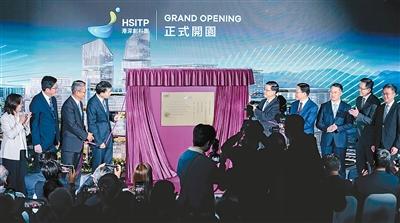
香港创科发展的一个里程碑时刻
Ren Min Ri Bao· 2025-12-23 19:48
Core Insights - The opening of the Hong Kong Science and Technology Innovation Cooperation Zone marks a significant milestone for Hong Kong's innovation and technology development, aiming to create a world-class platform for research, industry, and policy innovation [2] Group 1: Development and Structure - The Hong Kong section of the cooperation zone covers an area of approximately 0.87 square kilometers, while the Shenzhen section spans 3.02 square kilometers, totaling around 3.89 square kilometers [3] - The Hong Kong government plans to develop the area into a competitive industrial base focusing on cutting-edge fields such as life sciences, artificial intelligence, and high-end manufacturing [3] - Over 60 companies have signed agreements to establish operations in the Hong Kong section, including leading firms in their respective fields [3] Group 2: Strategic Advantages - The unique location of the cooperation zone allows for deep collaboration between Hong Kong and Shenzhen, providing a platform for companies to leverage Hong Kong's internationalization and talent advantages [4] - More than 60% of the companies entering the zone are from mainland China, with about 25% being international firms seeking to access the Greater Bay Area market [4] - The cooperation zone is expected to facilitate the cross-border flow of data, talent, and capital, enhancing the business environment for enterprises [4] Group 3: Future Development Goals - By 2030, the Hong Kong section aims to establish an efficient innovation collaboration mechanism with the Shenzhen section, with a comprehensive development framework expected by 2035 [6] - The cooperation zone is positioned to become a leading front for national technological self-reliance and innovation, contributing significantly to the development of the Greater Bay Area [5] - The establishment of the Hong Kong Science and Technology Innovation Cooperation Zone further solidifies Hong Kong's status as an international innovation and technology hub [7]
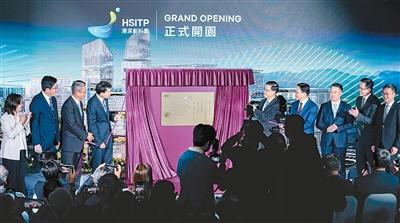
河套香港园区正式开园 采用科研加中试模式
2 1 Shi Ji Jing Ji Bao Dao· 2025-12-23 03:38
Core Insights - The He Tao Hong Kong Science and Technology Innovation Park officially opened on December 22, marking a significant step in the Shenzhen-Hong Kong cooperation in technology innovation [1][4] - The park aims to become a world-class innovation platform, leveraging the unique advantages of Hong Kong and Shenzhen's differing social, economic, and judicial systems [1][6] Group 1: Development and Infrastructure - The first phase of the park includes three completed buildings, with two wet laboratory buildings and one talent apartment, and additional five buildings expected to be completed by 2027 [1] - The total floor area for both phases of the park will reach 2 million square meters, a 70% increase from the original plan [1][6] - The park will adopt a "construction while moving in" model to accelerate development [1] Group 2: Strategic Initiatives - The launch of the Greater Bay Area Clinical Trial Collaboration Platform aims to enhance coordination between Shenzhen and Hong Kong in clinical trials, supporting the development of the biopharmaceutical industry [1][6] - The park will focus on cutting-edge technology fields such as life and health technology, artificial intelligence, robotics, new energy, and high-end intelligent manufacturing [2][6] - Over 60 companies have signed agreements to move into the park, indicating strong interest from both local and international enterprises [2][6] Group 3: Future Goals and Collaboration - The development plan outlines clear goals: by 2025, an efficient collaborative mechanism for technology innovation between Shenzhen and Hong Kong will be established; by 2035, a fully integrated innovation ecosystem will be formed [5][6] - The park is positioned as a hub for international clinical trials, aiming to streamline processes and enhance the efficiency of cross-border clinical trials [7][8] - The opening of the park is seen as a pivotal moment for the realization of the "One Zone, Two Parks" strategy, transitioning from planning to operational phase [4][6]

上海应用型本科高校启动人才培养模式改革:紧贴重点产业需求提高质效 车间即课堂 招生到就业全链条重构
Jie Fang Ri Bao· 2025-11-22 01:38
Group 1 - Shanghai Electric Power University has eliminated seven low-employment traditional majors and added ten new majors, including Energy Storage Science and Engineering, to align with industry needs [2][3] - The university aims to break down "disciplinary silos" and create a new talent cultivation ecosystem that integrates demand, training, employment, and development [2][3] - The professional setting is shifting from a discipline-based approach to an industry-demand-based approach, ensuring a precise match between talent supply and industry needs [2][3] Group 2 - Shanghai Electric Power University has developed an "industry talent demand map," indicating a job gap of over 20,000 positions in six critical areas, including energy storage and offshore wind power, over the next five years [3] - The university is accelerating professional layout adjustments and structural optimization based on frontier fields and industry development needs [3] Group 3 - Shanghai Electric Machine College has established a "dual mentor" system, combining enterprise engineers and internal faculty to ensure that educational content matches industry needs in real-time [4] - The teaching approach includes practical skills transfer from enterprise mentors and feedback collection from academic mentors to optimize the teaching plan dynamically [4] Group 4 - Shanghai Electric Power University collaborates with over 100 enterprises to develop 48 joint courses and a series of virtual simulation courses covering 70% of engineering majors [6] - The university has implemented a "1+1+1.5+0.5" work-study model, allowing students to engage in core skill training and practical integration from their junior year [6] Group 5 - The evaluation system has been reformed to include enterprise assessments, with plans to replace credit systems with a competency-based scoring system, where enterprise evaluations account for 40% of the assessment [7] - The new evaluation mechanism aims to ensure comprehensive coverage of student internships and provide a scientific assessment of their performance [7] Group 6 - Companies appreciate the "early involvement and joint cultivation" approach, which helps them identify potential talent earlier and increases students' job stability and professional identity [8]
兆威机电(003021)季报点评:Q3收入与归母净利润稳健增长
Xin Lang Cai Jing· 2025-10-30 08:41
Core Viewpoint - The company reported continuous revenue and profit growth in Q3 2025, driven by strong demand in the smart automotive sector and advancements in humanoid robotics, maintaining a "buy" rating [1][2][5]. Group 1: Financial Performance - In Q3 2025, the company achieved revenue of 469 million yuan, a year-on-year increase of 13.65%, and a net profit attributable to shareholders of 68 million yuan, up 4.01% year-on-year [1]. - For the first three quarters of 2025, total revenue reached 1.255 billion yuan, reflecting an 18.7% year-on-year growth, while net profit attributable to shareholders was 181 million yuan, a 13.86% increase year-on-year [1]. - The gross margin for Q3 2025 was 32.69%, up 0.63 percentage points year-on-year, while the net margin was 14.5%, down 1.35 percentage points year-on-year [3]. Group 2: Business Segments and Growth Drivers - The automotive electronics segment showed steady growth, with the company transitioning from precision components to system-level solutions, achieving full coverage in body, chassis, and intelligent cockpit domains [2]. - The company made significant advancements in humanoid robotics, launching the ZWHAND series, which has reached industry-leading performance levels, positioning the company as a core supplier for international manufacturers [2]. Group 3: Research and Development - The company maintained a high R&D investment rate of 9.93% of revenue in Q3 2025, focusing on micro-drives, electronic control, and soft perception systems to strengthen its core technology advantages [3][4]. - A strategic partnership with Tujian Technology was established to enhance the humanoid robot ecosystem, reinforcing the company's long-term competitive edge in high-end intelligent manufacturing [4]. Group 4: International Expansion and Capital Strategy - In August 2025, the board approved an investment of up to 100 million USD to establish a new production base in Thailand, aimed at enhancing overseas capacity and local service [4]. - The company submitted an application for a Hong Kong listing in June, intending to raise funds for global R&D, capacity expansion, and strategic acquisitions, facilitating a shift from "Made in China" to "Global Operations" [4]. Group 5: Profit Forecast and Valuation - The company maintains its profit forecasts for 2025-2027, projecting net profits of 254 million, 315 million, and 393 million yuan respectively, supported by its technological capabilities in precision transmission and a growing product matrix in various innovative fields [5].
“淮抱”发展新机遇 链动未来产业圈
Xin Hua Ri Bao· 2025-10-14 23:45
Core Insights - The 2025 Investment and Economic Trade Conference in Huai'an aims to enhance the integration of industrial, supply, and innovation chains, gathering over 300 guests including industry leaders and entrepreneurial talents [1] - Huai'an is focusing on the "353" strategic emerging industries, emphasizing the development of leading enterprises and enhancing the industrial ecosystem [1][3] - The city is actively improving its business environment to attract investments, with initiatives to lower logistics costs and streamline project approvals [4][5] Group 1: Investment and Economic Development - The total investment in the high-end intelligent manufacturing project by Pengding Holdings in Huai'an is 8 billion yuan, with cumulative investments reaching 27 billion yuan since 2006 [2] - The annual output value of Pengding Holdings has increased from 10 million yuan to over 15 billion yuan, establishing it as an industry leader [2] - Huai'an has established partnerships with various organizations and enterprises to enhance its investment attraction strategies [2] Group 2: Industrial Growth and Innovation - Huai'an is focusing on both major projects and small, innovative technology projects, with over 500 small technology projects introduced in the last three years [3] - The city has seen the completion of over 150 high-tech industrial projects, enhancing the resilience and speed of its leading industries [3] - The establishment of high-energy platforms and research centers is promoting innovation and collaboration between academia and industry [7] Group 3: Business Environment and Support - Huai'an is committed to creating a "four best" business environment, characterized by the lowest logistics and factor costs, optimal service conditions, and the highest efficiency [4] - The manufacturing loan balance in Huai'an reached 76.341 billion yuan, reflecting a year-on-year growth of 19.5% [4] - The city has implemented a "parallel review + deficiency handling" model, facilitating the rapid commencement of major industrial projects [4] Group 4: Talent and Knowledge Integration - Huai'an is enhancing its talent pool through initiatives like the "Huai Shang Ying Cai Plan," which connects industry leaders with technological experts [6] - The establishment of a strategic consulting expert committee supports decision-making for industrial innovation [6] - The city is fostering a dual-directional approach to talent and industry integration, promoting high-quality development [7]

服贸会客厅|瑞士创新产业园孙科:生命科学、人工智能、高端智能制造是中瑞产业优势交叉点
Sou Hu Cai Jing· 2025-09-25 03:44
Core Insights - The core viewpoint of the article emphasizes the potential for collaboration and investment in emerging industries between China and Switzerland, particularly in life sciences, artificial intelligence, and high-end intelligent manufacturing [1][2]. Group 1: Emerging Industries - Key emerging industries identified for collaboration include life sciences (medical devices and pharmaceuticals), artificial intelligence, robotics, and high-end intelligent manufacturing, which represent areas of mutual advantage for both countries [2]. - The Swiss Innovation Park has been actively exploring partnerships in various sectors such as life sciences, high-end intelligent manufacturing, mobile transportation, and clean energy since its expansion into the Chinese market in 2019 [2]. Group 2: Challenges for Chinese Enterprises - Chinese enterprises face diverse challenges when entering foreign markets, influenced by their industry, size, and specific goals, such as market expansion, technology collaboration, or cost reduction [2][3]. - It is crucial for companies to conduct thorough market research before entering new markets, understanding customer needs and ensuring their product's core value aligns with those needs [3]. Group 3: Recommendations for Market Entry - Companies are advised to clarify their reasons for going abroad and to prepare adequately by researching local markets and customer demands [3]. - Different product design models can be utilized to enter new markets, including redesigning existing products based on local customer needs [3]. Group 4: Data Security and Compliance - For artificial intelligence companies, leveraging abundant data from various application scenarios in China is a significant advantage when entering overseas markets [3]. - Special attention must be paid to local data security, protection, and compliance requirements, especially when entering the EU market, necessitating early engagement with local institutions [3]. Group 5: Local Partnerships - Establishing a local partner network is essential for Chinese companies entering Switzerland, as adapting to local culture and meeting collaboration requirements are critical for success [4].