独角兽

Search documents
一个VC的十年成长之路:3年投出独角兽,10年收获千亿市值IPO
创业邦· 2026-03-15 06:06
Core Viewpoint - The article discusses the investment journey of Chen Yu, a partner at Yunqi Capital, highlighting his investment philosophy and the successful ventures he has backed, including MiniMax, PingCAP, and others. It emphasizes the "3, 7, 10" rule for venture capitalists, which outlines the milestones for a successful investor over a decade [6][16][29]. Group 1: Investment Philosophy - Chen Yu believes that a qualified VC investor should achieve specific milestones: invest in a unicorn within three years, ensure that unicorns survive by the seventh year, and facilitate their IPO by the tenth year [6][16]. - He emphasizes the importance of investing in founders who are smart, honest, ambitious, and possess technical taste, rather than solely focusing on their educational background [19][28]. Group 2: Successful Investments - MiniMax, which went public in early 2026 with a market capitalization exceeding HKD 100 billion, was initially valued at only CNY 1.2 billion during its angel round investment [5][25]. - PingCAP, another successful investment, was made during a time when few investors understood the distributed database sector. It has since become a unicorn with a valuation exceeding USD 1 billion [14][24]. - Chen Yu also invested in autonomous driving companies, including Yuanrong Qixing and New Stone, both of which have achieved unicorn status [18][21]. Group 3: Investment Strategy - The article highlights the importance of making investment decisions based on deep technical understanding and independent judgment, rather than following market trends [26][28]. - Chen Yu's approach involves assessing the underlying technology and the potential market size, focusing on the critical point when technology reaches maturity [24][29]. - He stresses that successful investments require continuous attention to commercialization from the outset, not just as an afterthought [28]. Group 4: Future Outlook - Looking ahead, Chen Yu is focusing on two main areas: physical AI and AI agents, particularly in international markets, as he believes China has advantages in AI hardware [29]. - The article concludes by reiterating the "3, 7, 10" rule as a comprehensive framework for VC growth and success in the investment landscape [29].


从OpenAI到DeepSeek,独角兽开始“挑”投资人
阿尔法工场研究院· 2025-12-25 02:33
Core Viewpoint - The article emphasizes that in the current investment landscape, access to top-tier investment opportunities is increasingly restricted to a select group of investors who are on the "trust list" of founders, rather than being solely based on financial capability [4][29]. Group 1: Investment Dynamics - A recent private meeting in Silicon Valley focused on OpenAI's $40 billion funding round, which surpassed all IPOs this year and even exceeded the largest IPO in history by over $10 billion [5][9]. - Only selected private investors, such as SoftBank and Blackstone, were invited to participate in this exclusive funding event, highlighting a trend referred to as "elite internal circulation" [6][8]. - In China, similar dynamics are observed where participation in funding rounds for top unicorns is limited, emphasizing the importance of connections and resources beyond just financial strength [9][10]. Group 2: Historical Context and Evolution - The venture capital landscape has evolved significantly over the past three decades, transitioning from an environment where opportunities were abundant to one where finding quality projects is increasingly challenging [11][18]. - The article recounts how venture capitalists used to approach projects directly, contrasting it with the current scenario where projects often dictate terms and selectively engage with investors [19][27]. Group 3: High Returns from Unicorns - The potential returns from investing in unicorns are substantial, with examples like Tencent, where early investors saw returns of hundreds of times their initial investment [20]. - Recent unicorns like Moer Thread and domestic GPU leader Muxi have demonstrated extraordinary valuation increases, with early investors achieving returns exceeding 6000 times their initial investments [21][22]. Group 4: Changing Power Dynamics - The article discusses a shift in power dynamics where project founders now have the upper hand, often requiring investors to prove their worth before being allowed to engage in due diligence [24][27]. - This shift is exemplified by projects that refuse to open due diligence to any investors, regardless of their reputation, indicating a strong market position [26][28]. Group 5: The Invitation-Only Market - The investment landscape is increasingly characterized by an "invitation-only" model, where only those on the founders' trust lists can participate in lucrative funding rounds [29][30]. - Major firms like Morgan Stanley and Goldman Sachs have adapted by creating private market divisions to cater exclusively to wealthy investors who can connect with top entrepreneurs [29][30]. Group 6: Future Outlook - Companies like SpaceX are setting new valuation records, with recent internal transactions valuing the company at $800 billion, indicating a robust market for top-tier investments [30][31]. - The article concludes that as the industry matures, the best projects will attract capital rather than the other way around, necessitating a shift in how investors approach opportunities [32].

【公告臻选】半导体+先进封装+中芯国际概念!公司签订累计4.33亿元半导体量检测设备销售合同
第一财经· 2025-12-09 14:08
Group 1 - The article highlights the importance of efficiently navigating through a large volume of announcements, providing a service that selects and interprets key announcements for investment opportunities [1] - A subsidiary of a company has signed contracts for semiconductor testing equipment sales totaling 433 million yuan, primarily for advanced storage applications [1] - The company plans to invest 480 million yuan to construct a 40,000 tons/year electronic-grade phosphoric acid project, which is mainly used in wafer manufacturing [1] - The company is expected to win a bid for a large state-owned project involving chip packaging and human-machine collaborative systems, linking to sectors such as AI, new energy vehicles, and charging stations [1]
「隐形冠军」神话终破灭
36氪· 2025-10-29 00:16
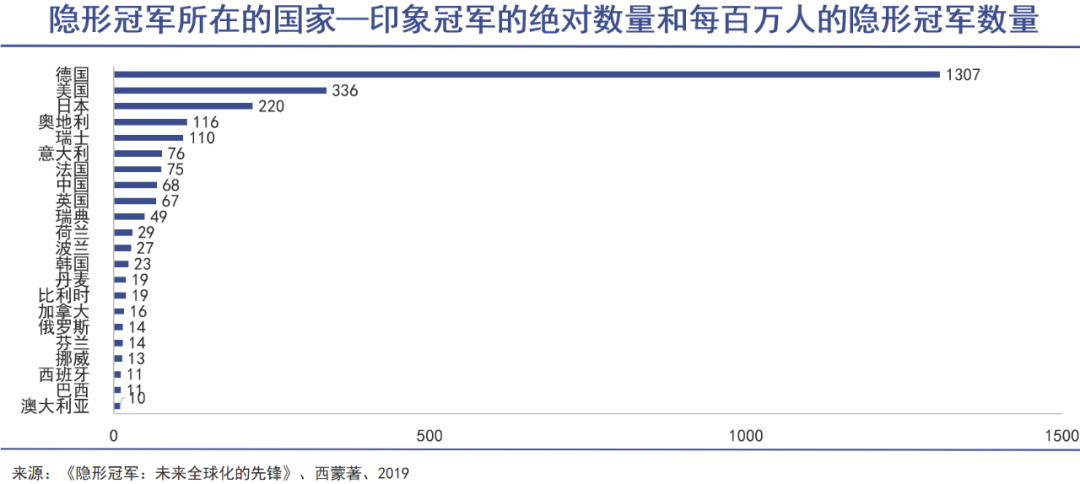
Core Viewpoint - The article discusses the decline of "hidden champions" in Germany and Japan, highlighting the rise of Chinese companies as new leaders in the global industrial landscape. Group 1: Definition and Characteristics of Hidden Champions - The term "hidden champions" refers to small and medium-sized enterprises that dominate niche markets but remain largely unknown to the public. These companies typically have a global market share in the top two positions and annual sales below $10 billion, although the criteria have been relaxed to include those with sales under $50 billion [5][7]. - As of 2023, there are 3,406 hidden champions globally, with Germany accounting for 1,573, nearly half of the total [7][11]. Group 2: Current State of Hidden Champions - The article notes that the myth of hidden champions is fading as the high-end industrial supply chain in China undergoes comprehensive upgrades [6]. - Germany's manufacturing sector, particularly the automotive industry, is experiencing a systemic decline, with a reported 80% increase in bankruptcies since 2021 [22][25]. Group 3: Economic Challenges in Germany - Germany's GDP fell by 0.2% last year, marking its second consecutive year of decline, a rare occurrence since 1950 [21]. - Major automotive companies, including Bosch and Volkswagen, are planning significant layoffs, with Bosch alone cutting 13,000 jobs [22][24]. Group 4: Comparison with Chinese Companies - While hidden champions in Germany and Japan are declining, Chinese companies are rapidly emerging as new industrial leaders, particularly in advanced manufacturing and digital technology [41]. - China has cultivated over 14,000 specialized small and medium-sized enterprises, with the number of hidden champions increasing from about 100 to 300 in the past five years [41]. Group 5: Future Outlook - The article suggests that the traditional manufacturing models of Germany and Japan are becoming obsolete, as they struggle with digital transformation and innovation [33][35]. - In contrast, China's hidden champions are gaining strength and represent significant future growth potential, indicating a shift in the global industrial landscape [41][43].





「隐形冠军」神话终破灭
投资界· 2025-10-26 08:32
Core Viewpoint - The article discusses the concept of "hidden champions," small and medium-sized enterprises that dominate niche markets but remain largely unknown to the public. It highlights the decline of these companies in Germany and Japan due to various economic challenges and the rise of Chinese companies in the same space [4][14][36]. Group 1: Definition and Characteristics of Hidden Champions - Hidden champions are defined as companies that hold a top two global market share, have annual sales below $10 billion, and are not widely recognized by the public. This definition has evolved to include companies with annual revenues below $50 billion [5][14]. - As of 2023, there are 3,406 hidden champions globally, with Germany having 1,573, the highest number, followed by the United States and Japan [5][9]. Group 2: Economic Decline of German and Japanese Hidden Champions - Germany's economy has faced significant challenges, with GDP declining by 0.2% last year and a further 0.3% drop in the second quarter of this year, marking a rare occurrence of consecutive annual GDP shrinkage since 1950 [16][19]. - The automotive industry, a cornerstone of Germany's manufacturing sector, has seen a dramatic increase in bankruptcies, with over 80% growth in the number of bankrupt companies since 2021 [16][19]. - Major automotive companies like Bosch and Volkswagen are planning significant layoffs, with Bosch cutting 13,000 jobs and Volkswagen planning to lay off 35,000 employees by 2030 [19][21]. Group 3: Rise of Chinese Companies - Chinese companies are increasingly taking over roles traditionally held by hidden champions in Germany and Japan, with 300 German companies acquired by Chinese firms between 2014 and 2020 [32]. - China has developed a robust ecosystem of hidden champions, with over 14,000 specialized small and medium enterprises and 1,500 single-item champion companies [33][34]. - The number of identified hidden champions in China has increased from about 100 to 300 in the past five years, indicating a significant growth in this sector [34]. Group 4: Challenges Faced by Traditional Hidden Champions - German and Japanese hidden champions are struggling with digital transformation, with many companies lagging in adopting new technologies and innovations [26][28]. - The reliance on traditional business models and a lack of sensitivity to new industries have hindered their ability to adapt to changing market conditions [28][29]. - The emergence of electric vehicles and the energy crisis in Europe have further exacerbated the challenges faced by these companies, leading to a decline in their market positions [22][24].



“隐形冠军”神话终破灭
虎嗅APP· 2025-10-24 09:53
Core Viewpoint - The article discusses the decline of "hidden champions" in Germany and Japan, highlighting the rise of Chinese companies as they increasingly dominate the global industrial landscape [6][30]. Group 1: Definition and Importance of Hidden Champions - The term "hidden champions" refers to small and medium-sized enterprises that are leaders in niche markets but are not widely recognized [5]. - Hermann Simon identified that these companies are crucial for the economic success of Germany, Japan, and the U.S. post-World War II, with Germany having 1,573 hidden champions, nearly half of the global total of 3,406 [9][12]. Group 2: Current Challenges Faced by Hidden Champions - The hidden champions in Germany are facing significant challenges, particularly in the manufacturing sector, which is experiencing a systemic decline [20]. - Germany's GDP fell by 0.2% last year, marking the second consecutive year of contraction, with the manufacturing sector, especially the automotive industry, seeing an 80% increase in bankruptcies since 2021 [22][24]. - Major automotive companies like Bosch and Volkswagen are implementing significant layoffs, with Bosch cutting 13,000 jobs and Volkswagen planning to lay off 35,000 by 2030 [22][23]. Group 3: The Rise of Chinese Companies - As German and Japanese hidden champions decline, Chinese companies are emerging as new leaders in technology and manufacturing, particularly in sectors like AI, robotics, and renewable energy [30][31]. - China has seen a rapid increase in its own hidden champions, with over 14,000 specialized small and medium enterprises and 300 identified hidden champions in advanced manufacturing and digital technology [42][40]. - Chinese companies are outperforming their German and Japanese counterparts in profitability, with a pre-tax profit margin of 5.7% compared to Germany's 3.6% and South Korea's 3.4% [40]. Group 4: Future Outlook - The article suggests that the traditional manufacturing strengths of Germany and Japan are at risk of being overshadowed by the innovative capabilities of Chinese firms, which are adapting more quickly to new technologies [30][34]. - The shift in industrial power dynamics indicates a potential long-term decline for the hidden champions of Germany and Japan, as they struggle to keep pace with the rapid advancements in China [42][44].



“隐形冠军”神话终破灭
创业邦· 2025-10-22 04:06
Core Insights - The article discusses the concept of "hidden champions," small and medium-sized enterprises (SMEs) that dominate niche markets but remain largely unknown to the public. These companies have been crucial to the economic success of countries like Germany, Japan, and the U.S. [5][7] - The number of hidden champions has increased significantly in China, with a growing number of SMEs emerging as global leaders in their respective fields. [33][34] Group 1: Definition and Characteristics of Hidden Champions - Hidden champions are defined as companies that hold a top two global market share position, have annual sales below $10 billion, and are not widely recognized by the public. This definition has evolved to include companies with annual revenues below $50 billion. [7][9] - As of 2023, there are 3,406 hidden champions globally, with Germany accounting for 1,573, nearly half of the total. The U.S. has 350, and Japan has 283. [7][9] Group 2: Current Challenges Faced by Hidden Champions - The article highlights a decline in the manufacturing sector in Germany, particularly in the automotive industry, which has seen an 80% increase in bankruptcies since 2021. [16][19] - Major automotive companies like Bosch and Volkswagen are implementing significant layoffs, with Bosch planning to cut 13,000 jobs and Volkswagen aiming to reduce 35,000 positions by 2030. [19][21] - The hidden champions that have historically supported these larger manufacturers are now facing severe challenges due to rising costs, supply chain disruptions, and increased competition from Chinese companies. [22][31] Group 3: The Rise of Chinese Hidden Champions - China has seen a rapid increase in the number of hidden champions, with over 14,000 specialized SMEs and 1,500 "single champion" companies. [33] - Chinese companies are increasingly entering the global market, with 15 Chinese firms now listed among the top 100 automotive suppliers, showcasing a shift in the competitive landscape. [31][32] - The article notes that the number of identified hidden champions in China has grown from about 100 to 300 in the past five years, indicating a robust growth trajectory. [33] Group 4: The Future of Hidden Champions - The article suggests that the traditional models of success for hidden champions in Germany and Japan are becoming outdated, as these companies struggle to adapt to new technological advancements and market demands. [34] - The rise of Chinese technology and innovation is reshaping the global industrial landscape, with Chinese firms increasingly dominating sectors like AI and renewable energy. [22][34]



数字化浪潮中,“隐形冠军”的旧世界正在瓦解
Xin Lang Cai Jing· 2025-10-22 02:39
Core Insights - The concept of "hidden champions" refers to small and medium-sized enterprises that dominate niche markets but remain largely unknown to the public, significantly contributing to the economic success of countries like Germany, Japan, and the U.S. [1][4] - The number of hidden champions has increased globally, with China witnessing a rapid rise in such companies, particularly in advanced manufacturing and digital technology sectors [28][29] - However, the myth of hidden champions is facing challenges as these companies in Germany and Japan are experiencing decline due to structural economic issues and competition from Chinese firms [3][19] Group 1: Definition and Characteristics of Hidden Champions - Hidden champions are defined as companies that hold a top two global market share, have annual sales below $5 billion, and maintain low public recognition [4] - As of 2023, there are 3,406 hidden champions globally, with Germany accounting for 1,573, nearly half of the total [4][7] - These companies often focus on overlooked niche industries, producing specialized products like fasteners and pet leashes [8][9] Group 2: Current Challenges Faced by Hidden Champions - Germany's economy is experiencing a structural crisis, with GDP declining by 0.2% last year and a further 0.3% drop in the second quarter of this year [15][19] - The automotive industry, a key sector for hidden champions, has seen a significant increase in bankruptcies, with over 80% growth since 2021 [15][16] - Major automotive suppliers are facing severe layoffs, with companies like Bosch planning to cut 13,000 jobs [15][19] Group 3: The Rise of Chinese Hidden Champions - China has rapidly increased its number of hidden champions, with over 14,000 specialized small and medium enterprises and 1,500 single-item champions [28][29] - Chinese companies are increasingly acquiring German firms, with 300 acquisitions between 2014 and 2020, enhancing their competitive edge in the automotive parts sector [27][28] - The number of identified hidden champions in China has tripled from about 100 to 300 in the past five years, indicating a strong growth trajectory [29] Group 4: Future Outlook - The traditional manufacturing powerhouses of Germany and Japan are struggling to adapt to new technological advancements, particularly in digitalization and AI [19][21] - The slow pace of digital transformation in these countries has left them vulnerable to competition from more agile and innovative firms in China and the U.S. [21][24] - The decline of hidden champions in Europe contrasts sharply with the rise of unicorns in China and the U.S., highlighting a shift in global economic dynamics [24][29]

“隐形冠军”神话终破灭
Hu Xiu· 2025-10-21 04:59
Core Insights - The article discusses the concept of "hidden champions," small and medium-sized enterprises (SMEs) that dominate niche markets but remain largely unknown to the public, particularly in Germany, Japan, and the U.S. [2][3][4] - The number of hidden champions has significantly increased in China, with a unique survival and operational philosophy that differs from Western companies [5][54] - However, the myth of hidden champions is facing challenges due to structural economic issues in Germany and Japan, leading to a decline in their prominence [6][23][36] Group 1: Definition and Characteristics of Hidden Champions - Hermann Simon defines hidden champions as companies that hold the top two global market shares, have annual sales below $1 billion, and are not widely recognized [8] - The number of hidden champions globally is estimated at 3,406, with Germany accounting for 1,573, nearly half of the total [9][13] - These companies often operate in overlooked industries, focusing on specialized products like fasteners and pet leashes, and maintain a low profile as part of their business model [14][15] Group 2: Economic Context and Decline - Germany's economy is experiencing a structural crisis, with GDP shrinking for two consecutive years, a rare occurrence since 1950 [27][28] - The automotive industry, a cornerstone of Germany's manufacturing sector, is facing systemic decline, with a reported 80% increase in bankruptcies since 2021 [28][30] - Major automotive suppliers are also struggling, with significant layoffs announced by companies like Bosch and ZF [28][29] Group 3: Comparison with China - In contrast to the decline of hidden champions in Germany and Japan, China's hidden champions are on the rise, with over 14,000 specialized small and medium enterprises identified [53][54] - Chinese companies are increasingly entering the global market, with 15 firms listed among the top 100 automotive parts suppliers, showcasing higher profit margins than their European counterparts [52] - The article notes that the number of identified hidden champions in China has tripled in the past five years, indicating a robust growth trajectory [54][55] Group 4: Future Outlook - The article suggests that the traditional manufacturing powerhouses of Germany and Japan are losing their competitive edge due to slow digital transformation and a lack of innovation [39][42][46] - The rise of Chinese technology and manufacturing capabilities is reshaping the global industrial landscape, with a notable absence of German and Japanese firms in the emerging sectors like AI and renewable energy [36][37] - The future of hidden champions in Germany and Japan appears uncertain as they struggle to adapt to changing market dynamics and increasing competition from China [58]
28亿,蚂蚁在香港出手了
Xin Lang Cai Jing· 2025-10-20 02:33
Core Insights - Ant Group, valued at 635 billion yuan, is making significant moves in the Hong Kong financial market, including a proposed acquisition of Yao Cai Securities for 2.814 billion HKD [1][3][6] - The acquisition aims to secure full licensing for Ant Group, allowing it to operate across various financial services in Hong Kong [3][4] - Ant Group is also exploring international expansion and stablecoin initiatives to find new growth avenues amid stricter regulations in the internet finance sector [8][10][11] Acquisition Details - Ant Group's subsidiary, Wealthiness and Prosperity Holding Limited, is set to acquire 50.55% of Yao Cai Securities at a price of 3.28 HKD per share, representing a 17.6% premium over the previous closing price [3][4] - The founder of Yao Cai Securities, Ye Maolin, will receive 2.8 billion HKD in cash from the sale, marking his exit from the company [3] - Yao Cai Securities holds multiple licenses from the Hong Kong Securities and Futures Commission, which are crucial for Ant Group's strategic goals [4] Market Position and Strategy - Yao Cai Securities has a client base of 579,000 and manages assets close to 60.5 billion HKD, but Ant Group's interest lies more in the licensing than the existing client assets [4][5] - The acquisition is seen as a faster route to obtaining necessary licenses compared to the lengthy application process [4] - Ant Group's valuation has fluctuated significantly, dropping from a peak of 2.1 trillion yuan in 2020 to 570 billion yuan in 2024, highlighting the challenges faced in the current market environment [6][8] International Expansion and New Initiatives - Ant Group is planning to split its international operations and pursue an IPO in Hong Kong, aiming to enhance its global footprint [6][10] - The company is focusing on stablecoin development, with plans to apply for licenses in major financial centers like Hong Kong and Singapore [10] - Ant Group's international business, particularly through Alipay+, aims to connect its vast user base with global consumers, positioning Hong Kong as a key market for cross-border financial services [7][10] Regulatory Environment and Future Outlook - The internet finance sector is facing increased regulatory scrutiny, prompting Ant Group to seek new growth strategies [8][9] - The company is adapting to a "steady growth era," emphasizing the need for sustainable value creation in light of changing market dynamics [8][11] - Ant Group's strategic initiatives, including the acquisition and stablecoin projects, reflect its efforts to navigate the evolving financial landscape and maintain its competitive edge [10][11]