
零基预算改革

Search documents
赵刚在省政府财政工作专题会议上强调落实过紧日子要求 提高财政管理质效 为全省高质量发展提供坚强财政保障
Shan Xi Ri Bao· 2026-01-17 02:33
西安市市长叶牛平,省政府秘书长吕来升,省直有关部门和各市(区)负责同志参加会议。 会上,省财政厅通报了有关情况。 1月15日,省政府召开财政工作专题会议,省长赵刚出席并讲话。他强调,要认真学习贯彻习近平 总书记关于财政工作的重要论述和中央经济工作会议精神,按照省委、省政府部署,坚决落实过紧日子 要求,不断提高财政管理质效,为全省高质量发展提供坚强财政保障。副省长李钧主持会议。 赵刚强调,各地各相关部门要切实提高思想认识,始终坚持以收定支、量入为出,强化财政科学管 理,保障刚性支出和重点领域资金需求,严禁超预算、无预算支出,切实把有限的财政资金用在发展紧 要处、民生急需上。要积极稳妥化解政府债务风险,加力化解存量隐性债务,严禁新增隐性债务,坚决 守住不发生系统性风险的底线。要深化零基预算改革,始终坚持"花钱必问效、无效必问责",加强资金 统筹安排,强化预算刚性约束,严格预算执行管理,加强财会监督工作,不断提高财政资金配置效率和 使用效益。 ...
触摸更加积极财政政策的温度
Jing Ji Ri Bao· 2026-01-13 22:09
Core Viewpoint - In 2025, China's economy is expected to demonstrate strong resilience and vitality, driven by more proactive macroeconomic policies, including a shift to a more aggressive fiscal policy and a moderate easing of monetary policy [1][2]. Fiscal Policy - The fiscal policy in 2025 is characterized as "more proactive," aimed at addressing various challenges while enhancing long-term development momentum and promoting high-quality economic growth [2]. - The deficit ratio is set at around 4%, an increase of 1 percentage point from the previous year, with a deficit scale of 5.66 trillion yuan, marking the highest levels in recent years [2]. - The increase in the deficit ratio and scale indicates an expansion of fiscal spending to boost consumption and investment, thereby increasing overall social demand and driving economic growth [2][3]. Government Bonds and Investment - A larger scale of government bonds is planned, including 4.4 trillion yuan in new local government special bonds to support key areas and projects [3]. - The issuance of long-term special government bonds totaling 1.3 trillion yuan aims to support major projects and enhance the capacity to serve the real economy [3]. - Central government transfers to local governments are set at 10.34 trillion yuan, an increase of 8.4%, focusing on enhancing local financial capabilities [3]. Consumer Support and Demand Expansion - The 2025 fiscal policy emphasizes expanding domestic demand, with direct consumer subsidies and initiatives to promote consumption [5][7]. - The "old-for-new" subsidy program for consumer goods, including home appliances and mobile phones, is expected to significantly boost sales, with over 2.2 billion items sold and sales exceeding 700 billion yuan [7][8]. - The introduction of personal consumption loan interest subsidies aims to lower costs for consumers and stimulate demand [8]. Investment in Human Capital - The 2025 government report highlights a focus on investing in people, with significant cash subsidies for childcare and education aimed at reducing family burdens [10][11]. - A nationwide subsidy of 3,600 yuan per child per year for children under three marks a significant investment in social welfare [11]. - Employment policies are prioritized, with measures to reduce unemployment insurance rates and expand support for job creation [12]. Reform and Efficiency - Fiscal and tax reforms are ongoing, with zero-based budgeting being a key focus to enhance the efficiency of budget allocations [14]. - The implementation of a national asset sharing platform aims to optimize the use of government assets and improve resource allocation [15]. - Tax reforms, including the introduction of a new VAT law and green tax initiatives, are designed to support sustainable economic development [16]. Risk Management - Measures to manage local government debt are in place, with a focus on increasing transparency and reducing repayment pressures, allowing for more funds to be directed towards economic development and social welfare [17].
预算管理,从“粗估”转向“精算”
Xin Lang Cai Jing· 2026-01-11 21:22
Core Viewpoint - Jiangsu Province has implemented three expenditure standards in the environmental protection sector to enhance budget management from "rough estimates" to "precise accounting" and from "experience-based decision-making" to "data-driven" approaches [1] Group 1: Expenditure Standards - The new regulations focus on three key areas: operation and quality control of environmental quality automatic monitoring stations, updating of emergency rescue reserve materials, and updating of forest fire prevention and extinguishing materials [1] - The budget standard for the operation and quality control of provincial environmental quality automatic monitoring stations includes classifications based on basic support costs such as electricity and water fees, as well as expenses for reagents, spare parts, and labor [1] Group 2: Financial Management and Efficiency - The annual operation and quality control costs for the 14 provincial environmental monitoring stations amount to nearly 450 million yuan, with nearly 200 million yuan coming from departmental budgets and special funds [2] - The establishment of standardized management aims to allocate the substantial funds more scientifically and efficiently, providing a system guarantee for meeting the requirement of "tightening budgets" and mitigating corruption risks [2] Group 3: Implementation and Future Plans - The expenditure standards are set as "maximum limits" rather than mandatory standards, encouraging project units to prepare budgets strictly and avoid inflated demands [3] - In the budget preparation for specific target projects in 2026, Jiangsu will adopt a principle of "standard limit and lower declared amount," resulting in a reduction of 22.19 million yuan for the environmental quality automatic monitoring station project compared to 2025 [3] - Jiangsu aims to accelerate the establishment of a comprehensive fiscal expenditure standard system, targeting full coverage by June 2026, and plans to not allocate budgets for projects without established standards starting from 2027 [3]
安徽:全面推进“农业保险+一揽子金融产品”改革
Jin Rong Jie· 2026-01-09 02:31
Core Viewpoint - The Anhui Provincial Finance Work Conference emphasizes the importance of innovative governance and the implementation of zero-based budgeting to deepen fiscal and tax system reforms [1] Group 1: Fiscal Management and Reforms - The conference advocates for advancing scientific fiscal management and reforming the fiscal and tax system through zero-based budgeting [1] - A comprehensive push for the "agricultural insurance + a package of financial products" reform is highlighted as a key initiative [1] Group 2: Risk Management - The meeting stresses the need to prevent and mitigate local government debt risks [1] - Ensuring the baseline for grassroots "three guarantees" (basic living, education, and healthcare) is a priority [1] Group 3: Financial Oversight - There is a focus on enhancing the deterrent effect of financial supervision [1]
告别“大水漫灌” 财政调控靶向精准滴灌
Zhong Guo Jing Ying Bao· 2026-01-08 14:05
Core Viewpoint - The fiscal policy for 2026 will be "more proactive and effective," focusing on structural optimization and targeted measures rather than merely increasing total spending [1][2]. Group 1: Fiscal Policy Implementation - The 2026 fiscal policy will expand the fiscal expenditure base to ensure necessary spending [1]. - There will be an optimization of government bond tools to enhance their effectiveness [1]. - The efficiency of transfer payment funds will be improved to increase local financial autonomy [1]. - The expenditure structure will be continuously optimized, with a focus on key areas [1]. - There will be a strengthened collaboration between fiscal and financial policies to amplify policy effectiveness [1]. Group 2: New Characteristics and Balance Logic - The proactive nature of the 2026 policy emphasizes long-term strategic planning and precise targeting to address short-term economic fluctuations and long-term structural issues [2]. - The policy will utilize tools such as special bonds, tax incentives, and transfer payments to direct fiscal resources towards critical areas like major national strategies and technological innovation [2]. - The integration of fiscal policy with monetary and industrial policies will create a strong macroeconomic control synergy [2]. Group 3: Debt Management and Fiscal Health - In 2025, local debt issuance exceeded 10 trillion yuan, with special bonds focusing on infrastructure to stimulate economic recovery [3]. - The central government will replace 2 trillion yuan of existing hidden debt with special bonds, reducing average interest costs by over 2.5 percentage points [3]. - The 2026 fiscal strategy will balance necessary fiscal deficits and total debt while optimizing the expenditure structure and managing tax incentives [3]. - The emphasis will be on enhancing the quality of fiscal revenue and ensuring long-term fiscal health by focusing on key areas like technological innovation and public welfare [3]. Group 4: Zero-Based Budgeting Reform - The zero-based budgeting reform is expected to expand its coverage in 2026, moving beyond general public budgets to more departments and projects [3]. - This reform aims to break the rigidity of budgets and improve the standardization and consistency of local practices [3].
2026年财政政策如何更加积极?
2 1 Shi Ji Jing Ji Bao Dao· 2026-01-06 05:25
Core Viewpoint - The 2025 Central Economic Work Conference decided to continue implementing a more proactive fiscal and monetary policy in 2026, emphasizing the need for policy optimization, enhanced fiscal management, and reform advancement [1] Group 1: Fiscal Policy Optimization - The scale of fiscal expenditure is increasing, with general public budget expenditure expected to exceed 30 trillion yuan in 2026, but its proportion relative to total social financing remains small [2] - By the end of November 2025, the social financing scale reached 440.07 trillion yuan, and the broad money (M2) balance was 336.99 trillion yuan [2] - The fiscal deficit rate for 2025 is around 4%, indicating that fiscal revenue and expenditure should focus more on policy effectiveness in 2026 [2] Group 2: Debt Financing - Debt financing is crucial for supporting a more proactive fiscal policy, necessitating a scientific assessment and optimization of the government bond portfolio [3] - In 2025, local special bonds issued amounted to 4.4 trillion yuan, with total local debt issuance exceeding 10 trillion yuan and net financing over 7.2 trillion yuan [3] - The issuance of long-term special government bonds in 2025 reached 1.3 trillion yuan, aimed at supporting specific projects and policies [3] Group 3: Local Fiscal Autonomy - Enhancing local fiscal autonomy is essential for fiscal sustainability, as local finances are directly responsible for basic public services and social security [4] - From 2023 to 2025, central government transfers to local governments are expected to exceed 10 trillion yuan annually, highlighting the central government's commitment [4] - The structure of transfer payments needs optimization, reducing the proportion of special transfers and increasing general transfers to enhance local fiscal capacity [4] Group 4: Fiscal Management - Scientific fiscal management is increasingly important as fiscal revenues and expenditures grow, requiring a focus on optimizing expenditure structures [6] - The zero-based budgeting reform is being deepened across various regions, shifting budget preparation from historical baselines to current needs [7] - Establishing a sound expenditure standard system is crucial for controlling spending and ensuring that actual needs are met [7] Group 5: Economic Stability and Reform - A more proactive fiscal policy is necessary to promote stable economic development, requiring a combination of effective markets and proactive government roles [9] - Domestic demand has significant potential for growth, and boosting consumption is essential for economic recovery [10] - The unification of the domestic market is hindered by fragmented policies, necessitating reforms to standardize tax incentives and subsidies [10] Group 6: Supply-Side Improvements - Domestic supply has room for improvement, needing to align with the upgrading demands of consumer preferences [11] - Innovation in supply is critical, as it can create new demand and enhance economic growth [11] - Increased investment in basic research is essential for fostering technological innovation, with a focus on effective investment to maximize fiscal policy impacts [12]
2026年财政政策如何更加积极?丨杨志勇专栏
Xin Lang Cai Jing· 2026-01-05 22:50
Core Viewpoint - The Chinese government will continue to implement a more proactive fiscal and monetary policy in 2026, emphasizing the need for policy optimization, enhanced fiscal management, and reform to ensure effective implementation [2]. Group 1: Fiscal Policy Optimization - The scale of fiscal expenditure is increasing, with general public budget expenditure expected to approach 30 trillion yuan in 2025 and exceed 30 trillion yuan in 2026, but its proportion relative to total social financing remains small [3]. - By the end of November 2025, the social financing scale reached 440.07 trillion yuan, and the broad money (M2) balance was 336.99 trillion yuan, indicating a need for improved efficiency and effectiveness of fiscal funds [3]. - The fiscal deficit rate for 2025 is projected to be around 4%, necessitating a focus on policy effectiveness and alignment between fiscal and monetary policies in 2026 [3]. Group 2: Debt Financing - Debt financing is crucial for supporting a more proactive fiscal policy, with a need for scientific evaluation and optimization of government bond types, including general bonds and special bonds [4]. - In 2025, local special bond issuance is expected to reach 4.4 trillion yuan, with total local debt issuance surpassing 10 trillion yuan and net financing exceeding 7.2 trillion yuan [4]. - The issuance of long-term special government bonds and special bonds for capital replenishment of state-owned banks highlights the importance of effectively utilizing debt funds [4]. Group 3: Local Fiscal Autonomy - Enhancing local fiscal autonomy is essential for fiscal sustainability, with central government transfers to localities exceeding 10 trillion yuan annually from 2023 to 2025 [5]. - The structure of transfer payments needs optimization, reducing the proportion of special transfers and increasing general transfers to enhance local fiscal capacity [5]. Group 4: Fiscal Management - Effective fiscal management is increasingly important as fiscal revenues and expenditures grow, requiring a shift from simple revenue and expenditure management to a more comprehensive governance approach [6]. - The need for zero-based budgeting reform is emphasized to address the issues of rigid expenditure patterns and ensure that budget allocations reflect actual needs [7]. Group 5: Economic Stability and Reform - A more proactive fiscal policy is necessary to promote stable economic development, requiring a combination of effective markets and active government roles to stimulate market vitality [9]. - The need to enhance domestic demand and consumer spending is highlighted, with a focus on increasing disposable income to support consumption growth [9]. Group 6: Supply-Side Improvements - There is significant room for improvement in domestic supply to meet the evolving demands of consumer upgrades, necessitating continuous supply-side reforms [11]. - Innovation in supply is crucial for transforming potential demand into actual demand, with fiscal policy playing a supportive role in fostering technological and industrial innovation [12].

【省财政厅】十六项措施推动财政资金聚力增效
Shan Xi Ri Bao· 2026-01-05 00:41
Core Viewpoint - The provincial government of Shaanxi has implemented a comprehensive reform plan for zero-based budgeting, aiming to enhance the efficiency of fiscal funds through 16 specific measures [1][2]. Group 1: Budget Reform Measures - The reform plan emphasizes the integration of government fund budgets with general public budgets, establishing a dynamic adjustment mechanism for state-owned capital transfers to the general budget, with a minimum transfer ratio of 30% [1]. - All revenues obtained by departments and their subordinate units must be included in budget management, and efforts will be made to revitalize various types of stock funds and assets [1]. - The plan includes innovative budgeting methods, such as classifying provincial special funds into four categories: livelihood security, public services, industry and innovation, and fixed asset investment [2]. Group 2: Implementation and Oversight - A cross-departmental joint review mechanism for budgets will be established to prevent multiple project applications and funding duplications [2]. - The reform will also involve the decentralization of special fund allocation rights, increasing the proportion of special funds allocated to cities and counties [2]. - The provincial finance department will work with relevant departments to ensure that the reform measures are implemented in the 2026 fiscal budget, providing effective financial support for high-quality economic and social development [3].
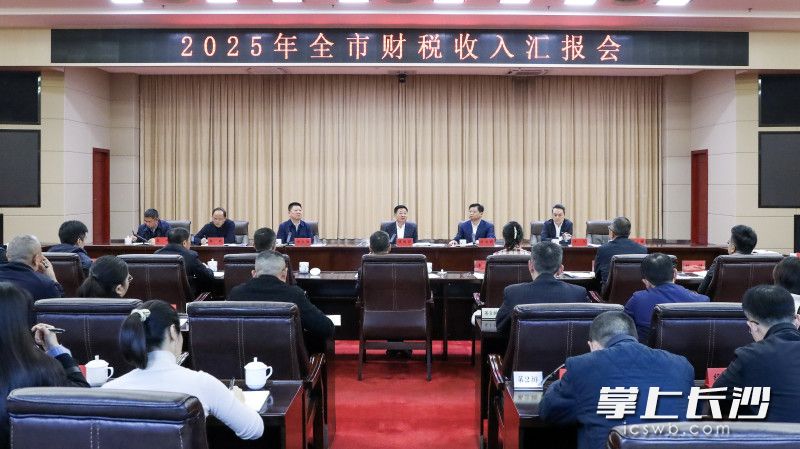
陈博彰主持召开2025年全市财税收入汇报会
Chang Sha Wan Bao· 2026-01-01 02:35
Core Viewpoint - The meeting focused on the financial and tax revenue situation for the city in 2025, emphasizing the need for collaboration and effective financial management to support high-quality development [4][5]. Group 1: Financial Performance - The city's financial system achieved a 2.5% growth target for general public budget revenue, with local revenue and tax growth rates exceeding provincial and city averages [4]. - The financial performance reflects proactive measures taken by the city to ensure financial stability and effective expenditure management [4]. Group 2: Strategic Initiatives - The city aims to implement a zero-based budgeting reform to optimize financial resources, ensuring funds are allocated based on needs and effectiveness [5]. - Emphasis on leveraging fiscal tools, such as government investment funds and policy guarantees, to attract social capital into the real economy [5]. Group 3: Collaborative Approach - The city promotes a unified approach among departments, enhancing collaboration between government, banks, and enterprises to strengthen financial management [6]. - The focus is on developing strategies to drive growth, expand revenue sources, and mitigate risks in the financial sector [6].
狠刹年底突击花钱歪风
Xin Lang Cai Jing· 2025-12-29 22:22
Core Viewpoint - The phenomenon of "year-end spending sprees" in certain regions and departments is driven by a flawed logic that prioritizes immediate expenditure over actual needs, leading to waste and potential corruption [1][2]. Group 1: Year-End Spending Issues - Year-end spending is often justified by the belief that unspent funds will be lost or that spending less will result in reduced future budgets, which contradicts the principle of prudent financial management [1]. - This practice results in unnecessary purchases and projects that lack proper justification, leading to "vanity projects" and incomplete initiatives [1]. - There are instances of illegal allowances and subsidies being issued at year-end, creating opportunities for corruption [1]. Group 2: Budgeting and Supervision - Budget preparation should be scientific and based on actual needs, yet many regions exhibit a "guesswork" approach, leading to excessive year-end fund surpluses and spending sprees [2]. - The implementation of zero-based budgeting reforms aims to break away from traditional budgeting methods, ensuring that funds are allocated based on necessity rather than historical baselines [2]. - Enhanced supervision mechanisms are necessary, transitioning from post-event oversight to continuous monitoring of budget execution, utilizing modern technology for real-time tracking [2]. Group 3: Future Financial Strategy - The use of fiscal funds must be aligned with the principle of serving the public, as every penny impacts the well-being of citizens and overall development [3]. - To combat the issue of year-end spending sprees, a performance-oriented long-term mechanism for fiscal fund usage should be established, ensuring funds are effectively utilized for sustainable development [3].