
韧性城市建设

Search documents
韧性城市怎么建
Jing Ji Ri Bao· 2025-08-30 23:20
Core Viewpoint - The article emphasizes the importance of building resilient cities that can withstand various risks and challenges, integrating safety and high-quality development into urban planning [1][4]. Group 1: Urban Resilience Concepts - The shift from engineering thinking to life thinking is crucial, viewing cities as complex systems rather than mere components, ensuring that urban planning incorporates the needs of the people [1]. - The need to enhance urban resilience from the initial planning stage by integrating it into land use planning, ensuring redundancy and replaceability of critical infrastructure [2]. - Optimizing infrastructure to improve connectivity and safety, utilizing smart sensing systems for real-time monitoring and risk management [2]. Group 2: Community and Governance - Implementing "micro-updates" in urban governance to rejuvenate vulnerable areas, enhancing safety and community engagement through participatory approaches [3]. - Establishing a multi-stakeholder governance model to enhance social resilience, involving government, market, and community collaboration in emergency response and safety education [3]. Group 3: Overall Vision - A resilient city can recover quickly from challenges and evolve continuously, with a focus on integrating safety and resilience into the fabric of modern urban life, ensuring citizens can enjoy a secure and fulfilling life [4].
如何建设无惧风雨韧性城市?
Jing Ji Ri Bao· 2025-08-16 01:19
Core Viewpoint - The increasing frequency of extreme weather events, such as heavy rainfall, necessitates the construction of resilient cities that can effectively manage urban flooding and climate risks [1][2]. Group 1: Urban Resilience and Climate Risks - Urban resilience focuses on proactive measures to address climate safety risks, which are now closely linked to national security aspects like food, energy, and ecological safety [2]. - The need for cities to understand their disaster risk profiles and implement targeted protective measures in high-risk areas is emphasized [2]. - Many small and medium-sized cities currently lack early warning systems for climate safety and specific plans for extreme weather events [2]. Group 2: Infrastructure and Planning - The ability of a city to withstand natural disasters relies more on its infrastructure than on superficial appearances [2]. - Urban renewal must reconsider planning in light of climate change, allowing for flexible design that accommodates varying financial capabilities [2]. - It is recommended to establish tiered drainage system upgrades and reserve capacity for extreme conditions to mitigate adverse outcomes [2]. Group 3: Community Aspirations and Systematic Approach - The construction of resilient cities reflects the community's desire for safety against extreme weather [3]. - A balance between urgency and systematic planning is crucial for enhancing urban safety resilience, transitioning from reactive emergency responses to proactive prevention [3].
建设无惧风雨韧性城市
Jing Ji Ri Bao· 2025-08-14 22:06
Group 1 - The core viewpoint emphasizes that a city's resilience lies in its infrastructure, which is crucial for withstanding natural disasters rather than just its superficial appearance [1][2] - Recent extreme weather events, such as unprecedented heavy rainfall, have raised concerns about urban flooding, highlighting the need for cities to proactively adapt to climate change rather than merely reacting to disasters [1][2] - The construction of resilient cities should integrate smart city concepts, utilizing digital control measures supported by the Internet of Things to identify vulnerabilities and enhance real-time monitoring and emergency automation [2][3] Group 2 - The construction of resilient cities reflects the public's aspiration for safety and the ability to withstand adverse weather conditions, necessitating a balance between urgency and systematic planning [3] - High-quality urban renewal efforts must focus on enhancing urban safety resilience, transitioning from passive emergency responses to proactive prevention strategies [3]
中共郑州市委召开党外人士座谈会
Zheng Zhou Ri Bao· 2025-08-13 01:01
Core Viewpoint - The meeting held by the Zhengzhou Municipal Committee emphasized the importance of collaboration among various political parties and organizations to promote high-quality development in Zhengzhou, focusing on economic and social progress as well as anti-corruption efforts in the first half of the year [1][2]. Group 1: Economic and Social Development - The meeting reported achievements in economic and social development in the first half of the year, with a consensus on the need to advance sectors such as advanced manufacturing, exhibition economy, cross-border e-commerce, and resilient city construction [1]. - Various representatives from democratic parties and organizations expressed their support for the city's development and provided suggestions for future initiatives [1]. Group 2: Strategic Focus Areas - The Municipal Committee highlighted key areas for future focus, including building a regional innovation hub, modernizing the industrial system, enhancing logistical capabilities, and developing a resilient and smart city [2]. - Emphasis was placed on accelerating the construction of the Zhengzhou metropolitan area and maintaining social harmony and stability [2]. Group 3: Collaborative Efforts - The need for collective brainstorming and future planning was stressed, with a call for leveraging the strengths of various parties to contribute to the scientific formulation of the "14th Five-Year Plan" [2]. - The importance of strengthening the internal construction of political parties was also highlighted, aiming to enhance team capabilities and improve work styles to support Zhengzhou's modernization efforts [2].
浙江大学求是特聘教授石敏俊:中央城市工作会议的新要求,反映了我国城市治理理念发生了怎样的变迁?
Zhong Guo Huan Jing Bao· 2025-08-12 03:29
Group 1 - The central urban work conference has outlined a strategic framework for building innovative, livable, beautiful, resilient, civilized, and smart modern cities, marking a shift from rapid urbanization to stable development [1] - By the end of 2024, the urbanization rate in China is expected to reach 67%, with 940 million people living in urban areas, indicating a transition to a phase focused on quality improvement rather than quantity expansion [1] - The conference emphasizes the importance of sustainable urban development, aligning with the United Nations' 11th Sustainable Development Goal of creating inclusive, safe, resilient, and sustainable cities [1] Group 2 - China's urban development has faced significant challenges, including air quality issues, with PM2.5 annual average concentrations dropping from 72 micrograms per cubic meter in 2013 to 29.3 micrograms per cubic meter in 2024, reflecting substantial improvements in air quality [2] - The percentage of cities meeting air quality standards increased from 4.1% in 2013 to 65.5% in 2024, showcasing the effectiveness of efforts to transition towards sustainable urban development [2] Group 3 - The central urban work conference reflects a deepening and systematic improvement in urban governance, with new policies establishing a framework for beautiful city construction focused on green, low-carbon, and safe environments [3] - The conference sets higher standards for resilient city construction, addressing various aspects such as infrastructure safety, disaster prevention, and social security [3] Group 4 - In the construction of livable cities, the conference emphasizes the integration of population, industry, urban, and transportation planning, aiming to enhance the quality of urban life and promote healthy real estate development [4] - The evolving policies indicate a more systematic and comprehensive framework for urban governance, focusing on ecological foundations, safety, and quality of life, thereby promoting high-quality urban development [4]
着力建设安全可靠的韧性城市(新时代画卷)
Ren Min Ri Bao· 2025-08-06 22:49
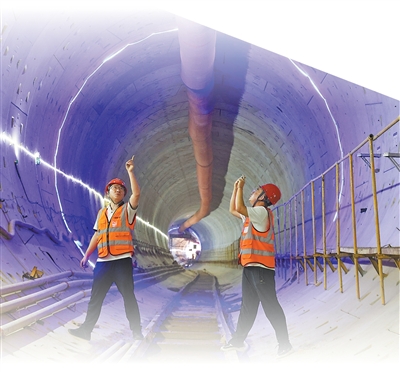
Group 1: Urban Infrastructure Safety Projects - The construction of urban infrastructure safety projects is being advanced in various regions, including Shenzhen, Hebei, and Gansu, focusing on the inspection and maintenance of essential facilities such as underground pipelines and heating stations [2][4][6]. Group 2: Enhancing Building Safety - Comprehensive fire rescue drills are being conducted in high-rise buildings in Zhejiang to improve fire safety measures [8]. - In Hunan, efforts are being made to install elevators in old residential communities to enhance the quality of life for residents [10]. Group 3: Natural Disaster Prevention - Emergency response drills for typhoon and flood prevention are being carried out in Fuzhou, Fujian, to strengthen disaster preparedness [12]. - In Chongqing, the construction of an ecological water level regulation dam is underway, with a total storage capacity of approximately 80 million cubic meters [14]. Group 4: Social Security and Public Safety - Public security measures are being reinforced in Shenyang, with police maintaining order in night markets [16]. - Real-time monitoring of urban operations is being implemented in Tianjin to enhance city management [18]. - Community discussions are being held in Henan to address local infrastructure issues, such as water pipe network maintenance [20].

建设安全可靠的韧性城市
Jing Ji Ri Bao· 2025-08-01 21:53
Core Viewpoint - The recent Central Urban Work Conference emphasizes the need to advance urban infrastructure safety projects and accelerate the renovation and upgrading of old pipelines, marking a foundational task for safeguarding urban lifelines and ensuring high-quality urban development [1]. Group 1: Urban Development Goals - China's urban development is shifting from large-scale expansion to enhancing existing infrastructure, with key goals including innovation, livability, beauty, resilience, civilization, and intelligence [1]. - Upgrading critical infrastructure such as gas, water supply, drainage, and bridges is essential and should not be limited to simple repairs but rather require a comprehensive operational system that integrates efficiency, safety, intelligence, and resilience [1]. Group 2: Local Practices and Innovations - Local practices show that advancing urban lifeline safety projects is viewed as a crucial strategy for building modern cities, with Anhui province establishing a monitoring system covering 170,000 kilometers of underground pipelines for precise risk management [1]. - The collaboration between technology, funding, and information is vital for achieving urban infrastructure safety goals, with a focus on enhancing technological innovation and integrating academic and research resources [2]. Group 3: Funding and Data Management - A robust financing mechanism is necessary due to the substantial funds required for systematic renovations, suggesting the establishment of special funds and the use of fiscal tools to attract diverse capital for sustainable funding [2]. - Breaking down data barriers is essential for effective pipeline system construction, necessitating the creation of an intelligent management hub for information sharing and integration across departments, thereby supporting comprehensive management throughout the lifecycle of urban infrastructure [2].
专家共论房地产转型:在气候风险应对与韧性城市建设中寻找新动能
2 1 Shi Ji Jing Ji Bao Dao· 2025-07-30 09:50
Group 1 - The global economic transformation, demographic changes, and climate crises are increasingly impacting urban, housing, and real estate issues, which are critical for sustainable economic and social development [1] - Climate risks have become a key factor affecting global socio-economic development, with extreme weather events causing significant losses, necessitating proactive measures [1] - From 1990 to 2019, 91.6% of major natural disasters, 67.6% of disaster-related deaths, 83.7% of economic losses, and 92.4% of insurance losses were attributed to meteorological and derived disasters [1] Group 2 - Research indicates that in China, low-lying and low-floor residences experience significant rent reductions during periods of heavy rainfall, while old neighborhoods and areas with weak infrastructure are particularly sensitive to flood risks [2] - In Italy, the negative impact of flood risks on property prices can be mitigated through public disaster investment, highlighting the positive role of policy intervention in the risk capitalization process [2] - The housing market must enhance its ability to identify and respond to climate risks, reinforcing urban resilience and institutional safeguards for sustainable and safe urban development [2] Group 3 - The recent Central Urban Work Conference identified "resilience" as a key goal for modern urban construction, emphasizing the need for safe and reliable resilient cities as a priority task [2] - Specific measures include advancing urban infrastructure safety projects, upgrading old pipelines, restricting super-tall buildings, and enhancing housing safety standards, all closely related to the real estate industry [2] - The Chinese real estate sector is undergoing deep market adjustments, industrial transformation, and institutional optimization, necessitating a scientific understanding of the interactions between real estate and various socio-economic factors for sustainable development [2][3] Group 4 - Key issues in the real estate industry include establishing a rational land transfer mechanism, stabilizing real estate price fluctuations, addressing expiring land lease issues, and exploring reasonable investment structures for commercial buildings [3] - The profound changes in the global landscape are expected to significantly influence the long-term trajectory of the real estate market [3]
众志成城打好防汛抢险这场硬仗
Bei Jing Qing Nian Bao· 2025-07-29 12:24
Core Viewpoint - The article emphasizes the importance of collective efforts and unity in responding to severe flooding and rainstorms, highlighting the need for timely evacuation and collaboration among various rescue teams and local authorities to minimize disaster losses and enhance urban resilience [1][6]. Summary by Sections Emergency Response - On July 28, a red rainstorm warning was issued in Beijing, predicting over 150 mm of rainfall in most areas within six hours, with some locations potentially exceeding 300 mm, leading to high risks of secondary disasters such as flash floods and landslides [3]. - The city's flood control command initiated a level one emergency response, urging citizens to pay close attention to warnings and prepare for necessary actions [3]. Rescue Operations - Various rescue teams and local forces are actively collaborating to ensure the safe evacuation of threatened residents. As of July 27, 1552 households (3270 individuals) were evacuated in the Miyun District, 668 households (1277 individuals) in Huairou District, and 418 households (854 individuals) in Yanqing District [4][5]. - Emergency response teams, including 56 members from the Miyun District Fire Rescue Team and over 1220 personnel from district-level teams, are deployed to assist in rescue operations [3][4]. Community Involvement - The article highlights the role of ordinary citizens in the rescue efforts, showcasing acts of bravery and kindness, such as a 65-year-old man who used his car to block a flooded road and a woman who helped a stranded mother and daughter during the storm [5]. - It stresses the need for all citizens to actively participate in flood prevention efforts, comply with safety measures, and assist others where possible [6]. Preparedness and Awareness - The article calls for continuous vigilance and preparedness as the flood season progresses, urging departments and units to maintain a proactive approach to disaster risk management and public awareness campaigns [5][6]. - It emphasizes the importance of enhancing emergency response capabilities and community awareness to better protect urban safety during extreme weather events [4][5].
武汉超大城市治理研究院成立,60多位专家学者加盟研究团队
Chang Jiang Ri Bao· 2025-07-16 12:53
Core Viewpoint - The Wuhan Super Large City Governance Research Institute has been established to focus on innovative governance practices and theories for super large cities, with over 60 experts joining the initiative [1][2]. Group 1: Establishment and Purpose - The Wuhan Super Large City Governance Research Institute is a collaborative research platform co-hosted by Jianghan University and the Wuhan Academy of Social Sciences, aimed at serving the governance needs of Wuhan as a super large city [2]. - The institute will leverage resources from various departments within Jianghan University, including the Law School, Business School, and others, to create a multidisciplinary research system [2]. Group 2: Research Focus and Goals - Future research will concentrate on urban integration, spatial planning, smart city development, social governance, urban safety resilience, and civilized city construction [3]. - The institute aims to produce significant outcomes in theoretical innovation, decision-making consulting, governance practice, and talent cultivation, establishing itself as a prominent think tank for super large city governance [3].