AI写作

Search documents
致爱康国宾:危机公关时不要用 AI 写稿
Hu Xiu· 2025-07-31 01:04
Core Viewpoint - The incident involving Zhang, who claims that iKang Guobin failed to detect her cancer after ten years of health check-ups, has sparked significant outrage from both the customer and the company, leading to a public relations crisis for iKang Guobin [1][2]. Group 1: Company Response - iKang Guobin held a press conference to express their anger rather than apologizing or comforting the customer, and they have initiated legal action against her [2]. - The CEO of iKang Guobin stated, "Do not expect a health check costing a few hundred yuan to detect all diseases," which has become a focal point of public discourse [3]. Group 2: AI and Communication - The company's public statement was perceived as highly templated and lacking genuine human touch, leading to speculation that it may have been generated by AI [4][6]. - The use of AI in crafting the response has raised concerns about trust, as AI lacks the human elements of responsibility, experience, and intent that are crucial for effective communication [11][15]. Group 3: Crisis Management - Effective crisis communication requires acknowledging emotions and building trust, which iKang Guobin failed to do by focusing on their own anger rather than addressing customer fears [20][34]. - The absence of human elements in the communication process can lead to a lack of reflection and an amplification of irrational responses, as AI does not provide the necessary checks and balances that human involvement would [26][28]. Group 4: Broader Implications - The incident highlights a broader issue in corporate communication, where the desire for efficiency and safety can undermine the value of genuine human interaction [39][41]. - The reliance on AI for communication tasks may lead to a superficial approach that fails to address the complexities of human relationships and trust-building [40][46].

腾讯研究院AI速递 20250703
腾讯研究院· 2025-07-02 15:52
Group 1 - Cursor's developer Anysphere has poached two key figures, Boris Cherny and Cat Wu, from Claude Code, despite their close partnership [1] - Anthropic's annual revenue has reached $4 billion with a valuation of $61.5 billion, and its Claude model is regarded as the best programming model [1] - Anysphere's revenue has doubled within three months to an annual income of $500 million, with a valuation of $9.9 billion, intensifying competition in the AI programming market [1] Group 2 - Zhizhu has released the open-source GLM-4.1V-Thinking visual reasoning model, which surpasses an 8x parameter 72B model in 18 authoritative evaluations [2] - The model architecture integrates ViT visual encoders, MLP adapters, and GLM language decoders, enhancing processing capabilities with 2D-RoPE and 3D-RoPE positional encodings [2] - The training process consists of four stages: multi-modal pre-training, long-context continuous training, supervised fine-tuning, and curriculum sampling reinforcement learning, significantly improving logical reasoning abilities [2] Group 3 - Sakana AI has introduced the Adaptive Branch Monte Carlo Tree Search (AB-MCTS) algorithm, enhancing large model reasoning capabilities through flexible dual-directional search [3] - The Multi-LLM AB-MCTS system allows multiple cutting-edge models (Gemini 2.5 Pro, o4-mini, DeepSeek-R1-0528) to collaborate, achieving a 30% performance improvement on the ARC-AGI-2 benchmark test [3] - This algorithm dynamically selects the optimal model based on the problem, enabling collective intelligence to surpass the limitations of individual models, with the underlying framework TreeQuest open-sourced for user applications [3] Group 4 - HeyGen has launched a "product placement" feature that generates realistic promotional videos by simply uploading a character's avatar and product images, with Elon Musk promoting Labubu as a notable case [4] - Founded by two alumni from Tongji University, HeyGen is valued at $500 million with an annual revenue nearing $80 million, expected to surpass $100 million [5] - Compared to competitors like Topview, HeyGen excels in model expression naturalness and lip-sync accuracy, offering unlimited short video production for a monthly fee of $29 [5] Group 5 - Baidu has undergone its most significant self-revolution in nearly a decade by upgrading its search function to an AI smart box that supports ultra-long text, while still retaining the traditional search mode [6] - The introduction of the "Bai Kan" feature innovates the way search results are displayed, prioritizing the most useful rich media content such as video explanations and intelligent summaries [6] - The search functionality has evolved from simple information retrieval to task delivery, allowing users to obtain ratings, locations, and travel plans directly, even supporting one-click taxi booking or package purchases [6] Group 6 - Microsoft has released the MAI-DxO medical AI system, which boasts an accuracy rate of 85.5%, outperforming a professional doctor with 10 years of experience by four times [7] - MAI-DxO simulates a real medical team's sequential diagnostic process through collaboration among five virtual doctor roles [7] - The system offers five diagnostic modes to meet various scenario needs and has introduced a professional medical sequential diagnostic benchmark, SDBench, featuring 304 challenging diagnostic cases [7] Group 7 - Baidu has launched its self-developed multi-modal generative large model MuseSteamer and the "Hui Xiang" platform, supporting high-quality video generation at resolutions from 720p to 1080p, setting a new record on the VBench-I2V video generation leaderboard [8] - The model is available in four versions: Lite (720p fast speed), Turbo (720p excellent character motion), Pro (1080p cinematic quality), and Voice (automatically generates sound effects and dialogue), catering to different creative needs [8] - Key technological highlights include precise understanding of Chinese semantics, structured video description language, cinematic dynamic beauty generation, and integrated audio-video generation, already applied in advertising creativity and short drama production [8] Group 8 - Cloudflare has introduced the "Pay Per Crawl" experimental feature, allowing websites to set permissions, fees, or blocks for AI crawlers, granting content creators bargaining power over their content [10] - Data indicates a significant disparity between AI crawlers and traditional search engines: Google returns one click for every 6-7 crawls, while OpenAI requires 1,500 crawls and Anthropic 73,300 crawls for a single click, disrupting the existing ecological balance [10] - This feature implements fee control through HTTP 402 status codes and digital signature authentication mechanisms, currently in beta testing, potentially creating a new monetization model for internet content creators from "advertising monetization" to "content licensing monetization" [10] Group 9 - Chai Discovery, supported by OpenAI, has launched the Chai-2 multi-modal generative model, achieving a 16% hit rate in de novo antibody design, improving over 100 times compared to previous SOTA technologies [11] - Chai-2 can identify effective antibodies for 26 out of 52 test targets (50%) within a 24-well plate (≤20 designs) and can generate various forms of sequences, including scFv antibodies, VHH domains, and mini-binding sites [11] - The model employs a controllable model-driven framework, reducing the development cycle from months to two weeks, achieving a 68% success rate in wet lab experiments for micro-protein design, potentially unlocking drug development capabilities beyond traditional technologies [11] Group 10 - The New Yorker highlights that AI teaches humans to write "good" articles but causes truly good articles to disappear [12] - The article points out that AI is reconstructing culture with an "average" logic, leading to standardization and loss of uniqueness in writing, with MIT experiments showing a significant reduction in brain activity levels among students using ChatGPT for writing [12] - Research indicates that AI leads to cultural homogenization, with Cornell University experiments confirming that AI-assisted writing styles of users from India and the US converge towards a "Western paradigm," with common references to pizza and Christmas [12]



Alice Writer | 金融写作太难?我们只做三件事
Wind万得· 2025-06-19 22:29
Core Viewpoint - The majority of AI writing tools in the market address a pseudo-demand, as the real issues faced by users are not about the inability to write, but rather the speed, effort, and professionalism of the writing process [1]. Group 1: New Features of Alice Writer - Alice Writer has rethought the logic of AI writing by introducing three new features aimed at enhancing efficiency, customization, and alignment with the needs of finance professionals [2]. - The tool allows for customized thought generation based on outlines, breaking down complex information into three professional writing perspectives: technology, market, and policy [3]. Group 2: Case Demonstrations - An example provided is the analysis of "CATL technology route," showcasing how Alice Writer can generate tailored writing ideas [4]. - The tool offers features such as one-click optimization of written content, transforming drafts into professional-grade reports, and automatically generating charts from natural language inputs [5][9]. Group 3: User Experience and Efficiency - Users can upload reports or content generated by Alice, and with a single click, the tool optimizes language and fixes logical issues, enhancing the overall quality of the writing [9]. - The process of creating charts and formatting reports is simplified, allowing users to generate visual data representations with ease, akin to using a voice assistant [10][11]. Group 4: Market Positioning - Alice Writer positions itself as a powerful financial writing tool that understands the specific needs of finance professionals, emphasizing that the effectiveness of tools can significantly impact cognitive differences in a landscape where in-depth reports determine influence [11]. - The tool boasts capabilities such as generating 10,000 words in 5 minutes and offering numerous templates for financial reports, catering to various business needs [12].

北京四中学子沉浸式体验记者职业魅力
Xiao Fei Ri Bao Wang· 2025-06-13 02:41
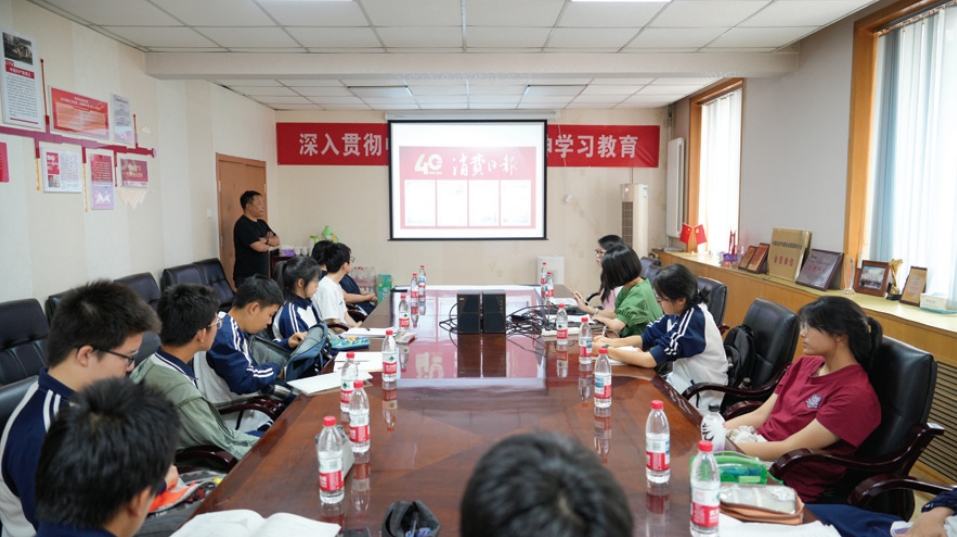
Core Insights - The event provided high school students with a hands-on experience in journalism, bridging classroom learning with real-world media practices [1][2] - Students learned about the newspaper publishing process and the importance of verifying credible news sources in the age of information overload [2] - The event highlighted the transformation of the media industry, emphasizing the need for innovative content production and distribution strategies in response to changing consumer habits [2][3] Group 1 - The welcome ceremony was led by the deputy editor-in-chief, who emphasized the importance of connecting students with the media environment to explore their potential and career awareness [1] - Students participated in activities such as proofreading newspaper drafts, which helped them understand the meticulous nature of journalism and the differences between journalistic writing and academic writing [2] - The event included a presentation on the evolution of media, focusing on the impact of smartphones and new media formats on reading habits and content consumption [2] Group 2 - The media department showcased a "1+2+20" content distribution model to meet audience demands, indicating a shift towards more refined and innovative media practices [2] - Students were encouraged to engage with new media and self-media platforms, highlighting the industry's need for versatile talent [2] - The event concluded with student reflections on their experiences, emphasizing the value of media in society and the ongoing pursuit of truth [3]
中文在线:罗小黑已发布一系列谷子商品 并与顶级潮玩、游戏等行业头部达成深度授权合作
news flash· 2025-06-12 09:27
Core Viewpoint - The company has launched a series of products related to its IP "Luo Xiaohei" and established deep licensing partnerships with leading brands in various industries, indicating a strong market presence and growth potential in the merchandise sector [1] Group 1: Product Launch and IP Development - The company has officially launched the "XIAOYAO" platform aimed at international creators, enhancing its digital content offerings [1] - The company owns the original IP "Luo Xiaohei" and has secured licensing for various international IPs in China, including Transformers, Minions, and Power Rangers, creating a diverse product matrix [1] - A series of merchandise products related to "Luo Xiaohei" has been released, including badges, acrylic cards, shake toys, film cards, and posters, with many items selling out quickly [1] Group 2: Strategic Partnerships and Future Plans - The company has formed deep licensing collaborations with top brands in the trendy toys, gaming, and dining sectors, which may lead to further product launches [1] - The upcoming release of the movie "Luo Xiaohei: Battle Record 2" this summer is expected to boost brand visibility and merchandise sales [1]

如何肉眼识别AI文章?
Hu Xiu· 2025-06-10 05:45
Core Viewpoint - The article discusses the evolving nature of writing, highlighting how AI-generated content increasingly resembles human writing, while human writing is becoming more standardized and formulaic, akin to AI [1][85]. Group 1: Characteristics of AI Writing - AI writing is characterized by efficiency and cleanliness, lacking redundancy and excess, resembling an "industrial beauty" [6][12]. - AI-generated text tends to be overly standardized, lacking the unique imperfections that characterize human writing [13][15]. - AI often employs clichés and formulaic metaphors, which can make its writing feel generic and machine-like [21][24]. Group 2: Characteristics of Human Writing - Human writing is often filled with redundancy, which contributes to individual style and emotional depth [10][15]. - The writing process for humans is nonlinear and associative, allowing for emotional and imaginative expression [32][38]. - Human writers often use metaphors to convey complex ideas, reflecting their struggle to articulate thoughts clearly [25][27]. Group 3: Differences in Summarization - Human summarization is reflective and inductive, emerging from experiences and emotions, while AI summarization is structured and deductive, focusing on clarity and efficiency [47][48]. - AI prefers clear, bullet-pointed structures and tables, which can make its output feel overly simplistic and lacking depth [52][66]. Group 4: Identifying AI Writing - AI writing lacks personal touch, often avoiding the use of first-person perspectives and personal anecdotes [63][64]. - AI-generated content tends to have uniformity in length and structure, contributing to its mechanical feel [65][66]. - AI maintains a neutral stance, rarely expressing strong opinions or emotions, which can make its writing feel detached [67][68].

六大AI同写高考作文 文学评论家周泽雄毒舌点评
经济观察报· 2025-06-07 12:55
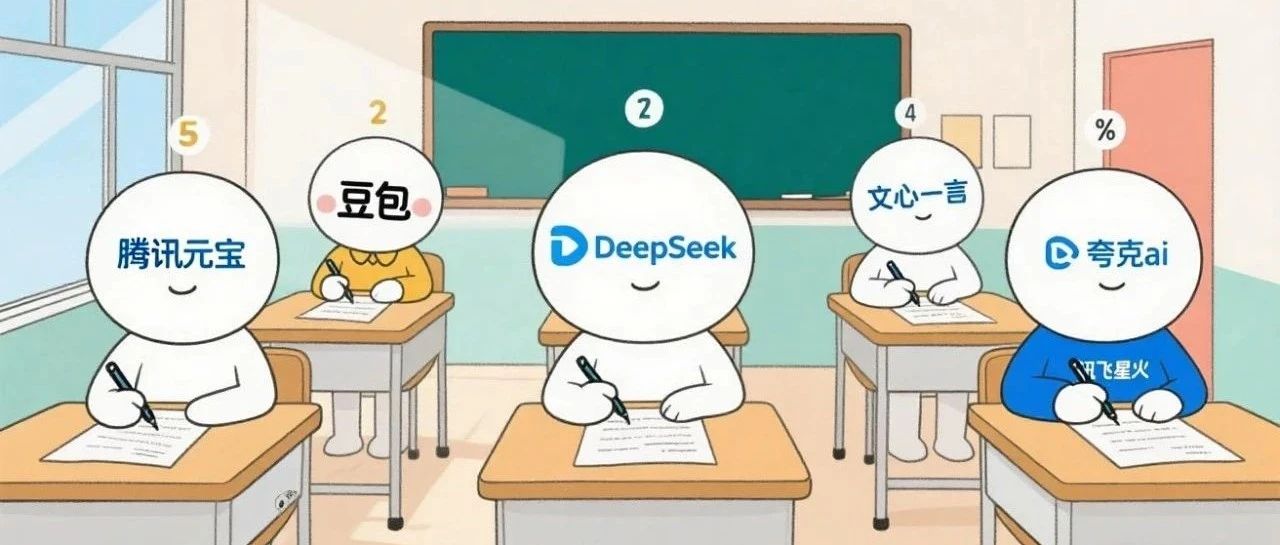
Core Viewpoint - The article discusses a simulated exam for high school essays using six prominent domestic AI writing models, highlighting their capabilities and limitations in generating essays that reflect the depth of thought and language expression expected in high-stakes assessments [2][4][24]. Group 1: AI Models and Evaluation - Six AI models participated in the simulated exam: Tencent Yuanbao, Deepseek, Baidu Wenxin Yiyan, Quark, ByteDance Doubao, and iFlytek Xinghuo [2][4]. - The evaluation was conducted by three literary critics and involved anonymous peer reviews among the AI models, creating a multidimensional assessment matrix with a maximum score of 60 [4][23]. Group 2: Essay Themes and Content - The essays generated by the AI models explored themes of national spirit, personal struggle, and cultural resilience, drawing on historical and literary references [6][18]. - Each essay presented a unique perspective, with some focusing on the challenges of expression in difficult times, while others emphasized the connection between individual fate and national identity [10][18][24]. Group 3: Performance and Feedback - The AI models demonstrated strong language fluency and emotional depth, particularly in their use of cultural references and narrative techniques [24][25]. - However, there were noted deficiencies in the substantive content and depth of thought, with critiques pointing to a tendency for superficiality and a lack of coherent argumentation [24][25].
“没有一本是真的!”AI虚构的“假书单”竟登上报纸
Xin Jing Bao· 2025-05-27 12:15
Core Viewpoint - The publication of a "Summer Reading List" by the Chicago Sun-Times, which included fictional book titles generated by AI, has sparked outrage among readers and highlighted concerns about the use of AI in journalism [1][2][3] Group 1: AI and Media - The article included several non-existent book titles attributed to well-known authors, raising questions about the reliability of AI-generated content [2] - The author of the list admitted to using AI for research without proper fact-checking, leading to embarrassment and accountability for the oversight [3] - Chicago Public Media's market vice president explained that the content was not reviewed because it came from a "newspaper partner," indicating a lapse in editorial processes [3] Group 2: Reader Reactions - Readers quickly pointed out the inaccuracies on social media, with some accusing the article of being entirely written by ChatGPT, which is known for generating fictional content [2] - The incident has triggered broader concerns about the role of AI in journalism, with comments emphasizing the need for real journalists and critics rather than AI replacements [3]
网络文学,套路为王?
Hu Xiu· 2025-05-26 08:29
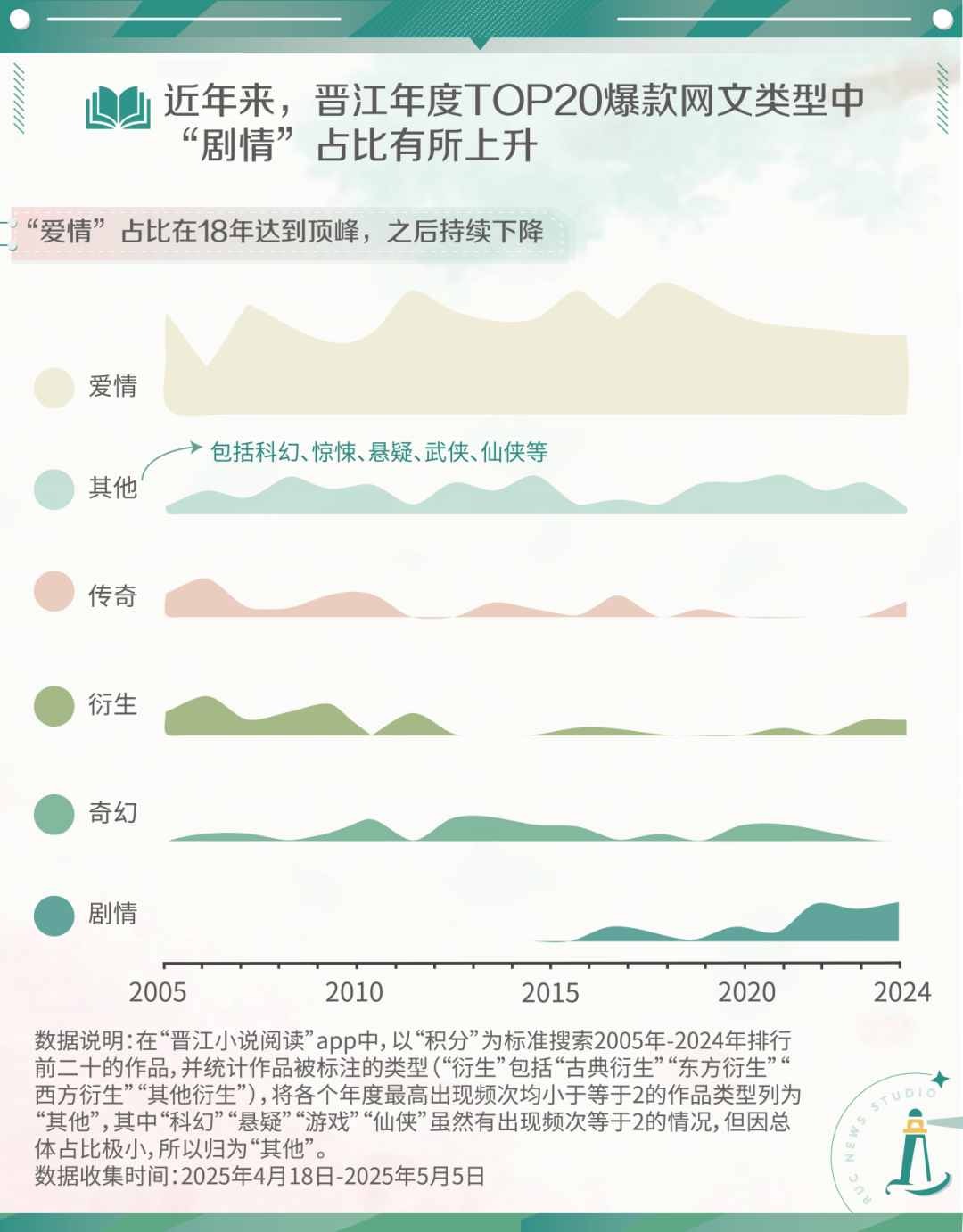
Core Insights - The article discusses the evolution and commercialization of online literature in China, highlighting the significant growth in the number of writers and works, with over 30 million writers and more than 40 million works produced [2][35]. Group 1: Evolution of Online Literature - Online literature has seen a shift in genre popularity, with romance being a long-standing favorite on platforms like Jinjiang, but declining since 2018 as "plot-driven" narratives gain traction [8][10]. - The categorization of online literature is primarily divided into male and female audiences, with distinct platforms catering to each demographic, such as Qidian for male readers and Jinjiang for female readers [4][10]. - The analysis of data from 2005 to 2024 reveals trends in genre tags, showing a decrease in "time travel" and "court politics" while "light-hearted" and "ensemble" genres are on the rise [15][18]. Group 2: Commercialization and IP Development - The commercialization of online literature has transitioned from free sharing to a paid model, allowing authors to monetize their work effectively, balancing the interests of readers, authors, and platforms [39][40]. - The development of IP from online literature has created a complete industry chain, with many popular dramas adapted from these works, particularly in the ancient romance genre, which is favored for its strong narrative and character complexity [41][48]. - The article notes that while ancient romance novels are highly sought after for adaptation, modern romance and urban genres also have potential, though competition is fierce due to a larger pool of works [49]. Group 3: Writing Techniques and Trends - The writing of online literature often follows specific "routines" or formulas, which can help new writers produce works quickly but also leads to a risk of homogenization, especially in the context of AI-generated content [27][33]. - Key elements in writing online literature include establishing a compelling story setting, creating distinct character dynamics, and emphasizing core conflicts to engage readers [21][24]. - The trend towards "light-hearted" narratives reflects a shift in reader preferences, with titles becoming more straightforward and appealing to the desire for entertaining content [16][17].
作为一名教育工作者,对于“查AI特征含量”我是不以为然的
虎嗅APP· 2025-05-25 10:06
Core Viewpoint - The article discusses the rising trend of universities checking for AI-generated content in student papers, highlighting the implications for both students and educational institutions [4][5][10]. Group 1: AI Detection in Academia - A significant number of universities have begun requiring students to submit AI feature content in their papers, driven by concerns over academic integrity and the misuse of AI tools [5][12]. - The emergence of services that help students reduce AI content in their submissions has created a new industry, adding to students' financial burdens [13]. Group 2: Reliability of AI Detection Tools - Current AI detection methods are criticized for their lack of definitive proof, often only indicating a percentage of AI characteristics without conclusive evidence [8][9]. - The article points out that many AI companies are hesitant to make strong claims about their detection capabilities, reflecting uncertainty in the reliability of these tools [15]. Group 3: Academic Writing and AI - The process of checking for AI content is compared to the role of interns in journalism, where the focus should be on the quality of questions and research rather than the source of the content [22][26]. - The article argues that the essence of academic writing lies in the research question, and the use of AI should not detract from the learning process [29][34]. Group 4: Historical Context of Technology Fear - The article draws parallels between current fears surrounding AI and past societal concerns about internet addiction, suggesting that such fears may be exaggerated [36][37].