
AI生成内容

Search documents
马斯克旗下Grokipedia被批抄袭维基百科,引入无来源错误信息
3 6 Ke· 2025-11-17 12:12
Core Insights - PolitiFact's evaluation of xAI's Grokipedia reveals serious issues including content plagiarism and lack of factual accuracy, damaging its credibility as a reliable information source [2][3][4] - Grokipedia, launched in October 2023, aimed to compete with Wikipedia but has faced widespread criticism for its AI-generated content that often replicates Wikipedia without proper attribution [2][3] Content Plagiarism - PolitiFact analyzed 885,279 articles on Grokipedia, finding that many directly copied text from Wikipedia, with a similarity rate as high as 96% in some cases [2][4] - An example includes the "Monday" entry, which omitted 22 reference sources from Wikipedia while claiming to adapt content under a Creative Commons license [4] Lack of Factual Accuracy - Grokipedia's AI-generated content has been found to introduce errors, such as a misleading statement regarding the Nobel Prize, which lacked citation and was factually incorrect [4][6] - The platform often simplifies narratives by removing context from Wikipedia, sacrificing accuracy in the process [4][5] Transparency Issues - Grokipedia's editing mechanism lacks transparency, with no visible edit history or clear error correction processes, making its "fact-checking" label difficult to trust [6] - In contrast, Wikipedia maintains a transparent editing process, allowing anyone to edit and providing a complete history of article changes [5][6] Industry Context - The launch of Grokipedia coincides with xAI's legal disputes with Apple and OpenAI, which have accused these companies of suppressing AI competition [6] - The Wikimedia Foundation has raised concerns about Grokipedia's plagiarism and the implications for educational ecosystems, emphasizing the need for responsible use of open-source content [6]

外卖档口用AI营造“网红门面” 技术不能成非法牟利工具
Jing Ji Ri Bao· 2025-11-13 00:28
Core Viewpoint - The use of AI technology to create misleading representations of businesses, such as "premium dining establishments," has led to consumer backlash and highlights the risks of misusing AI in commercial promotion [1][2]. Group 1: Misuse of AI in Business - Businesses utilizing AI-generated content to create a false image may attract initial customers but risk long-term sustainability if the actual service does not meet expectations [2][3]. - The public expresses concerns over the authenticity of AI-generated images and the potential for malicious use in advertising, indicating a growing skepticism towards AI applications in marketing [1][2]. Group 2: Regulatory and Ethical Considerations - There is a pressing need for stricter regulations governing the use of AI-generated content in commercial activities to protect consumer rights and ensure truthful representation of products and services [3]. - Companies must adhere to legal standards by providing clear and accurate information about their offerings, including proper labeling of AI-generated content as per national regulations [1][3]. - Recent judicial rulings, such as the "AI companionship case," emphasize the importance of protecting individual rights against unauthorized use of AI technology, reinforcing the need for ethical practices in AI applications [2].
“AI假象”带不来流量
Jing Ji Ri Bao· 2025-11-12 22:24
Core Points - The use of AI technology to create a false image of "premium dining" by takeout vendors has led to significant consumer backlash, highlighting the risks of misleading marketing practices [1][2] - There is a growing concern among the public regarding the misuse of AI-generated content, which can lead to safety risks and consumer deception [1][2] - Legal frameworks are being established to regulate the use of AI in commercial activities, emphasizing the importance of protecting consumer rights and ensuring truthful representation of products and services [2][3] Group 1 - The application of AI technology in marketing must be legal and compliant, ensuring that content is truthful and accurately reflects the actual quality and price of goods or services [1][2] - Businesses are required to clearly label AI-generated content in accordance with national standards, which includes explicit and implicit markings on various media types [1][3] - The misuse of AI-generated content can infringe on consumer rights and potentially lead to consumer fraud, undermining long-term business sustainability [2][3] Group 2 - There is an urgent need for further regulation of AI-generated content in commercial activities, with businesses encouraged to operate transparently and uphold consumer rights [3] - Platforms should enhance oversight to remove misleading content and utilize customer feedback mechanisms to ensure compliance with standards [3] - Regulatory bodies must develop guidelines that align with technological advancements to protect consumer rights and promote ethical business practices [3]
整蛊式AI生成内容突破了底线
Bei Jing Qing Nian Bao· 2025-11-12 01:33
Core Viewpoint - The recent incident involving an AI-generated image of a homeless person attempting to enter a home highlights the potential dangers and societal implications of AI technology misuse, particularly in creating false alarms and wasting public safety resources [1][2][3] Group 1: Social Implications - The AI-generated "homeless person entering home" incident has led to significant public safety resource wastage, as police are required to respond to these false alarms, which detracts from their ability to handle genuine emergencies [2] - The psychological impact on affected homeowners and their families can be long-lasting, potentially disrupting their daily lives and mental well-being [2] Group 2: Legal and Ethical Concerns - The actions of individuals creating and sharing such AI-generated content may not fully recognize the legal and ethical boundaries they are crossing, which could lead to legal repercussions if serious consequences arise [2] - There is a pressing need for enhanced regulation of AI technology, with calls for the establishment of clear legal frameworks and responsibilities regarding the use of AI-generated content [3] Group 3: Technological Challenges - The rapid advancement of AI technology has made it increasingly easy for individuals to create misleading content, raising concerns about the proliferation of similar harmful behaviors in society [2][3] - Online platforms are urged to take greater responsibility in monitoring and regulating the dissemination of such harmful AI-generated content to prevent its spread [3]
马斯克发布 AI 生成视频引争议,作家欧茨犀利批评其缺乏文化素养
Sou Hu Cai Jing· 2025-11-10 07:10
Core Points - Tesla's shareholders have approved a new compensation plan potentially worth up to $1 trillion, which CEO Elon Musk seems to celebrate on social media [1] - Musk released videos generated by his company xAI's new tool Grok Imagine, showcasing AI-generated content that has drawn mixed reactions from users [3][5] - Criticism of Musk's social media presence has intensified, with notable figures like Joyce Carol Oates questioning his understanding of life and culture [5][7] Group 1 - Tesla's new compensation plan could reach a value of $1 trillion, reflecting significant shareholder support [1] - Musk's use of AI-generated videos has sparked both interest and ridicule among users on the X platform [3][5] - The backlash against Musk's social media activity highlights a growing concern about his public persona and cultural awareness [5][7]

早报 | 南航通报员工3000米体测猝死;寒武纪回应前CTO天价索赔;马斯克称5年后不再有手机和App;黄仁勋套现超10亿美元
虎嗅APP· 2025-11-02 23:52
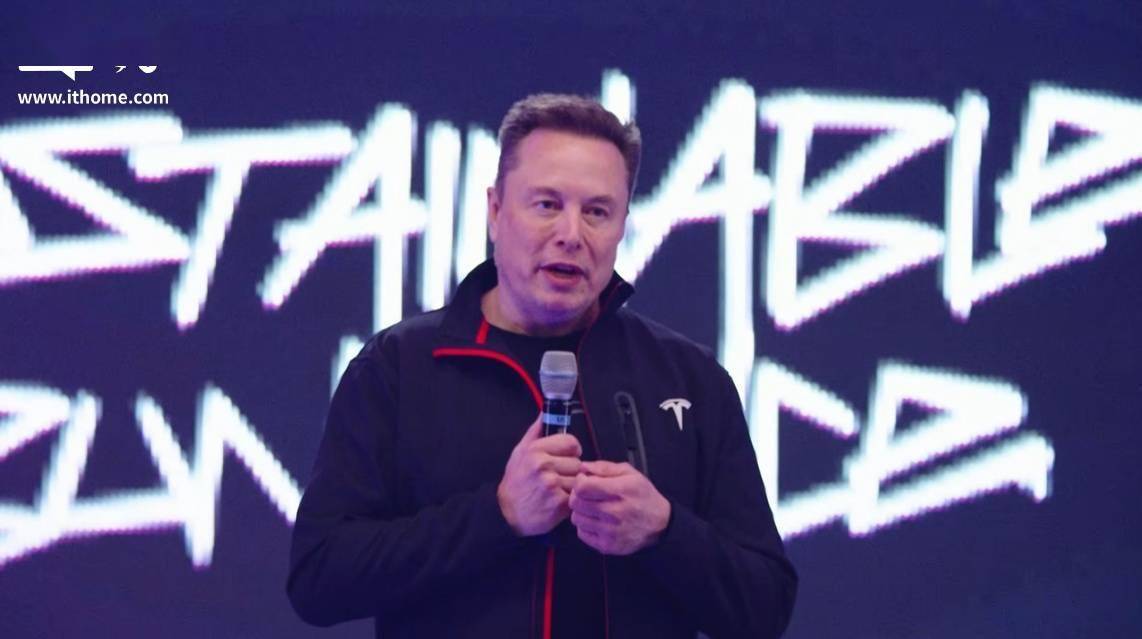
Group 1 - China Southern Airlines reported the unfortunate death of an employee during a 3-kilometer fitness test, prompting the company to form a special task force to assist the family [2] Group 2 - OpenAI has lifted the invitation-only restriction for its Sora 2 video generation tool, now available to users in the US, Canada, Japan, and South Korea, indicating a significant expansion into the Asian market [3][4] - The company is facing substantial cost pressures, with the cost of generating a 10-second video estimated between $0.5 and $2, leading to the introduction of a $4 "point package" for additional video generation [4] - OpenAI plans to create a "Sora economy" where copyright holders can charge for appearances in videos, addressing previous concerns over default content collection [4] Group 3 - The Russian government has terminated parts of an energy agreement with Finland due to Finland's refusal to purchase Russian electricity since April 2022, impacting cross-border energy cooperation [5] Group 4 - A near-collision incident involving a Southwest Airlines passenger plane and a medical helicopter near Cleveland Hopkins International Airport is under investigation by the National Transportation Safety Board [6] Group 5 - Microsoft’s recent financial disclosures revealed that OpenAI incurred a staggering loss of over $11.5 billion in a single quarter, significantly exceeding market expectations and highlighting the financial strain in the AI sector [7][8] - This loss is particularly notable when compared to OpenAI's revenue of $4.3 billion in the first half of the year, indicating a challenging financial landscape for AI companies [7] Group 6 - The Chinese Ministry of Commerce has responded to issues surrounding Anshi Semiconductor, emphasizing the need for stability in global supply chains and offering support to companies facing difficulties [9] Group 7 - Huang Renxun has completed his stock sell-off plan, cashing out over $1 billion since June, while still holding approximately 3.5% of NVIDIA's shares [12][13] Group 8 - Google and Amazon's investments in AI startup Anthropic have yielded significant profits, with Alphabet reporting a $10.7 billion gain and Amazon seeing a $9.5 billion increase in pre-tax earnings from this investment [16][17][18] Group 9 - The recent donation of 10,000 shares of Kweichow Moutai stock by investor Duan Yongping to a university highlights the trend of philanthropic contributions from wealthy individuals in the tech industry [23][24][25] Group 10 - Elon Musk predicts that in five to six years, traditional smartphones will evolve into AI-driven devices, eliminating the need for operating systems and apps, as AI will generate content in real-time [14]

这种没一点活人感的短视频,凭什么骗过全网
3 6 Ke· 2025-10-29 01:48
Core Viewpoint - The rise of AI-generated short videos has created a paradox in the entertainment industry, where viewers are increasingly skeptical about the authenticity of content, leading to a psychological burden of constantly questioning what is real and what is not [1][36]. Group 1: AI in Entertainment - OpenAI's new Sora app has revolutionized video generation, resembling TikTok in design and functionality, marking a significant shift towards automated content creation in the short video sector [3][5]. - The emergence of AI-generated content has sparked concerns among traditional actors and creators, with the American Actors' Union emphasizing the importance of human performance in storytelling [5][20]. - AI-generated series like "The Real and Fake Cat Princess" have gained immense popularity, achieving 180 million views per episode despite their simplistic plots, indicating a shift in audience engagement [5][14]. Group 2: Industry Response and Challenges - The rapid advancement of AI technology has led to ethical discussions lagging behind its implementation, with platforms like Sora facing challenges in maintaining user interest as novelty wears off [14][19]. - The operational costs of AI video generation are significant, with estimates suggesting each video costs around $1 to produce, raising questions about the long-term viability of such platforms [19]. - The proliferation of AI-generated content has resulted in a homogenization of creative output, as the ease of production leads to a dilution of originality and uniqueness in the content [19][24]. Group 3: Viewer Experience and Perception - Viewers are increasingly burdened by the need to discern the authenticity of content, often feeling like they are part of an invisible jury tasked with identifying AI-generated material [36][25]. - The distinction between real and AI-generated content is becoming blurred, with AI-generated content now constituting over half of the internet, leading to a shift in how audiences perceive and value authenticity [29][31]. - The psychological impact of AI content creation is profound, as audiences grapple with feelings of manipulation and loss of control over their viewing experiences [31][39].

52%比48%:互联网上AI生成的内容数量首超人类
3 6 Ke· 2025-10-28 11:02
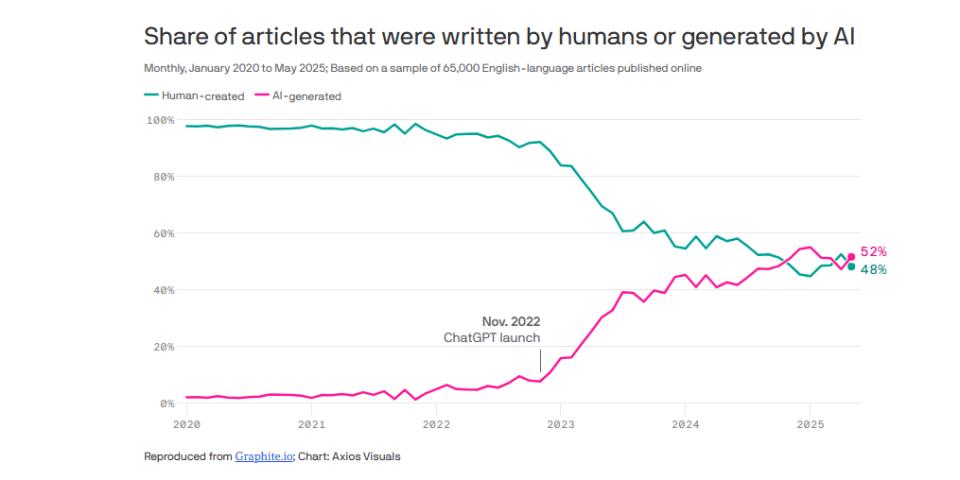
Core Insights - Over 50% of written content on the internet is now generated by AI, marking a significant shift in content creation dynamics and raising questions about authenticity and trust in information [1][2][11] - The rapid growth of AI-generated content is closely linked to the launch of ChatGPT, with AI articles accounting for 39% of online publications within a year of its release, and projected to reach 52% by May 2025 [2][5] - The content production landscape is evolving, with AI technologies becoming essential tools for businesses, while traditional content platforms face challenges due to AI's cost and efficiency advantages [9][10] AI Content Growth - The introduction of large language models like ChatGPT has led to a surge in AI-generated content, providing a cost-effective alternative to hiring human writers [2][5] - Graphite's analysis of 65,000 English articles from January 2020 to May 2025 indicates that AI-generated content will surpass human-created content by November 2024 [2][5] Detection and Verification - Graphite's research utilized a rigorous methodology to identify AI-generated content, achieving a false positive rate of 4.2% and a false negative rate of 0.6% using the Surfer AI detector [6][8] - The study highlights the limitations of current detection methods, particularly in identifying hybrid content created through human-AI collaboration [8] Industry Dynamics - AI-generated content is reshaping the competitive landscape, with companies like OpenAI, Google, and Anthropic leading the charge in developing advanced content generation technologies [9][10] - The demand for verifiable and traceable content is increasing, creating opportunities for service providers focused on content authenticity [10] Future Implications - The evolution of content creation will not solely depend on quantity but also on the ability to distinguish between human and AI-generated works, emphasizing the value of authenticity in the digital age [11]
我用AI生成流浪汉骗我爸,结果他摇来了特警
36氪· 2025-10-25 01:16
Core Viewpoint - The article discusses the viral trend of "AI homeless man pranks" on social media, highlighting the humorous yet potentially dangerous consequences of such pranks as they escalate into real-life panic and police involvement [10][12][16]. Group 1: Overview of the Prank Trend - The "AI homeless man" prank began with a TikTok video by a user named Joe, which quickly gained popularity, amassing nearly 920,000 views [8]. - This trend involves users creating realistic images of a homeless man using AI tools and sending them to family members, capturing their shocked reactions [10][12]. - As of now, there are over 1,600 related videos on TikTok under the "homelessmanprank" tag, with many videos receiving millions of views [10][12]. Group 2: Escalation and Consequences - Initially perceived as a harmless prank, the situation changed when some parents called the police, leading to serious consequences [14][16]. - Police departments treat reports of home intrusions involving children as high-priority, which can result in significant police resources being deployed, including SWAT teams [16]. - The trend has also spread to other social media platforms and has been localized in Chinese platforms like Douyin and Xiaohongshu, where similar prank videos are gaining traction [12][19]. Group 3: Public Reaction and Concerns - While many viewers find the pranks amusing, there are growing concerns about the implications of such actions, with some expressing fear over the rapid development of AI technology [25][26]. - Instances of parents mistakenly calling the police due to these pranks have been reported, leading to unnecessary police responses and public safety concerns [26][28]. - The article emphasizes the need for individuals to consider the potential consequences of their actions before engaging in such pranks, as they can lead to real distress and resource wastage for law enforcement [36].

阜博集团(03738.HK):多模态AI受益者
Ge Long Hui· 2025-10-12 03:16
Core Insights - The article highlights the rapid growth and expansion of digital copyright protection and transaction services, particularly through AI technology and Web3 infrastructure, positioning the company as a leader in the digital content asset market [1] Group 1: Company Performance - The company's subscription service revenue reached HKD 610 million in the first half of 2025, a year-on-year increase of 11.8%, driven by collaborations with major platforms in various content formats [1] - Value-added service revenue for the same period was HKD 846 million, reflecting a 33.3% year-on-year growth, supported by rights management and operational assistance on platforms like YouTube and Facebook [1] - Active assets under management on social media platforms grew to 4.29 million, a year-on-year increase of over 25%, indicating strong engagement and asset utilization [1] Group 2: Capital and Strategic Initiatives - In April 2025, the company acquired audio recognition firm PEX, integrating over 23 billion audio fingerprint data to enhance its music copyright protection capabilities [1] - The company completed a zero-interest convertible bond issuance of HKD 1.6 billion in September, with plans to allocate 50% of the funds towards AI-driven content assetization and transaction systems [1] Group 3: Industry Trends - Multi-modal AI technology is reshaping the media and entertainment landscape, with significant advancements from tech giants like Google and OpenAI, indicating a shift towards new content creation and revenue models [2][3] - The global media and entertainment market, valued at USD 3 trillion, is undergoing transformation as AI-generated content becomes more prevalent, leading to fragmented revenue models [3] Group 4: Competitive Positioning - The company is developing two core platforms: Vobile MAX for digital content asset trading and rights management, and DreamMaker for AI-driven multi-modal content creation, enhancing its competitive edge in the AI era [4] - The company has established three key competitive advantages: leading technology in digital fingerprinting, deep partnerships with top content providers, and a self-reinforcing growth cycle through technology and customer relationships [4] Group 5: Financial Projections - The company is expected to achieve revenues of HKD 30 billion, 37.9 billion, and 49.9 billion for the years 2025 to 2027, with corresponding net profits of HKD 2.37 billion, 3.51 billion, and 5.3 billion [5]