
卫星互联网

Search documents
数据复盘丨传媒、计算机等行业走强 150股获主力资金净流入超1亿元
Zheng Quan Shi Bao Wang· 2026-01-12 10:42
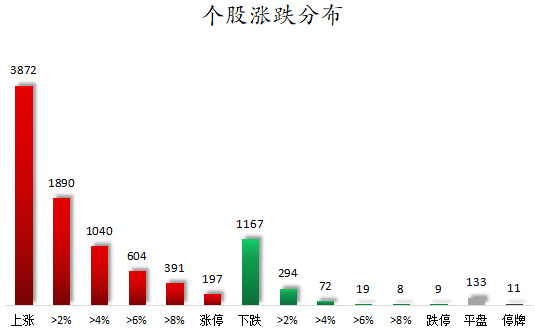
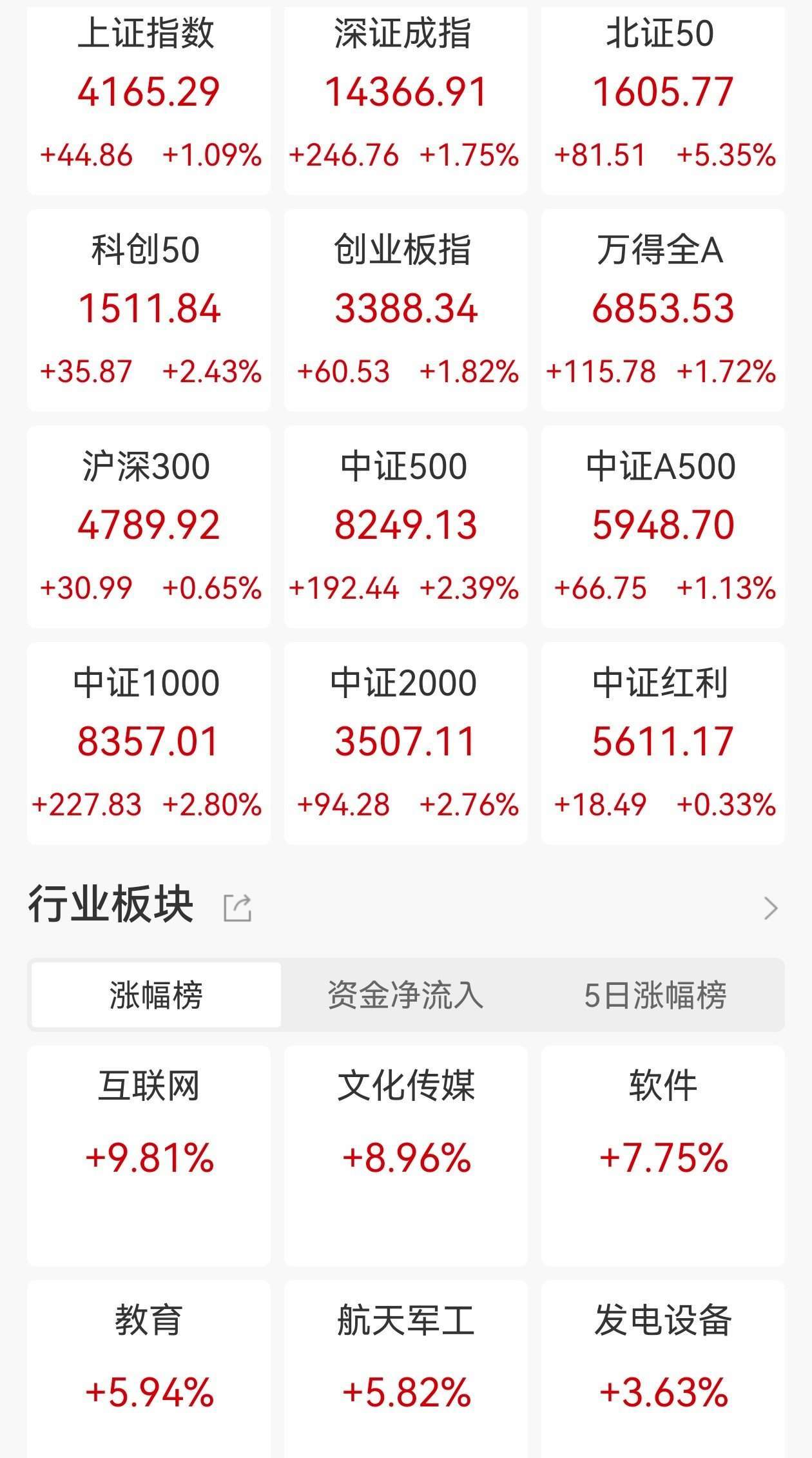
Market Performance - The Shanghai Composite Index closed at 4165.29 points, up 1.09%, with a trading volume of 1.4462 trillion yuan, marking a historical high in trading volume [1] - The Shenzhen Component Index rose 1.75% to 14366.91 points, with a trading volume of 2.1552 trillion yuan [1] - The ChiNext Index increased by 1.82% to 3388.34 points, with a trading volume of 1.0962 trillion yuan [1] - The STAR 50 Index gained 2.43% to close at 1511.84 points, with a trading volume of 106.6 billion yuan [1] - The total trading volume of both markets reached 3.60142 trillion yuan, an increase of 478.659 billion yuan compared to the previous trading day [1] Sector Performance - Strong sectors included Media, Computer, Defense, Education, Communication, Retail, Steel, Machinery, and Textile, with notable gains [2] - Active concepts included Short Drama Interactive Games, Multi-modal AI, Satellite Internet, and Quantum Technology [2] - Weak sectors included Oil, Insurance, and Coal, with notable declines [2] Individual Stock Performance - 3872 stocks rose while 1167 stocks fell, with 197 stocks hitting the daily limit up and 9 stocks hitting the limit down [2] - Fenglong Co. achieved a record 12 consecutive limit-up days, leading the market [5] - 150 stocks saw net inflows exceeding 100 million yuan, with Dongfang Caifu leading at 1.81 billion yuan [9][10] - 168 stocks experienced net outflows exceeding 100 million yuan, with Yangguang Electric leading at 2.081 billion yuan [11][12] Institutional Activity - Institutions had a net sell of approximately 699 million yuan, with 15 stocks seeing net purchases and 21 stocks net sales [14] - The top net purchase stock by institutions was Shanzi High-Tech, with a net inflow of approximately 484 million yuan [14]





信科移动(688387.SH):在卫星互联网领域的收入占整体营业收入的比例约为2%~3%,对公司业绩无重大影响
Ge Long Hui A P P· 2026-01-12 10:24
Core Viewpoint - The company, Xinke Mobile (688387.SH), continues to focus on mobile communication network equipment and technology services, with its satellite internet business currently contributing only about 2% to 3% of total revenue, indicating minimal impact on overall performance [1] Company Overview - The company's main business remains unchanged, focusing on mobile communication network equipment and technology services [1] - The satellite internet business is still in the investment phase, with no significant revenue contribution at this time [1] Industry Context - The satellite internet industry in China is in its early stages, characterized by initial investment and development [1] - The process of satellite system development, from international application and coordination to satellite launch and service provision, requires a long timeline, leading to unpredictability in contributions to the company's performance [1] - The 6G industry is also in the early stages of standard formulation, indicating that advancements in this area are still forthcoming [1]

信科移动:卫星互联网领域收入占比2%—3% 对业绩无重大影响
Zheng Quan Shi Bao Wang· 2026-01-12 10:24
人民财讯1月12日电,信科移动(688387)1月12日发布股票交易异常波动公告称,公司目前主营业务为移 动通信网络设备及移动通信技术服务,未发生变化。公司在卫星互联网领域的收入占整体营业收入的比 例为2%—3%,对公司业绩无重大影响,公司卫星互联网业务尚处于投入期。目前我国卫星互联网产业 发展仍处于初期阶段和投入阶段,卫星系统从卫星网络资料国际申报、国际协调到卫星发射、系统建 设、提供服务、应用推广需要较长周期,批量化发射组网进展及对公司经营业绩的贡献存在不可预见 性。此外,目前6G产业尚处于标准制订的初期阶段。 转自:证券时报 ...
信科移动:在卫星互联网领域的收入占整体营业收入的比例约为2%~3% 对业绩无重大影响
Mei Ri Jing Ji Xin Wen· 2026-01-12 10:15
Core Viewpoint - The company, Xinke Mobile (688387.SH), has confirmed that its main business in mobile communication network equipment and technology services remains unchanged, with its satellite internet revenue accounting for approximately 2% to 3% of total revenue, which does not significantly impact overall performance [1] Group 1: Company Overview - Xinke Mobile's satellite internet business is still in the investment phase, contributing minimally to its overall revenue [1] - The company emphasizes that the satellite internet sector in China is in its early development and investment stages [1] Group 2: Industry Context - The satellite system development involves a lengthy process from international application and coordination to satellite launch, system construction, service provision, and application promotion, leading to unpredictability in contributions to the company's performance [1] - The 6G industry is currently in the early stages of standard formulation [1]
2连板信科移动:在卫星互联网领域的收入占整体营业收入的比例约为2%~3% 对业绩无重大影响
Di Yi Cai Jing· 2026-01-12 10:05
Core Viewpoint - The company has issued a notice regarding its business operations, confirming that its main business remains focused on mobile communication network equipment and services, with no significant changes [1] Group 1: Business Operations - The company's revenue from the satellite internet sector accounts for approximately 2% to 3% of its total revenue, indicating that it does not have a major impact on overall performance [1] - The satellite internet business is still in the investment phase, suggesting that it is not yet generating substantial returns [1] Group 2: Industry Context - The satellite internet industry in China is currently in its early development and investment stages, which involves a lengthy process from international application and coordination to satellite launch, system construction, service provision, and application promotion [1] - The progress of large-scale satellite launches and their contribution to the company's operational performance remains unpredictable [1] - The 6G industry is still in the initial stages of standard formulation, indicating that significant advancements are yet to be made [1]
信科移动:公司在卫星互联网领域的收入占整体营业收入的比例约为2%~3%
Xin Lang Cai Jing· 2026-01-12 10:03
信科移动发布异动公告,公司股票于2026年1月8日、2026年1月9日及2026年1月12日连续三个交易日内 收盘价格涨幅偏离值累计超过30%。根据《上海证券交易所交易规则》的有关规定,属于股票交易异常 波动情形。公司目前主营业务为移动通信网络设备及移动通信技术服务,未发生变化。公司在卫星互联 网领域的收入占整体营业收入的比例约为2%~3%,对公司业绩无重大影响,公司卫星互联网业务尚处 于投入期。此外,目前6G产业尚处于标准制订的初期阶段。 ...
杀疯了!两大顶流赛道引爆全市场
Ge Long Hui· 2026-01-12 09:27
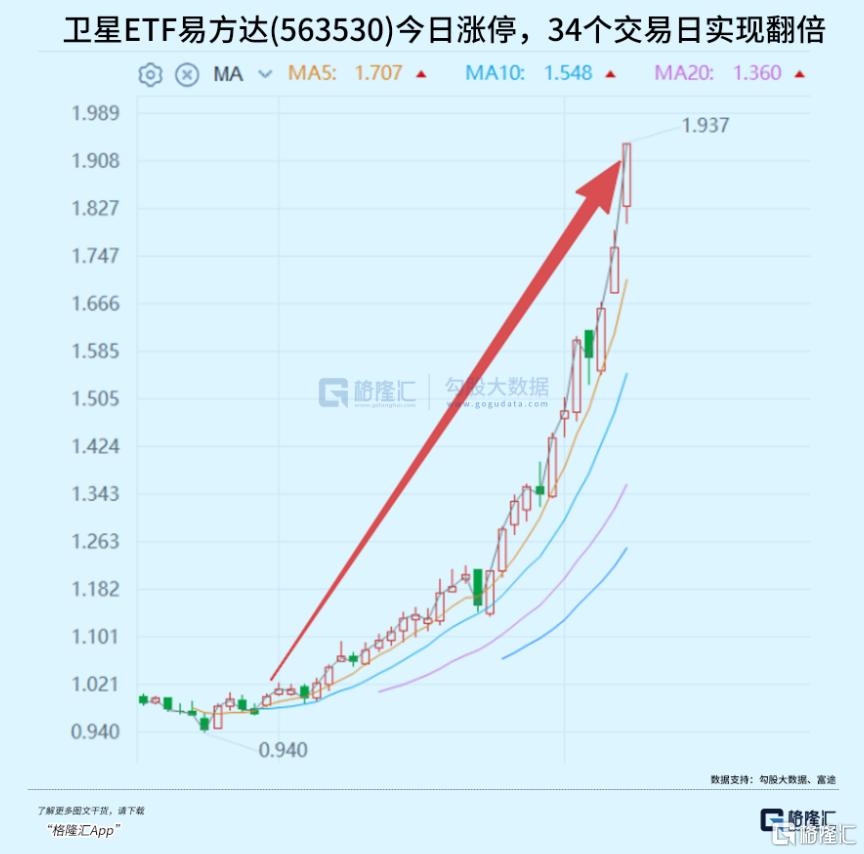
Core Insights - The article highlights the explosive growth of the satellite and AI application sectors, marking the beginning of a strong market trend in 2026, with A-shares achieving a 17-day consecutive rise and nearing 4200 points [1][24]. Group 1: Satellite Industry Developments - China has submitted a record application to the International Telecommunication Union (ITU) for approximately 203,000 satellites, covering 14 constellations, aiming to secure essential resources for satellite internet development over the next decade [6][26]. - The U.S. Federal Communications Commission (FCC) has approved SpaceX's deployment of an additional 7,500 second-generation Starlink satellites, indicating a competitive race for scarce space resources [7][8]. - The satellite industry is experiencing a significant increase in investment, with a notable rise in institutional fund inflows exceeding 150% in key sectors such as satellite manufacturing and rocket support [16][17]. Group 2: AI Application Advancements - The AI sector is witnessing a shift from "Chat" to "Agent" models, with major tech companies accelerating their entry into AI healthcare and other applications [11][12]. - The cost of AI services has decreased by over 90% in the past 18 months, making complex AI applications economically viable for large-scale commercialization [25][28]. - Significant investments are being made in AI, with SoftBank investing $41 billion in OpenAI and ByteDance partnering with NVIDIA for a $14 billion chip collaboration [20][22]. Group 3: Market Trends and Investment Opportunities - The satellite ETF E Fund (563530) has seen a net inflow of 860 million yuan, reflecting strong investor interest in the satellite industry, which is expected to benefit from a long-term growth cycle [18][20]. - The software ETF E Fund (562930) has increased by 213% in size compared to the previous year, indicating a robust interest in AI application companies [20][22]. - The convergence of satellite technology and AI applications is anticipated to create substantial commercial value, with both sectors poised for significant growth in 2026 [30][31].
A股收评:三大指数均涨超1%,沪指17连阳北证50涨超5%,AI应用、商业航天引爆市场!超4100股上涨,成交额3.64万亿创新高放量4922亿
Ge Long Hui· 2026-01-12 08:39
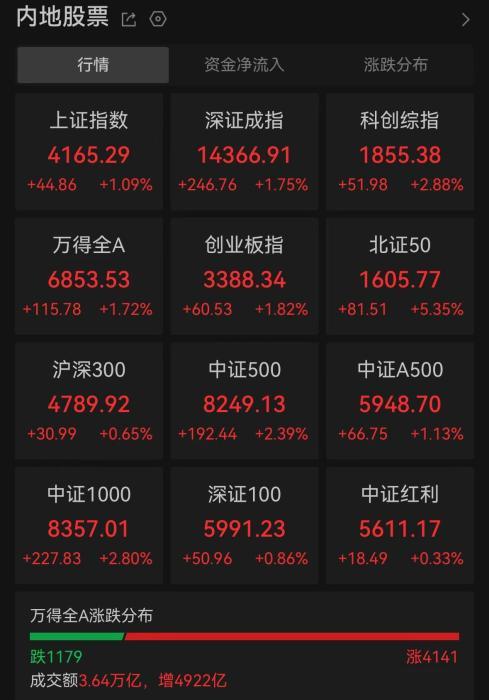
格隆汇1月12日|A股三大指数今日继续上涨,沪指录得17连阳;截至收盘,沪指涨1.09%报4165点,深 证成指涨1.75%,创业板指涨1.82%。全市场成交额达3.64万亿元创历史新高,较前一交易日增量4922亿 元,超4100股上涨。 | 上证指数 | 深证成指 | 北证50 | | --- | --- | --- | | 4165.29 | 14366.91 | 1605.77 | | +44.86 +1.09% +246.76 +1.75% +81.51 +5.35% | | | | 科创50 | 创业板指 | 万得全A | | 1511.84 3388.34 6853.53 | | | | +35.87 +2.43% +60.53 +1.82% +115.78 +1.72% | | | | 沪深300 中证500 中证A500 | | | | 4789.92 8249.13 5948.70 | | | | +30.99 +0.65% +192.44 +2.39% +66.75 +1.13% | | | | 中证1000 | 中证2000 | 中证红利 | | 8357.01 | 3507.11 | ...
A股成交额破纪录 沪指录得17连阳
Zhong Guo Xin Wen Wang· 2026-01-12 08:28
Group 1 - The A-share market continued its strong performance with all three major indices rising collectively on January 12, marking a 17-day consecutive increase and reaching a new high not seen in over a decade [1] - The Shanghai Composite Index rose by 1.09% to close at 4165.29 points, while the Shenzhen Component Index increased by 1.75% to 14366.91 points, and the ChiNext Index gained 1.82% to 3388.34 points [1] Group 2 - The total market turnover for the day was approximately 3.64 trillion yuan, breaking the previous record of 3.49 trillion yuan and setting a new historical high [2] - Sectors such as internet, cultural media, and software saw significant gains, while concept sectors like quantum materials, intelligent AI, and satellite internet performed exceptionally well [2]
粤开市场日报-20260112
Yuekai Securities· 2026-01-12 07:38
Market Overview - The A-share market indices all rose today, with the Shanghai Composite Index increasing by 1.09% to close at 4165.29 points, the Shenzhen Component Index rising by 1.75% to 14366.91 points, the Sci-Tech 50 up by 2.43% to 1511.84 points, and the ChiNext Index gaining 1.82% to 3388.34 points [1][10] - Overall, 4141 stocks rose while 1179 stocks fell, with a total trading volume of 3601.4 billion yuan, an increase of 478.7 billion yuan compared to the previous trading day [1] Industry Performance - Among the Shenwan first-level industries, the leading sectors included Media, Computer, National Defense and Military Industry, Social Services, and Communication, with respective increases of 7.80%, 7.26%, 5.66%, 3.21%, and 2.74% [1][14] - Conversely, the Oil and Petrochemical, Coal, and Real Estate sectors experienced declines, with decreases of 1.00%, 0.47%, and 0.29% respectively [1][14] Concept Sectors - The top-performing concept sectors today included Kimi, Pinduoduo partners, Xiaohongshu platform, Satellite Internet, ChatGPT, Intelligent Agents, Virtual Humans, DeepSeek, Chinese Corpus, AIGC, Internet Celebrity Economy, Douyin Doubao, Multimodal Models, WEB3.0, and Commercial Aerospace [2][12]