
航天军工

Search documents
沪指V型反弹,福建本地股爆发,平潭发展4天2板,铝概念掀涨停潮
21世纪经济报道· 2026-03-30 03:51
Market Overview - The A-share market experienced a rebound after an initial drop, with the Shanghai Composite Index turning positive after falling over 1% earlier in the day. More than 2,500 stocks in the market saw gains [1]. Sector Performance - Agricultural stocks led the gains, with companies like New Agricultural Development, Beidahuang, and Jinjian Rice Industry hitting the daily limit [5]. - Local stocks in Fujian showed significant movement, with Pingtan Development achieving two consecutive trading limits in four days, and Haixia Innovation rising over 10% [5]. - Aerospace and military stocks collectively surged, with Guolian Aviation increasing over 10% and Aerospace Nanhu rising over 6% [5]. - The non-ferrous aluminum and fiberglass sectors saw explosive growth, with multiple stocks such as Zengsheng Technology and Honghe Technology hitting the daily limit [5]. - The innovative drug concept gained strength, with Meinuohua achieving six consecutive trading limits in seven days, and other pharmaceutical companies like Lianhuan Pharmaceutical and Shuanglu Pharmaceutical also hitting the limit [5]. - Precious metals saw a rise, with Chifeng Gold increasing nearly 7% and Shandong Gold rising over 5%. Spot gold rose by 0.22% to $4,504.97 per ounce, while spot silver increased by 0.93% to $70.34 per ounce [5]. Decline in Specific Sectors - The power sector faced significant declines, with Huadian Energy and Jinkong Power hitting the daily limit down, alongside other companies like Yinxing Energy and Yunnan Energy also reaching the limit down [6]. - The Hong Kong market saw a narrowing of declines, with the Hang Seng Index down 1% and the Hang Seng Technology Index down 1.85%. Popular tech stocks like Xiaopeng Motors and NIO fell over 4% [6]. - Semiconductor stocks collectively dropped, with companies like Lanke Technology and Tianshu Zhixin falling over 4% and over 3% respectively, although some stocks like SMIC and Huahong Semiconductor saw a reduction in their earlier losses [6].


A股超4800股上涨,航天军工、福建本地股午后爆发,港股美团飙涨12%
2 1 Shi Ji Jing Ji Bao Dao· 2026-03-25 07:37
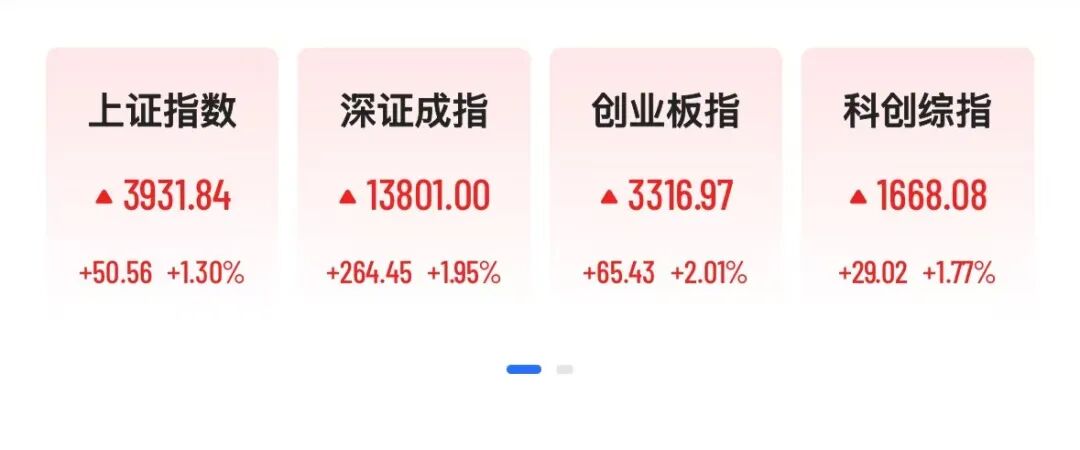
Market Overview - On March 25, the A-share market experienced a rebound, with all four major indices rising, the Shanghai Composite Index increasing by over 1% to surpass 3900 points, and the ChiNext Index rising by over 2% [1] - More than 4800 stocks in the market rose, with 105 stocks hitting the daily limit, marking the second consecutive trading day with over a hundred stocks reaching the limit [1] Sector Performance - The optical communication sector saw a collective surge, with Tongding Interconnection and Changfei Fiber both hitting the daily limit, while Tianfu Communication rose over 6% and Zhongji Xuchuang increased by over 4% [4] - The aerospace and military sector strengthened in the afternoon, with Changcheng Military Industry hitting the daily limit, Hunan Tianyan achieving two consecutive limit-ups, and several other stocks like Beifang Changlong and Hongdu Aviation rising over 8% [4] - Local stocks in Fujian experienced significant gains, with Pingtan Development hitting the daily limit and several others following suit, driven by a recent government initiative to promote the development of state-owned enterprises [4] - The electric power sector exploded, led by green energy concepts, with over ten constituent stocks hitting the daily limit, including Huadian Liao Energy with eight consecutive limit-ups and Shaoneng Shares with five limit-ups in six days [4] - The computing power leasing concept also gained strength, with stocks like Erli San and Aorui De hitting the daily limit [4] Declines - The oil and gas, as well as coal sectors, faced the largest declines, with stocks like Intercontinental Oil and Blue Flame Holdings dropping over 5%, and China National Offshore Oil Corporation falling over 3% [5] Hong Kong Market - In the Hong Kong market, the Hang Seng Technology Index saw an afternoon increase of up to 2%, with tech stocks collectively rising, including Meituan increasing nearly 12% and Alibaba rising over 5% [5] Company-Specific News - Pop Mart's stock price plummeted by 22% following the release of its 2025 financial report, which indicated that sales of non-Labubu IP products did not meet expectations [7]

重视防空反导装备投资机会
HTSC· 2026-03-22 02:45
Investment Rating - The report maintains an "Overweight" rating for the aerospace and defense industry, indicating an expectation that the industry will outperform the benchmark index [2][47]. Core Insights - The ongoing conflict between the US, Israel, and Iran has highlighted the shortcomings in air defense capabilities among the US, Israel, and Gulf countries, leading to increased demand for air defense and missile defense systems [4][5]. - The global air defense market is projected to reach USD 22.4 billion in 2024, with an expected annual growth rate of 7.2% from 2025 to 2034, driven by rising security concerns and evolving aerial threats [7][26]. - The report emphasizes the importance of investing in the air defense supply chain, particularly in light of the increasing demand for low-cost drone countermeasures and missile defense systems [8][31]. Summary by Sections Section 1: Market Dynamics - The conflict has resulted in significant consumption of air defense systems, with estimates indicating that nearly 600 interceptors were used in the first 36 hours of the conflict [12]. - The US is ramping up production of THAAD and PAC-3 interceptors to address the shortfall in air defense capabilities in the Middle East [12][14]. Section 2: Demand for Countermeasures - There is an urgent need for low-cost counter-drone capabilities as the cost of offensive drones continues to decrease, while defensive systems remain relatively expensive [6][14]. - Various countries are developing technologies to counter the proliferation of inexpensive attack drones, including electronic jamming, intercept drones, and laser weapons [6][15]. Section 3: Investment Opportunities - Companies such as Lockheed Martin, Raytheon, and Hanwha Aerospace are expected to benefit from increased defense budgets in the US and Europe, as well as replenishment needs in the Middle East [8][31]. - Domestic companies involved in air defense exports, such as China Aerospace Science and Industry Corporation and China Electronics Technology Group, are highlighted as potential investment opportunities [8][31].
社保新进11只重仓股,机构加仓名单出炉
21世纪经济报道· 2026-03-19 02:45
Core Viewpoint - The article highlights the recent investment trends of social security funds and QFIIs in A-share companies, indicating a preference for sectors such as cyclical, high-end manufacturing, and consumer goods, with a particular focus on environmental protection, wind power, pharmaceuticals, and aerospace military industries [1][3]. Social Security Fund Investment Trends - The social security fund has increased its holdings in cyclical, high-end manufacturing, and consumer goods sectors, particularly favoring stocks in environmental protection, wind power, pharmaceuticals, and aerospace military fields [1][3]. - As of March 18, over 130 A-share companies have disclosed their annual reports, with the social security fund appearing in the top ten shareholders of 38 companies, having notably increased its holdings in stocks like Shantui Construction Machinery, China Merchants Shekou, Nanshan Aluminum, and Nanjing Steel [3]. - Specific increases in shareholdings include approximately 22.72 million shares for Shantui, 8.56 million for China Merchants Shekou, 4.34 million for Nanshan Aluminum, and 4 million for Nanjing Steel [3]. - The fund has also newly entered the top ten shareholders of 11 companies, including High Energy Environment, Jiazhe New Energy, and Kelun Pharmaceutical [3][4]. Sector-Specific Insights - The stocks favored by the social security fund span various industries, including wind power, environmental protection, pharmaceuticals, aerospace military, negative materials, food, passive components, property management services, and electric tools [5]. - High Energy Environment, a key player in waste resource utilization and environmental remediation, has seen significant investment, with the fund holding nearly 27.3 million shares, making it the sixth-largest shareholder [5]. - Jiazhe New Energy, involved in wind power, has also attracted attention, with the fund holding approximately 19.45 million shares, ranking as the ninth-largest shareholder [5]. QFII Investment Trends - QFIIs have shown a preference for small-cap stocks, with 42 companies having QFII as a top ten shareholder [8][11]. - Notable investments include Shuhua Sports, where major banks like UBS, Goldman Sachs, and Morgan Stanley have become significant shareholders [9]. - QFIIs have increased their holdings in sectors such as electrical engineering, health food, non-woven fabrics, and storage chips, with specific investments in stocks like Baosheng and Yanjing [11]. Individual Stock Highlights - Baosheng, a major player in the electrical equipment sector, has seen new investments from QFIIs, with UBS and Morgan Stanley holding approximately 6.6 million and 5.63 million shares, respectively [11]. - Newowei, a supplier of caffeine products for major beverage companies, has also attracted both social security funds and QFIIs, with a market capitalization exceeding 45 billion [11]. - Yanjing, a manufacturer of disposable hygiene products, has been newly favored by QFIIs, with significant shareholdings from Morgan Stanley and CITIC Securities [11].



航天军工:装备建设迈向“高质量推进”新阶段
HTSC· 2026-03-16 02:26
Investment Rating - The report maintains a "Buy" rating for companies such as AVIC Optoelectronics, Guotai Group, Beihua Co., National Science Military Industry, Aerospace Electric, and a "Hold" rating for Shangda Co. and Aero Engine Corporation [3][8]. Core Insights - The "14th Five-Year Plan" emphasizes a transition from scale expansion to "high-quality advancement" in equipment construction, focusing on the integration of development and security [1][11]. - The military modernization during the "14th Five-Year Plan" is expected to shift from quantity to quality, with significant structural opportunities emerging in new domains, unmanned intelligence, advanced weaponry, and low-cost equipment [2][11]. - The plan highlights the cultivation of emerging industries, particularly in low-altitude economy, aerospace, and marine economy, forming a comprehensive industrial layout [12]. Summary by Sections Key Companies - Recommended companies include AVIC Optoelectronics (002179 CH), Guotai Group (603977 CH), Beihua Co. (002246 CH), National Science Military Industry (688543 CH), Aerospace Electric (002025 CH), Shangda Co. (301522 CH), and Aero Engine Corporation (600893 CH) [3][8]. Industry Trends - The report indicates a notable increase in defense spending, with a projected budget of 1.94 trillion yuan for 2026, reflecting a 6.9% increase from the previous year [15]. - The military industry is expected to benefit from the ongoing demand for advanced military equipment and modernization efforts [11][15]. Market Performance - The report notes that the defense and military industry index has underperformed, with a decline of 6.64% in the past week, ranking last among 31 primary industries [22]. - The current PE (TTM) for the defense and military sector is 90.65 times, with specific segments like aerospace equipment and military electronics showing varying valuations [26][30]. Future Outlook - The report anticipates significant growth in the demand for new military products and markets, particularly in unmanned systems and advanced weaponry, aligning with the strategic goals outlined in the "14th Five-Year Plan" [2][12]. - The focus on high-quality development and modernization is expected to create a favorable environment for investment in the military sector [11][12].


农业涨价逻辑受青睐:权益ETF周度跟踪-20260315
HUAXI Securities· 2026-03-15 07:50
1. Report Industry Investment Rating - Not provided in the report 2. Core View of the Report - As of the market conditions on March 13, combining the "Gain - Crowding" quadrant chart and ETF fund flow, the agricultural sector is worthy of continuous attention. The agricultural sector is steadily increasing in holdings, possibly due to capital betting on the price - rising logic. The breeding sector shows a net inflow of funds, and its upward space depends on policy strength. The coal and battery sectors have a net outflow of funds and may experience short - term fluctuations. The chemical sector has a high participation difficulty [1][23]. 3. Summary According to the Directory 3.1 Market Review - From March 9 - 13, the market fluctuated and declined. As of March 13, 2026, the closing price of the Wind All - A Index was 6750.45, a 0.48% decrease from March 6 [6]. - The ChiNext performed better. From March 9 - 13, most major stock indexes pulled back. The ChiNext Index and the Shenzhen Component Index rose by 2.51% and 0.76% respectively, while the Science and Technology Innovation 50 and the CSI 500 fell by 2.88% and 1.44% respectively [9]. - Stock - type ETFs maintained a net outflow. From March 9 - 12, stock - type ETFs had a net outflow of 20.904 billion yuan, with a larger outflow scale compared to March 2 - 5. Among them, broad - based index ETFs had a net outflow of 28.299 billion yuan, industry - index ETFs had a net outflow of 1.364 billion yuan, and theme - index ETFs had a net inflow of 4.807 billion yuan [11][12]. - At the industry level, batteries and coal led the gains. The battery index rose by 8.40%, and its crowding - degree quantile since 2020 rose to 68.6%, an increase of 37.4 percentage points. The coal index rose by 6.60%, and its crowding - degree quantile since 2020 rose 7.50 percentage points to 59.70%. Aerospace and military industry and non - ferrous metals fell significantly, and their crowding degrees declined from high levels. The agricultural and livestock sector rose moderately, with little change in crowding degree. The chemical industry index fell slightly, but its crowding degree increased significantly [15][16]. 3.2 Follow - up Attention - The agricultural sector is steadily increasing in holdings and is a direction for capital to bet on the price - rising logic. The agricultural ETF rose 2.68% this week, with a net inflow of 717 million yuan. It has had a net inflow for 9 consecutive days, with a cumulative 1.095 billion yuan, accounting for 29.48% of its fund scale [23]. - The breeding sector also shows a net inflow of funds, and its upward space depends on policy strength. The breeding ETF rose 1.54% this week, with a net inflow of 447 million yuan. If the policy implementation intensity increases, the price of live pigs may recover, and the sector still has upward space [23]. - The chemical sector has a high participation difficulty. From March 9 - 12, the chemical ETF fell 0.42%, with a net outflow of 557 million yuan. After the Spring Festival, the cashing pressure in the sector increased, and from February 24 to March 13, there was a cumulative net outflow of 1.39 billion yuan. The index crowding degree has risen to a relatively high level since 2020 [24]. - The coal and battery sectors have a net outflow of funds and may experience short - term fluctuations. The battery ETF and the coal ETF rose 8.49% and 6.63% respectively this week, with net outflows of 309 million yuan and 795 million yuan respectively. The battery sector may adjust in the short term, and the subsequent market of the coal sector is greatly affected by the situation in the Middle East [24].
量化大势研判202603:3月核心推荐预期成长风格
Guolian Minsheng Securities· 2026-03-04 07:27
Quantitative Models and Construction Methods - **Model Name**: Quantitative Market Trend Judgment Framework **Model Construction Idea**: The model aims to identify the dominant market style by comparing asset characteristics and prioritizing superior assets based on their intrinsic attributes. It incorporates a bottom-up quantitative approach to analyze the lifecycle of industries and their corresponding asset styles[6][10][17] **Model Construction Process**: 1. Define five asset style stages: external growth, quality growth, quality dividend, value dividend, and bankruptcy value[6] 2. Use a priority framework of $g > ROE > D$ to evaluate assets based on growth expectations, profitability, and dividend yield[6][7] 3. Compare mainstream assets (expected growth, actual growth, and profitability) and secondary assets (quality dividend, value dividend, and bankruptcy value) based on their crowding levels and fundamental factors[10][17] 4. Allocate industries using equal weights within each strategy, selecting five industries per strategy per period[17] **Model Evaluation**: The framework has demonstrated strong explanatory power for A-share market style rotations since 2009, achieving an annualized return of 27.81%[17] Quantitative Factors and Construction Methods - **Factor Name**: Expected Growth ($gf$) **Factor Construction Idea**: Measures the expected growth rate of industries based on analysts' forecasts, regardless of the lifecycle stage[7] **Factor Construction Process**: 1. Calculate the expected net profit growth rate ($g_{f,ttm}$) for each industry 2. Rank industries based on $g_{f,ttm}$ and select the top-performing ones[7][23] **Factor Evaluation**: The factor has shown consistent performance in identifying high-growth industries, with significant excess returns since 2019[37] - **Factor Name**: Actual Growth ($g$) **Factor Construction Idea**: Focuses on industries with the highest performance momentum ($\Delta g$), particularly during transition and growth phases[7] **Factor Construction Process**: 1. Calculate the actual net profit growth rate ($g_{ttm}$) for each industry 2. Identify industries with the highest $\Delta g$ values[7][27] **Factor Evaluation**: The factor has delivered strong excess returns in growth-dominated environments[38] - **Factor Name**: Profitability (ROE) **Factor Construction Idea**: Targets industries with high ROE and low valuation under the PB-ROE framework, focusing on mature phases[7] **Factor Construction Process**: 1. Calculate the PB-ROE residuals for each industry 2. Rank industries based on residuals and select the top-performing ones[7][41] **Factor Evaluation**: The factor performed well from 2016 to 2020 but weakened from 2021 to mid-2024[41] - **Factor Name**: Quality Dividend (DP+ROE) **Factor Construction Idea**: Combines dividend yield (DP) and ROE to identify high-quality industries, focusing on mature phases[7] **Factor Construction Process**: 1. Calculate DP and ROE for each industry 2. Combine the two metrics into a composite score and rank industries[7][44] **Factor Evaluation**: The factor has shown significant excess returns in 2016, 2017, and 2023[44] - **Factor Name**: Value Dividend (DP+BP) **Factor Construction Idea**: Combines dividend yield (DP) and book-to-price ratio (BP) to identify undervalued industries, focusing on mature phases[7] **Factor Construction Process**: 1. Calculate DP and BP for each industry 2. Combine the two metrics into a composite score and rank industries[7][47] **Factor Evaluation**: The factor has delivered strong excess returns in 2009, 2017, and 2021-2023[47] - **Factor Name**: Bankruptcy Value (PB+SIZE) **Factor Construction Idea**: Targets industries with low PB and small size, focusing on stagnation and recession phases[7] **Factor Construction Process**: 1. Calculate PB and SIZE for each industry 2. Combine the two metrics into a composite score and rank industries[7][50] **Factor Evaluation**: The factor has shown significant excess returns in 2015-2016 and 2021-2023[50] Model Backtesting Results - **Quantitative Market Trend Judgment Framework**: - Annualized return: 27.81% since 2009 - Significant excess returns in 2017, 2020, 2021, and 2022[17][20] Factor Backtesting Results - **Expected Growth ($gf$)**: - Recent performance: Top industries include automotive sales, lithium battery equipment, and tungsten, with mixed returns over the past three months (e.g., -4.47% for automotive sales, +0.25% for lithium battery equipment)[37] - **Actual Growth ($g$)**: - Recent performance: Top industries include photovoltaic equipment and insurance, with mixed returns over the past three months (e.g., -8.92% for photovoltaic equipment, -6.04% for insurance)[39] - **Profitability (ROE)**: - Recent performance: Top industries include agriculture and garden engineering, with mixed returns over the past three months (e.g., -4.19% for agriculture, -2.07% for garden engineering)[41] - **Quality Dividend (DP+ROE)**: - Recent performance: Top industries include forestry and lithium battery equipment, with mixed returns over the past three months (e.g., +1.21% for forestry, +0.25% for lithium battery equipment)[44] - **Value Dividend (DP+BP)**: - Recent performance: Top industries include security and buses, with mixed returns over the past three months (e.g., +6.09% for security, +12.65% for buses)[47] - **Bankruptcy Value (PB+SIZE)**: - Recent performance: Top industries include automotive sales and textile products, with mixed returns over the past three months (e.g., -4.47% for automotive sales, +4.09% for textile products)[50]
A股军工股大跌,煤炭逆势走强,陕西黑猫涨停,港股赣锋锂业跌超10%
2 1 Shi Ji Jing Ji Bao Dao· 2026-03-03 07:50
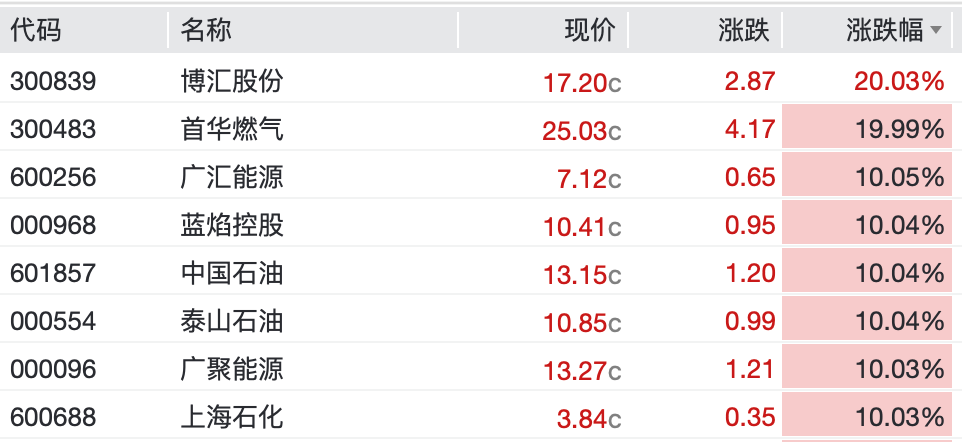
Group 1 - The Asia-Pacific markets experienced a collective decline on March 3, with major indices in A-shares and Hong Kong all weakening, while Japanese and South Korean markets saw significant drops. The Shanghai Composite Index fell over 1%, the ChiNext Index dropped over 2%, and the Shenzhen Component Index declined by more than 3% [1] - Over 4,800 stocks in the market declined, with the total trading volume in the Shanghai and Shenzhen markets exceeding 3 trillion yuan, an increase of over 110 billion yuan compared to the previous day [1] Group 2 - The military, non-ferrous metals, computer, media, electronics, and chemical sectors saw significant declines, with aerospace and military stocks leading the drop. Several stocks, including AVIC Control and AVIC Technology, hit the daily limit down, while others like Zhenxin Technology fell over 15% [2] - The rare earth sector also faced heavy losses, with stocks like Northern Rare Earth and Baotou Steel hitting the daily limit down. The semiconductor industry chain declined, with over ten stocks, including Purun and Dongwei Microelectronics, dropping more than 10% [2] - Conversely, the oil and gas and shipping sectors maintained strong performance, with over 30 stocks, including China Petroleum, hitting the daily limit up. China Petroleum's stock price reached a new high since March 2008 [2] Group 3 - In the Hong Kong market, the Hang Seng Index fell over 1%, and the Hang Seng Tech Index dropped over 2%. Tech stocks collectively declined, with companies like Li Auto and NIO falling over 6% [3] - The non-ferrous metals sector led the decline in Hong Kong, with Ganfeng Lithium dropping over 10% and other companies like Jiangxi Copper and Zijin Mining falling over 7% [3] Group 4 - The Japanese and South Korean stock markets both closed lower, with the Nikkei 225 index down 3.1% and the KOSPI index down 7.24%, marking the largest single-day drop since August 5, 2024 [4] - International oil prices surged, with WTI crude oil rising over 2% to exceed $73 per barrel, while Brent crude increased by over 3%. Gold and silver prices experienced sharp declines, with silver dropping over 7% at one point [4]



A股军工股大跌,煤炭逆势走强,陕西黑猫涨停,港股赣锋锂业跌超10%
21世纪经济报道· 2026-03-03 07:46
Market Overview - The Asia-Pacific markets experienced a collective decline due to escalating tensions in the Middle East, with major indices in A-shares and Hong Kong all weakening, and Japanese and South Korean markets suffering significant losses [1][5] - The Shanghai Composite Index fell over 1%, the ChiNext Index dropped over 2%, the Shenzhen Component Index decreased by more than 3%, and the Sci-Tech Innovation Index fell over 5% [1][2] - Over 4,800 stocks in the market declined, with total trading volume in the Shanghai and Shenzhen markets exceeding 3 trillion yuan, an increase of over 110 billion yuan compared to the previous day [1] Sector Performance - The military, non-ferrous metals, computer, media, electronics, and chemical sectors saw significant declines, with aerospace and military stocks leading the drop [3] - Notable stocks such as Hangfa Control and Hangfa Technology hit the daily limit down, while others like Hanya Technology fell over 15% [3] - The rare earth sector also faced heavy losses, with stocks like Northern Rare Earth and Baogang hitting the daily limit down [3] Commodity Trends - Oil and shipping concepts continued to show strength, with over 30 oil-related stocks hitting the daily limit up, including China Petroleum, which reached its highest price since March 2008 [3] - The coal sector performed well against the trend, with stocks like Shanxi Black Cat and Dayou Energy hitting the daily limit up [4] Hong Kong Market - The Hang Seng Index fell over 1%, and the Hang Seng Tech Index dropped over 2%, with tech stocks like Li Auto and NIO declining over 6% [5] - The non-ferrous metals sector led the decline, with stocks like Ganfeng Lithium and China Molybdenum dropping significantly [5] International Oil Prices - International oil prices surged, with WTI crude oil rising over 2% to exceed $73 per barrel, while Brent crude oil increased by over 3% [5]

未知机构:国泰海通军工航天电子增资航天火箭公司积极融入商业航天新格局-20260227
未知机构· 2026-02-27 02:15
Summary of Conference Call Notes Company and Industry Involved - The company involved is **Aerospace Electronic** and its subsidiary **Aerospace Changzheng Rocket Technology Co., Ltd.** (referred to as "Rocket Company") - The industry is **commercial aerospace** Core Points and Arguments 1. **Capital Increase for Rocket Company** The company plans to increase capital for the Rocket Company by **72.75 million yuan** (approximately **$10.4 million**), which includes **12.75 million yuan** from a previous refinancing project aimed at developing integrated measurement and control communication systems and product applications [1] 2. **Purpose of Capital Increase** The capital increase aims to enhance the comprehensive capabilities of the Rocket Company, address funding needs for key technology research and development, and streamline financial relationships between the parent and subsidiary companies [1] 3. **Focus on Key Technology Development** The Rocket Company's electronic information business primarily involves measurement and control systems, space network information systems, and related products. The funding will be used to improve production capacity in these areas, which are expected to maintain strong demand during the **14th Five-Year Plan** period [2] 4. **Industry Position and Technological Advancements** Over nearly two decades, the Rocket Company has overcome several key technologies in ground measurement and control, data link networking, and space information networks, establishing a leading position in the industry. Continued investment in key technology research is essential for maintaining this leadership [2] 5. **Integration with National Development Plans** The funding will support the Rocket Company in advancing critical technologies such as large-scale inter-satellite links, elastic networking technology, and high-performance chip design, which are crucial for the ongoing development of integrated space-ground networks during the **14th Five-Year Plan** [2] Other Important but Possibly Overlooked Content - The capital increase is part of a broader strategy to actively integrate into the evolving landscape of commercial aerospace, indicating the company's commitment to innovation and market responsiveness [1][2]
