绿色金融

Search documents
【四中全会精神在基层】金融“贷”动农民增收
Zhong Guo Jing Ji Wang· 2026-01-18 23:09
Group 1 - The core idea of the news is the innovative "credit village" model introduced by Agricultural Bank of China in Tianjin to address financing challenges for farmers, enabling timely access to funds for land contracting and agricultural inputs [1][2] - The "credit village" initiative involves collaboration with village committees to establish credit records and provide loans to eligible farmers, thereby reducing loan costs and improving production efficiency [1] - In 2025, a farmer in Baodi District received 3 million yuan in credit loans, allowing for an expansion of 2,000 acres in grain cultivation due to the good credit standing of his farm [1] Group 2 - Agricultural Bank of China has increased its agricultural credit support by simplifying processes and optimizing credit granting methods, ensuring stable financial backing for farmers [2] - A rice grower received a 500,000 yuan "Rural Revitalization e-loan" in 2025, which alleviated his financial concerns regarding the long repayment cycle associated with rice cultivation [2] - The bank's provision of 4.9 million yuan in credit to a trading company facilitated timely storage and processing of grain, ensuring stable market supply during peak sales periods [2] Group 3 - The entire agricultural production chain, from preparation to harvest and value addition, relies heavily on financial support, highlighting the importance of financial services in agriculture [3] - The 20th National Congress of the Communist Party of China emphasized the need for the development of various financial sectors, including technology finance and inclusive finance, which raises expectations for commercial banks to innovate in providing quality financial services [3] - Agricultural Bank of China aims to continue supporting grain production stability and farmers' income growth through financial initiatives [3]

金融“贷”动农民增收
Jing Ji Ri Bao· 2026-01-18 22:03
Core Insights - The "Credit Village" initiative by Agricultural Bank of China in Tianjin addresses financing challenges for farmers, enabling timely access to funds for land contracting and agricultural inputs [1][2] - The program involves collaboration with local village committees to provide loans to eligible farmers, utilizing a flexible repayment plan based on crop cycles to reduce loan costs [1] - Financial support is crucial for the entire agricultural production chain, from preparation to harvest and sales, with a focus on enhancing the quality of agricultural products [3] Group 1 - The "Credit Village" model allows farmers like Shen Bingyang to secure loans quickly, exemplified by a 3-day approval for a 3 million yuan loan to expand grain cultivation by 2,000 acres [1] - Agricultural Bank of China has simplified loan processes and optimized credit granting to provide stable financial support for farmers, as seen with a 500,000 yuan loan to rice grower Qin Wei [2] - The bank's financial services are designed to enhance the efficiency of agricultural production and ensure stable market supply, particularly during peak sales seasons [2] Group 2 - The initiative aligns with national policies promoting the development of various financial sectors, including technology and inclusive finance, to support agricultural stability and farmer income [3] - Agricultural Bank of China aims to continuously provide financial resources to ensure food security and support farmers' income growth [3]
聚力绿色金融 夯实可持续发展战略根基
Xin Lang Cai Jing· 2026-01-18 21:31
Core Viewpoint - The article emphasizes the importance of green finance in promoting comprehensive green transformation and sustainable development in China, as outlined in the Central Economic Work Conference held in December 2025 [1]. Group 1: Green Finance Framework - A sustainable development-oriented green finance policy framework needs to be established, focusing on resource allocation and promoting green transformation [1]. - The top-level design of green finance should be improved, aligning with national sustainable development strategies and setting phased goals for key areas such as green industries and climate governance [1]. - A multi-tiered sustainable standard system should be constructed to enhance the scientific and operational standards for green finance tools like green credit and green bonds [1]. Group 2: Diversified Green Finance Tools - There is a need to innovate and diversify green finance tools to meet various financing demands for sustainable development [2]. - Traditional debt financing tools like green credit and green bonds should be enriched, and new varieties such as sustainable development-linked bonds should be introduced [2]. - Equity financing channels should be expanded through the establishment of green development funds and carbon neutrality-themed funds to attract social capital into green industries [2]. Group 3: Targeted Green Finance Services - Green finance should focus on key areas and weak links in sustainable development, providing precise support for industrial green transformation [3]. - Financial support for ecological protection should be strengthened, with innovative financial models for ecological compensation and value realization [3]. - Green technology innovation should be promoted through the establishment of green technology venture capital funds and improved financing mechanisms for green intellectual property [3]. Group 4: Digital Economy and Green Finance Innovation - The integration of digital technology with green finance is essential, requiring the construction of digital infrastructure for green finance [4]. - Innovative digital green finance products should be developed, utilizing technologies like IoT and AI for environmental benefit monitoring and risk assessment [4]. - Collaboration between financial institutions and technology companies should be encouraged to foster green finance technology innovation [5]. Group 5: Collaborative Green Finance System - A value co-existence system should be established to align economic growth with ecological protection, promoting a sustainable development model [5]. - Green finance tools should guide funding towards circular economy sectors, supporting energy-saving and carbon-reducing technology upgrades [5]. - Financial products should be developed to broaden the benefits of sustainable development, particularly for small and micro green enterprises and rural green industries [5].
中国绿色金融自主治理体系与实践
Xin Lang Cai Jing· 2026-01-18 21:30
Group 1 - The core viewpoint of the article emphasizes the importance of establishing a green finance governance system to support environmental improvement, address climate change, and promote efficient resource utilization [3] - Green finance is defined as financial services aimed at supporting economic activities that contribute to environmental sustainability and the achievement of carbon neutrality goals [3] - The article invites experts to discuss the development of a Chinese green finance governance system and its practices, focusing on global governance, enabling carbon neutrality goals, and solidifying sustainable development [3] Group 2 - The governance system for green finance is seen as a foundational element for implementing the "dual carbon" goals and the strategy for a strong financial nation, covering various areas such as market development, technological innovation, international collaboration, and risk prevention [3] - The aim is to address the pain points in the development of green finance, enhance China's global governance discourse power in green finance, and promote a comprehensive green transformation of economic and social development [3]


唤醒“沉睡”绿色资产 信托业交出创新答卷
Zhong Guo Zheng Quan Bao· 2026-01-18 20:44
Core Viewpoint - The recent release of the "Top Ten Green Trust Cases for 2025" by the China Trust Industry Association highlights the industry's shift towards green finance, showcasing successful projects that contribute to low-carbon transformation and the activation of dormant green assets [1][2]. Group 1: Overview of Green Trust Cases - The selected projects include various types of trust services such as asset management and public welfare, demonstrating the diverse applications of green trust in the industry [1]. - Notable projects include the Kunlun Trust's CCUS project, Shandong Guoxin's CCER carbon asset revenue rights project, and the Foreign Trade Trust's household photovoltaic service trust project, among others [1]. Group 2: Industry Insights and Future Directions - Industry experts believe that green trust is essential for the trust sector to return to its core functions, reshape business logic, and find new growth points [2]. - The ten cases serve as replicable models for the industry, indicating a broad future for green trust development [2]. Group 3: Innovative Project Mechanisms - Shandong Guoxin's CCER carbon asset revenue rights project addresses challenges faced by environmental enterprises, utilizing trust structures to convert carbon assets into manageable financial assets [3]. - The project employs innovative mechanisms such as specific carbon asset rights transfer and a dual-layer exit strategy to ensure the safety of trust funds [3]. Group 4: Performance and Impact - The project has shown significant environmental benefits, such as reducing pollutant emissions and preventing the return of waste oil to the food supply chain, thus providing a replicable solution for urban green governance [3]. - As of November 2025, Shandong Guoxin's green trust business had a scale of 8.532 billion yuan, an increase of approximately 3.3 billion yuan from the beginning of the year [4]. Group 5: Policy Environment and Support - The policy environment for green trust has been continuously optimized since 2025, with regulatory bodies encouraging trust institutions to develop green trust initiatives [4]. - The issuance of guidelines and frameworks by the China Trust Industry Association aims to enhance the industry's capacity to engage in green finance and improve ESG governance [4]. Group 6: Future Commitment and Strategy - Industry leaders emphasize the need for increased innovation in green trust to support ecological protection and low-carbon transformation [5]. - Companies are encouraged to leverage their unique advantages in trust structures to provide diverse and sustainable financial solutions that align with national carbon reduction goals [5].
从黑麋峰到比什凯克 绿色金融服务创新背后的“湘企”出海记
Xin Jing Bao· 2026-01-18 13:52
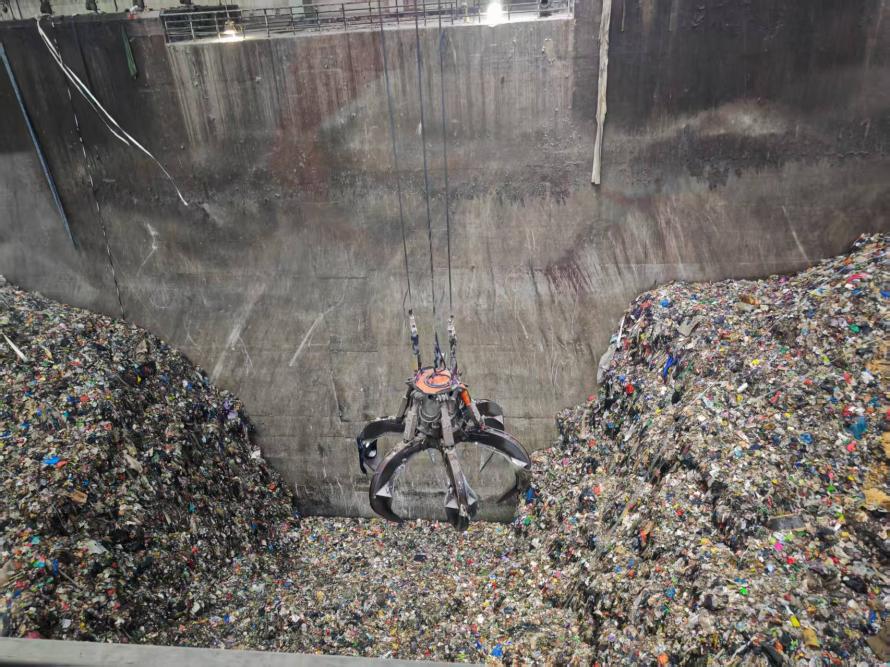
Core Viewpoint - Hunan Junxin Environmental Protection Co., Ltd. (Junxin Co., 301109.SZ) is expanding its waste treatment and green energy business, successfully implementing projects both domestically and internationally, including a significant partnership in Kyrgyzstan for waste-to-energy initiatives [3][5][6]. Group 1: Company Overview - Junxin Co. specializes in converting waste into energy, focusing on municipal solid waste, kitchen waste, municipal sludge, leachate, and fly ash [3]. - The company operates the Heimi Peak Solid Waste Treatment Plant in Changsha, which is the only environmental park in China to have won two Luban Awards, the highest construction engineering award in the country [3]. Group 2: International Expansion - During the first China-Central Asia Summit, Junxin Co. signed a memorandum with Kyrgyzstan to introduce successful waste treatment experiences from Changsha, aiming to establish the country's first waste incineration power generation project [5]. - The company’s strategy is to "root in Hunan, radiate nationwide, and move towards the world" [5]. Group 3: Financial Support and Challenges - The company faces challenges in its international projects, including language barriers, funding shortages, and legal constraints between countries [5]. - China Merchants Bank (CMB) formed a project team to support Junxin Co. in overcoming these challenges, leading to the creation of an innovative cross-border loan solution [6]. Group 4: Project Development - CMB successfully provided Junxin Co. with a cross-border syndicated loan of $6.42375 million, which facilitated the construction of the Bishkek waste-to-energy project in Kyrgyzstan [6]. - The project is set to be completed by December 27, 2025, marking a significant milestone as the first waste incineration power project in Central Asia [6]. Group 5: Future Outlook - The story of Junxin Co.'s international expansion reflects the growing trend of green finance and the potential for further overseas ventures by Chinese enterprises [7].
国泰君安期货研究周报:绿色金融与新能源-20260118
Guo Tai Jun An Qi Huo· 2026-01-18 11:18
2026年01月18日 国泰君安期货研究周报-绿色金融与新能源 观点与策略 | 镍:印尼言论反复扰动,镍价宽幅震荡运行 | 2 | | --- | --- | | 不锈钢:盘面锚定矿端矛盾,镍铁跟涨支撑重心 | 2 | | 工业硅:下游减产,反弹逢高布空 | 12 | | 多晶硅:下周二市场情绪或有提振 | 12 | | 碳酸锂:基本面偏强叠加现货采买意愿升温,短期下方空间有限 | 21 | 国 泰 君 安 期 货 研 究 所 请务必阅读正文之后的免责条款部分 1 期货研究 商 品 研 究 2026 年 1 月 18 日 镍:印尼言论反复扰动,镍价宽幅震荡运行 不锈钢:盘面锚定矿端矛盾,镍铁跟涨支撑重心 张再宇 投资咨询从业资格号:Z0021479 zhangzaiyu@gtht.com 国 泰 君 安 期 货 研 究 期货研究 本轮资金面对镍与不锈钢的关注度提高,本质在于消息面的变化,主要包括:印尼镍矿配额的 2.5 亿 吨目标,以及考虑将伴生矿物,如钴,纳入计价和征税体系,以及违规开采镍矿罚款,具体来看: 1)配额事件:1 月 8 日印尼能矿部表示配额将根据行业需求进行调整,1 月 14 日接受采访时表示 ...
从黑麋峰到比什凯克,绿色金融服务创新背后的“湘企”出海记
Bei Ke Cai Jing· 2026-01-18 10:09
Core Viewpoint - Hunan Junxin Environmental Protection Co., Ltd. (Junxin Co., 301109.SZ) is expanding its waste treatment and green energy business, with a focus on both domestic and international markets, including a significant project in Kyrgyzstan [3][4][9]. Group 1: Company Overview - Junxin Co. specializes in the treatment of municipal solid waste, kitchen waste, municipal sludge, leachate, and fly ash, positioning itself as a "waste-to-energy" green manufacturing company [3]. - The company operates the Changsha Heimi Peak Solid Waste Treatment Plant, which is the only environmental park in China to have won two Luban Awards, the highest construction engineering award in the country [3]. Group 2: International Expansion - During the first China-Central Asia Summit, Junxin Co. signed a memorandum of understanding with Kyrgyz Republic officials to establish the country's first waste incineration power generation project, leveraging its successful experience from Changsha [4]. - The company's future strategy is to "root in Hunan, radiate nationwide, and go global" [4]. Group 3: Project Financing - The project in Kyrgyzstan faces challenges such as language barriers, funding shortages, and legal constraints, which complicate cross-border financing [4]. - China Merchants Bank (CMB) formed a project team to support Junxin Co., leading to the creation of a cross-border syndicate loan solution [5][6]. - CMB successfully provided Junxin Co. with a cross-border syndicate loan of $6.42375 million, which is crucial for the project's construction and boosts the company's confidence in expanding overseas [7]. Group 4: Project Progress - With funding secured, the Bishkek waste-to-energy project in Kyrgyzstan is on track for completion, with operations expected to commence on December 27, 2025 [9]. - The project was recognized by the Kyrgyz Republic President, who awarded Junxin Co.'s chairman a friendship medal during the inauguration ceremony [10]. Group 5: Future Outlook - The story of Junxin Co.'s international expansion reflects the growing trend of green finance and the potential for similar enterprises to venture abroad [11].
金融强国如何贡献“公募力量”?千亿公募最新发声
券商中国· 2026-01-18 09:38
编者按: 党的二十届四中全会审议通过"十五五"规划建议,明确提出"加快建设金融强国","大力发展科技金融、绿色 金融、普惠金融、养老金融、数字金融","优化金融机构体系,推动各类金融机构专注主业、完善治理、错位 发展"。而最近相继召开的中央政治局会议、中央经济工作会议,又提出了明年八大重点任务,以及相关的政 策安排和具体部署。 三十余载砥砺前行,中国资管行业从初步探索到如今跻身全球前列,与经济的蓬勃发展和制度的日趋完善 密不可分。在此期间,公募与私募协同发展的多元生态为资本市场的鼎新革故注入了核心动力,二者的发 展始终与国家改革同频共振,与经济发展浪潮同向而行,与产业升级齐头并进。 长城基金认为,这为接下来五年的金融工作和经济工作提供了基本遵循和根本指南,也为金融机构实现高质量 发展指明了方向。基金公司是我国金融市场的重要参与者、建设者,更是普惠金融服务的创造者、提供者。深 入学习贯彻全会精神,积极投身金融强国建设和中国式现代化大局,是时代赋予的重大责任,也是行业实现高 质量发展的必由之路。 站在"十五五"开启的历史节点,二十届四中全会明确的"高质量发展取得显著成效、科技自立自强水平大幅 提高"等目标,为资本 ...

上海对外经贸大学张晓莉:FDI冰火两重天,北美亚洲增长,欧洲下降25%
Sou Hu Cai Jing· 2026-01-17 11:02
Core Viewpoint - The global economy is currently experiencing a period of weak growth and increasing geopolitical competition, leading to a complex shift in cross-border capital flows driven by safety, policy, technology, and ideological differences rather than traditional growth and interest rate differentials [1][5]. Group 1: Global FDI Trends - Global Foreign Direct Investment (FDI) has entered a "low growth, high differentiation" phase, with developed economies showing stark contrasts: Europe has seen a 25% decline in FDI due to geopolitical tensions, while North America has experienced a 5% increase driven by domestic demand recovery and supportive industrial policies [1][6]. - In emerging markets, Asia has achieved a 7% growth in FDI due to the expansion of manufacturing and digital industries, whereas Africa has faced a 42% decline due to stagnation in infrastructure financing [1][6]. Group 2: Capital Flow Characteristics - Cross-border capital flows are characterized by high volatility, with emerging market non-resident securities investments frequently switching between inflows and outflows, reflecting rapid changes in investor sentiment influenced by interest rate expectations and geopolitical events [1][6]. - The current capital reallocation process is marked by "risk aversion" and "seeking new opportunities" as core trends [1][6]. Group 3: Drivers of Capital Flow Changes - The macroeconomic and policy divergence among major economies has led to a chaotic global capital pricing system, with the U.S. economy attracting safe-haven funds and exacerbating the capital flow dynamics [1][7]. - Geopolitical tensions and fragmentation trends are forcing companies to prioritize safety and resilience over efficiency, contributing to the decline in European FDI and increased investments in Asia [1][7]. - Technological changes and industrial transformations are accelerating capital movement towards new economic sectors such as digital economy, AI, and green finance, which are becoming focal points for global capital [1][7]. Group 4: RMB Internationalization - The RMB is currently the fifth-largest payment currency globally, accounting for 3.17% of the total, with a significant increase in cross-border payment activity, reaching 34.9 trillion yuan in the first half of 2025, a 14% year-on-year growth [1][8]. - The RMB's role in international finance shows a notable "internal-external temperature difference," with over 30% of cross-border transactions settled in RMB within China, while its share in international payments via SWIFT is only 5% [1][8]. Group 5: Future Outlook and Recommendations - The internationalization of the RMB faces multiple risks, including deepening global economic fragmentation and challenges in cross-border settlement channels due to U.S. sanctions and regulatory discrepancies in digital currencies [1][11]. - To support RMB internationalization, it is essential to strengthen the economic foundation, deepen financial reforms, and build diversified cooperation networks through initiatives like the Belt and Road and RCEP [1][12]. - The RMB should aim to become a stabilizing force in the global monetary system during periods of a weak dollar, leveraging its robust economic base and emerging market partnerships to overcome challenges and seize opportunities [1][13].