
制度型开放

Search documents
开放定义未来
Zhong Guo Fa Zhan Wang· 2025-12-18 07:23
Core Viewpoint - Hainan Free Trade Port is set to officially launch its full island closure operation on December 18, marking a new phase in China's highest level of openness and aiming to become a significant gateway for China's new era of opening up to the outside world [1][2]. Group 1: Policy Advantages - Hainan Free Trade Port aims to implement higher-level open policies characterized by "one line open, one line controlled, and free movement within the island," which will further relax trade and investment access restrictions [2][3]. - The construction of Hainan Free Trade Port is expected to significantly enhance China's position and influence in the global economic governance system, contributing to the establishment of an open world economy [2]. Group 2: Regional Economic Integration - Hainan is positioned to play a crucial role in the Regional Comprehensive Economic Partnership (RCEP), with 40% of its external trade and 50% of foreign direct investment projected to flow towards the RCEP region by 2024 [3][4]. - The Free Trade Port is expected to serve as a strategic hub for regional cooperation, enhancing the integration of markets and industries between China and ASEAN [3]. Group 3: Blue Economy Development - The closure operation will provide Hainan with broader open space and development opportunities, accelerating the advancement of the blue economy and enhancing China's influence in the global blue economy landscape [5][6]. - Hainan aims to become a service guarantee base and strategic platform for marine industry connections and cooperation between China and ASEAN [6]. Group 4: Collaboration with Greater Bay Area - Strengthening the linkage between Hainan Free Trade Port and the Guangdong-Hong Kong-Macau Greater Bay Area is seen as a key strategy, leveraging the strategic passage of Qiongzhou Strait for resource integration and transportation [7][8]. - The focus will be on industrial integration, utilizing Hainan's resource advantages and policy benefits alongside the industrial strengths of the Greater Bay Area [7]. Group 5: Institutional Opening - The launch of the closure operation signifies a comprehensive transformation of Hainan Free Trade Port, marking a shift from pilot policies to institutional arrangements, and positioning it as a unique player in China's unilateral opening [9][10]. - Hainan is set to align with international high-standard economic and trade rules, promoting innovation in trade, investment, and cross-border capital flow [9][11]. - By 2024, the service trade volume in Hainan is expected to account for 17% of its total foreign trade, exceeding the national average by over 2 percentage points [11].
制度型开放的本质是规则之治
Zhong Guo Fa Zhan Wang· 2025-12-18 07:23
Core Viewpoint - The establishment of the Hainan Free Trade Port marks a significant step in China's high-level opening-up strategy, emphasizing a rules-based governance approach to facilitate trade and investment [1][5]. Group 1: Policy and Regulatory Framework - The Hainan Free Trade Port will implement a "one line" open and "two lines" regulated approach, balancing openness with regulation and freedom with order [1][2]. - A new customs model will enhance efficiency by allowing eligible goods to be released directly and reducing the number of customs declaration items from 105 to 42 [2]. - The initial establishment of a policy and institutional framework for the free trade port focuses on trade, investment, cross-border capital flow, personnel movement, and data security [2][4]. Group 2: Sectoral Developments - In the medical sector, over 30 medical institutions are operational, and 15 biomedical technologies have completed clinical transformation, showcasing regulatory innovation in drug approval and medical practice [3]. - The education sector allows foreign high-level universities to operate independently, enhancing educational resource supply and exploring the integration of international standards with local conditions [3]. Group 3: Broader Implications - Hainan's regulatory innovations are expected to be replicated nationwide, providing a template for other free trade zones [4]. - The exploration of a rules system that aligns with international standards while incorporating Chinese characteristics will enhance China's participation in global competition and contribute to the improvement of global trade rules [4]. - The long-term vision for Hainan aims to establish a mature free trade port system by 2035, emphasizing sustainable development and digital transformation [4].
东西问|短评:海南自贸港全岛封关意义非凡
Sou Hu Cai Jing· 2025-12-18 05:42
2025年12月7日,三亚国际免税城三期项目建设现场。中新社记者 骆云飞 摄 2018年,在改革开放40周年之际,中国在海南布下"先手棋"——支持海南全岛建设自由贸易试验区,逐 步探索、稳步推进中国特色自由贸易港建设。七年来,海南对标全球最高水平的开放形态,实现了自贸 港建设从"蓝图规划"到"成型起势"的历史性跨越,初步建立起以"零关税、低税率、简税制"和"五自由 便利、一安全有序流动"为主要特征的自贸港政策制度体系。同时加速重构现代化产业体系和区域协调 发展新格局,为海南自贸港正式启动全岛封关奠定坚实基础。海南自贸港全岛封关,至少有四方面的意 义: 其一,它是中国在全球经济治理变局中的主动作为。在全球化遭遇逆流的背景下,海南自贸港建设本质 上是为全球经济合作提供中国方案。通过实施更高水平的制度型开放,透过海南探索、测试和完善一套 既符合中国国情、又能与国际高标准经贸规则相衔接的制度体系,为中国深度参与乃至引领未来全球经 济治理积累实践经验。 中新社海口12月18日电 题:海南自贸港全岛封关意义非凡 中新社记者 尹海明 王子谦 12月18日,在改革开放47周年这个特别有标志意义的日子,海南自由贸易港正式启动全 ...


专访原海南省大数据管理局局长董学耕:以数据跨境为桥连接全球数字经济 海南探路数据跨境“自贸港模式”
Zheng Quan Shi Bao· 2025-12-18 04:53
Core Insights - Hainan Free Trade Port officially launched its full island closure on December 18, focusing on cross-border data flow management through a negative list-based "non-prohibition unless permitted" model, which is seen as a significant practice for exploring safe and orderly cross-border data flow [1] Group 1: Hainan's Unique Approach - Hainan's differentiated exploration in cross-border data flow management is characterized by two main aspects: industry focus and optimized regulatory processes [2] - The emphasis on specific industries such as deep-sea technology, commercial aerospace, low-altitude economy, modern agriculture, tourism, and modern services aligns with regional resource endowments and strategic positioning [2] - Hainan allows data to exit under specified conditions without prior approval, enhancing operational efficiency for enterprises [2] Group 2: Negative List Management - A clear and actionable negative list for regulated "important data" and "personal information" is an efficient management approach that helps enterprises understand and comply with rules [3] - The negative list management mechanism aims for precise scene identification, ensuring clarity and operational feasibility for businesses [3] - Continuous optimization of the negative list is necessary, including timely revisions and expansions to enhance policy transparency and predictability [3] Group 3: Regulatory Framework for Data Flow - The "Regulations on the Development of International Data Centers in Hainan Free Trade Port" was approved on November 29, 2024, supporting domestic and foreign enterprises in establishing international data centers [4] - The business forms include "foreign data for foreign use," "domestic data for foreign use," and "foreign data for domestic use," each with specific compliance requirements [4] Group 4: Infrastructure and Soft Environment - Key infrastructure such as the Haikou International Communication Business Entry Bureau and cross-border submarine cables are being developed to support safe and orderly cross-border data flow [5] - The establishment of a supportive "soft environment" through rules, regulations, and standards is crucial for maximizing the effectiveness of hard infrastructure [5] Group 5: Opening Up to Foreign Investment - Hainan has lifted several foreign equity restrictions in value-added telecommunications services, allowing foreign investment in cloud services and computing markets [6] - The pilot program aims to attract international enterprises and enhance China's digital industry development [6] Group 6: Future Directions and Innovations - Hainan aims to promote data security and orderly flow as outlined in its overall construction plan, focusing on replicable and scalable practices in cross-border data flow [9] - Future exploration will focus on four areas: promoting "foreign data for foreign use," regulating "domestic data for foreign use," exploring "foreign data for domestic use," and integrating these data flow models [9]

专访原海南省大数据管理局局长董学耕:以数据跨境为桥连接全球数字经济 海南探路数据跨境“自贸港模式”
证券时报· 2025-12-18 04:50
Core Viewpoint - The Hainan Free Trade Port has officially launched its full island closure, focusing on innovative regulatory practices for cross-border data flow, which is seen as a significant step towards market-oriented reform and international cooperation in data elements [1]. Group 1: Differentiation in Data Management - Hainan's unique exploration in cross-border data flow management is characterized by two main aspects: industry focus and optimized regulatory processes. The focus is on specific industries such as deep-sea technology, commercial aerospace, low-altitude economy, modern agriculture, tourism, and modern services [3]. - The regulatory process emphasizes post-event supervision, allowing companies to conduct data outbound activities under a negative list framework, significantly enhancing operational efficiency [3]. Group 2: Negative List Management - A clear and actionable negative list for regulated "important data" and "personal information" is an efficient management approach that helps businesses understand and comply with regulations [4]. - The negative list management mechanism aims for precise scenario implementation, ensuring that the content is identifiable and operable, thus minimizing ambiguity for enterprises [4]. Group 3: International Data Center Development - The "Regulations on the Development of International Data Centers in Hainan Free Trade Port" was passed, supporting domestic and foreign enterprises in establishing international data centers and providing data services [5]. - The business forms are categorized into three types: "external data for external use," "internal data for external use," and "external data for internal use," each with specific compliance requirements [5]. Group 4: Infrastructure and Soft Environment - Key infrastructure such as the Haikou International Communication Business Entry Bureau and cross-border submarine cables are being developed to support the safe and orderly flow of cross-border data, particularly benefiting Southeast Asian markets [7]. - The soft environment requires the promotion of rules, regulations, and standards to align with international compliance requirements, facilitating the integration of domestic and foreign data governance [7]. Group 5: Opening Up to Foreign Investment - Hainan has lifted restrictions on foreign investment in value-added telecommunications services, allowing foreign enterprises to participate deeply in the domestic digital market, which is expected to foster the growth of the digital industry ecosystem [8]. - The pilot program for foreign investment in digital services is seen as a critical step towards enhancing data cross-border flow and building a credible data space [9]. Group 6: Future Directions - Future exploration will focus on four key areas: promoting "external data for external use" services, regulating "internal data for external use," exploring "external data for internal use," and integrating these data flow models for complex scenarios [12].
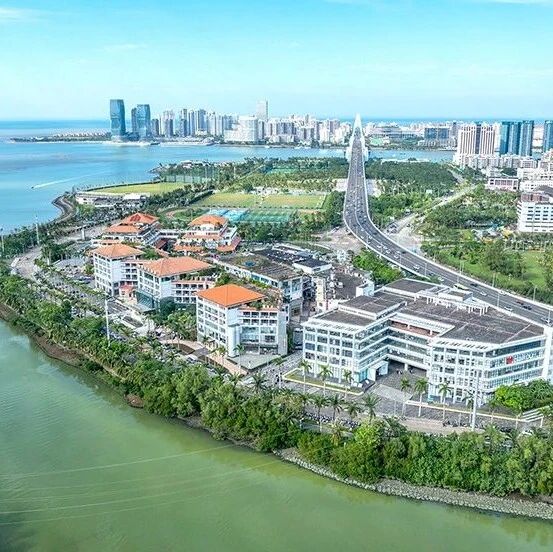
专访迟福林:封关启新程,海南自贸港迈向“最高水平开放形态”
2 1 Shi Ji Jing Ji Bao Dao· 2025-12-18 04:18
展望未来,迟福林认为,海南自由贸易港要适应中国企业与东盟企业双向投资大趋势,以建设国内企业 进入东盟投资合作的"总部基地"和以东盟企业为主进入中国大市场的"总部基地"为重大任务,使海南自 由贸易港在区域合作中发挥战略枢纽作用。 从官员贬谪的蛮荒之地,到南海碧波中冉冉升起的沧海明珠。这片曾是中国历史上最遥远的边疆,如今 已成为新时代改革开放最前沿的试验场,书写着从"天涯海角"到"世界枢纽"的跨越传奇。 南方财经 21世纪经济报道记者吴斌 海南报道 "海南背靠超大规模国内市场,毗邻东南亚,面向太平洋和印度洋。从海南出发,4小时飞行时间可以覆 盖亚洲21个国家和地区、约47%的全球人口、全世界约30%的GDP。"中国(海南)改革发展研究院院 长、海南自由贸易港研究院院长迟福林在第六届"海洋合作与治理论坛"上接受21世纪经济报道记者专访 时表示。 这正是海南独特区位优势的生动写照。在中国改革开放47周年纪念日,2025年12月18日,海南自由贸易 港正式启动全岛封关运作。在迟福林看来,封关运作标志着海南自由贸易港由起步阶段到实质性运作的 全面转型、由政策试点到制度安排的全面转型,标志着海南自由贸易港制度型开放进入新的 ...
人民日报:“加快建设具有世界影响力的中国特色自由贸易港”
Ren Min Ri Bao· 2025-12-18 04:08
Core Viewpoint - The official launch of the Hainan Free Trade Port marks a significant milestone in China's reform and opening-up strategy, aiming to establish Hainan as a leading gateway for international trade and investment, reflecting the country's commitment to high-level openness and innovation [4][5][9]. Group 1: Historical Context and Development - The establishment of the Hainan Free Trade Port is a culmination of decades of reform, starting from the creation of the Hainan Economic Special Zone in 1988 to the announcement of the Free Trade Port concept by President Xi Jinping in 2018 [6][15]. - The date of December 18, 2025, is symbolically significant as it coincides with the anniversary of the Third Plenary Session of the 11th Central Committee, which initiated China's reform and opening-up [5][6]. Group 2: Strategic Goals and Vision - The strategic goal is to make Hainan a significant portal for China's new era of opening-up, emphasizing the need for a systematic approach to reform and innovation [9][15]. - Hainan's development is aligned with the "14th Five-Year Plan" and is included in the central economic work conference's key tasks for the upcoming year, highlighting its importance in national economic strategy [7][9]. Group 3: Economic Impact and Growth - Hainan's trade volume has seen substantial growth, with total imports and exports increasing from 933.3 billion yuan in 2020 to 2,778.9 billion yuan in 2024, marking a significant leap in economic activity [18]. - The four main industries in Hainan—tourism, modern services, high-tech industries, and tropical agriculture—accounted for 67.2% of the regional GDP in the first three quarters of the year, reflecting a 14.2 percentage point increase since 2020 [18]. Group 4: Policy Innovations and Implementation - The Hainan Free Trade Port is characterized by a "one line open, two lines controlled, and free within the island" policy framework, facilitating a more liberalized and convenient trade environment [23]. - The port has implemented various innovative policies, such as tax exemptions for international shipping and streamlined customs procedures, to enhance its competitiveness as an international shipping hub [23][24]. Group 5: International Cooperation and Investment - Hainan aims to attract global investment, with over 1,025 billion yuan in actual foreign investment and significant growth in overseas direct investment, indicating a robust international interest [19]. - The port's strategic location and unique policies position it as a critical player in global trade, enhancing China's role in promoting multilateralism and open trade [19][34].
向全球数字贸易规则“试验田”迈进
Zheng Quan Shi Bao Wang· 2025-12-18 03:34
原海南省大数据管理局局长董学耕向证券时报记者指出,"海南模式"的差异化主要体现在产业与监管两 方面。从产业布局看,海南将数据跨境重点场景明确在深海科技、商业航天、低空经济、现代农业等特 色产业领域。这种场景驱动模式,使得数据跨境需求更为具体,风险更易管控。从监管流程看,在坚守 安全底线的前提下,海南更加强调事中事后监管。对于负面清单外的数据出境,允许企业在审慎承诺前 提下先行开展,并辅以事后备案管理,或直接免于审批,显著提升了企业的运营效率。 基于数据出境管理负面清单的"非禁即准"模式,核心是为企业提供稳定预期。董学耕强调,负面清单管 理机制的关键在于场景的精细化,确保清单内容"可识别、可界定、可操作",最大限度消除模糊空间, 让企业清楚知道什么能做、什么不能做。 基于清晰的制度框架,海南自贸港已在前期试点过程中布局了多层次、立体化的业务形态。根据已出台 的《海南自由贸易港国际数据中心发展规定》,海南自贸港国际数据中心的业务主要分为三类,分别 是"外数外用""内数外用"和"外数内用"。其中,"外数外用"相关业务不涉及境内数据出境,已成为海南 自贸港当前的重点发力方向。董学耕预计,游戏服务、影视制作、商业航天等 ...
新华鲜报|历史性时刻!海南自贸港正式启动全岛封关
Sou Hu Cai Jing· 2025-12-18 03:14
Core Viewpoint - The official launch of the Hainan Free Trade Port on December 18, 2025, marks a significant milestone in China's opening-up strategy, with the entire island becoming a customs supervision special area, facilitating a new model of "one line open, one line controlled, and free flow within the island" [1][5]. Group 1: Opening and Policy Changes - The full closure of Hainan is not a form of isolation but rather an expansion of openness, with the range of "zero tariff" goods increasing to over 6,600 tax items, stimulating new industrial vitality [3][5]. - On the first day of closure, it is expected that Hainan's open ports, including Yangpu Port and Sanya Phoenix International Airport, will import "zero tariff" goods worth over 500 million yuan, including crude oil, medical equipment, and food raw materials [3][5]. Group 2: Strategic Importance - The closure of the island is a crucial step in supporting the national development strategy, positioning Hainan as a key gateway to the Chinese market, especially in the context of global changes [5][7]. - Hainan aims to become a leading portal for a new era of openness, emphasizing institutional innovation and a systematic approach to policy development [5][7]. Group 3: Impact on Individuals - For individuals, traveling to Hainan for business or leisure will remain seamless without additional documentation, enhancing the consumer experience in tourism and shopping [7]. - Recent adjustments to the duty-free policy have expanded the range of exempted goods, making global purchases more convenient and affordable for consumers [7].
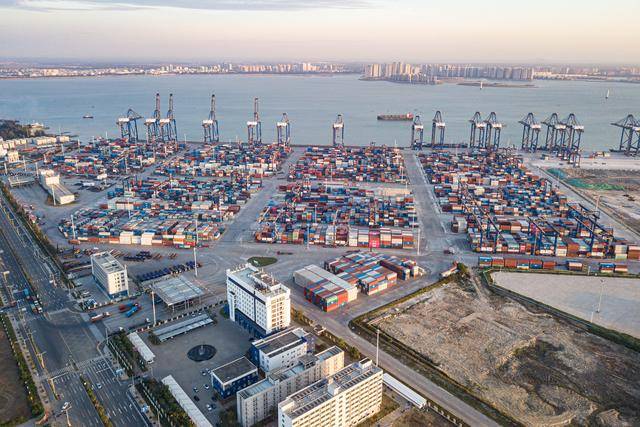
稳扎稳打,打造开放门户
Ren Min Ri Bao· 2025-12-18 03:13
Core Points - The Hainan Free Trade Port officially launched its full island closure on December 18, 2025, marking a significant historical moment for China's openness [1] - The establishment of the Hainan Free Trade Port is a major decision by the Central Committee aimed at deepening reform and opening up in the new era, impacting both Hainan's development and the broader context of China's reform and opening up [1] - Hainan is becoming a new frontier for China's openness, a hotbed for regional cooperation, and a new engine for promoting economic globalization [1] Summary by Categories Policy and Strategy - The closure is seen not as an island closure but as a starting point for further expanding openness, with a commitment to continuously improve the policy and institutional framework of the free trade port [1] - The strategic goal remains steadfast, focusing on steadily expanding institutional openness while implementing effective measures [1] Economic Development - The aim is to create a modern industrial system with Hainan's unique characteristics and advantages, transforming the momentum of openness into high-quality development [1] - The initiative is expected to lead to a new level of high-standard opening up for China [1]