
AI眼镜

Search documents
阿里将推出首款自研AI眼镜,“百镜大战”再添巨头
第一财经· 2025-07-26 12:44
Core Viewpoint - The competition in the AI glasses market is intensifying, with Alibaba announcing its self-developed Quark AI glasses, joining other major players like Xiaomi, Huawei, and Google in launching similar products this year [1][2]. Group 1: Product Launch and Features - Alibaba's Quark AI glasses are set to be officially released within the year, having completed their development phase [1]. - The glasses will integrate with Alibaba's ecosystem, supporting features such as Gaode navigation, Alipay payments, and travel reminders through Fliggy [2]. - The Quark AI glasses utilize Qualcomm's AR1 flagship design chip along with a low-power co-processor, addressing current ecological challenges in the AI glasses market [2]. Group 2: User Experience and Security - Users can initiate payments through the AI glasses by voice commands, with the system displaying QR codes for payment confirmation, eliminating the need to use a smartphone [3]. - Concerns regarding the security of payments made through smart glasses are prevalent among users, prompting Alipay to implement a multi-factor authentication system that includes voiceprint detection and wear detection [3]. - The AI glasses are anticipated to become a significant personal mobile entry point, potentially leading to a surge in personal data generation [3].


阿里将推出首款自研AI眼镜,“百镜大战”再添巨头
Di Yi Cai Jing· 2025-07-26 09:46
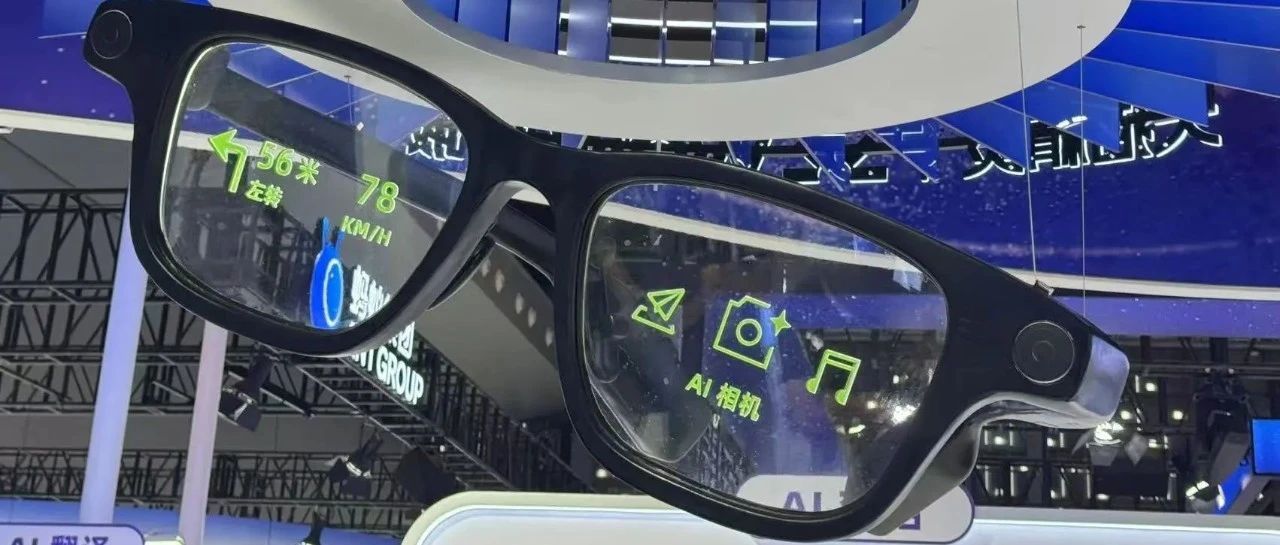
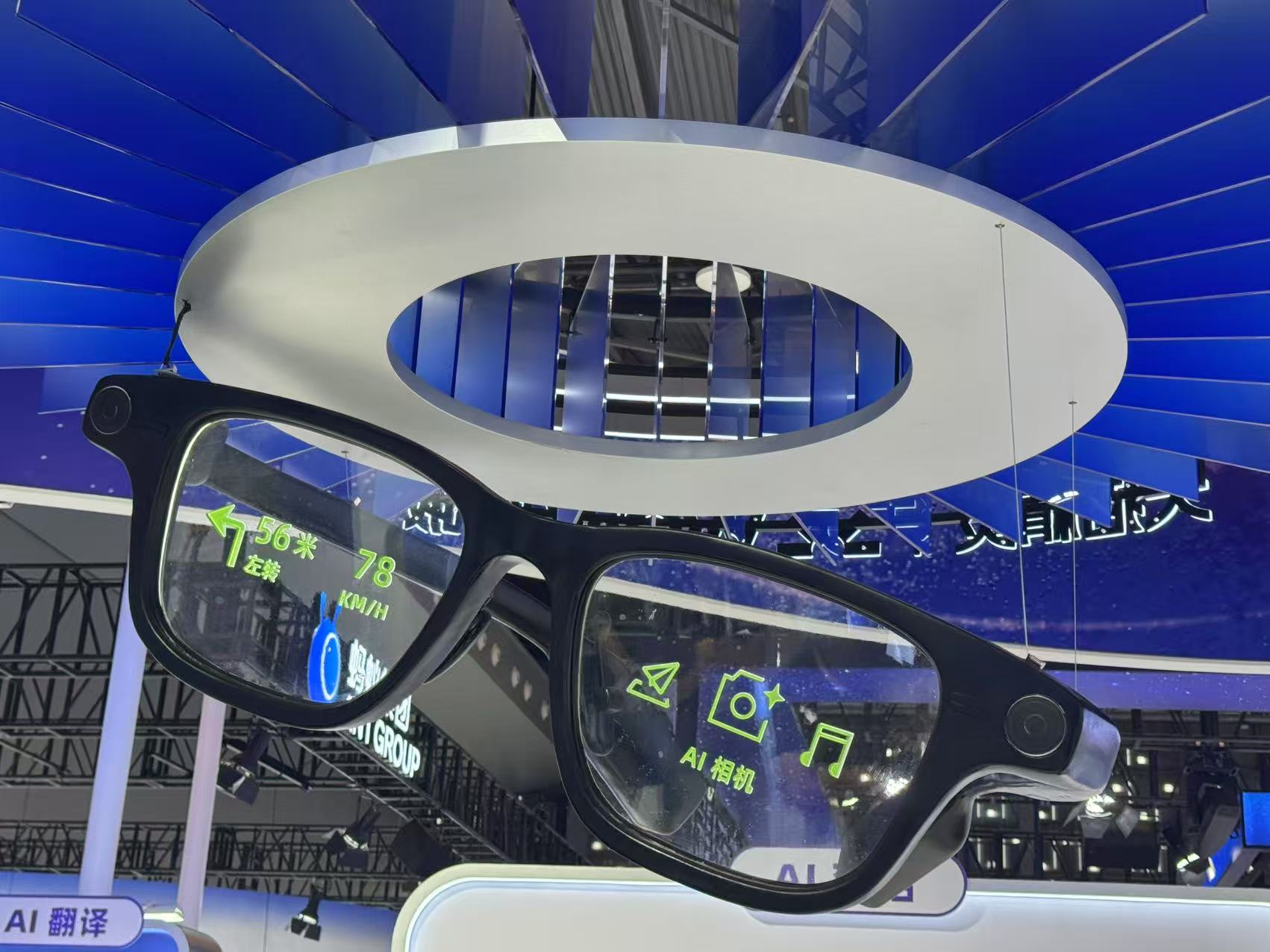
与阿里生态的高度融合是夸克AI眼镜的卖点之一。记者了解到,夸克AI眼镜将支持高德近眼导航、支付宝看一下支付、淘宝比价、飞猪商旅提醒等场景。 阿里巴巴智能信息事业群智能终端业务负责人宋刚表示,夸克AI眼镜采用高通ar1旗舰设计芯片加低功耗的协处理器双芯设计,整合阿里资源突破了AI眼镜 当前面临的生态困境,以高德为例,夸克AI眼镜实现了骑行、步行场景下的导航指引。 "百镜大战"进一步升温。7月26日,2025世界人工智能大会上,阿里宣布将推出首款自研AI眼镜--夸克AI眼镜。今年二季度,小米、华为、联想、Google 与 XREAL 等纷纷上新AI眼镜,如今,阿里也加入了这场战局。记者获悉,夸克AI眼镜目前研发完成,预计将于年内正式发布。 在阿里巴巴展台,记者看到,夸克AI眼镜被首次展出,吸引了大批观众。一个放大版的眼镜模型被悬挂在展台上方,两个镜片分别显示导航、AI相机功 能,镜片外框呈方圆状。不过,当天展台并未向观众提供试戴机会,夸克AI眼镜的价格、实际体验效果等仍待揭晓。 AI眼镜的推出被放入阿里AI To C整体战略中,今年年初,阿里将AI应用"通义"并入阿里智能信息事业群,宣布天猫精灵团队与夸克产品团队 ...
消息称阿里巴巴将于本周发布首款自研AI眼镜
Guan Cha Zhe Wang· 2025-07-25 10:54
Group 1 - Alibaba is set to launch its first self-developed AI glasses, featuring basic functions such as voice assistant, music playback, phone calls, real-time translation, and meeting minutes [1] - The AI glasses will integrate with Alibaba's ecosystem, including features from Gaode, Alipay, and Taobao, utilizing the Tongyi Qianwen model for AI capabilities [1] - The product will have two versions: non-display AI smart glasses and AI+AR smart glasses, with the latter being prioritized [1] Group 2 - Recent developments in the smart glasses market include the launch of Rokid Glasses by Lingban Technology, which features a payment solution integrated with Alipay [2] - Xiaomi has also introduced its first AI glasses, priced at 1999 yuan, which support various functions including video calls and payment scanning [2] - According to IDC, global smart eyewear market shipments are expected to reach 1.487 million units in Q1 2025, marking an 82.3% year-on-year increase [2] Group 3 - In Q1 2025, China's smart eyewear market shipments are projected to be 494,000 units, reflecting a 116.1% year-on-year growth [3] - The audio and audio capture glasses segment in China is expected to dominate, with shipments of 359,000 units, a 197.4% increase [3] - The AR/VR market in China is shifting focus towards AR&ER, with Q1 shipments reaching 86,000 units, accounting for 63.8% of the market share [3]

智能眼镜领头羊,道出行业泡沫
虎嗅APP· 2025-07-25 10:36
Core Viewpoint - XREAl, a leading AR glasses brand, has chosen to observe the AI glasses market rather than participate, despite the current hype and competition in the sector [2][5][6]. Group 1: Market Position and Strategy - XREAl ranks first in the global AR glasses market for 2024, with a market share that surpasses the combined share of the second to fourth competitors [2]. - The company has partnered with Google on the AR glasses project "Project Aura," enhancing its ecosystem support [2]. - The founder, Xu Chi, emphasizes focusing on core module development rather than rushing into the AI glasses market, which he believes is still in its early stages [6][7]. Group 2: Industry Analysis - Xu Chi questions the logic behind the rapid growth of the AI glasses market in China, suggesting it may be a bubble rather than a sustainable trend [6][11]. - He believes the AI glasses industry is still in the "first half" of its development, indicating that significant challenges remain before it can reach maturity [7][10]. - The industry lacks a unified understanding of the path to its ultimate goals, which complicates the current landscape [7]. Group 3: Product Development and Challenges - XREAl has developed its own co-processor chip, X1, and an optical solution called "X Prism" for its latest product, XREAL One Pro [7]. - Xu Chi highlights that the current AI glasses technology is not yet mature, with issues in hardware and software integration that need to be resolved [12][14]. - The founder predicts that the AI glasses market will not see a true explosion until around 2027 or 2028, contingent on major players like Xiaomi committing significant resources to the sector [8][10]. Group 4: Ecosystem and Collaboration - XREAl aims to avoid building a standalone ecosystem and instead collaborates with established players like Google to leverage existing ecosystems [15]. - The company is focused on creating hardware that can function well without a robust ecosystem, while also working with partners to enhance its product offerings [15].

数据复盘丨电子、计算机等行业走强 56股获主力资金净流入超1亿元
Zheng Quan Shi Bao Wang· 2025-07-25 10:16
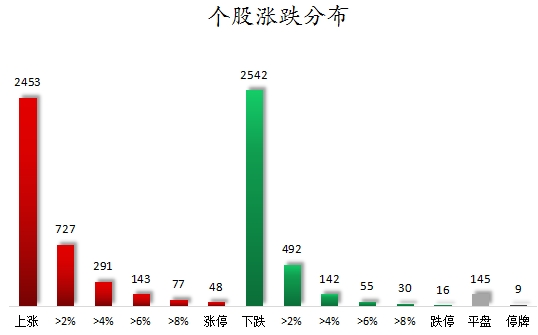
Market Overview - The Shanghai Composite Index closed at 3593.66 points, down 0.33%, with a trading volume of 821.61 billion yuan [1] - The Shenzhen Component Index closed at 11168.14 points, down 0.22%, with a trading volume of 965.73 billion yuan [1] - The ChiNext Index closed at 2340.06 points, down 0.23%, with a trading volume of 435.87 billion yuan [1] - The STAR 50 Index closed at 1054.20 points, up 2.07%, with a trading volume of 41.94 billion yuan [1] - Total trading volume for both markets was 1787.34 billion yuan, a decrease of 57.37 billion yuan from the previous trading day [1] Sector Performance - Strong sectors included electronics, computers, real estate, education, light manufacturing, and media [3] - Active concepts included multi-modal AI, glyphosate, AI corpus, AI glasses, remote office, and composite flow batteries [3] - Weak sectors included construction decoration, building materials, food and beverage, coal, steel, home appliances, electric equipment, and public utilities [3] Stock Performance - A total of 2453 stocks rose, while 2542 stocks fell, with 145 stocks remaining flat and 9 stocks suspended [3] - 48 stocks hit the daily limit up, while 16 stocks hit the daily limit down [3] Fund Flow - The net outflow of main funds from the Shanghai and Shenzhen markets was 30.98 billion yuan [5] - The net outflow from the ChiNext was 11.57 billion yuan, from the CSI 300 was 7.30 billion yuan, and from the STAR Market was 1.61 billion yuan [6] - Six sectors saw net inflows, with the computer sector leading at 1.79 billion yuan [6] Individual Stock Highlights - 2065 stocks experienced net inflows, with 56 stocks receiving over 100 million yuan in net inflows [11] - The stock with the highest net inflow was Yanshan Technology, with 515 million yuan [11] - 3075 stocks faced net outflows, with 119 stocks seeing over 100 million yuan in net outflows [15] - BYD had the highest net outflow at 1.144 billion yuan [15] Institutional Activity - Institutions had a net sell of approximately 933 million yuan, with seven stocks seeing net purchases [19] - The stock with the highest net purchase by institutions was Weiman Sealing, with approximately 28.48 million yuan [19]
智能眼镜领头羊,道出行业泡沫
Hu Xiu· 2025-07-25 02:12
Core Insights - XREAL has launched its new product "XREAL One Pro" amidst a booming interest in AI glasses, raising questions about its decision to not enter this segment [1][2] - The company holds a dominant position in the AR glasses market, with IDC reporting it has a market share greater than the combined total of its closest competitors [3] - XREAL's founder, Xu Chi, remains cautious about the AI glasses trend, questioning the sustainability and logic behind the rapid growth in this sector [5][10] Company Positioning - XREAL has partnered with Google on the "Project Aura," enhancing its ecosystem support [4] - The company has a strong user base and is focusing on refining core technologies rather than rushing into the AI glasses market [5][14] - Xu Chi emphasizes the importance of developing core modules and believes the AI glasses industry is still in its early stages, predicting significant developments around 2027-2028 [11][18] Industry Analysis - The current AI glasses market is characterized by a lack of consensus on its future direction, with many players entering the space without a clear path to profitability [12][20] - Xu Chi describes the current state of the industry as a "bubble," suggesting that many companies are chasing trends rather than focusing on sustainable growth [20][21] - The technological maturity of components, such as chips and sensors, is still lacking, which hinders the development of viable AI glasses [22][24] Future Outlook - Xu Chi believes that the industry will see a true competitive landscape when major players like Xiaomi commit significant resources to the sector [18] - The company is focused on building a robust ecosystem rather than competing directly with established giants, recognizing the challenges of creating a new ecosystem from scratch [25]
又一智能眼镜正式开售,消费电子ETF(561600)早盘上涨冲击周线6连涨
Xin Lang Cai Jing· 2025-07-24 02:25
Group 1 - PhancyAI smart glasses, equipped with AI solutions from Paradigm Group, officially launched on July 23 and will begin shipping in early August [1] - AI glasses are considered one of the best hardware carriers for edge AI, with major new products like Oakley Meta HSTN and Xiaomi AI glasses set to drive rapid growth in global AI glasses shipments [1] - According to Wellsenn XR, global AI glasses sales are expected to reach 3.5 million units by 2025, a year-on-year increase of 230%, and are projected to reach 10 million units by 2026 [1] Group 2 - As of June 30, 2025, the top ten weighted stocks in the CSI Consumer Electronics Theme Index accounted for 51.02% of the index, including companies like Luxshare Precision, SMIC, and BOE Technology Group [2] - The CSI Consumer Electronics Theme Index tracks 50 listed companies involved in component production and consumer electronics brand design and manufacturing [2] - The Consumer Electronics ETF closely follows the CSI Consumer Electronics Theme Index and includes various connecting funds [2]
阿里首款智能眼镜产品即将发布,海外巨头也加码智能硬件
Xuan Gu Bao· 2025-07-23 23:15
Group 1 - Alibaba is set to launch its first self-developed AI glasses this week, featuring basic functions such as voice assistant, music playback, phone calls, real-time translation, and meeting minutes, marking the extension of its AI to consumer strategy [1] - Amazon announced the acquisition of AI wearable startup Bee AI, which will integrate Bee AI's AI wristbands into Amazon's hardware product lineup [1] - The global AI glasses market is expected to see rapid growth, with projected sales reaching 3.5 million units by 2025, a 230% year-on-year increase, and expected to reach 10 million units by 2026 [1] Group 2 - The AI glasses industry is in the early stages of an explosive trend, with 36 out of 40 XR hardware releases in the first half of 2025 being AI glasses, attracting major players like Xiaomi and Lenovo [2] - Key challenges for AI glasses include hardware homogenization and battery life, with a focus on optimizing battery life and exploring high-value vertical scenarios, particularly in sports [2] - Companies should pay attention to breakthrough products from major manufacturers and the rhythm of product launches, especially those with strong brand power in lens manufacturing [2] Group 3 - Dr. Glasses has set up smart glasses counters in over 100 retail stores [3] - Longqi Technology is involved in the assembly of smart glasses [4]
【早报】中美将在瑞典举行经贸会谈;关于汽车“智驾”系统,公安部提醒
财联社· 2025-07-23 23:00
Macro News - The Ministry of Commerce announced that Vice Premier He Lifeng will visit Sweden from July 27 to 30 for economic and trade talks with the US, aiming to address mutual economic concerns based on the consensus reached during the June 5 call between the two countries' leaders [1][5] - The Ministry of Foreign Affairs responded to concerns from India and Bangladesh regarding China's Yarlung Tsangpo River hydropower project, stating that the project is within China's sovereign territory and aims to accelerate clean energy development without adverse effects on downstream regions [2][5] Industry News - The Ministry of Public Security indicated that current automotive "smart driving" systems have not achieved full "autonomous driving" capabilities, emphasizing that drivers remain responsible for their actions, and stricter regulations will be implemented [3][7] - The National Medical Products Administration reported that 43 innovative drugs were approved in China in the first half of the year, a 59% increase year-on-year, with China's innovative drug development pipeline accounting for about 25% of the global total [4][7] - The Ministry of Transport, along with other departments, will launch a special governance action for vehicle transport from July 2025 to December 2025, focusing on strict market access management for new vehicles [8][7] Company News - Everbright Bank announced that Citic Financial Assets has increased its shareholding to 1% [11] - Yirui Technology disclosed that shareholders Tianjin Sequoia and Beijing Sequoia plan to reduce their holdings by up to 2% through block trades [12] - Shenzhen Energy announced plans to invest 7.897 billion yuan in the construction of the Shantou Honghaiwan offshore wind power project [16] - Huaxin Cement expressed uncertainty regarding potential revenue from the Yarlung Tsangpo River hydropower project [19] Investment Opportunities - The first international standard for photovoltaic direct current, led by China, has been officially released, providing a foundation for distributed photovoltaic development and new distribution system construction [22] - The AI glasses market is expected to see rapid growth, with global sales projected to reach 3.5 million units by 2025, driven by new product launches [23] - The first fourth-generation commercial fast reactor CFR1000 in China has completed its preliminary design, marking significant progress in the country's nuclear energy development strategy [26]

TCL电子(01070):业绩预告符合预期,Miniled出货迅速提升
GUOTAI HAITONG SECURITIES· 2025-07-23 12:38
Investment Rating - The investment rating for TCL Electronics is "Buy" [6][11]. Core Views - The company's performance forecast for the first half of 2025 aligns with expectations, with a high degree of certainty in achieving the annual equity incentive targets. The shipment proportion of Miniled TVs is rapidly increasing, indicating an optimization in product structure [2][11]. Financial Summary - Total revenue is projected to grow from 78,986 million HKD in 2023 to 116,552 million HKD in 2025, reflecting a compound annual growth rate (CAGR) of approximately 17% [4]. - Net profit is expected to rise from 744 million HKD in 2023 to 2,125 million HKD in 2025, with a significant increase of 137% in 2024 [4]. - The price-to-earnings (PE) ratio is forecasted to be 12.19 in 2025, while the price-to-book (PB) ratio is expected to reach 1.42 [4]. Performance Drivers - The company is entering a phase of performance realization, driven by two main growth engines: enhanced product competitiveness and a global mid-to-high-end strategy, alongside improved supply chain and channel management [11]. - The first half of 2025 saw a significant increase in the shipment of Miniled TVs, with global TV shipments reaching 6.95 million units, a year-on-year increase of 4.1%. The domestic market saw a decrease of 3.3%, while overseas shipments increased by 6.2% [11]. Earnings Forecast - The adjusted net profit for the first half of 2025 is estimated to be between 950 million HKD and 1.08 billion HKD, representing a year-on-year growth of 45% to 65% [11]. - The earnings per share (EPS) for 2025 is projected to be 0.84 HKD, with subsequent years showing growth to 0.99 HKD in 2026 and 1.12 HKD in 2027 [11][12]. Market Position - The company maintains a strong global competitive position, with a well-established production capacity and a focus on digital transformation and automation to enhance operational efficiency [11]. - The target price for TCL Electronics is set at 11.76 HKD, based on a 14x PE ratio for 2025, reflecting a positive outlook on the company's performance and market positioning [11].